FeatureVolume Afterword
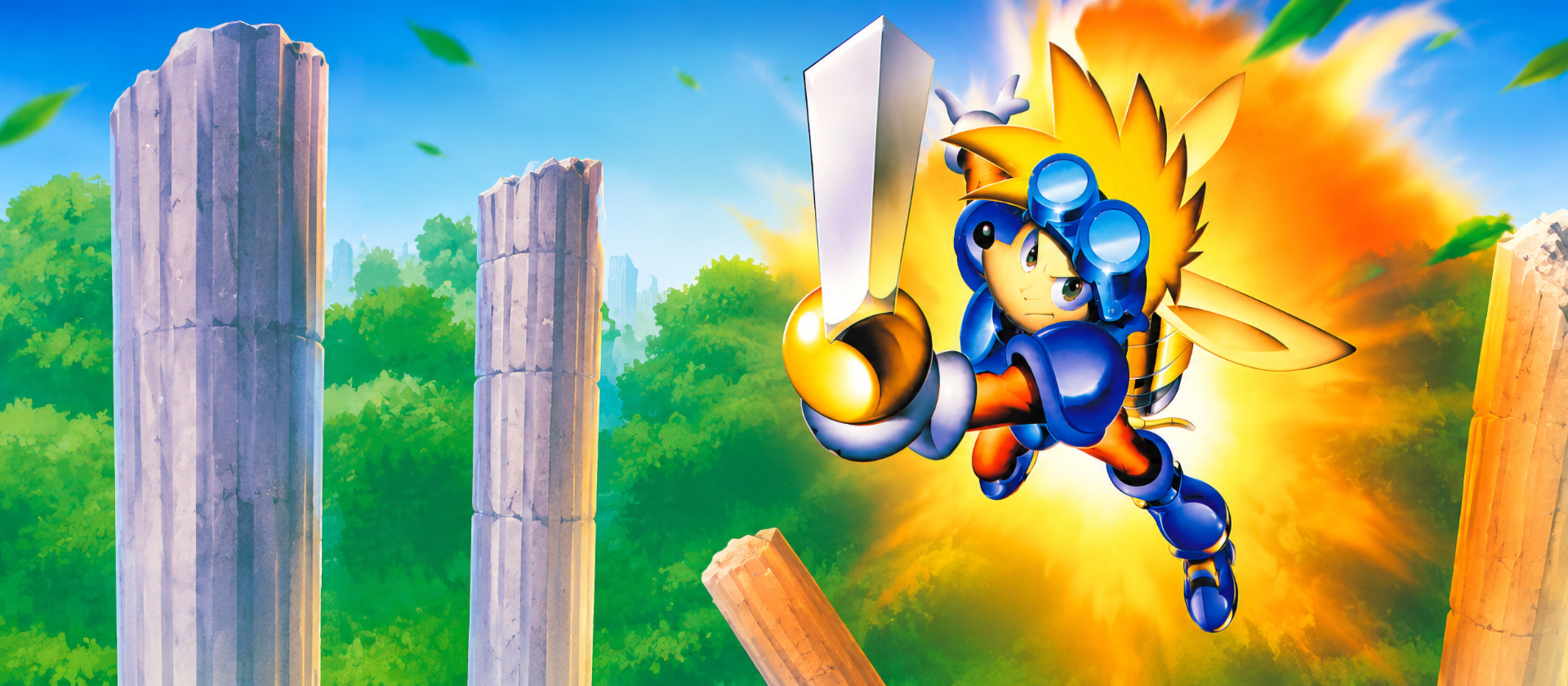
Konami's Late 1993 Was Already Three Studios
Volume I caught Konami in the four years its cabinet voice was the brand. The seam to Volume II was already on the studio's desk by late 1993 — three doors, one house style.
Nothing matches.
The Cartridge Collective
Older games still worth playing now — chosen for what they deliver in a session today, not for what they meant when they shipped.
FeatureVolume Afterword
Volume I caught Konami in the four years its cabinet voice was the brand. The seam to Volume II was already on the studio's desk by late 1993 — three doors, one house style.
FeatureVolume Foreword
FeatureYear Spotlight
FeaturePreservation
FeatureYear Spotlight
FeatureYear Spotlight
FeaturePreservation
FeaturePreservation

LocoRoco · LocoRoco 2
An Ico level designer pointed that school's wordless grace at joy — tilt-and-roll physics, songs sung in a made-up language, and nothing of its kind since.
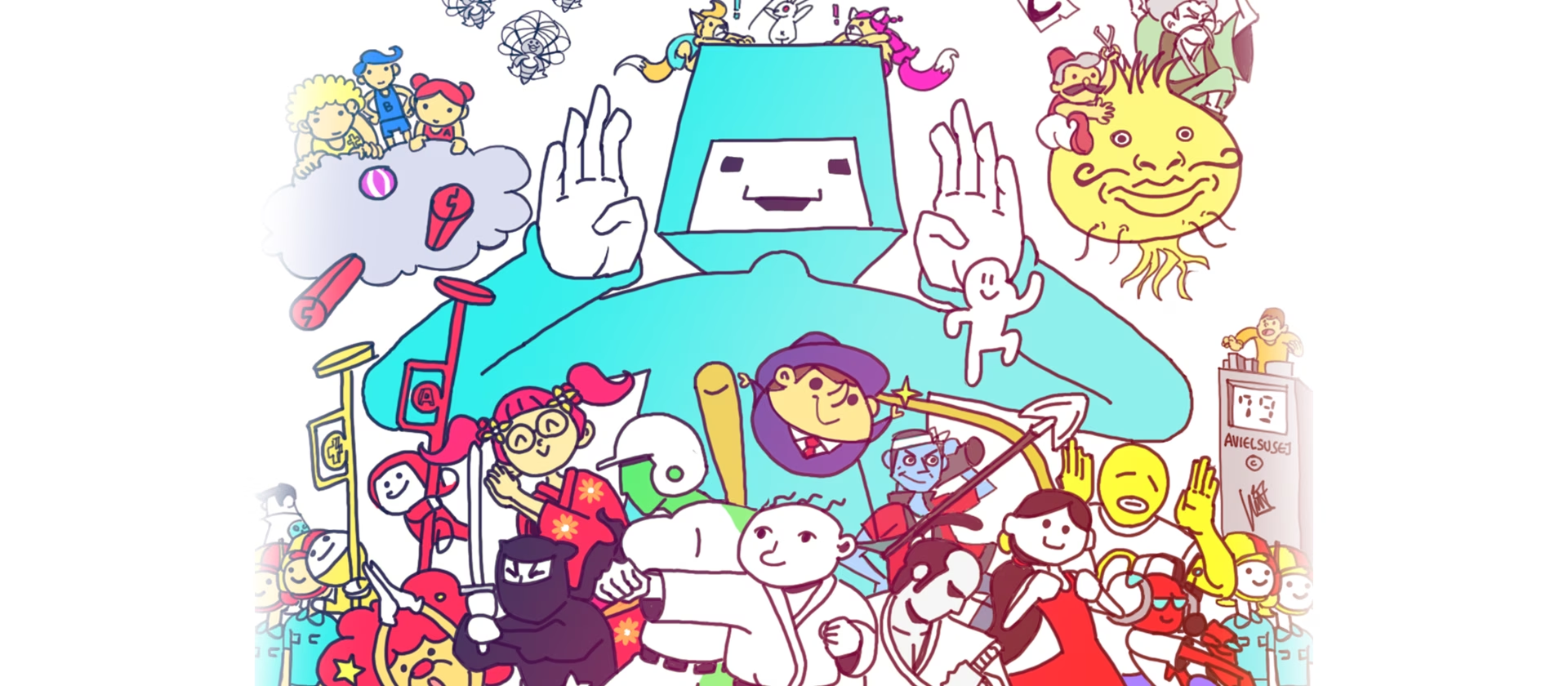
Rhythm Tengoku
A rhythm game built on the thesis that the ear keeps better time than the eye — Tsunku's pop record scores higher with your eyes closed.
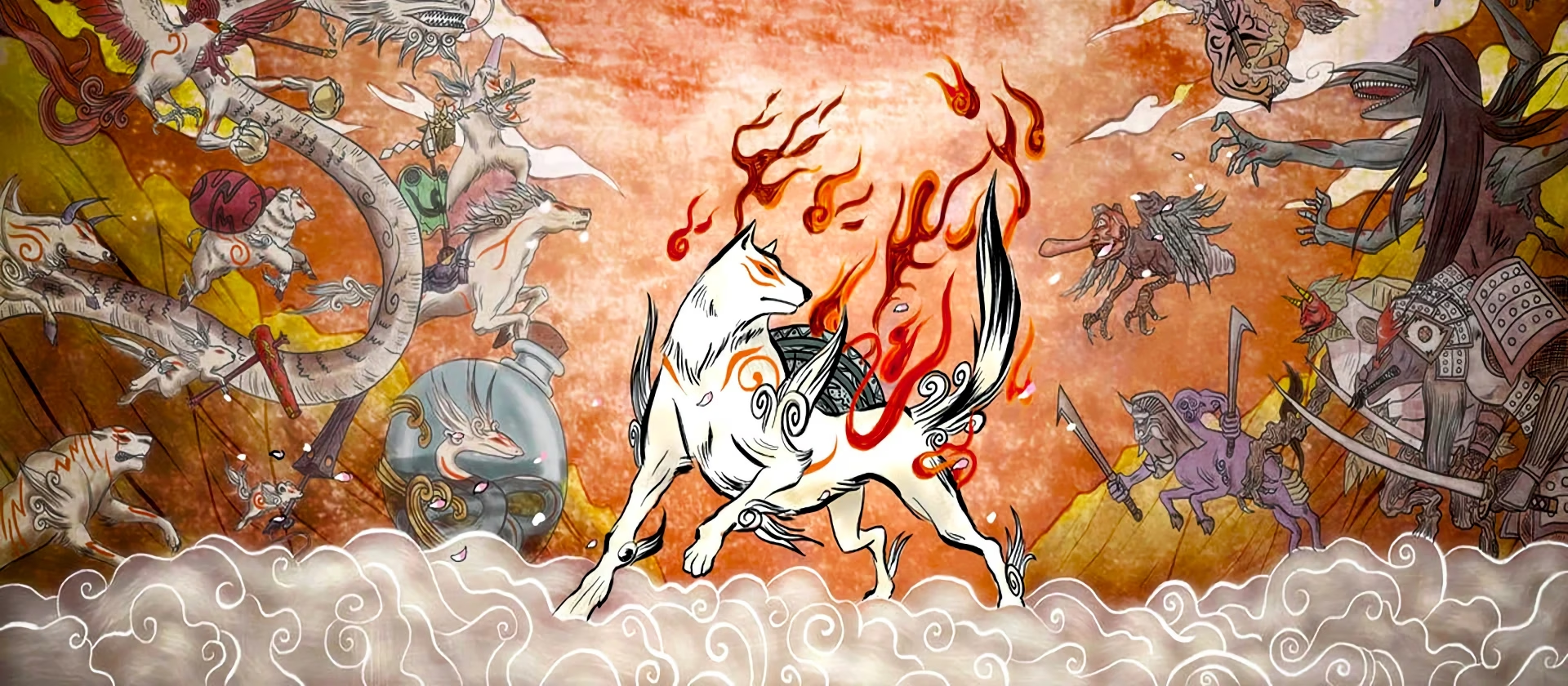
Ōkami
A sun goddess painting the world back to life — Clover's farewell still feels like nothing else, crisp now on a mouse.
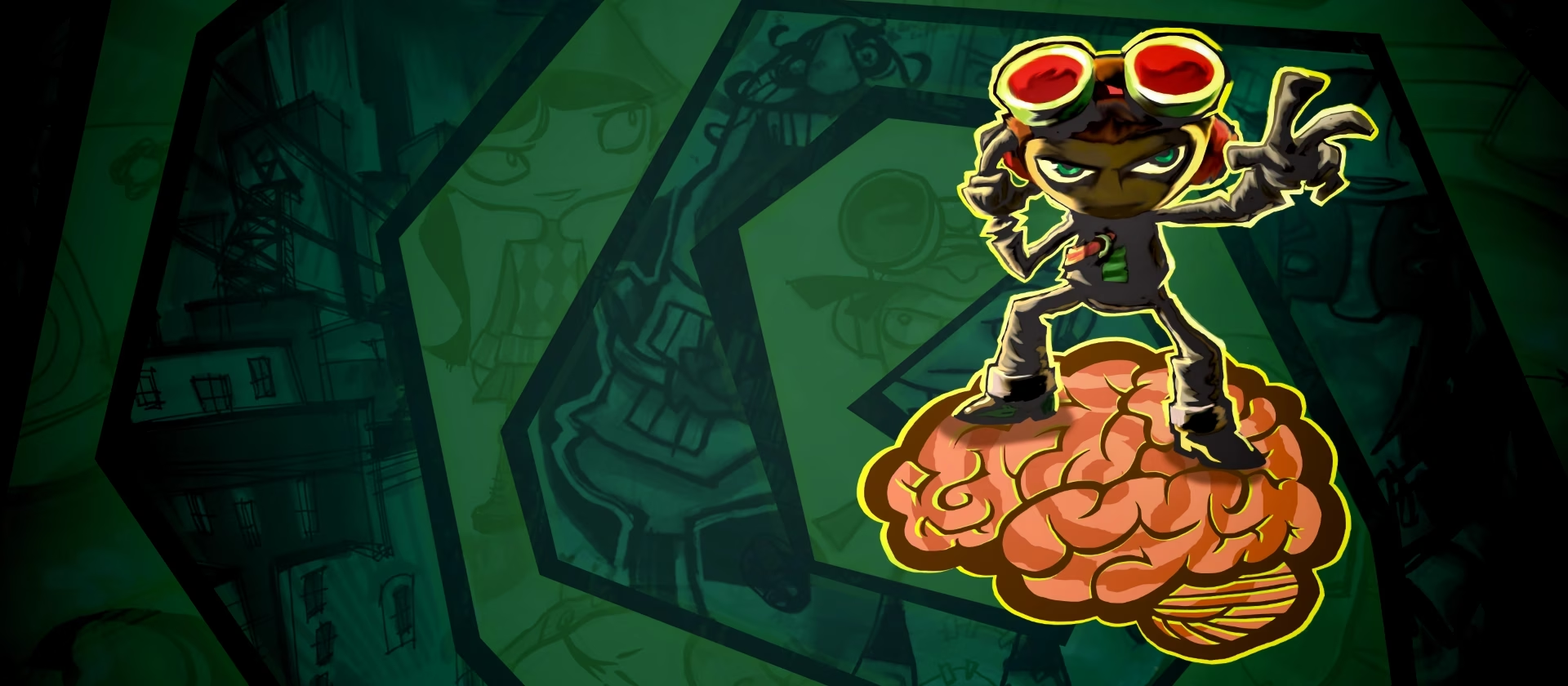
Psychonauts
A 2005 platformer that saw mental-health comedy coming — its wild, compassionate weirdness only got sharper as the genre played it safe.
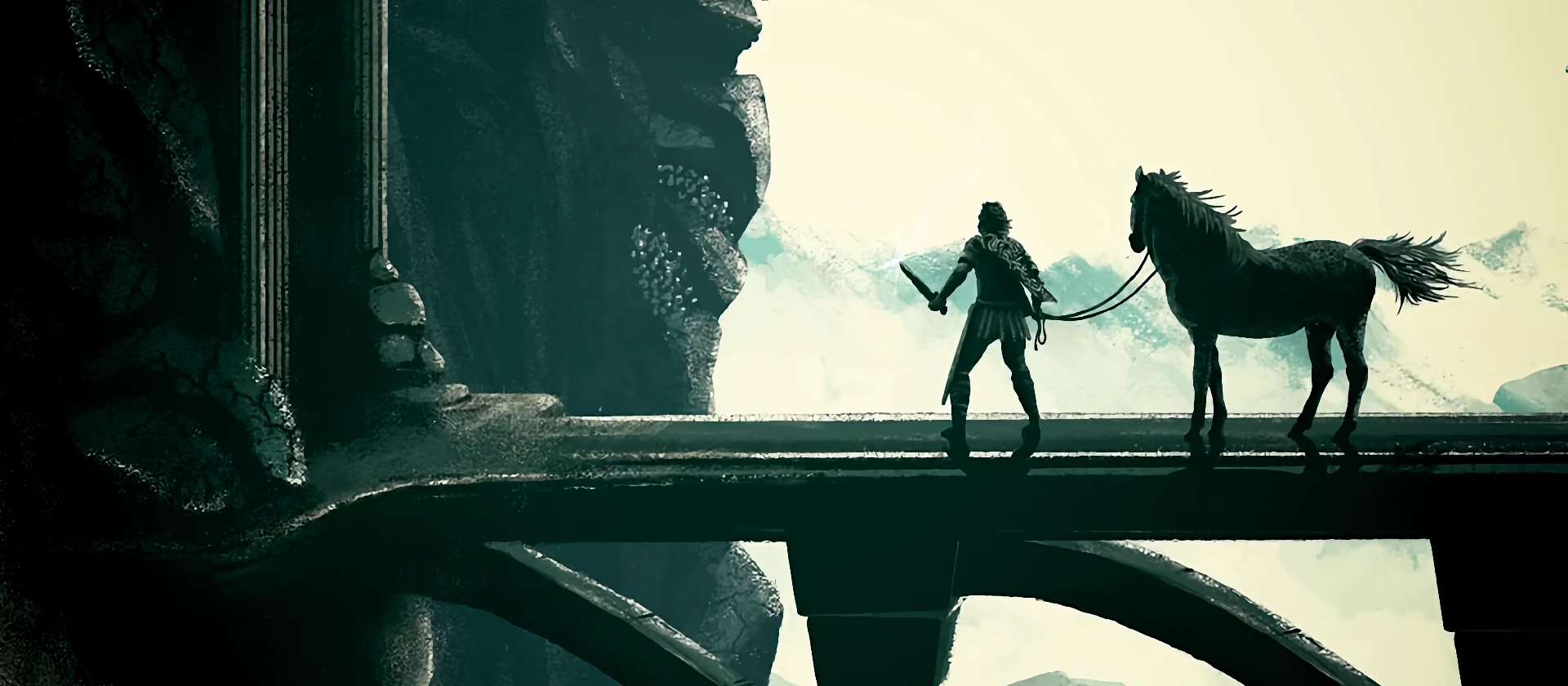
Shadow of the Colossus
One question, sixteen answers, a bargain that gets more uncomfortable every time — still the clearest case study in what video games can strip away.
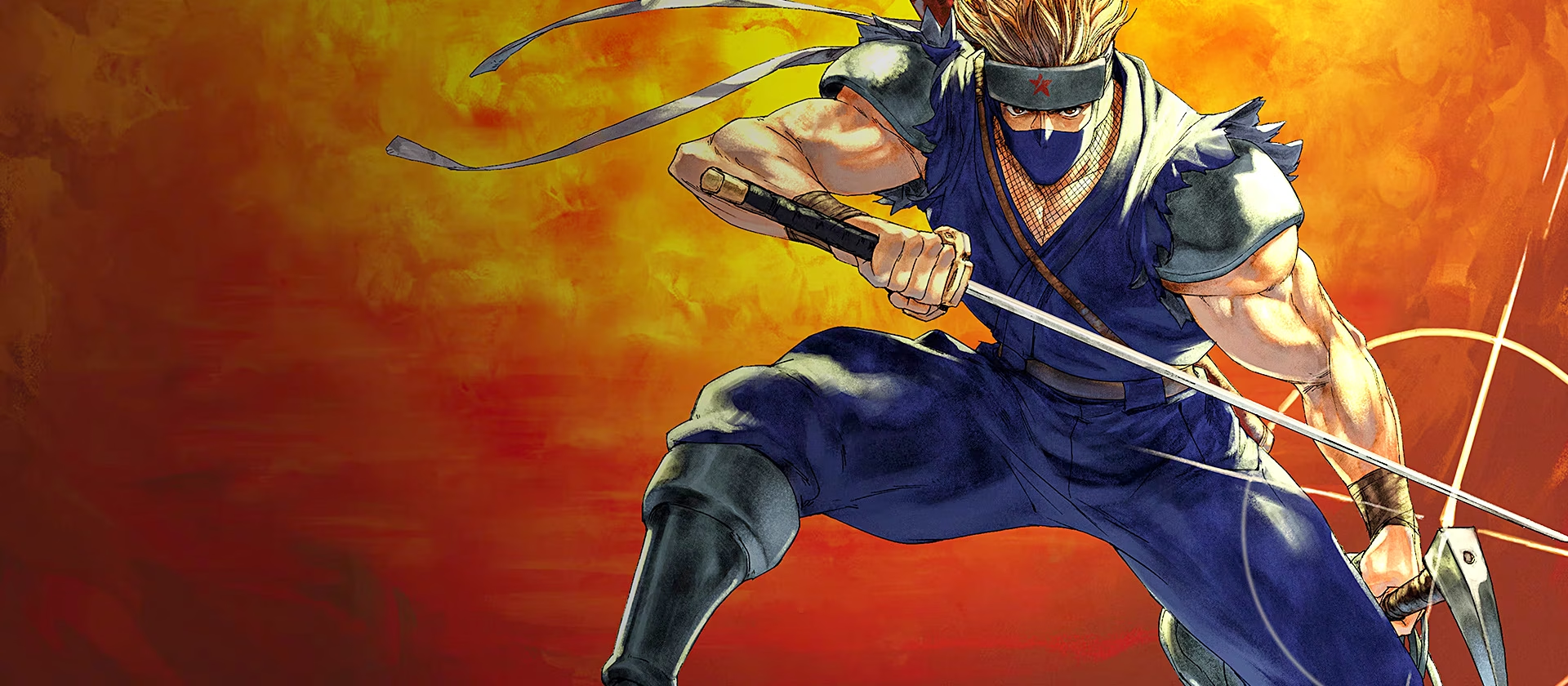
Ninja Five-O
The GBA's finest action platformer spent two decades a $300 rarity — now £12 on Steam, and the grappling hook lands exactly where you aim it.
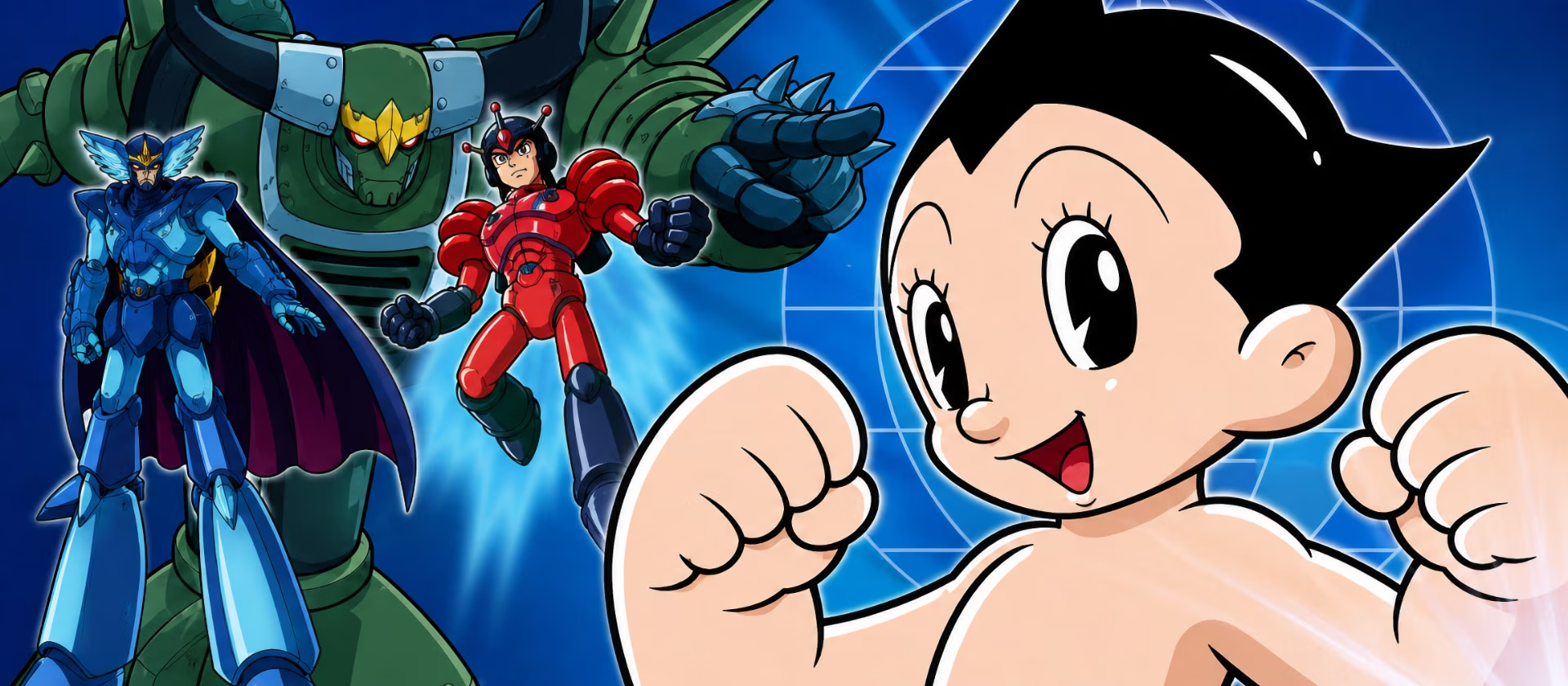
Astro Boy: Omega Factor
120 Tezuka characters woven into the progression itself, not pasted on — Treasure's densest GBA work, with a Hanzawa score that beats the platform.
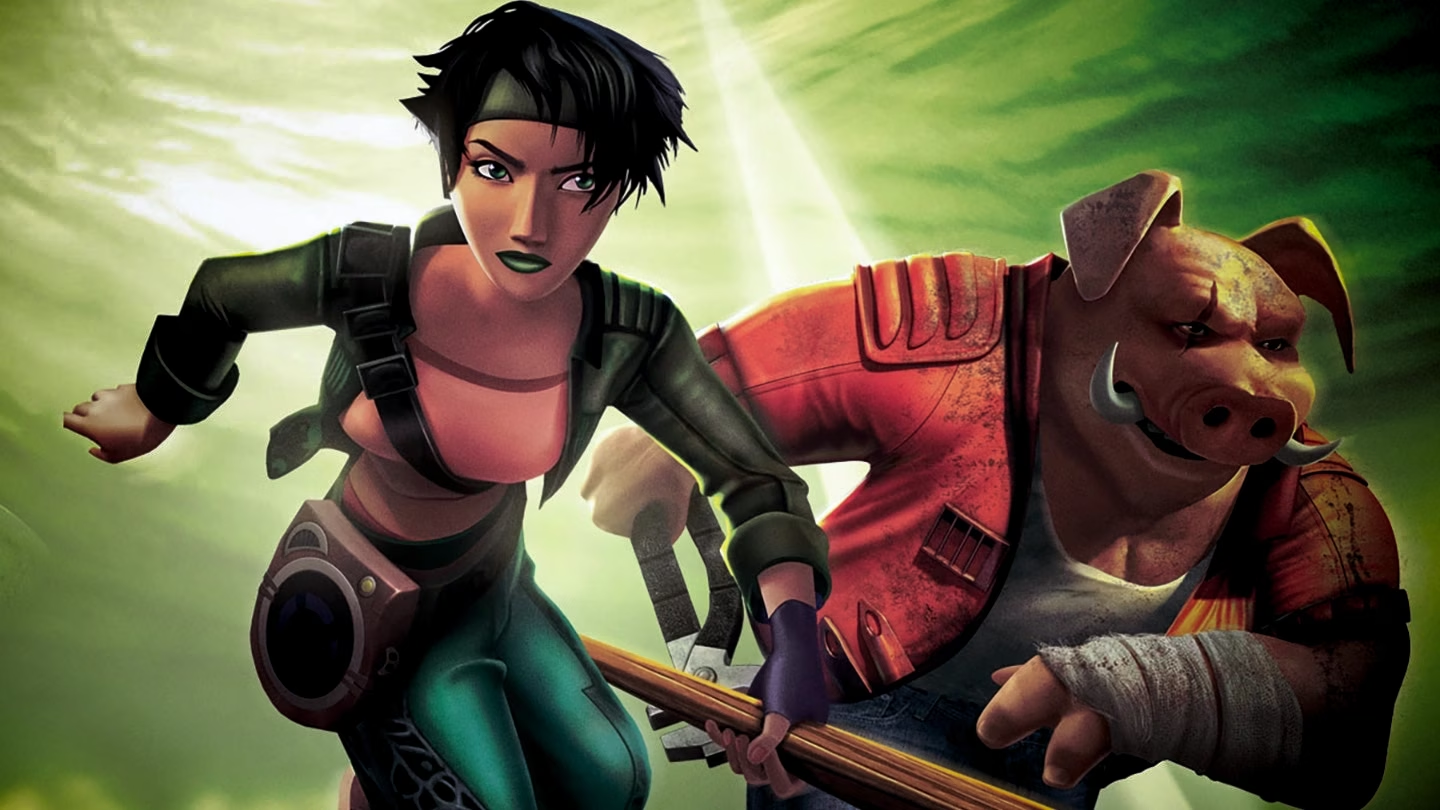
Beyond Good & Evil
An action-adventure where Jade's camera is the weapon — Ancel's warm, compromised world still reads more adult than most games built since.
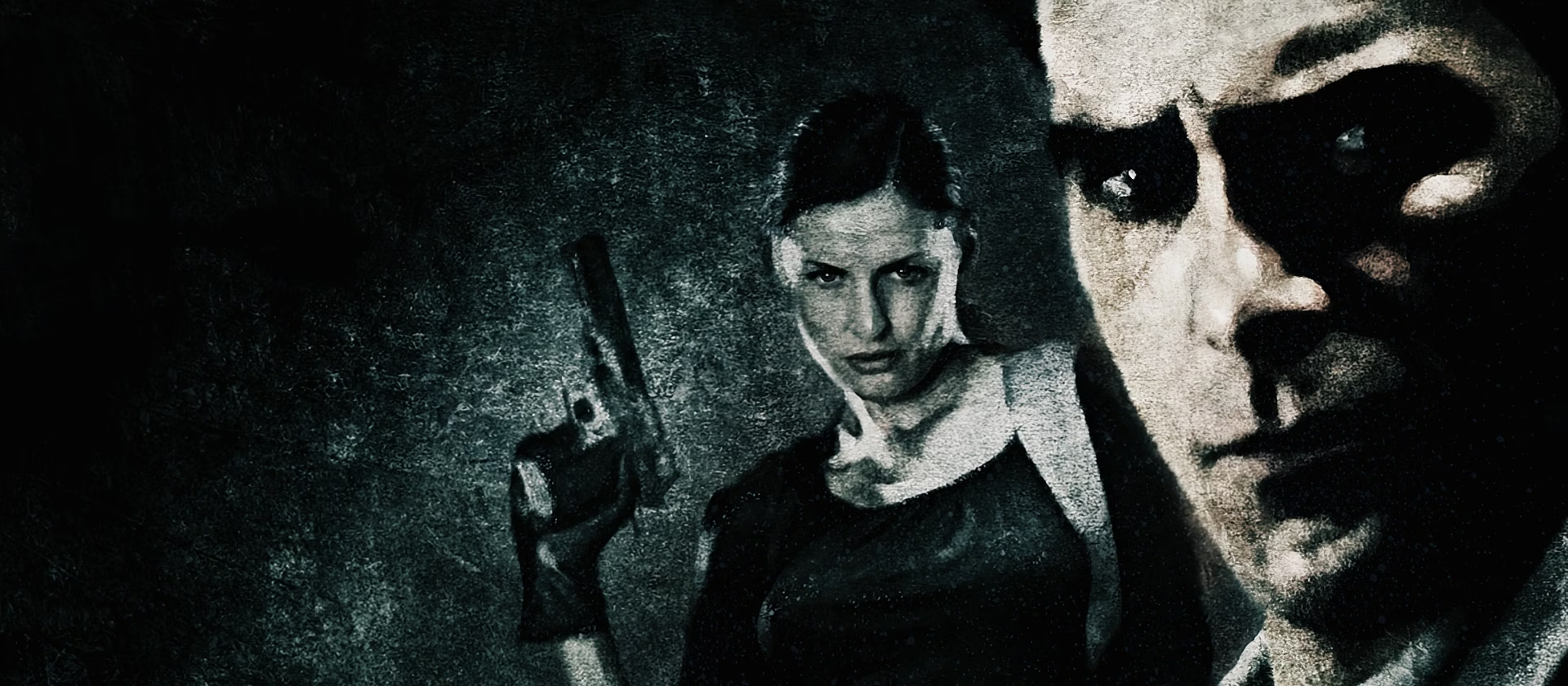
Max Payne 2: The Fall of Max Payne
A shooter about surviving the thing you wanted — bullet-time turned into grief, still the cleanest third-person action feel Remedy ever shipped.
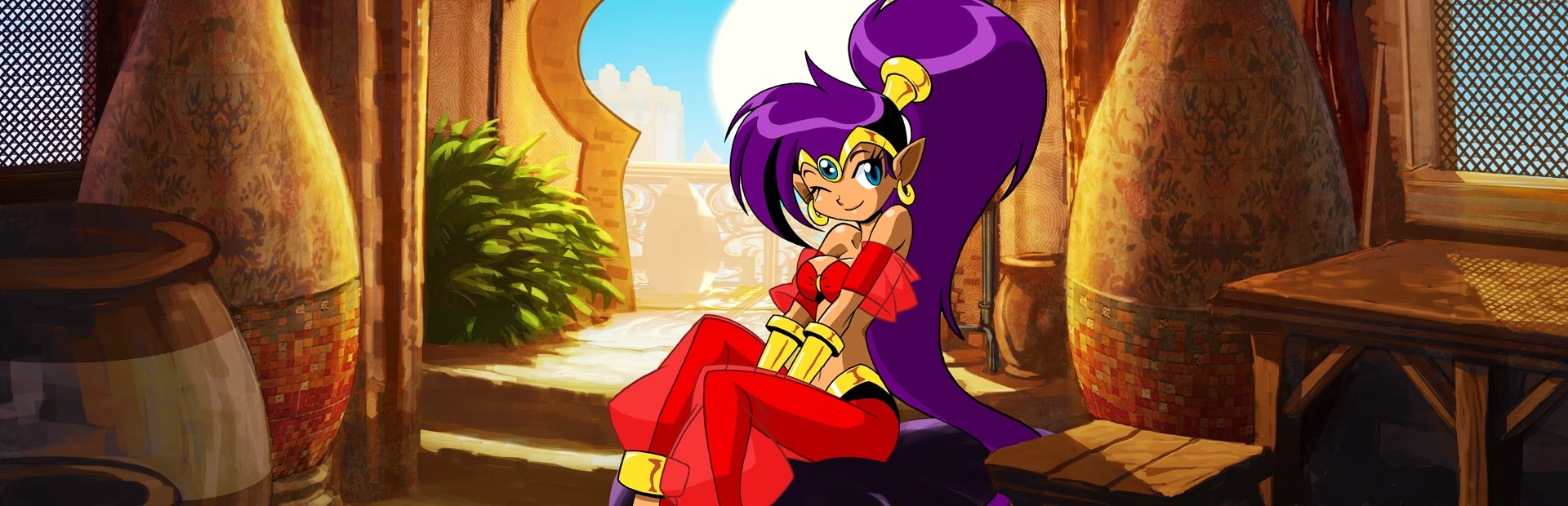
Shantae
A GBC platformer that out-animates most of the Advance's launch year — a transformation-dance metroidvania with sharper hit boxes and warmer world-building than its contemporaries.
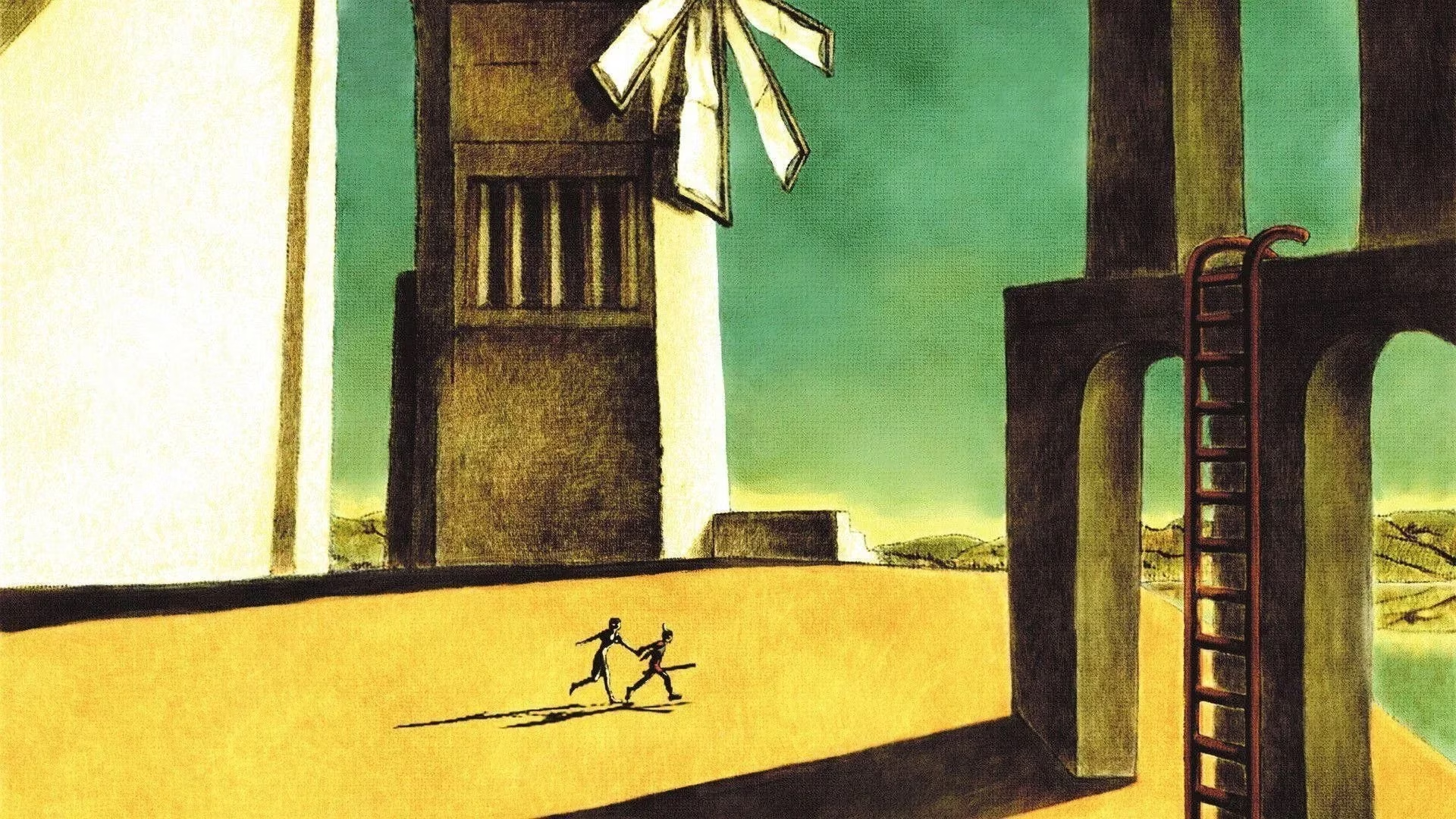
Ico
One button, one grip, one exit — Ueda's 2001 argument for video games as a medium, still unmatched in how much it trusts the player.
Perfect Dark
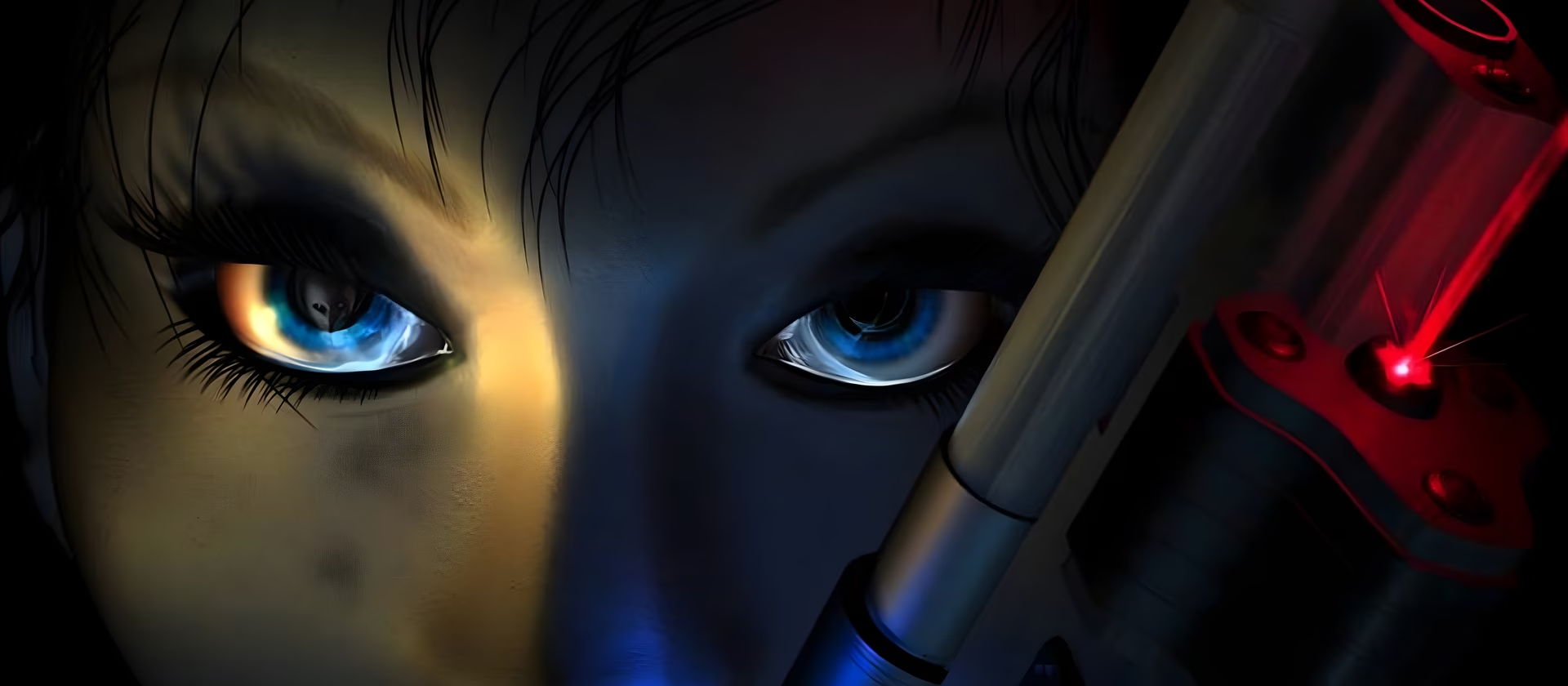
A console shooter built as a spy-simulation toybox — difficulty-specific objectives, gadgets, co-op, counter-op, bots.
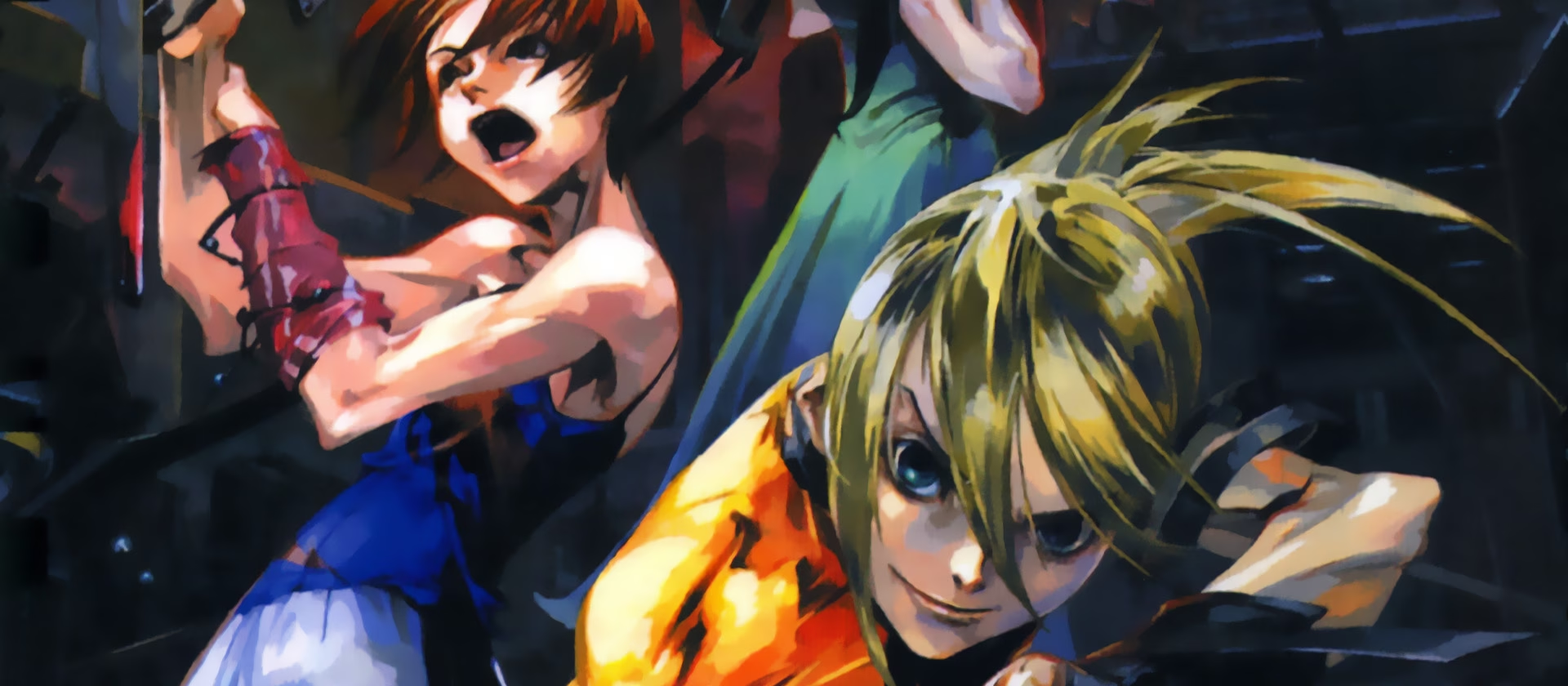
Sin and Punishment
A rail shooter where Treasure's asymmetric control scheme turns the N64 pad into a twin-stick instrument years before the convention existed — still ahead of it.
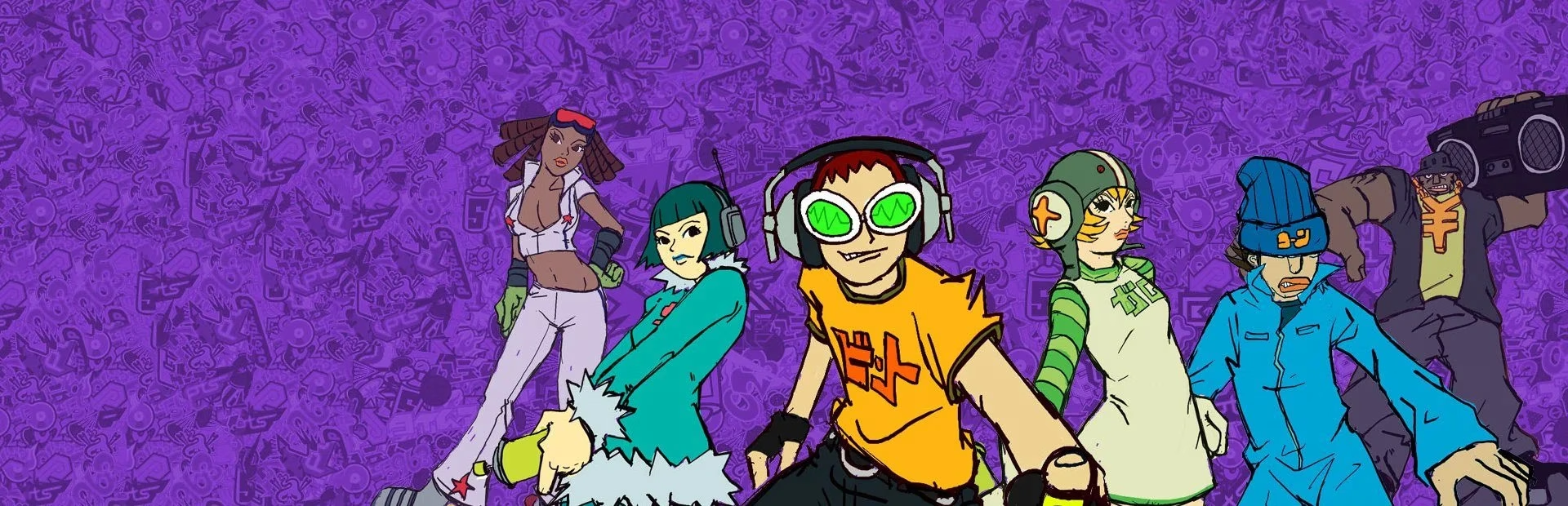
Jet Set Radio
Twenty-five years on, almost nothing has matched its coupling of motion and refusal — cel-shaded skating that still reads forward, not back.
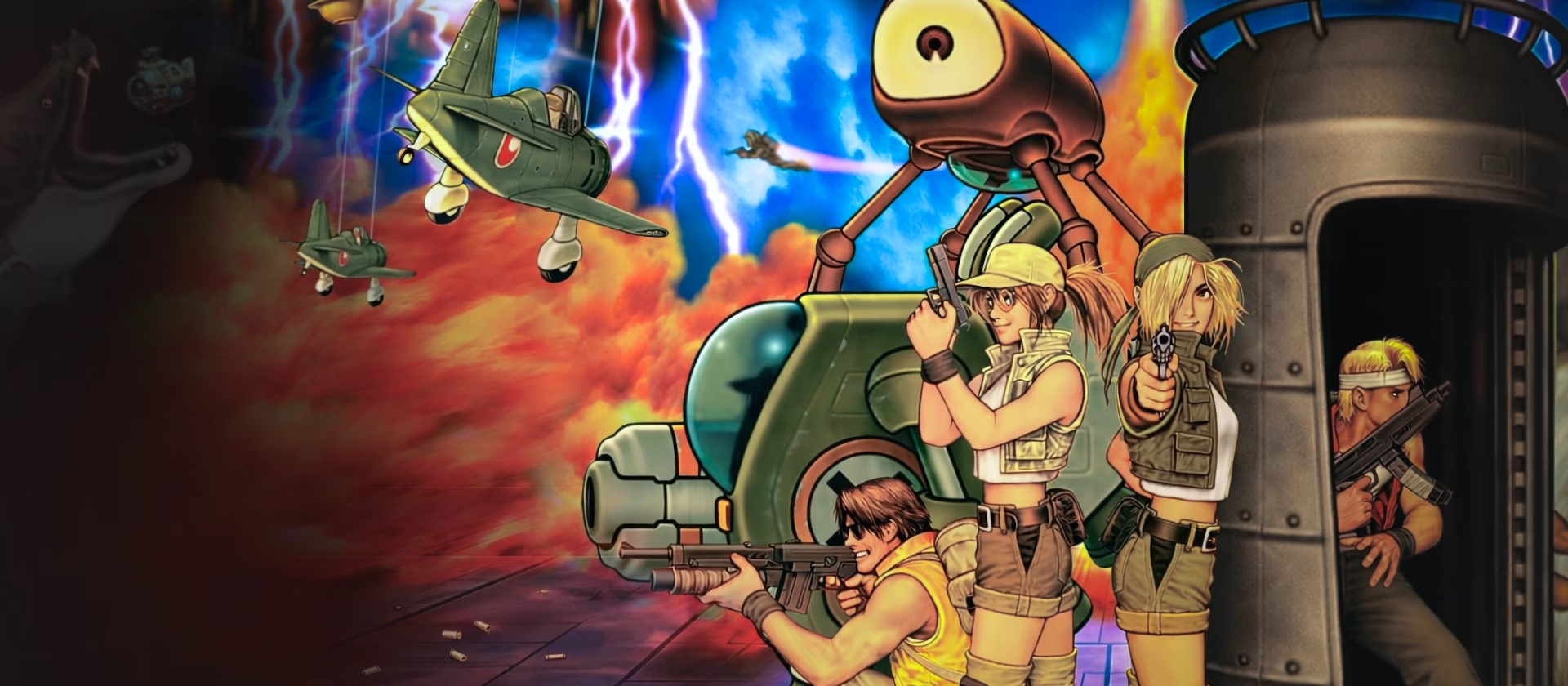
Metal Slug 3
Seven hundred megabits of hand-drawn war — SNK emptying the last drawers of 2D, on arcade-accurate ports with online co-op.
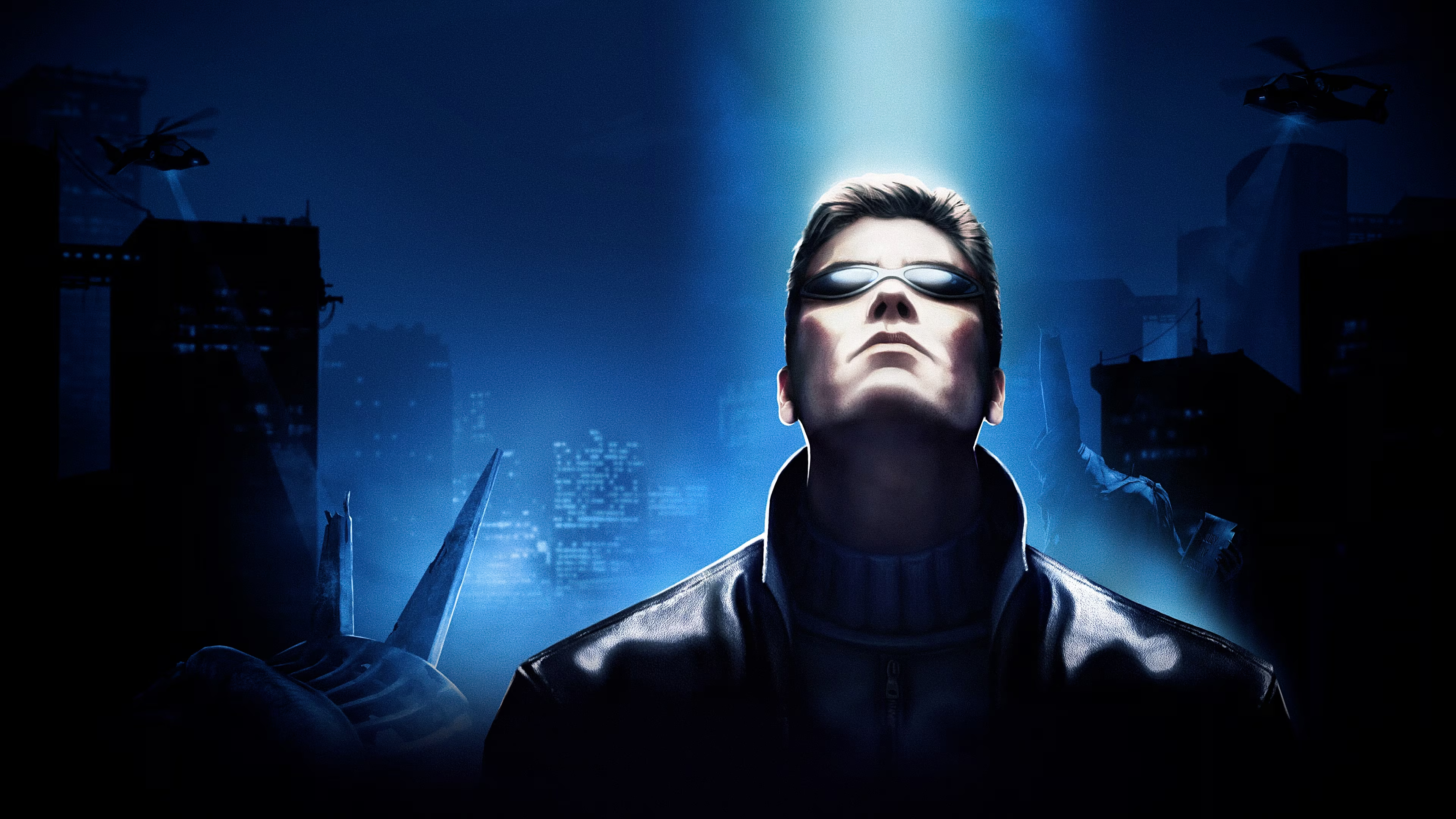
Deus Ex
An immersive sim about power lying in public — its freedoms still feel partial and expensive in a way blockbusters have forgotten how to risk.

Garou: Mark of the Wolves
A timed defensive system that pays you back in health, with rollback on Steam finally giving Garou the crowd pressure it was built to withstand.

SNK vs. Capcom: The Match of the Millennium
A pocket-sized SNK-vs-Capcom handshake co-written by Street Fighter's original author — the best crossover the series ever produced, now on Switch.
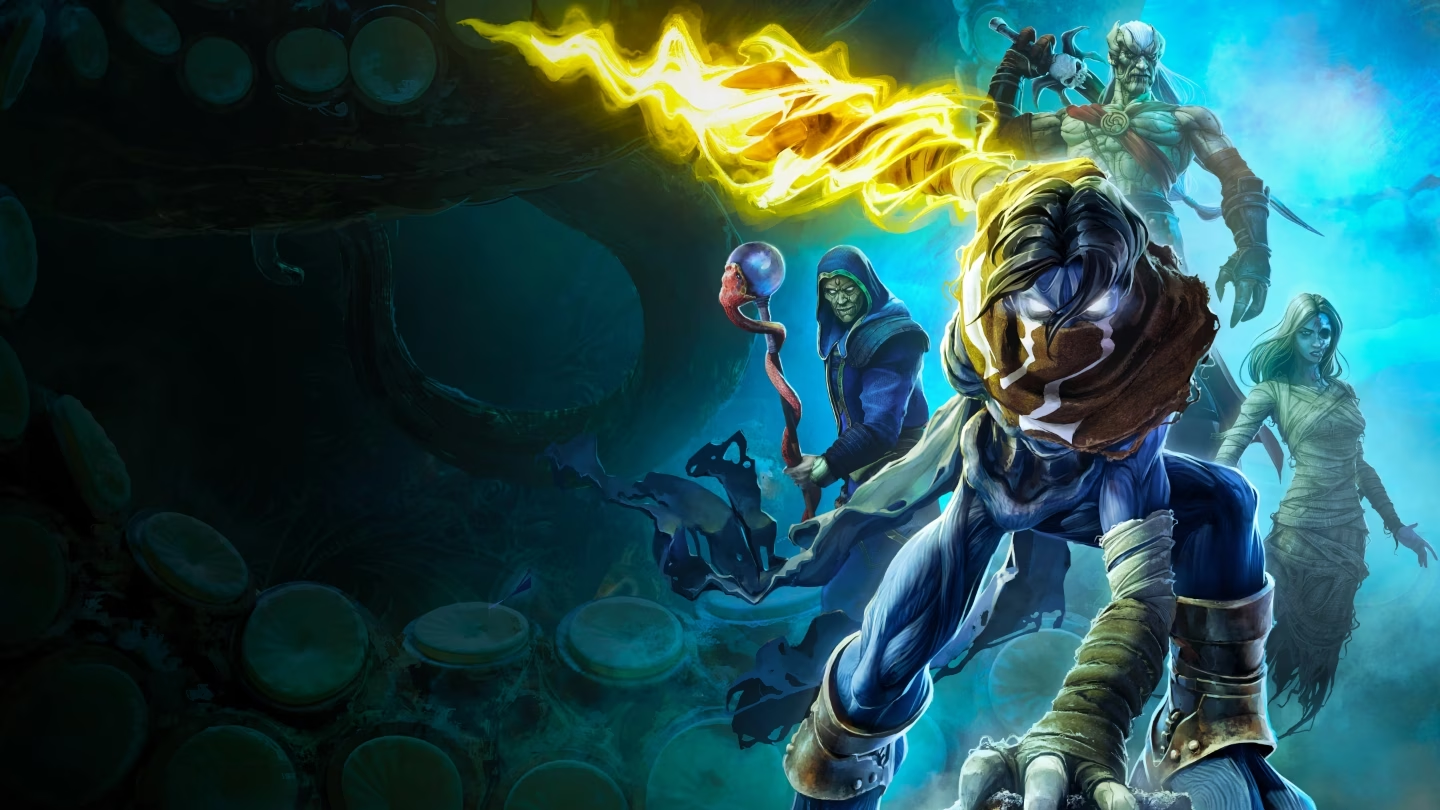
Legacy of Kain: Soul Reaver
A PS1 action-adventure shipped without its ending and with Shakespearean spite — the 2024 remaster finally lets its coherence reach new players.
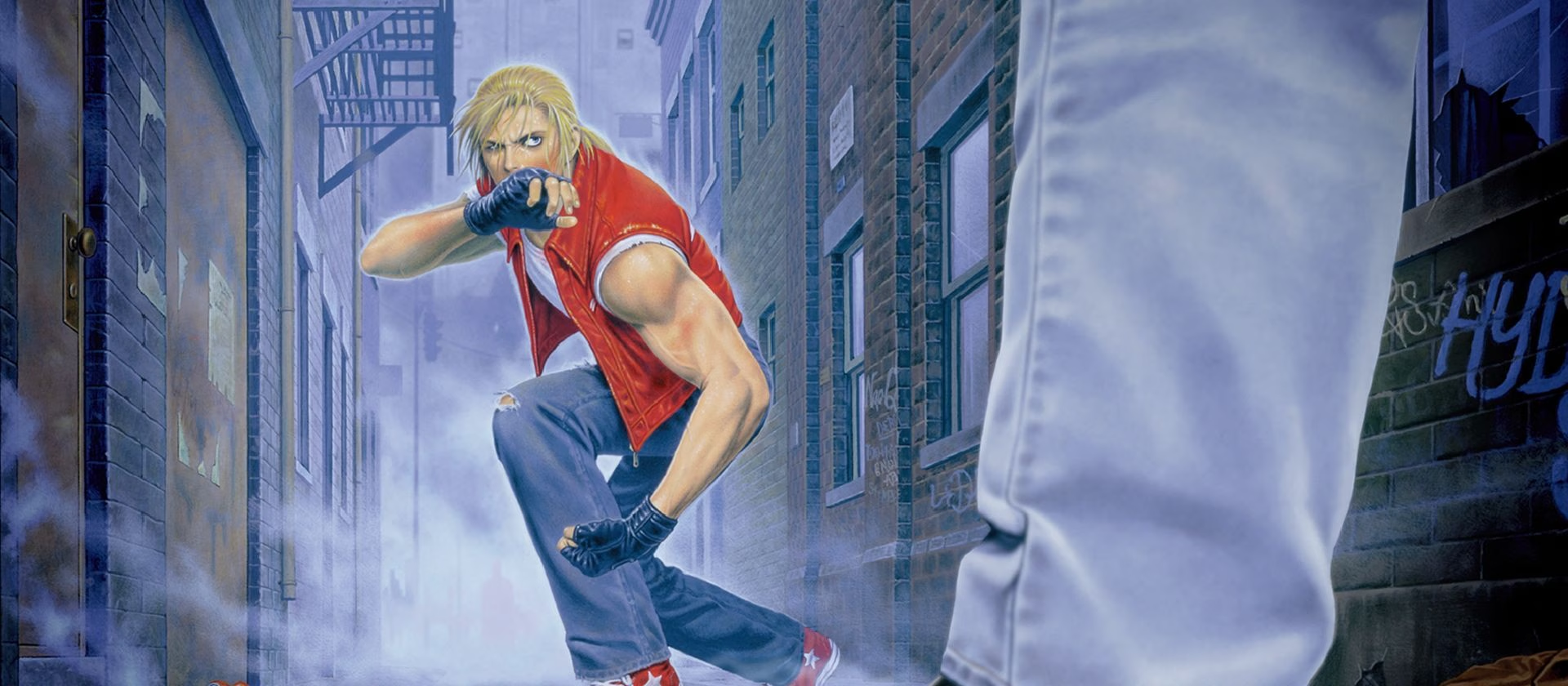
Real Bout Fatal Fury 2: The Newcomers
SNK's sharpest pre-Garou fighter turns sidestepping into a readable duel, and the Steam release gives its line-sway pressure rollback, lobbies, hitbox display, and opponents who can finally keep up.
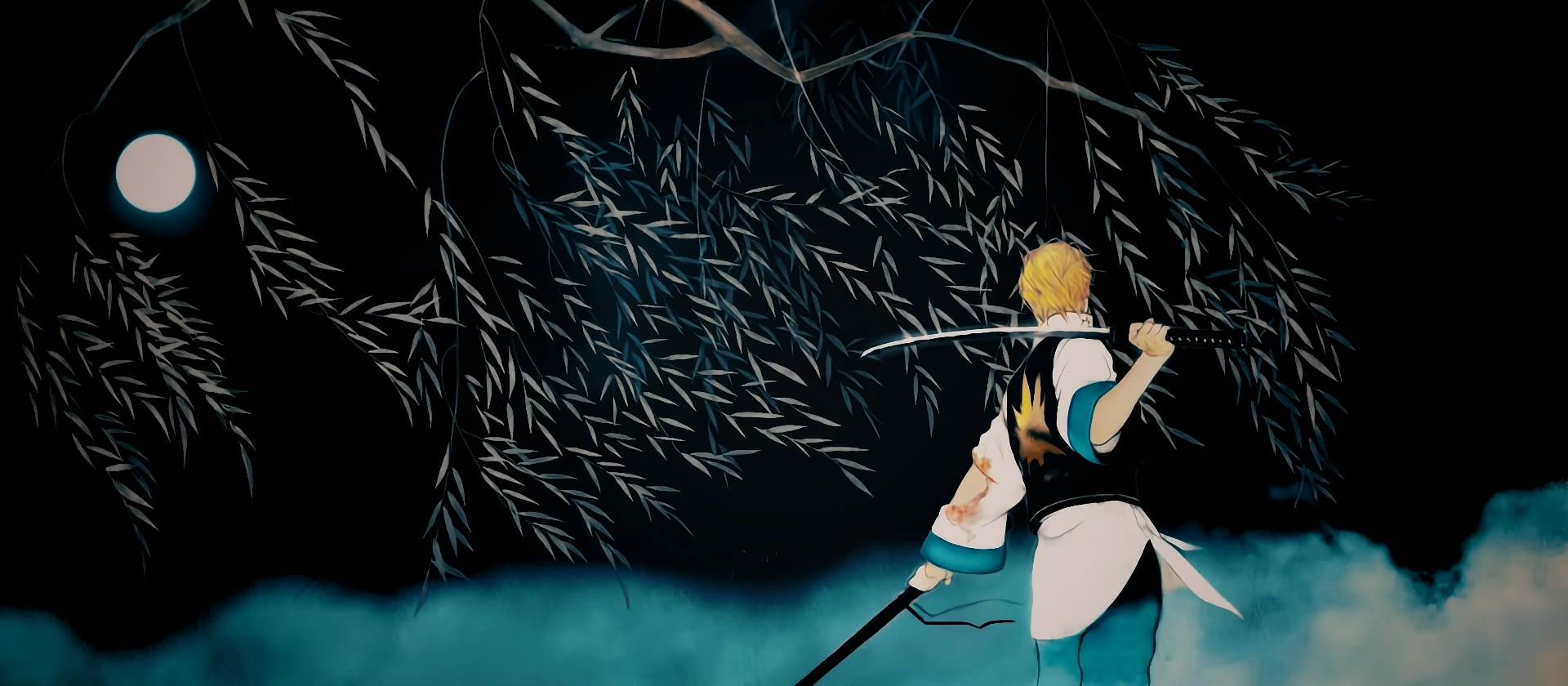
The Last Blade 2
A samurai fighter that mourned the Neo Geo while still on it — now on Steam with rollback, the elegy finally has its crowd.
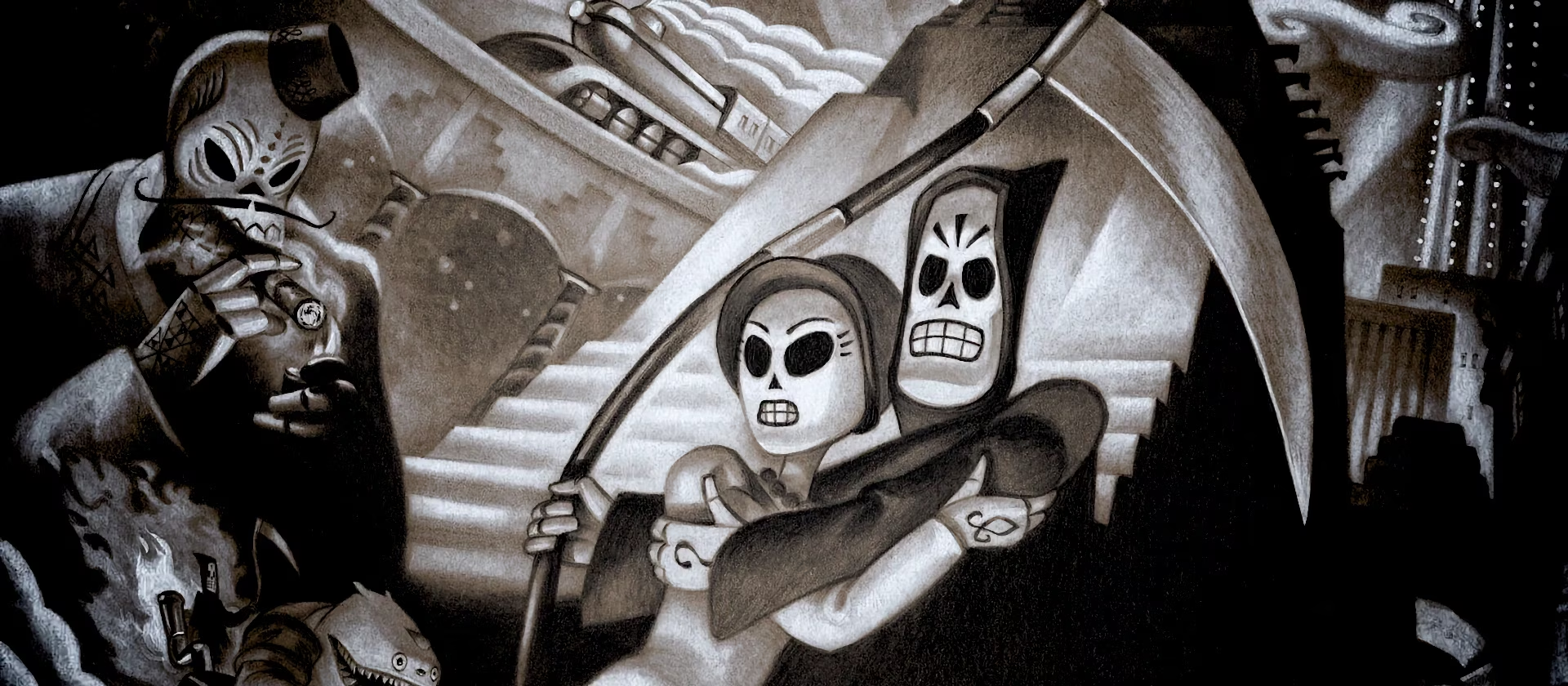
Grim Fandango
An Aztec-afterlife film-noir adventure with no peers — Schafer's script, McConnell's big-band score, a world no modern budget would greenlight.
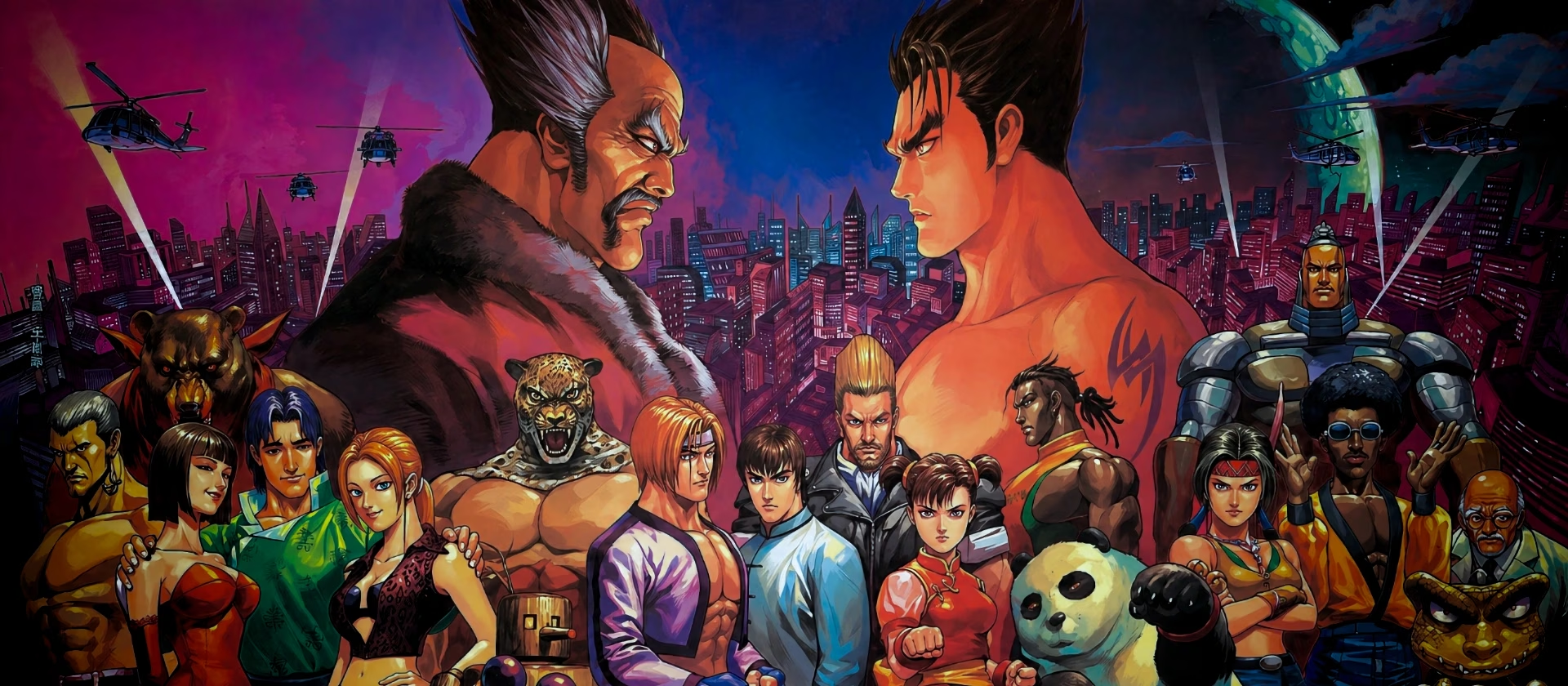
Tekken 3
The sidestep gave 3D fighting a third axis on hardware that couldn't really afford it — Tekken 3's cadence still lands before nostalgia can excuse it.

The Curse of Monkey Island
The point-and-click peak — hand-drawn frame by frame, scored with iMUSE, the form at its most polished three decades after the market stopped listening.

Policenauts
A shooting range that holds your gun back until the villain has earned your rage — the Kojima auteur method calibrated in public, before MGS.
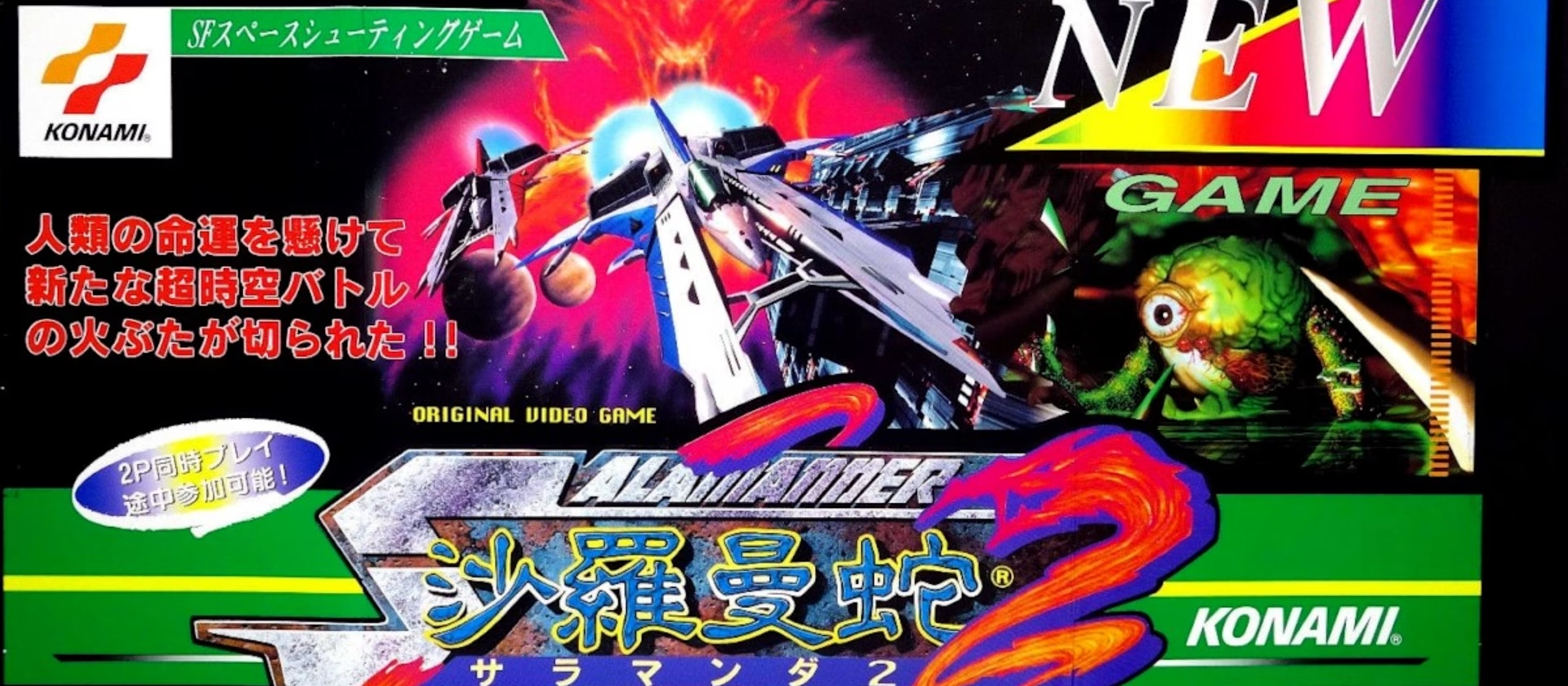
Salamander 2
Mariko Tokida's serpent-toothed Biter ambushes the Vic Viper in pre-rendered colour — Konami's most accessible Salamander, finally restored worldwide by M2 in 2025.
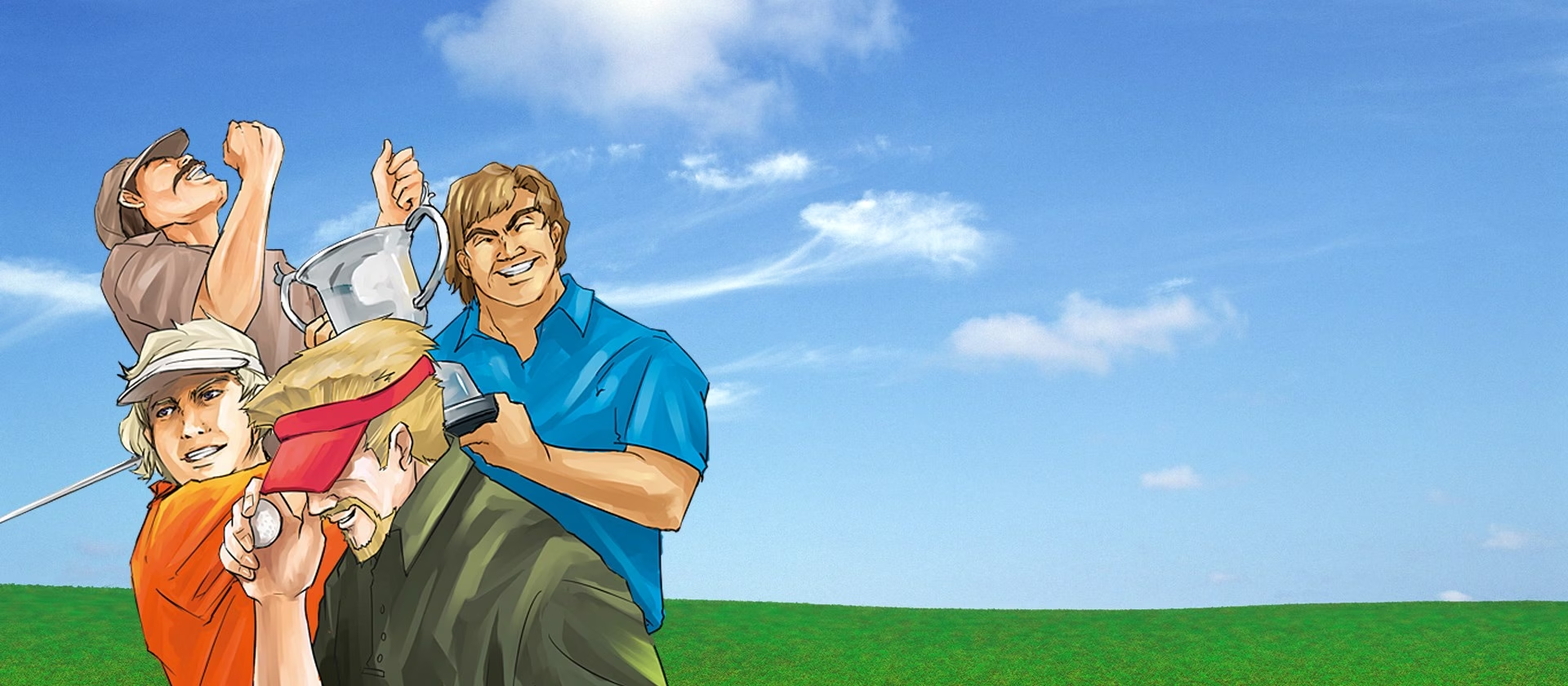
Neo Turf Masters
A sports game with the nerve of an action game — instant controls, harsh terrain, and rounds short enough to make one more attempt irresistible.
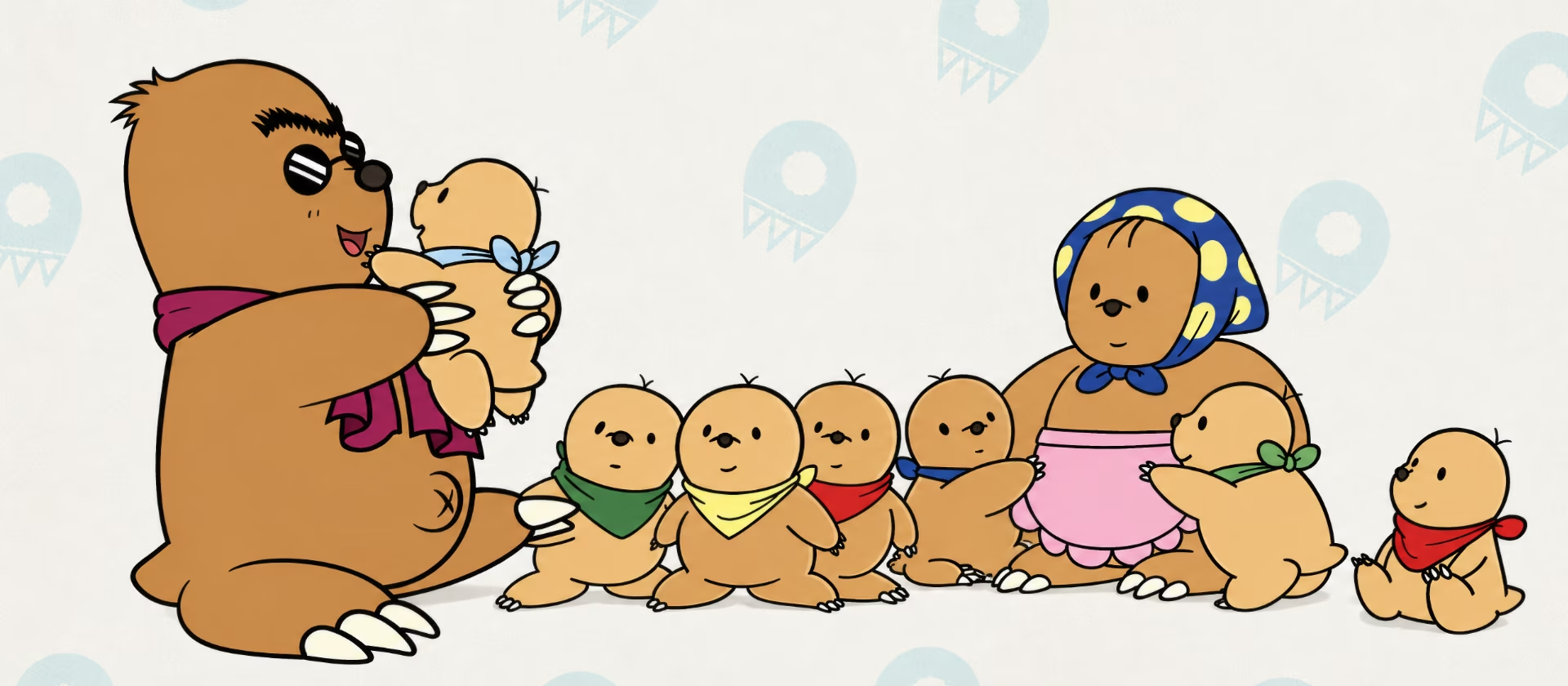
Mole Mania
A 1996 Miyamoto puzzle game that slipped out the week the N64 launched — a fan DX patch finally gives it the colour it was denied.
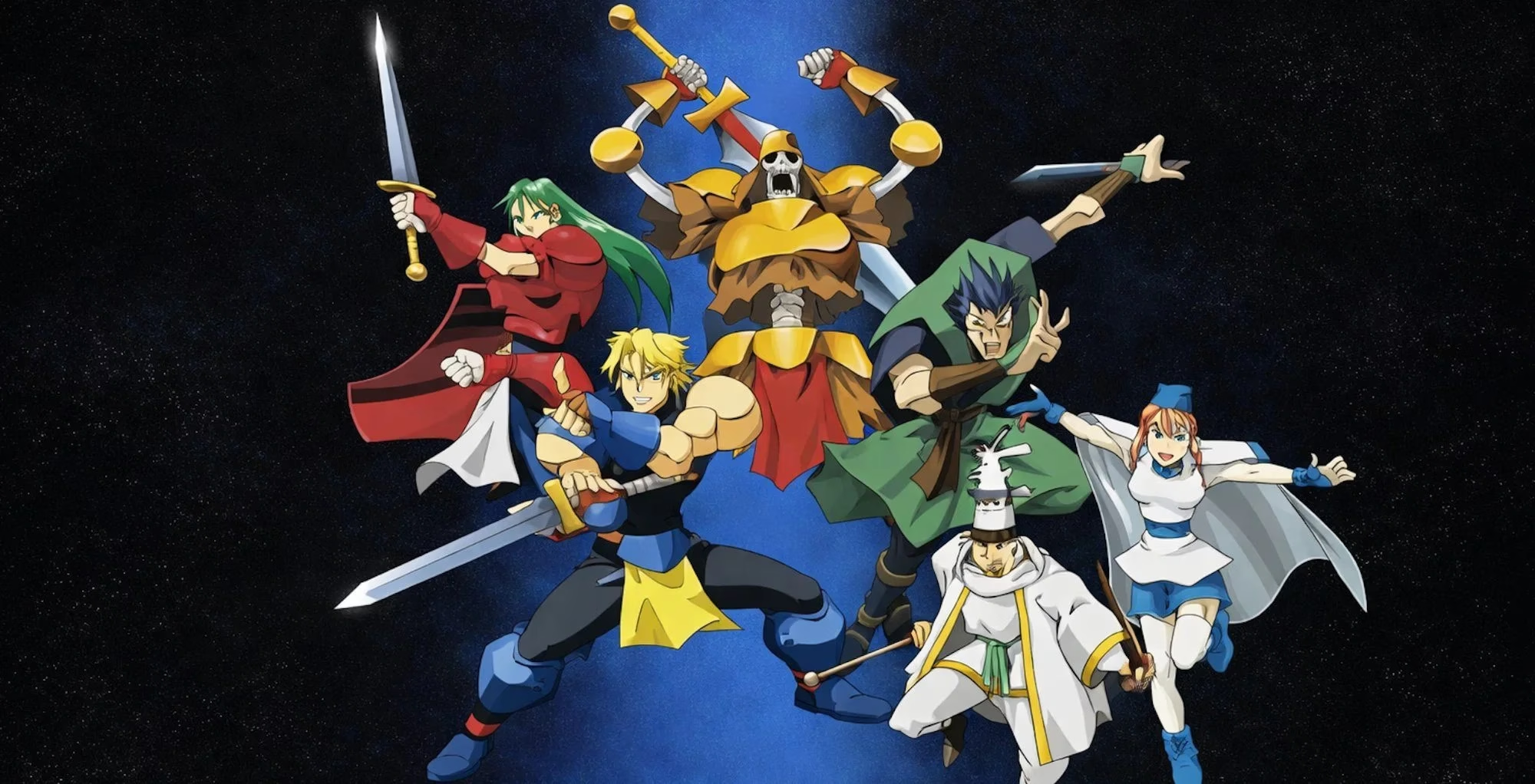
Guardian Heroes
A branching 2D brawler with 40 endings, buried for years on a dying console — the backcompat port finally gives the fighting system its audience.
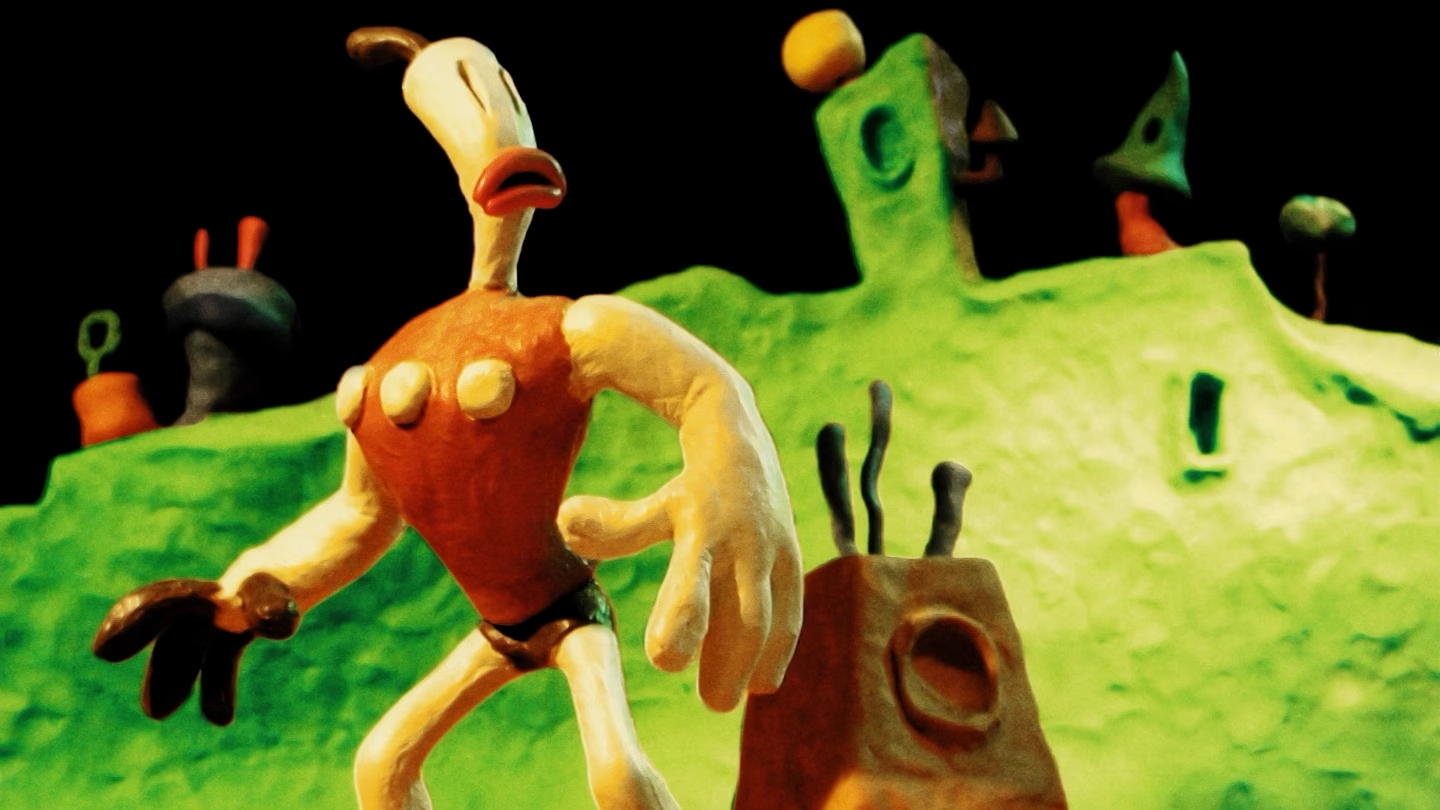
The Neverhood
Three tons of clay, one thumb-printed world — ScummVM finally runs it cleanly on modern Windows, and nothing else looks or feels anything like it.

Suikoden
A political RPG that respects your evening: fast battles, short chapters, visible headquarters growth, and a cast large enough to feel national without making the player carry an encyclopedia.
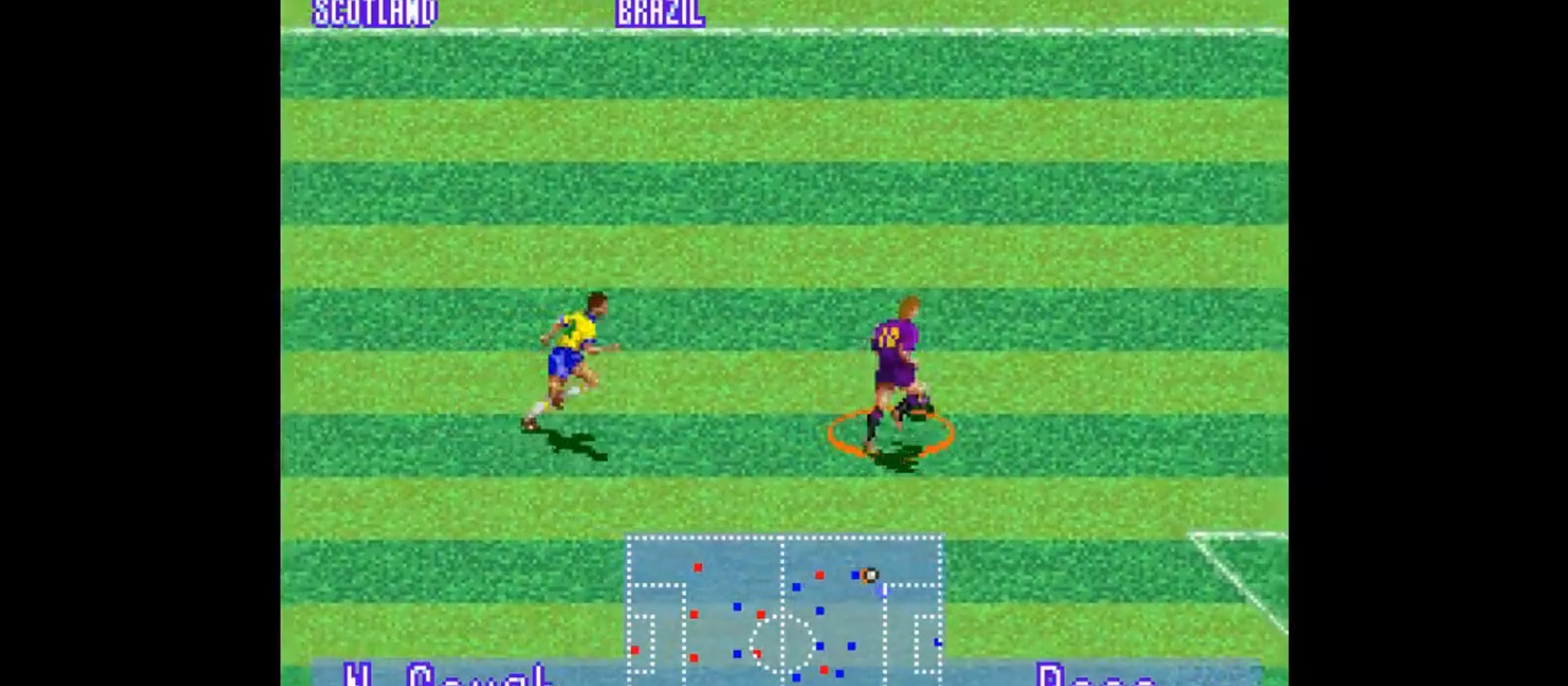
International Superstar Soccer Deluxe
Hold sprint, thread a one-touch pass, and the keeper spills a save into a six-yard scramble — football at the tempo modern simulations have animation-locked out of existence.
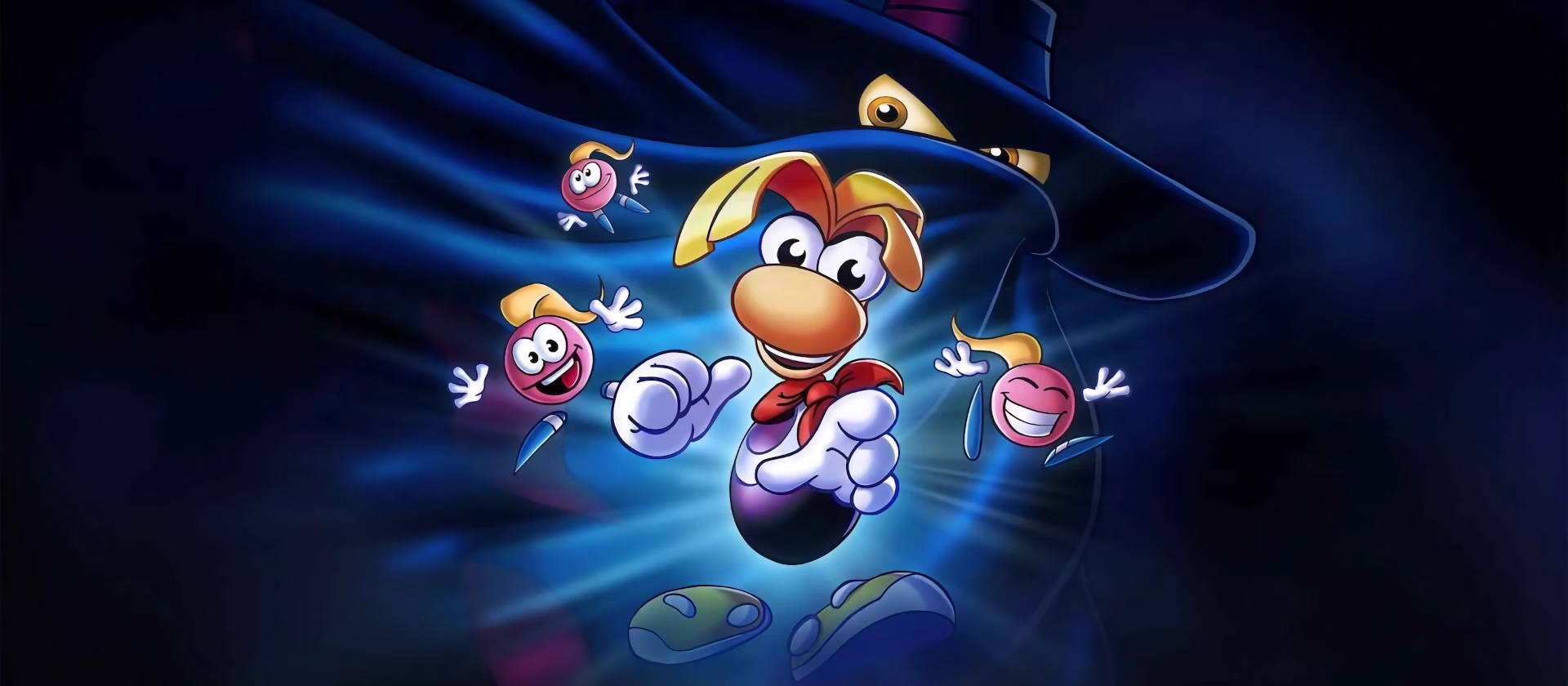
Rayman
Every frame hand-painted at 60Hz — Rayman's difficulty is composed rather than inherited, and Digital Eclipse's anniversary edition finally lets the originals sit side by side.
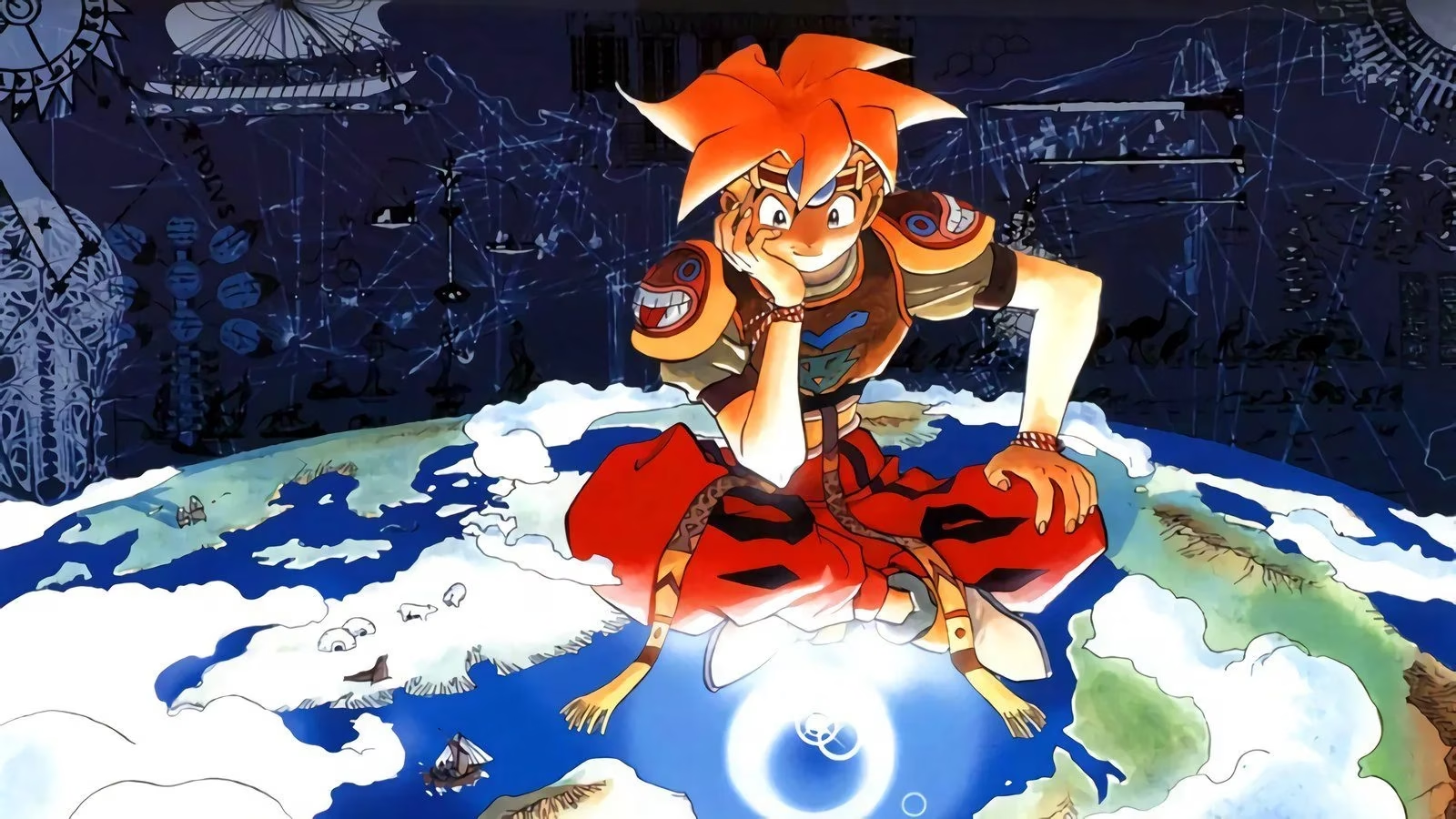
Terranigma
An action RPG where you play the god and live with the cost — Quintet's finest 16-bit work, never officially released in North America.
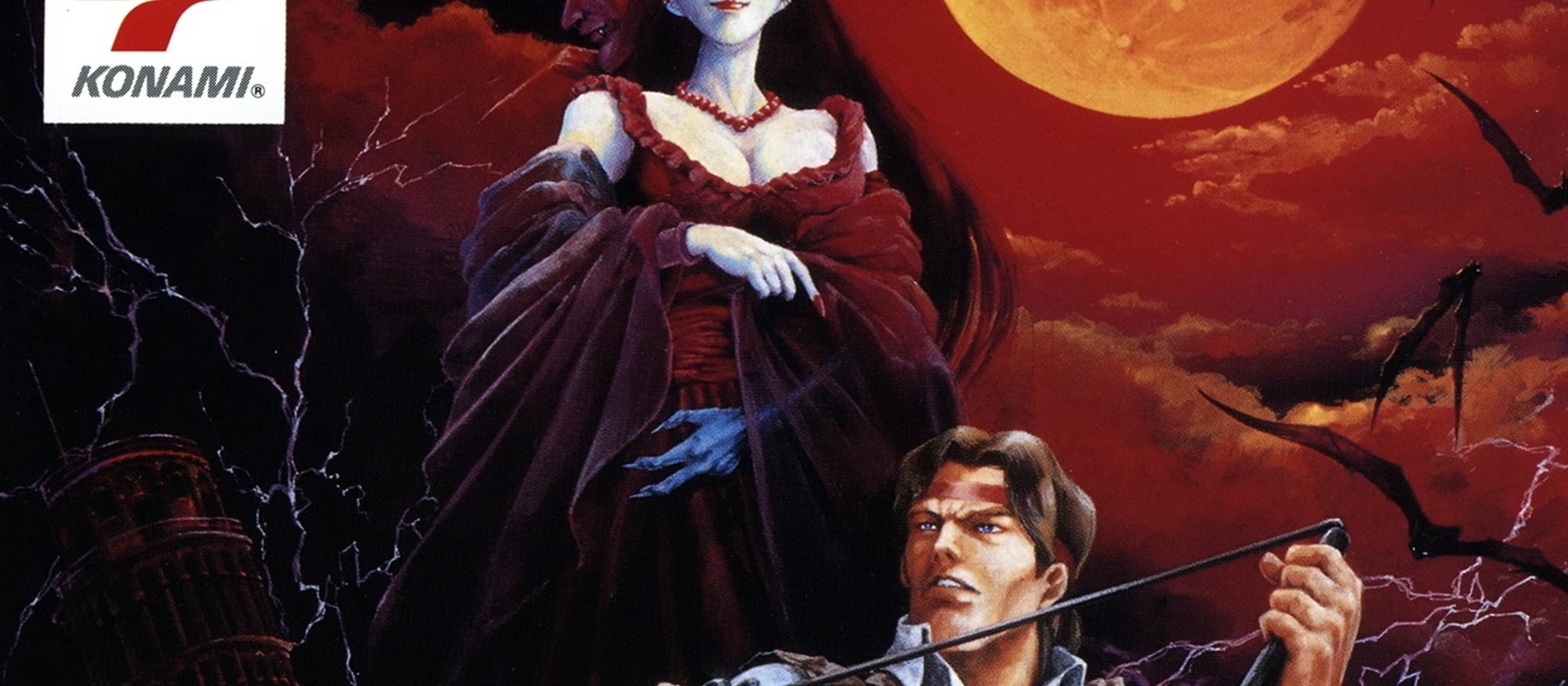
Castlevania: Bloodlines
A whip in one hand, a spear in the other, six stages from a Romanian ruin to Versailles — Konami's Castlevania left the castle and got faster.
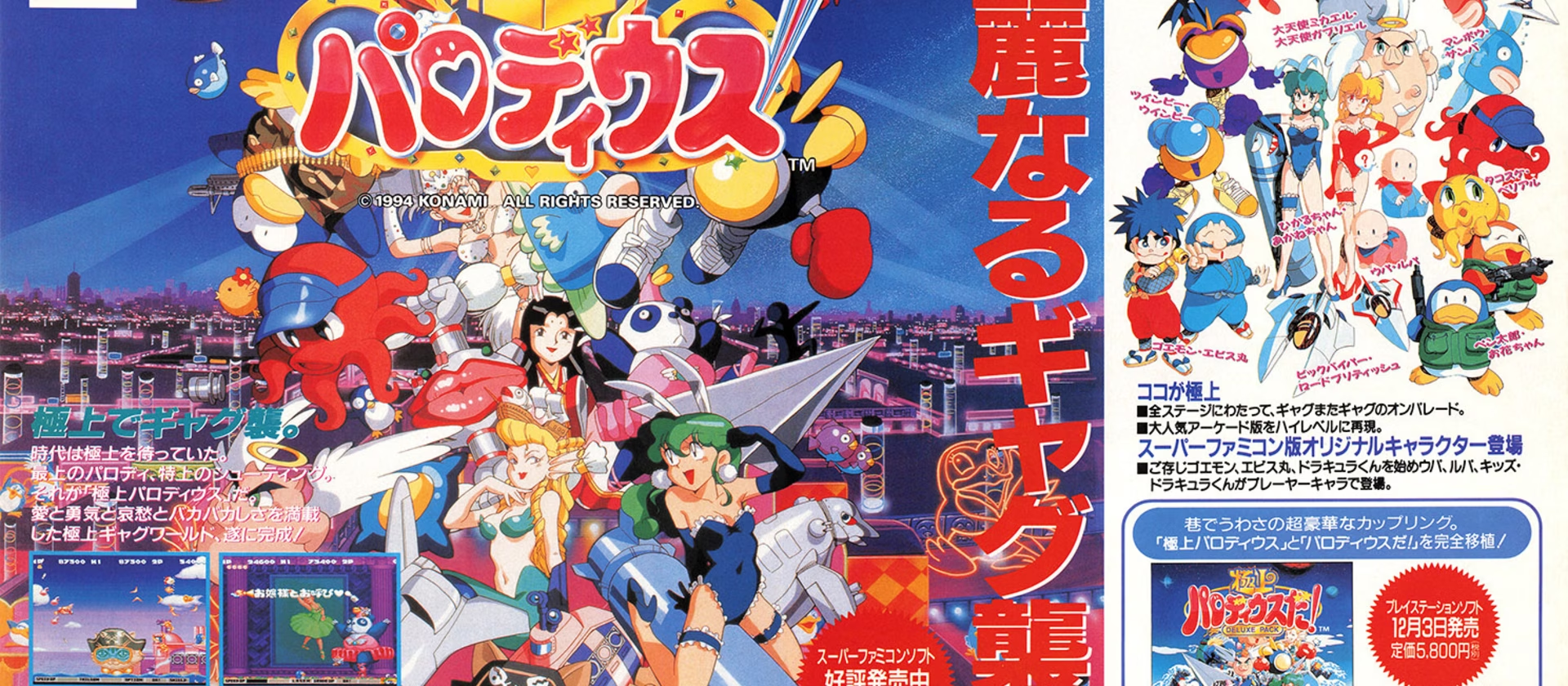
Gokujō Parodius
Eight characters with asymmetric weapons fan into a 1994 arcade built like a cabaret floor — the loudest, most generous co-op shmup of the era.
Sparkster
Two sequels, eight days, one cartridge that still rewards a Contra reflex: manual charge, projectile sword, vertical stages, a top-down detour that remembers Gradius.

System Shock
Nothing else plays with this much hostile memory.
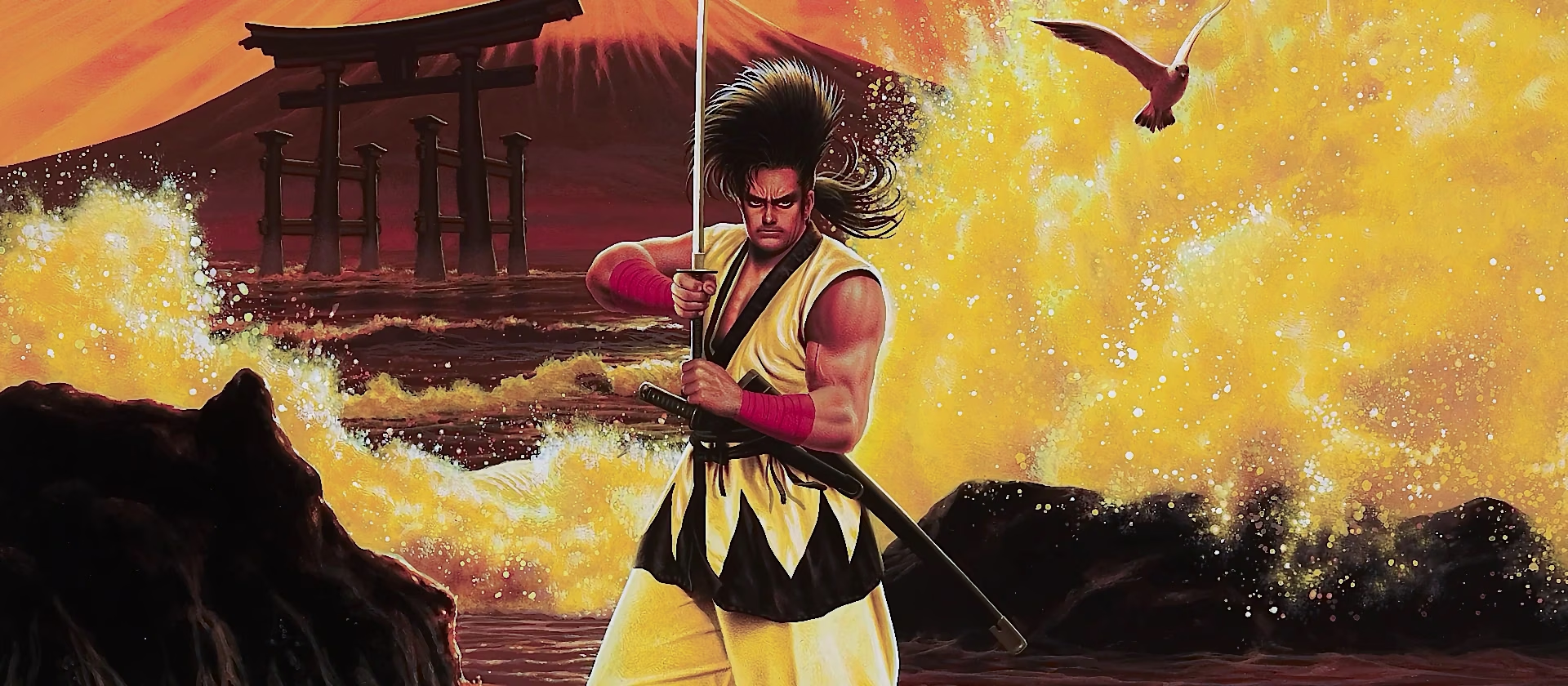
Samurai Shodown II
A 1994 fighter still unlike anything the genre has made since — one-hit strikes, a joke-turned-rage-gauge, and a wabi-sabi hush where arcades should shout.
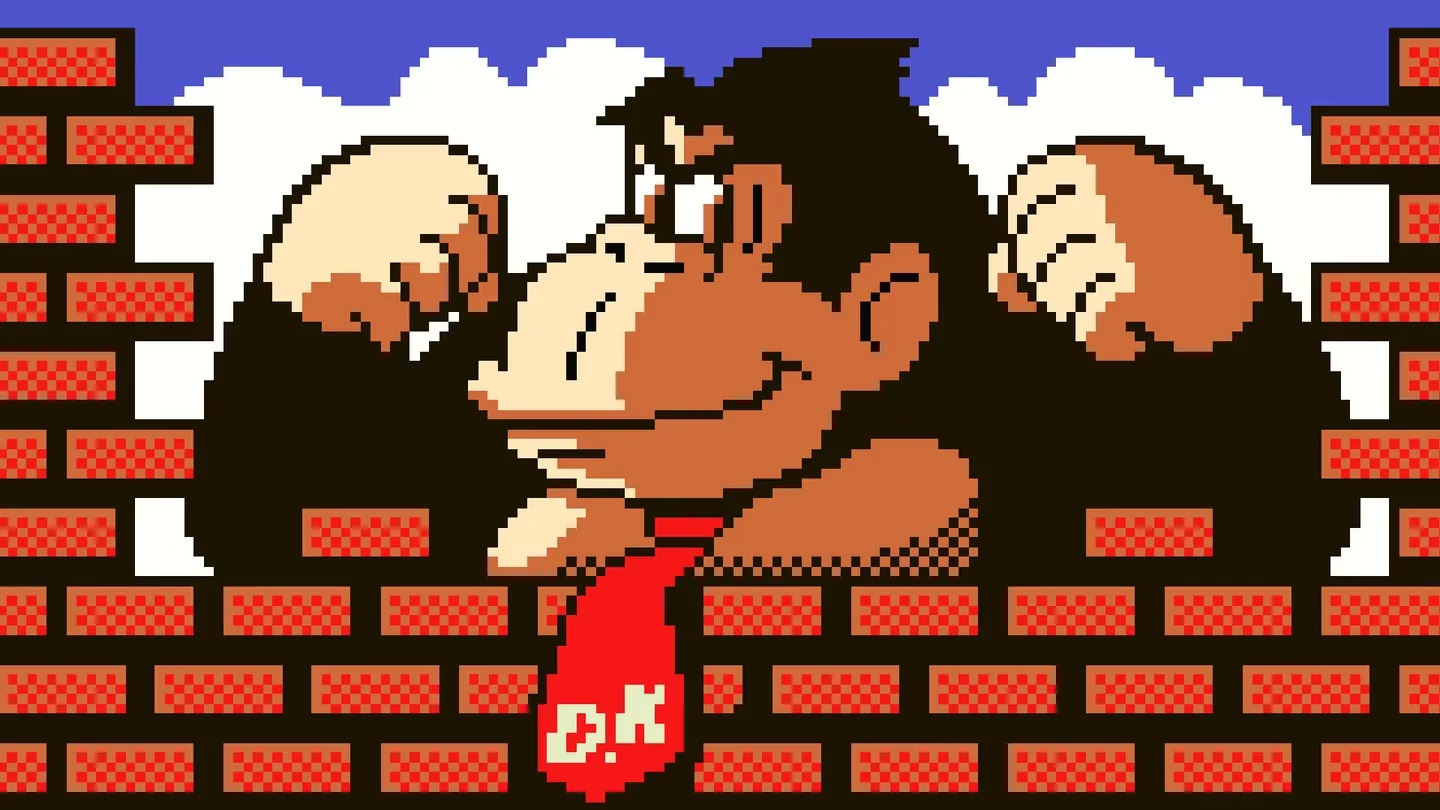
Donkey Kong
The 1994 Game Boy puzzle-platformer that invented half of Mario 64's vocabulary in four-screen miniatures — still the genre in its tightest, clearest form.
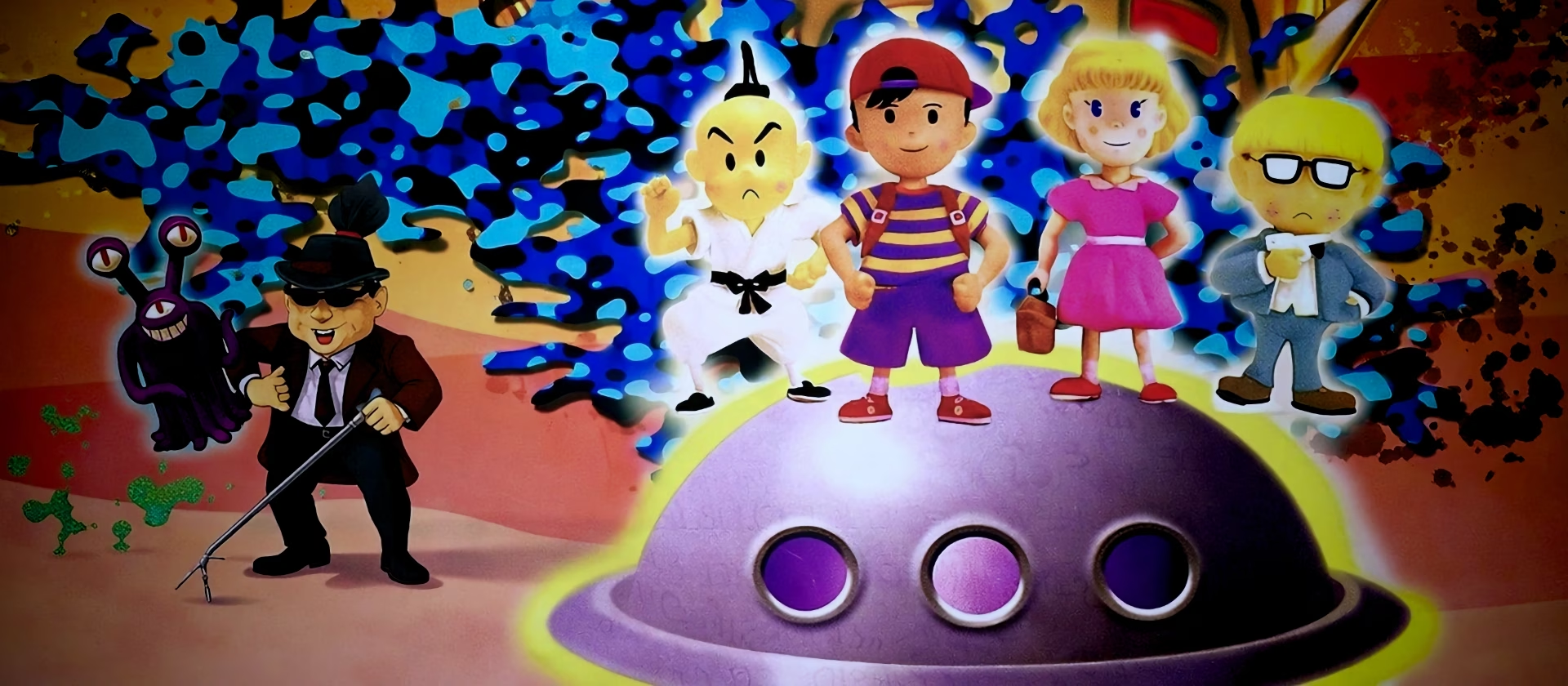
EarthBound
A 1994 RPG built from suburbia, advertising copy, and cosmic horror — still one of the strangest, funniest, most sincere games Nintendo ever shipped.
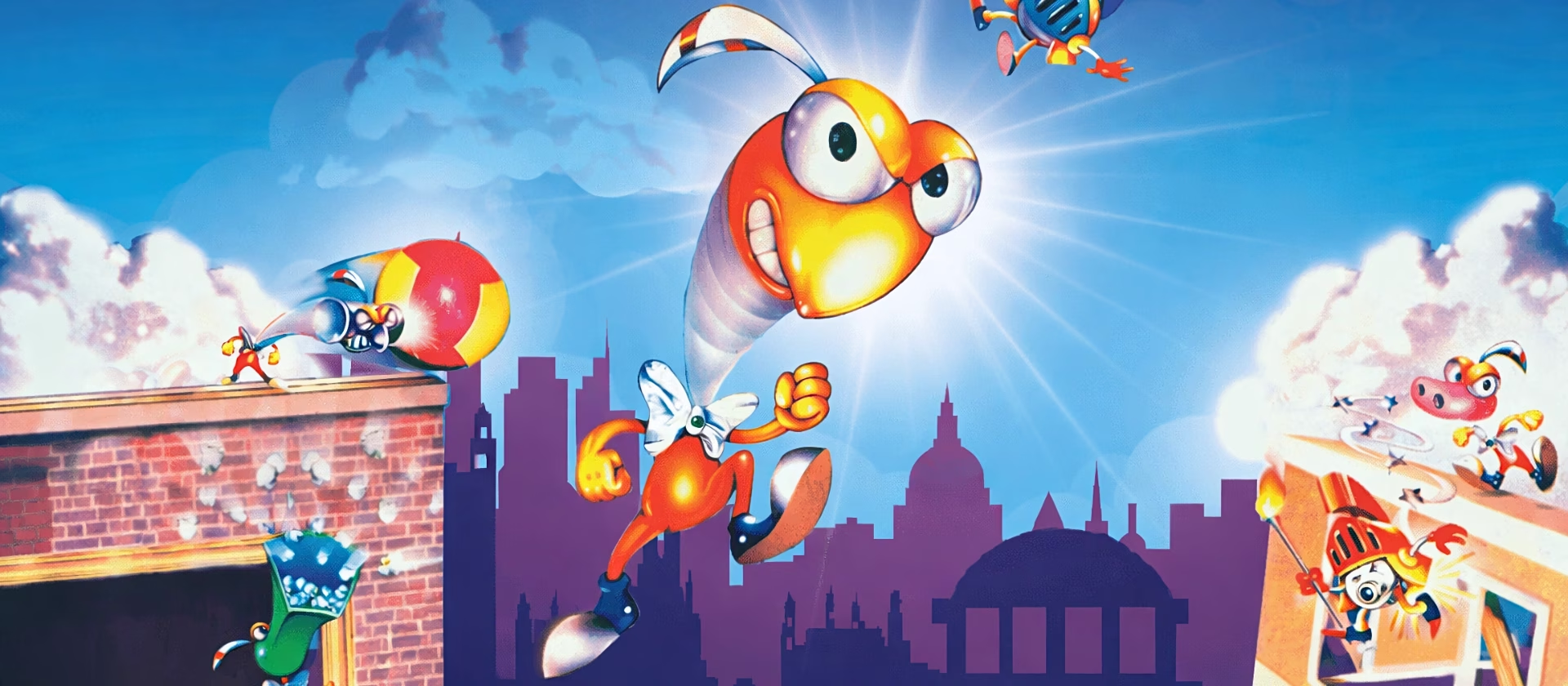
Dynamite Headdy
Treasure's collapsing-theatre platformer — every stage refuses to hold still, and the Japanese ROM is still the version to play.
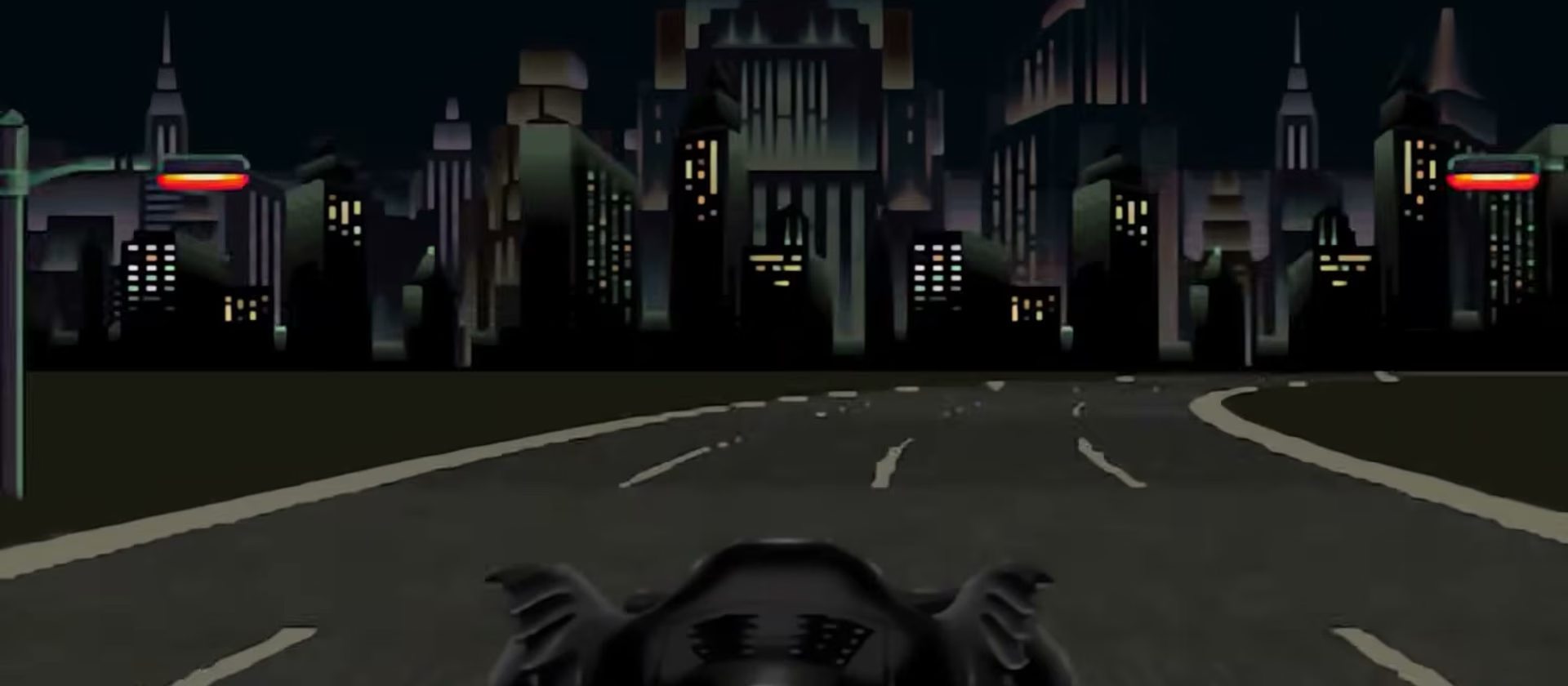
Batman Returns
Pin two clowns, smash their heads together, walk on.
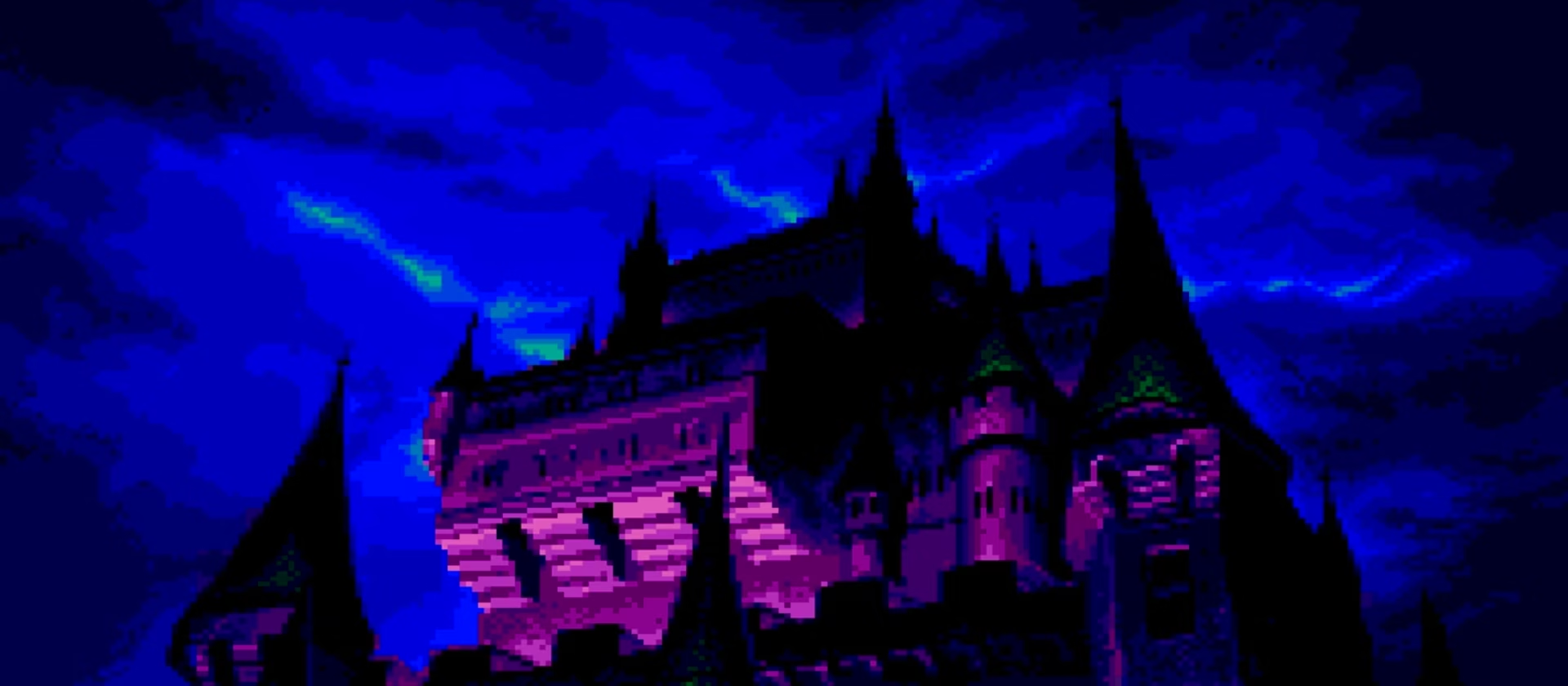
Castlevania: Rondo of Blood
Richter on the burning village's threshold over CD-Redbook Bloodlines — the first Castlevania choreographed for cinema, still the franchise's tightest seventy-five minutes.
Violent Storm
A train conductor swings an electric ticket-punch while a sampled choir shouts BREAK OUT — Konami's final brawler, scored by the composer about to leave for Square.

Tiny Toon Adventures: Buster Busts Loose!
A dash gauge that turns horizontal sprint into vertical climb, six episodes that never repeat a format, and a true ending hidden behind Challenge mode.
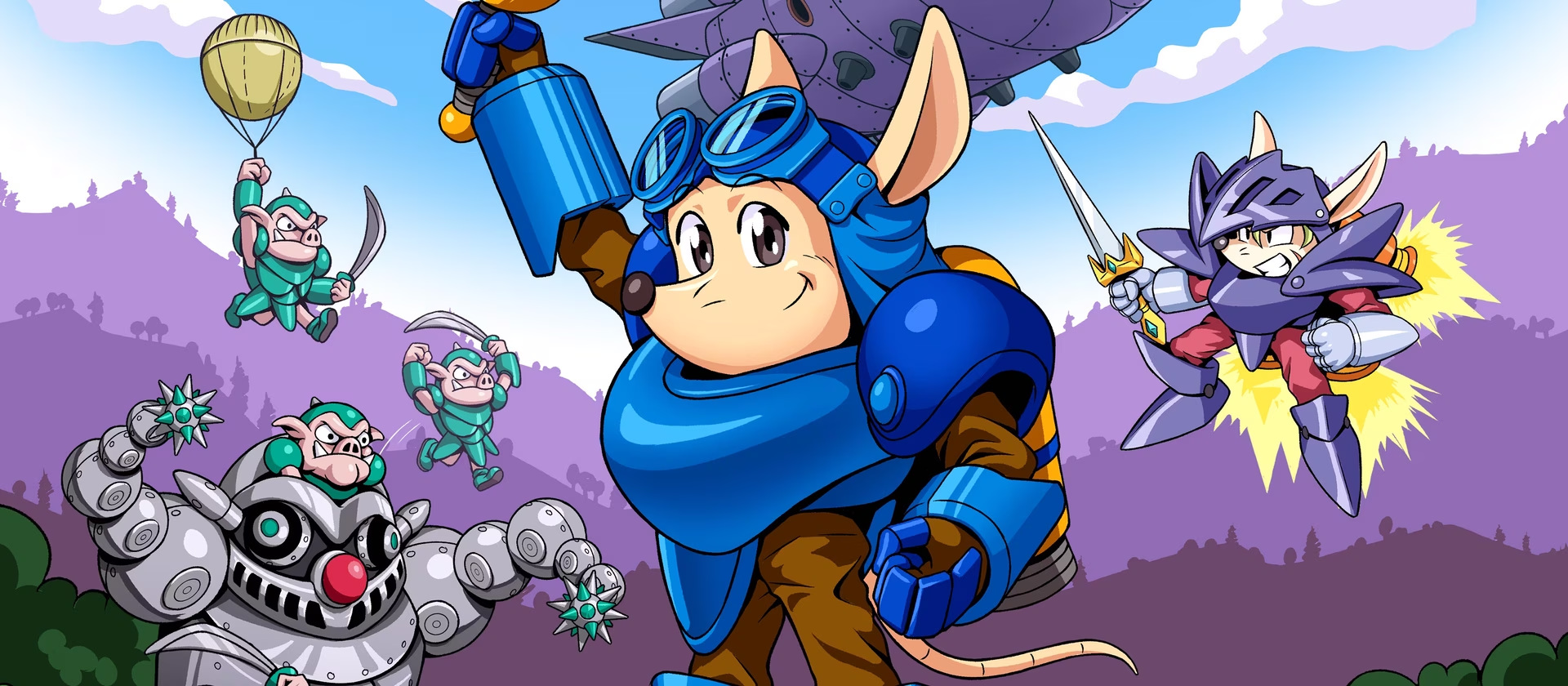
Rocket Knight Adventures
Charge the rocket, pick an angle, bounce clear.
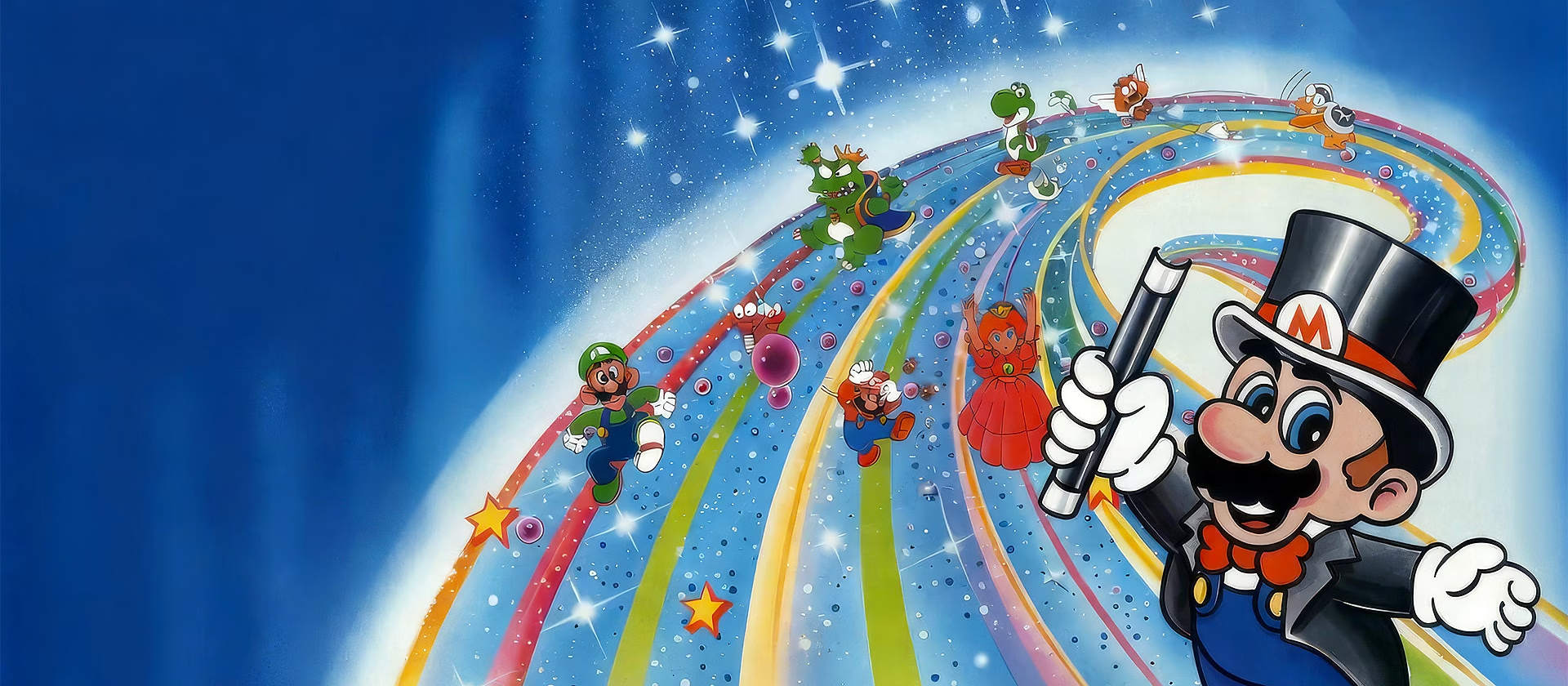
Super Mario All-Stars
It lets a modern player feel four foundational platformers as designed objects rather than homework, with save files and generous presentation clarifying the craft without sanding away the bite.
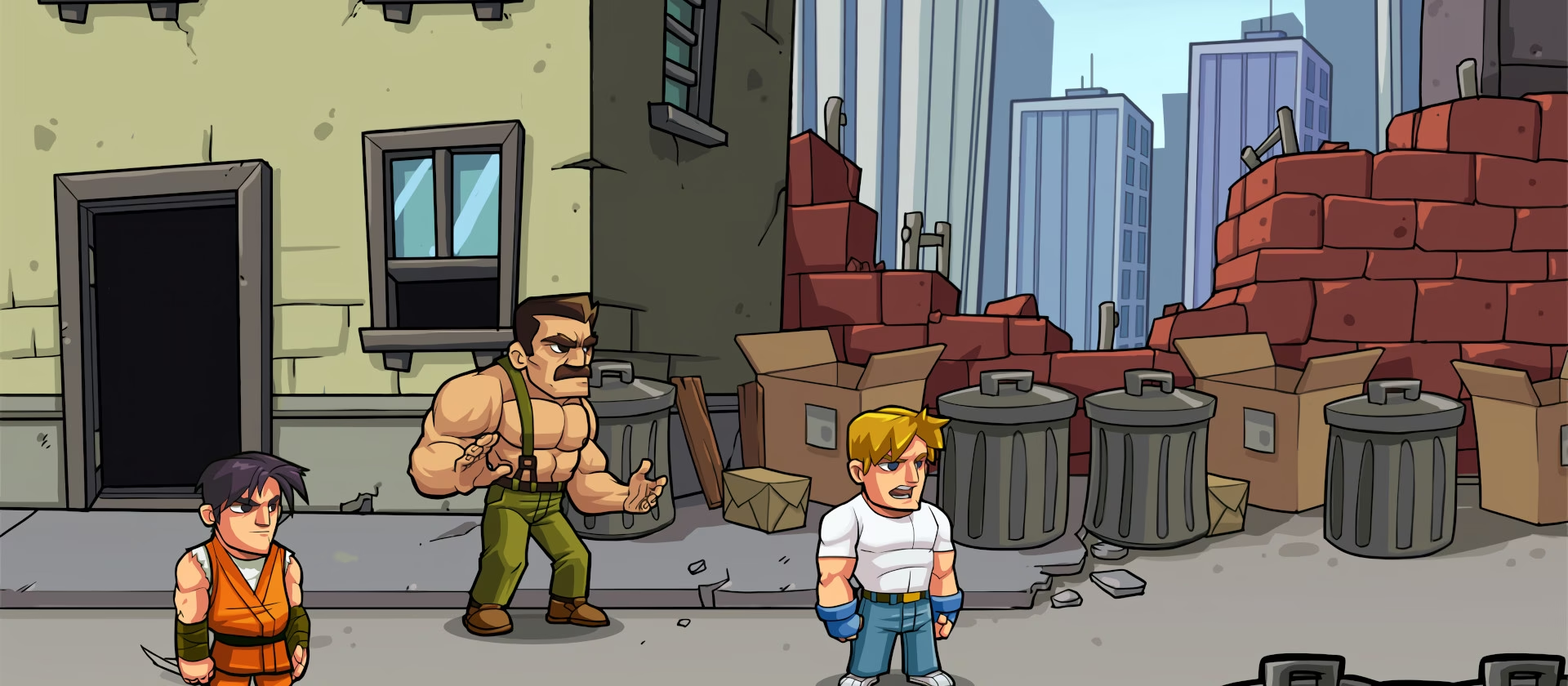
Mighty Final Fight
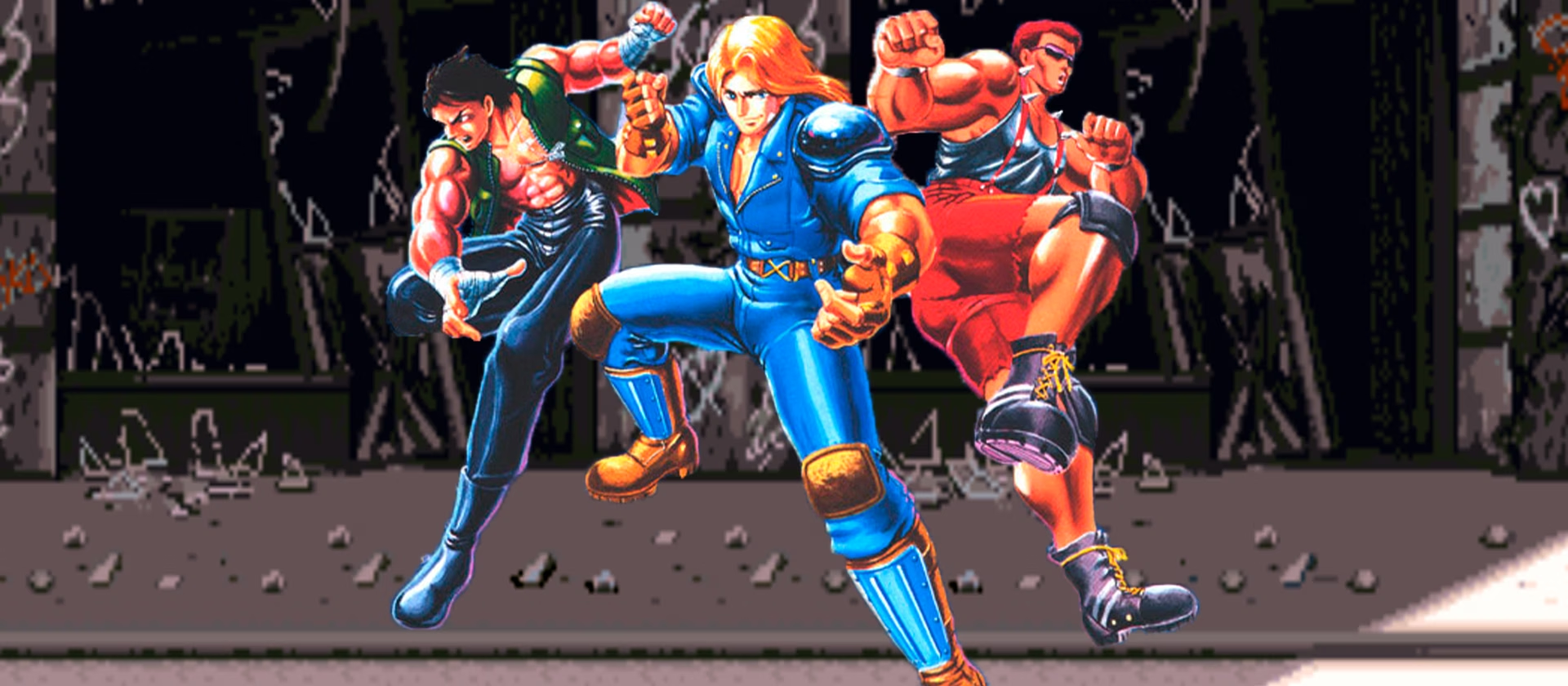
Chibi was the disguise that made the room — three characters, original level design, a Double Dragon XP curve: the arcade Final Fight on a Nintendo.
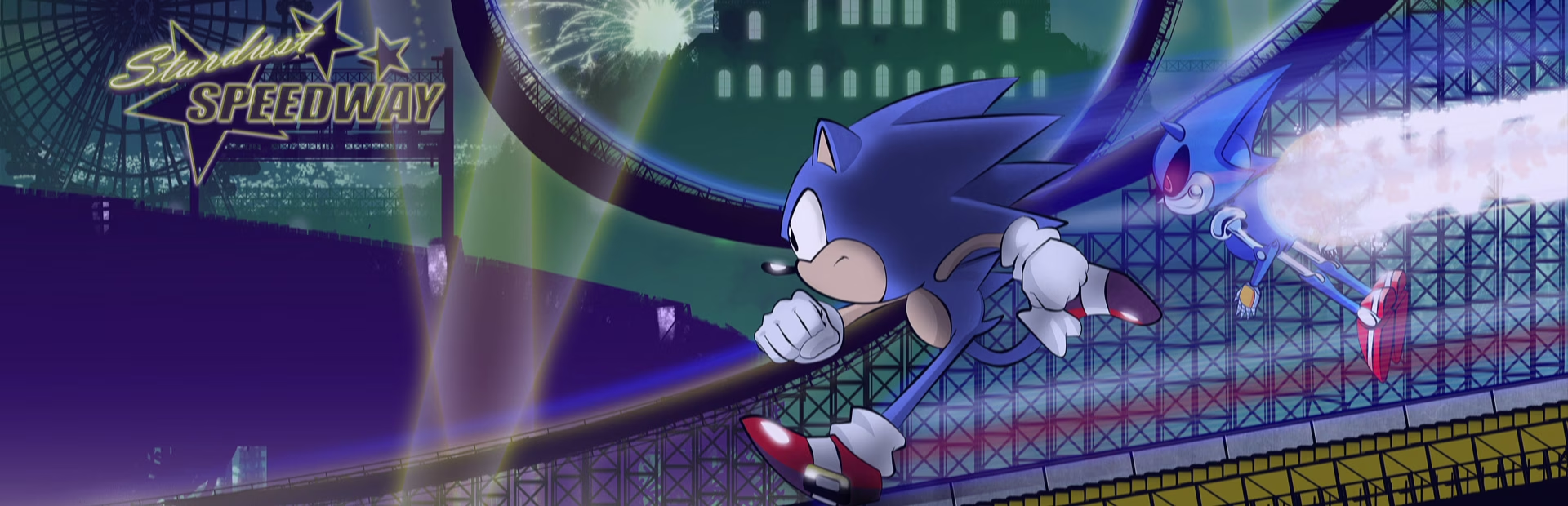
Sonic the Hedgehog CD
The only mainline Sonic where the format is the idea — disc-storage time travel, Toei animation because the CD had room.
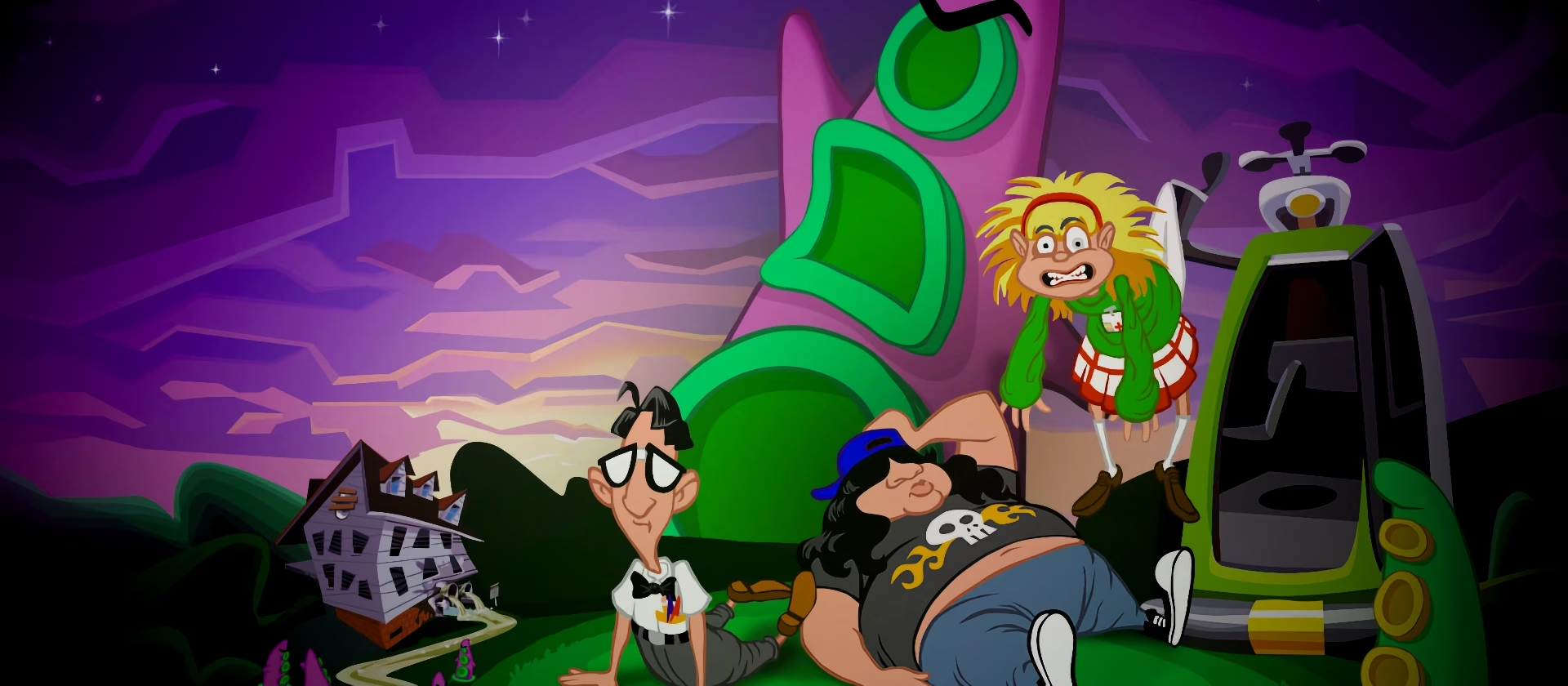
Day of the Tentacle
A three-century puzzle box where colonial America hands 1993 the answer — LucasArts adventure design at its most elegant, running cleanly on modern hardware.
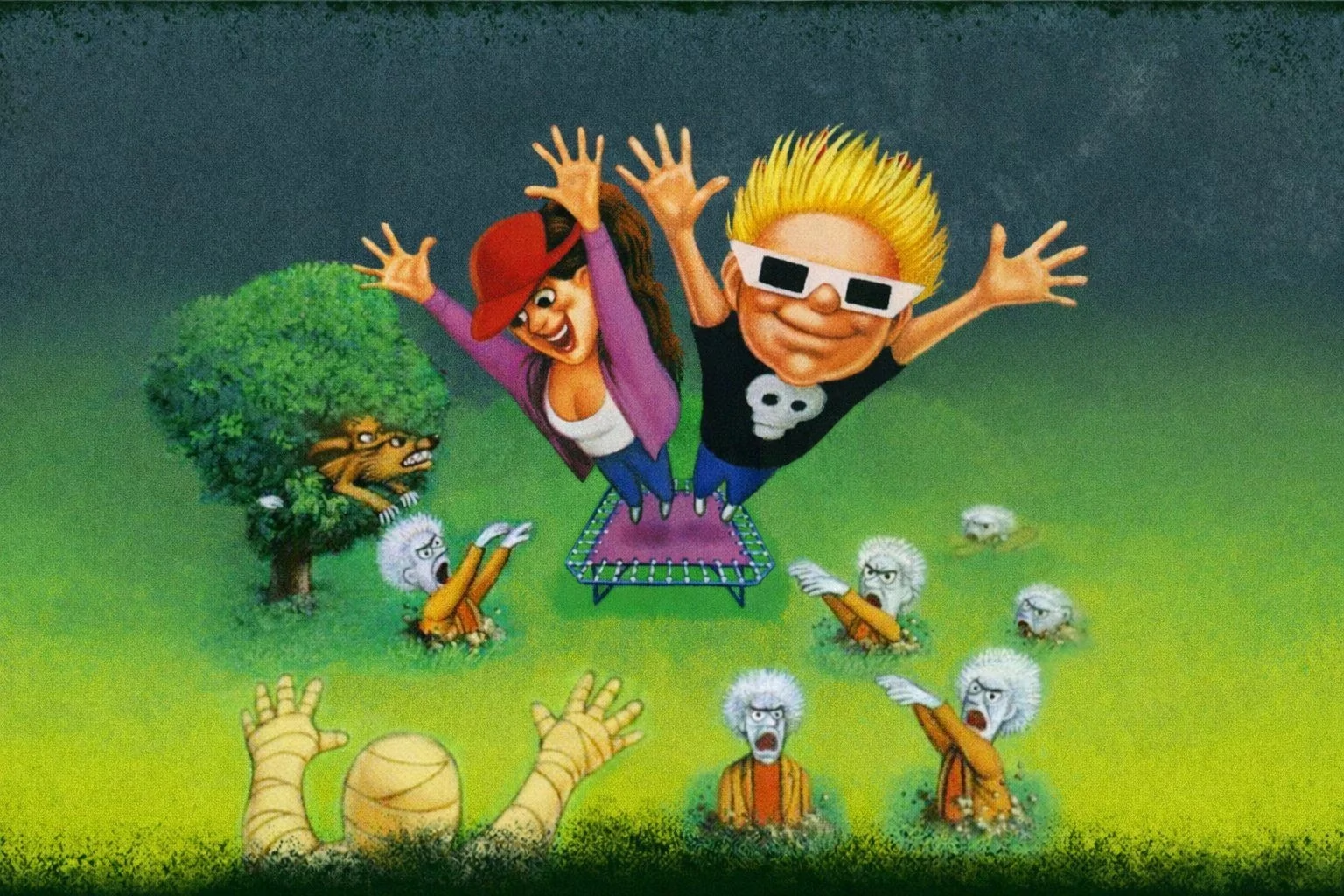
Zombies Ate My Neighbors
A shooter where killing is secondary and saving is the whole game — LucasArts built a subtraction machine that still teaches run-'n'-gun design by example.
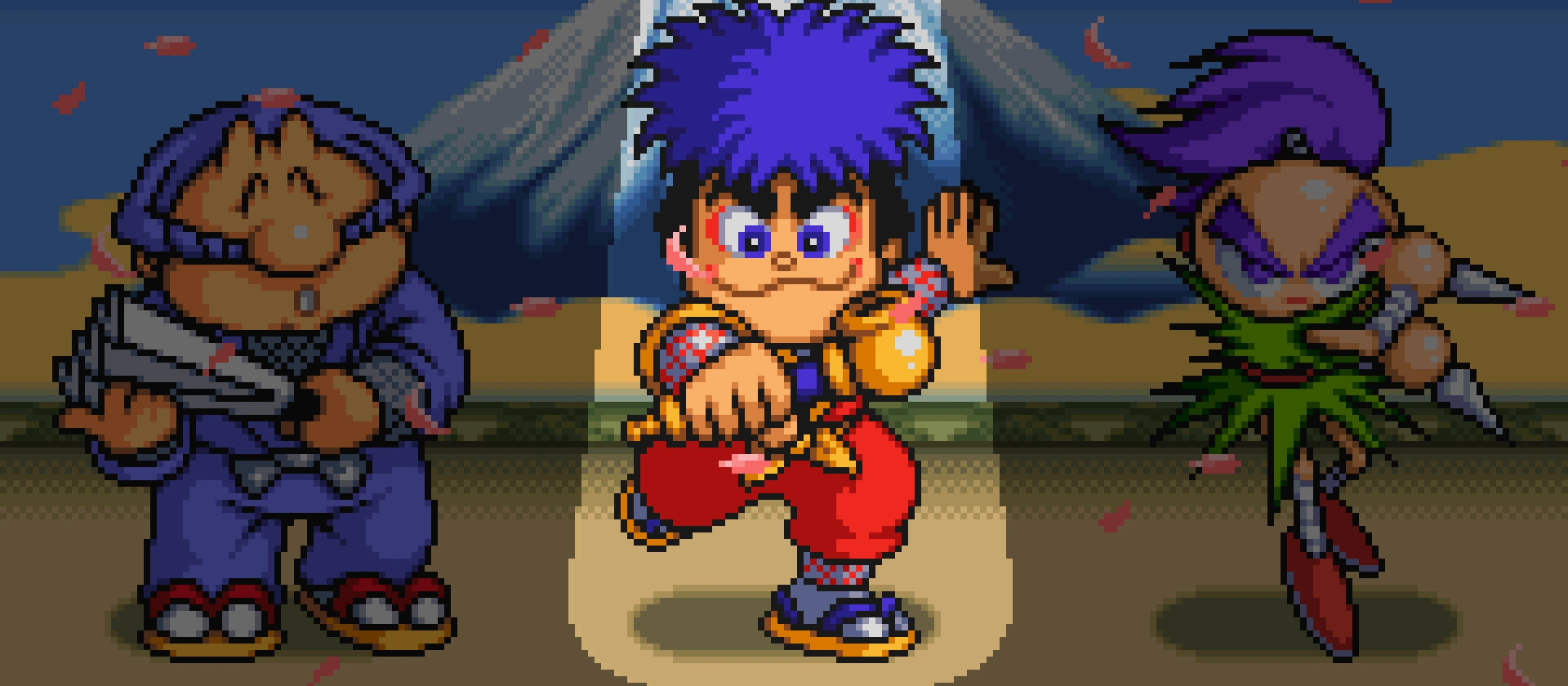
Ganbare Goemon 2
Konami's 16-bit confidence completely unchecked — a bunny invasion, a head-cold giant robot, and wordplay that only survives in the fan English patch.
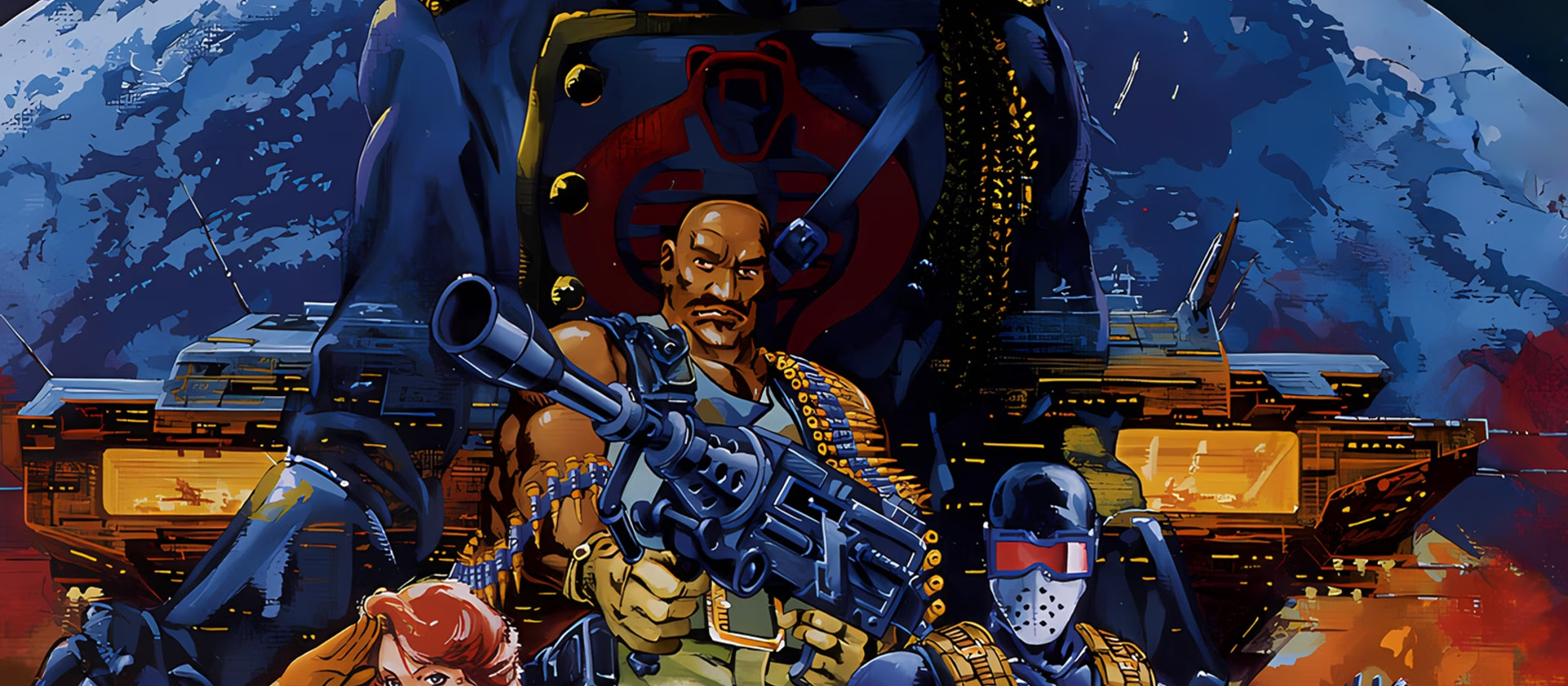
G.I. Joe
Roadblock running into a Cobra fortress that grows toward the camera — a sprite-scaling rail shooter Konami couldn't port, still arcade-only thirty years on.
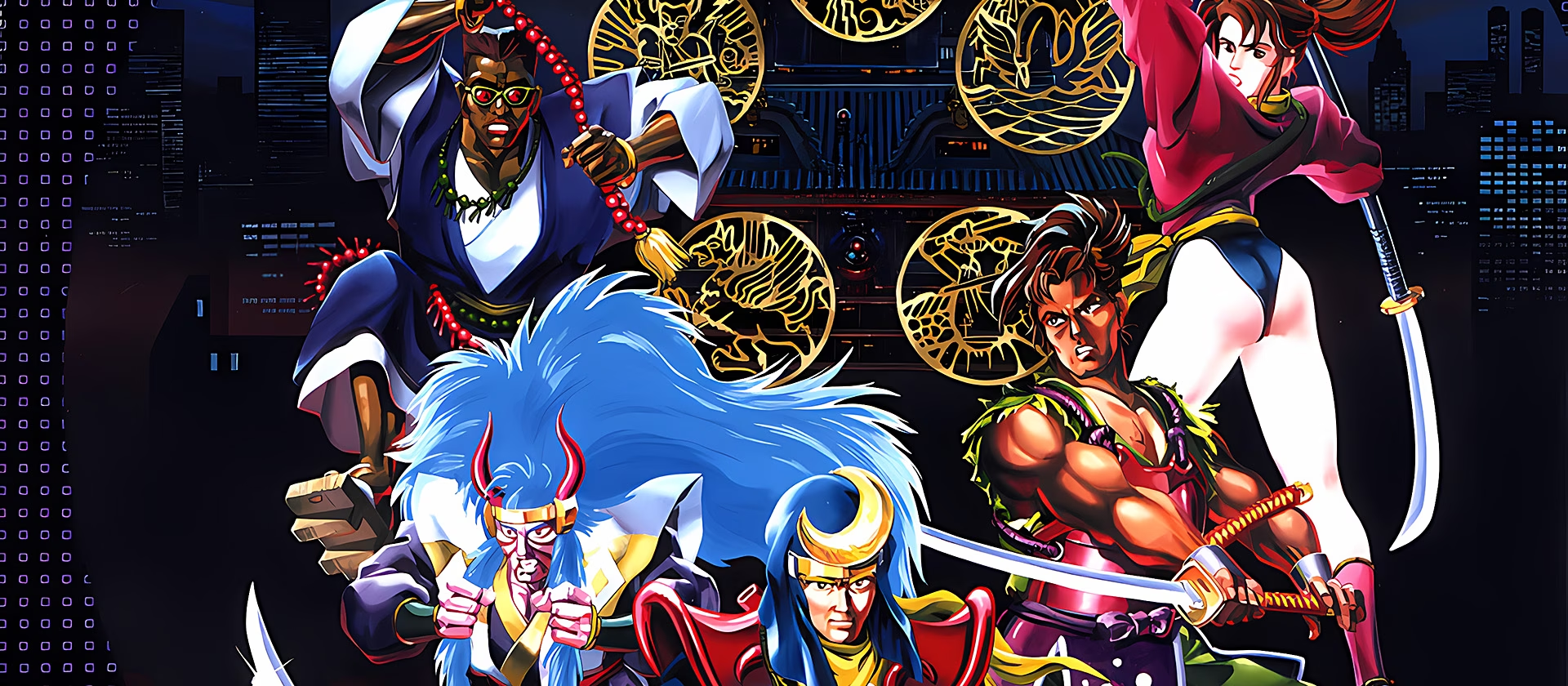
Mystic Warriors: Wrath of the Ninjas
A truck driven through its own backdrop, dogeza on a rooftop, prayer beads in a swung arc — Konami's tightest run-and-gun, finally reachable from a couch.

Snatcher
A two-tier detective loop — Look then Investigate — carrying a cinematic opening that lands cold, plus an Act 3 Kojima called a digital comic.
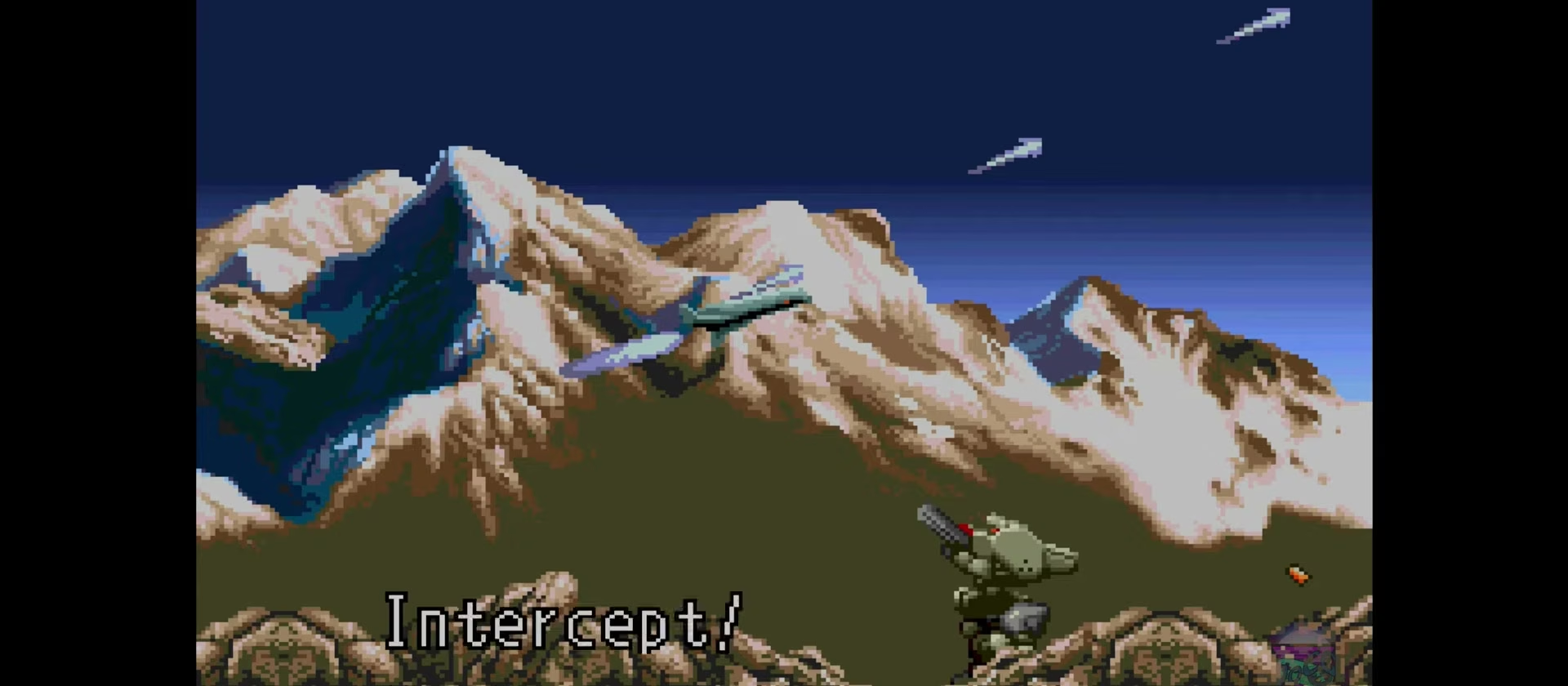
Assault Suits Valken
Each hit stops the world for two frames; between them the mech strides under its own mass — weight no SNES peer matched.
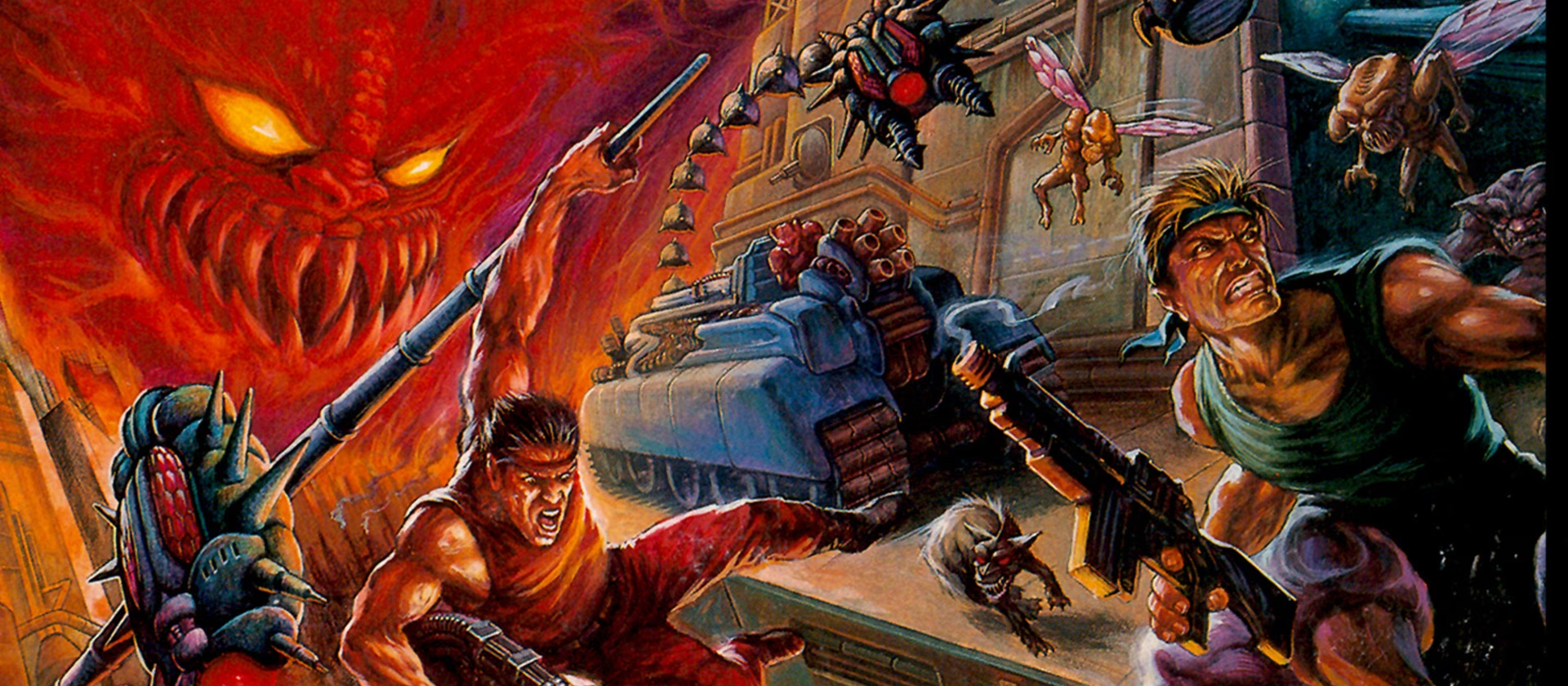
Contra III: The Alien Wars
A fresh threat every three screens: Contra III never lets a modern player settle into pattern, and every minute rewards a different reflex.
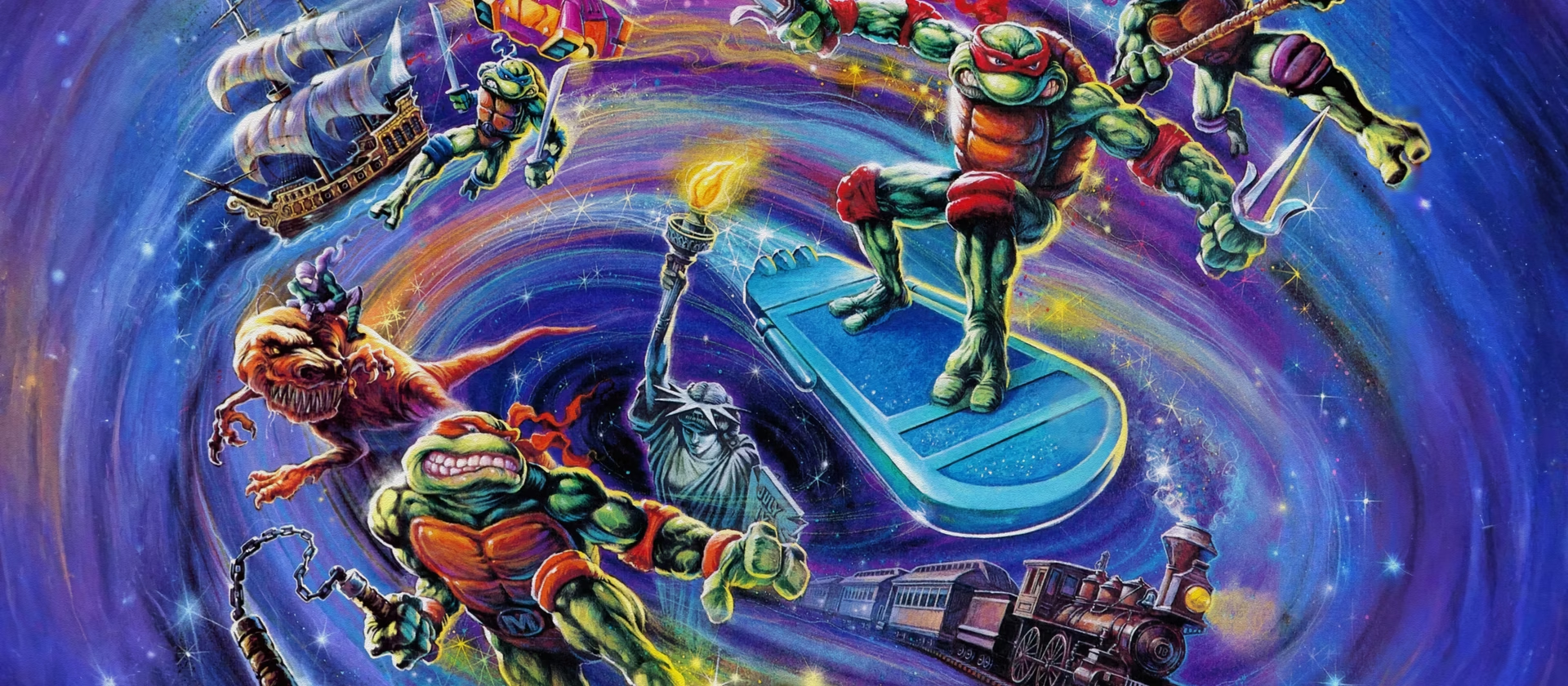
TMNT IV: Turtles in Time
The throw verb — Y-button, foot soldier hurled toward the screen — becomes the final boss's whole logic.
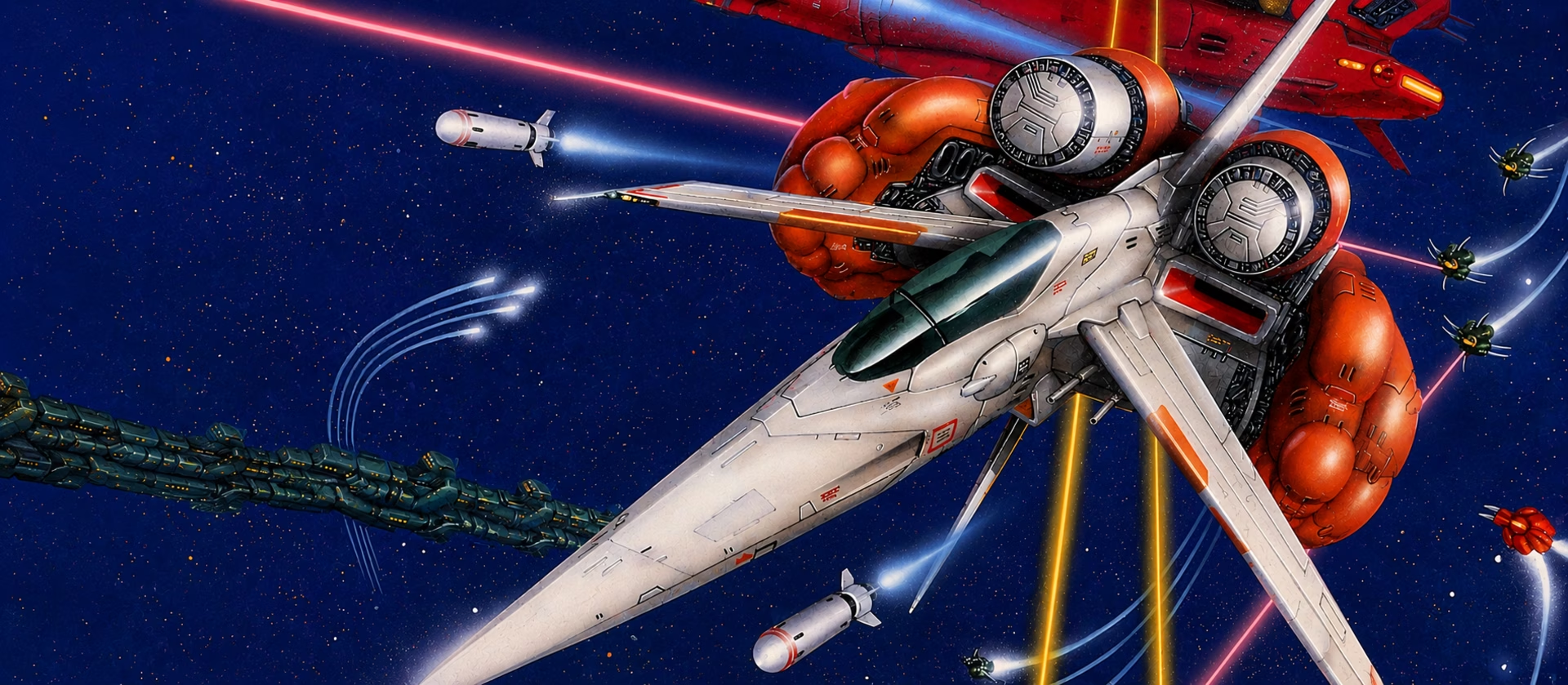
Axelay
Axelay makes damage tactical instead of merely punitive: each hit strips one weapon from your loadout, forcing a modern player to improvise with a ship that keeps changing under pressure.
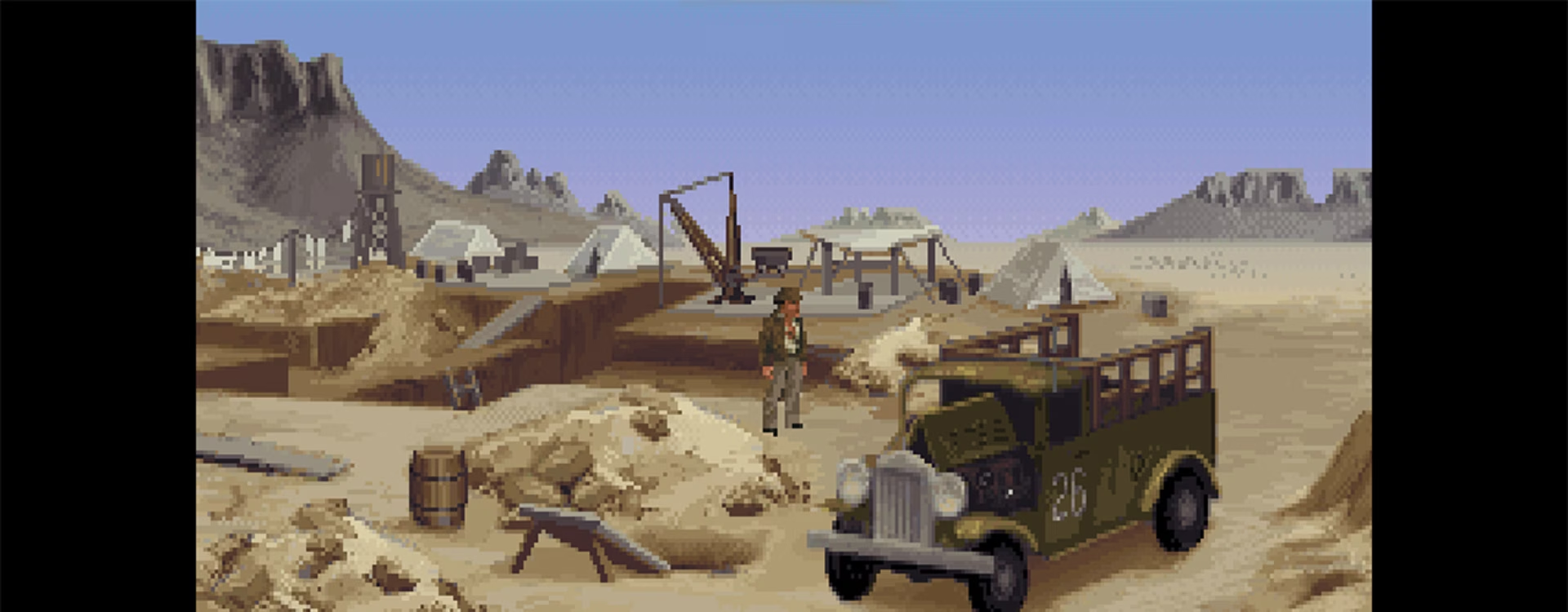
Indiana Jones and the Fate of Atlantis
Three branching paths through one Atlantis, an iMuse score that listens to your feet, and a script that argues with Plato — the only Indy sequel that earns its myth.
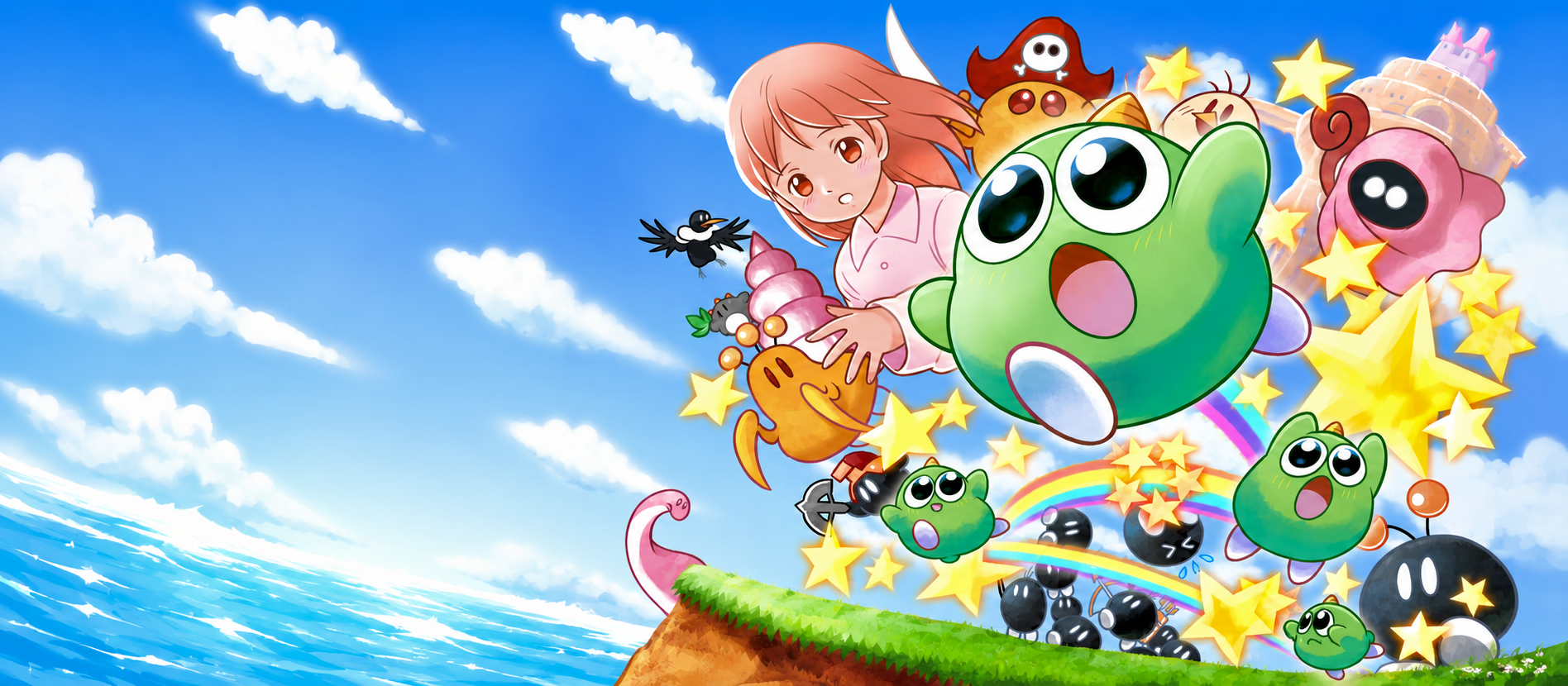
Gimmick!
One bright star makes every jump, fight, and secret route a small physics problem.

Soldier Blade
A complete shoot 'em up in twenty-five minutes, Caravan score-attack modes baked in beside the campaign — the genre's most concentrated case for a one-sitting shooter.
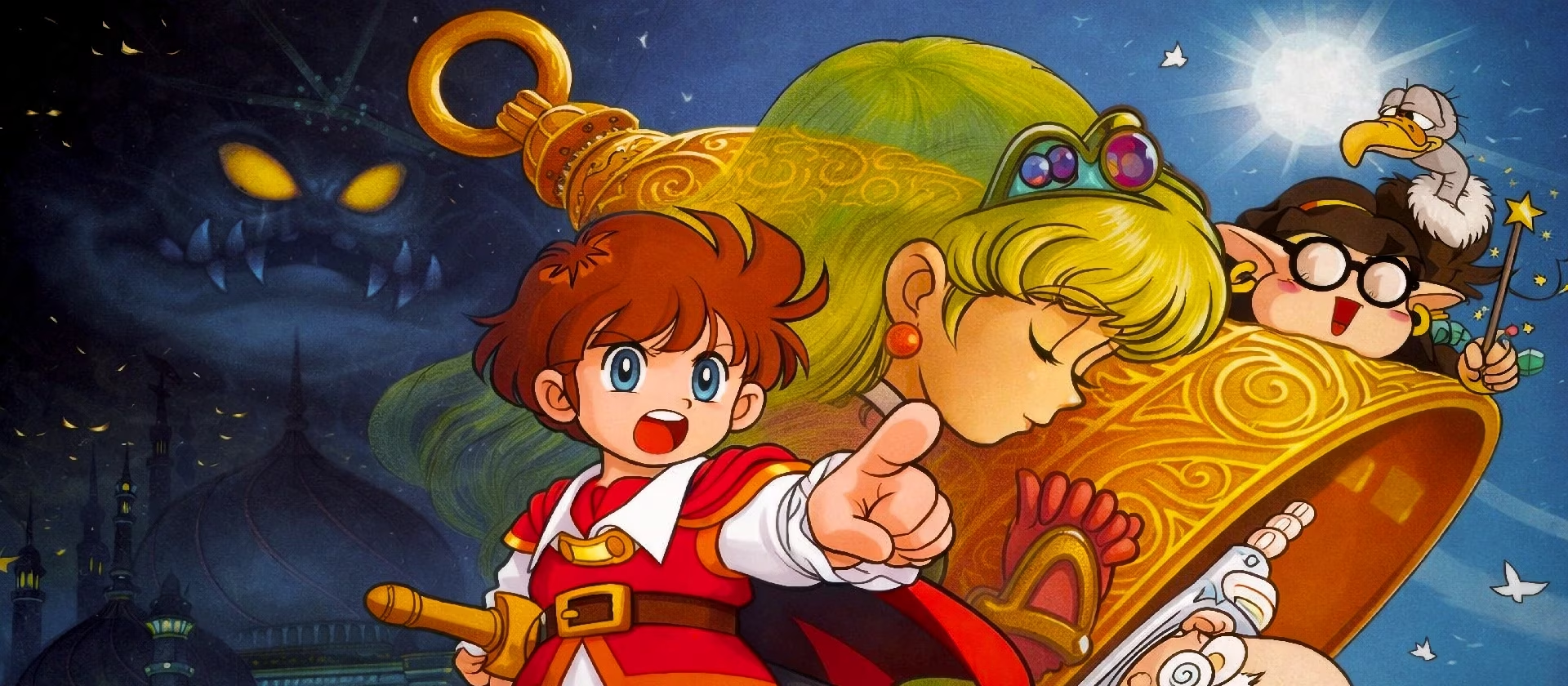
Kaeru no Tame ni Kane wa Naru
Yoshio Sakamoto's funniest script, two transformations that turn traversal into joke setup, and Nintendo's smartest auto-battle — English only via a fan patch Nintendo never replaced.

Trip World
A 1992 Game Boy platformer that refused to punish — Ueda's quiet argument against collision damage and completionism, now remastered with its 1993 colour pass.
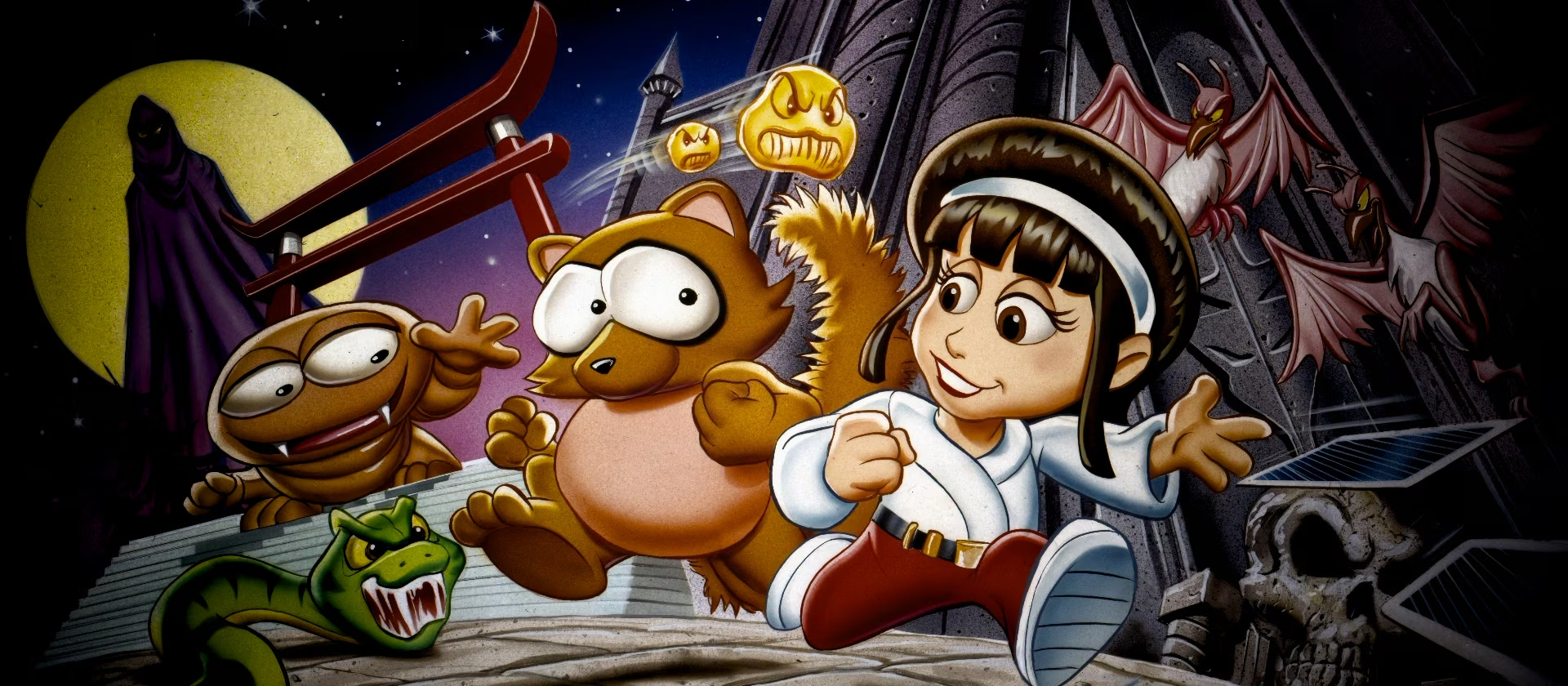
Pocky & Rocky
A 1992 SNES shooter where deflection beats the bomb — Natsume's Shinto-logic combat, sharper and stranger than anything in the bullet-heaven lineage.
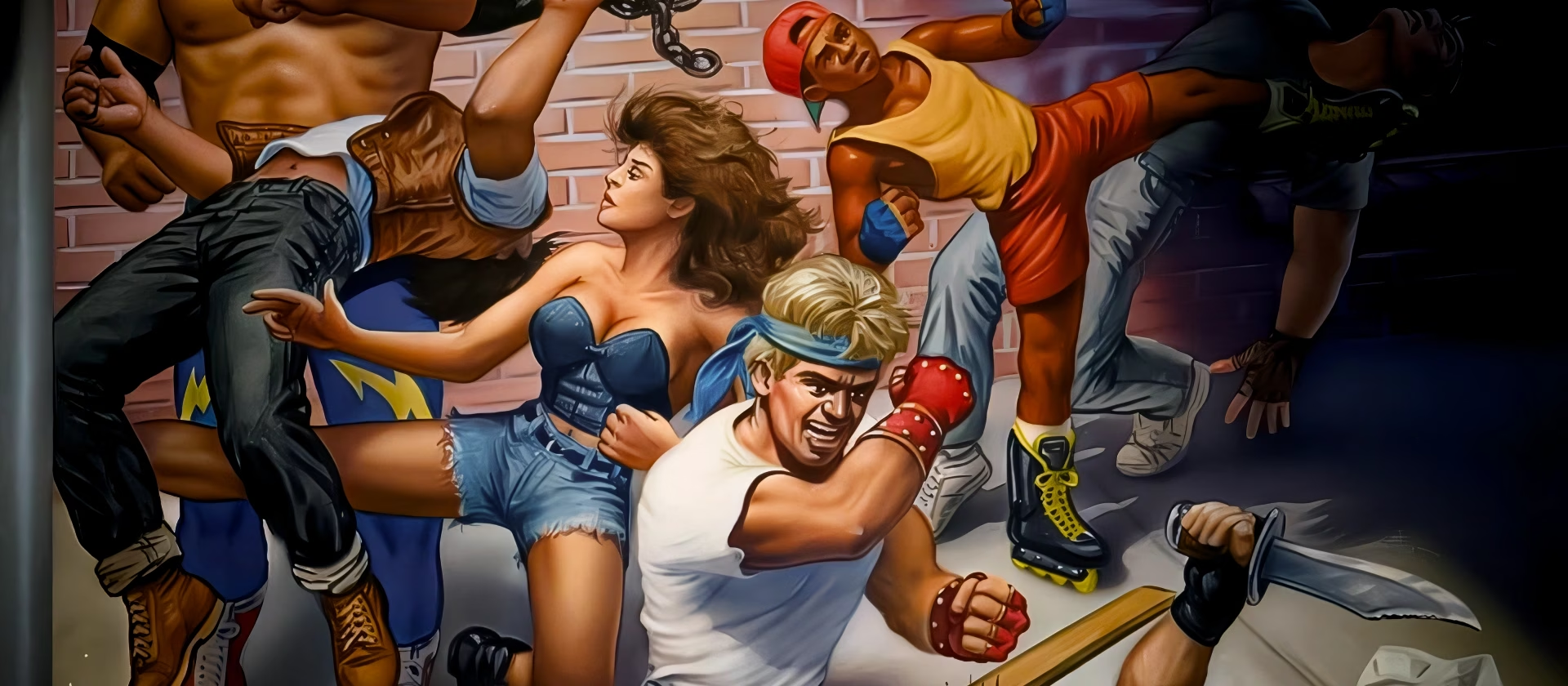
Streets of Rage 2
Ten people, under a year, the genre's high-water mark — Koshiro's club-floor score and two-player CRT violence still sell the whole form.
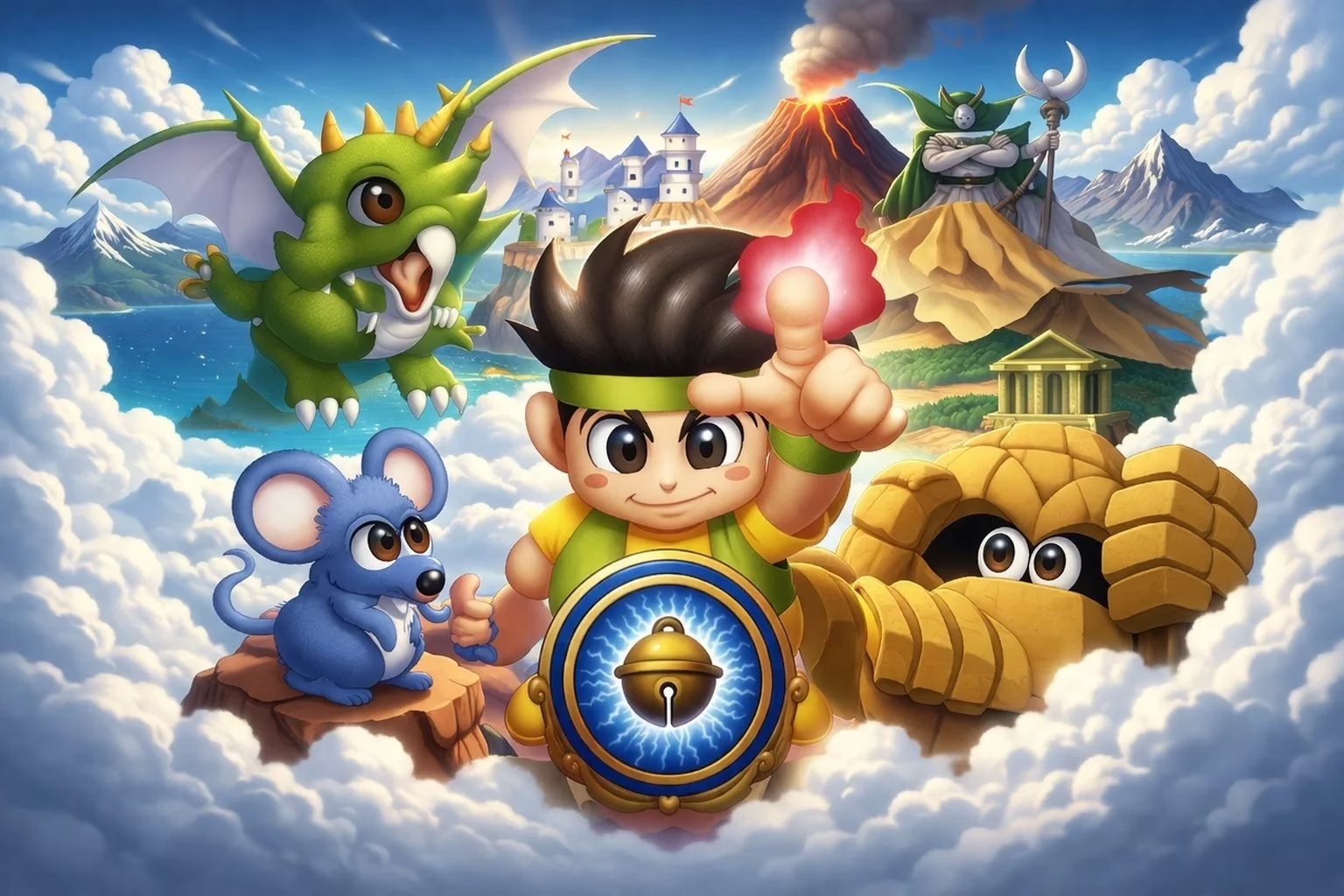
Little Samson
A late-NES action platformer whose central design — four heroes, four health bars, one freely switchable squad — still feels strangely unresolved.

The Simpsons Arcade Game
All four Simpsons on screen regardless of player count — and the Japanese ROM that quietly rebalanced what the West played as a quarter-vacuum.
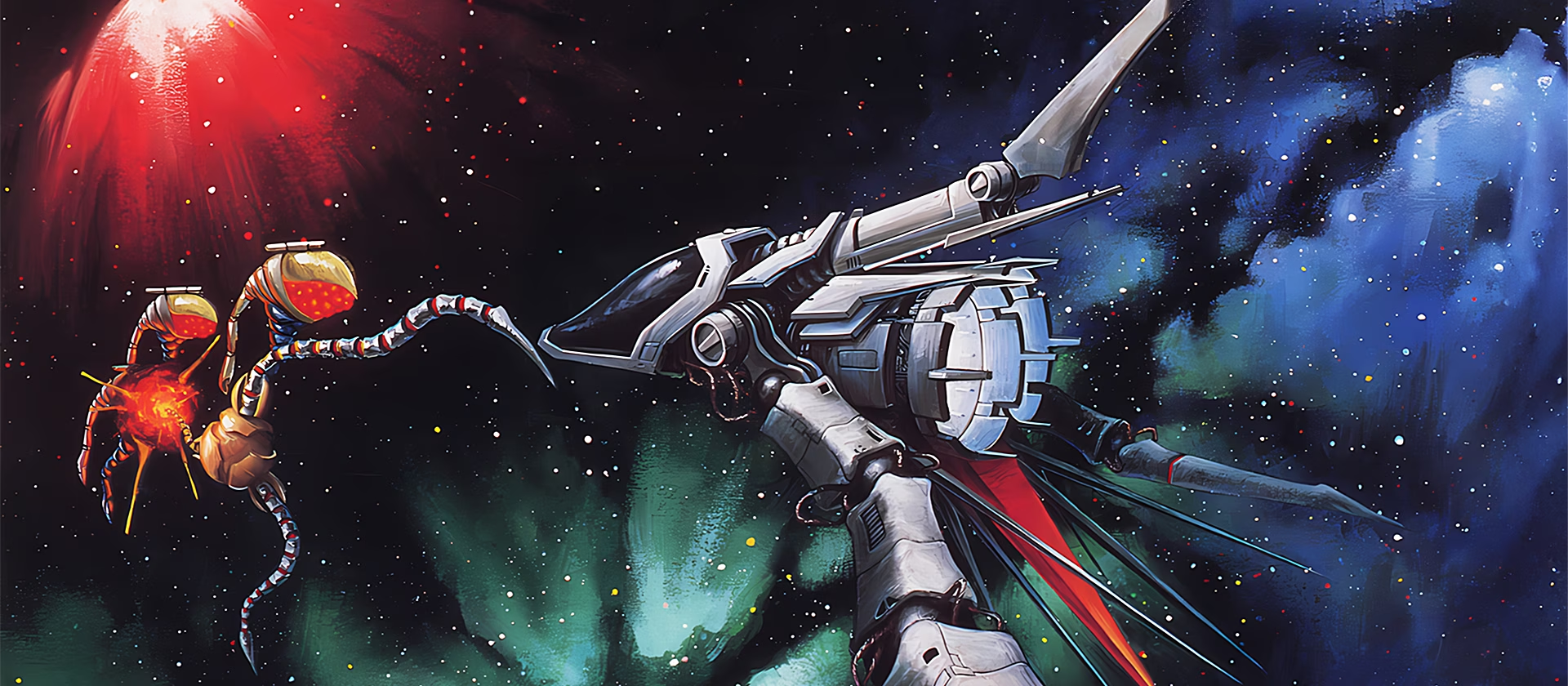
Xexex
The Flintlock launches its orb and the tentacles unfurl mid-flight, blocking bullets the orb itself never touches — Konami's answer to R-Type's Force, alive.
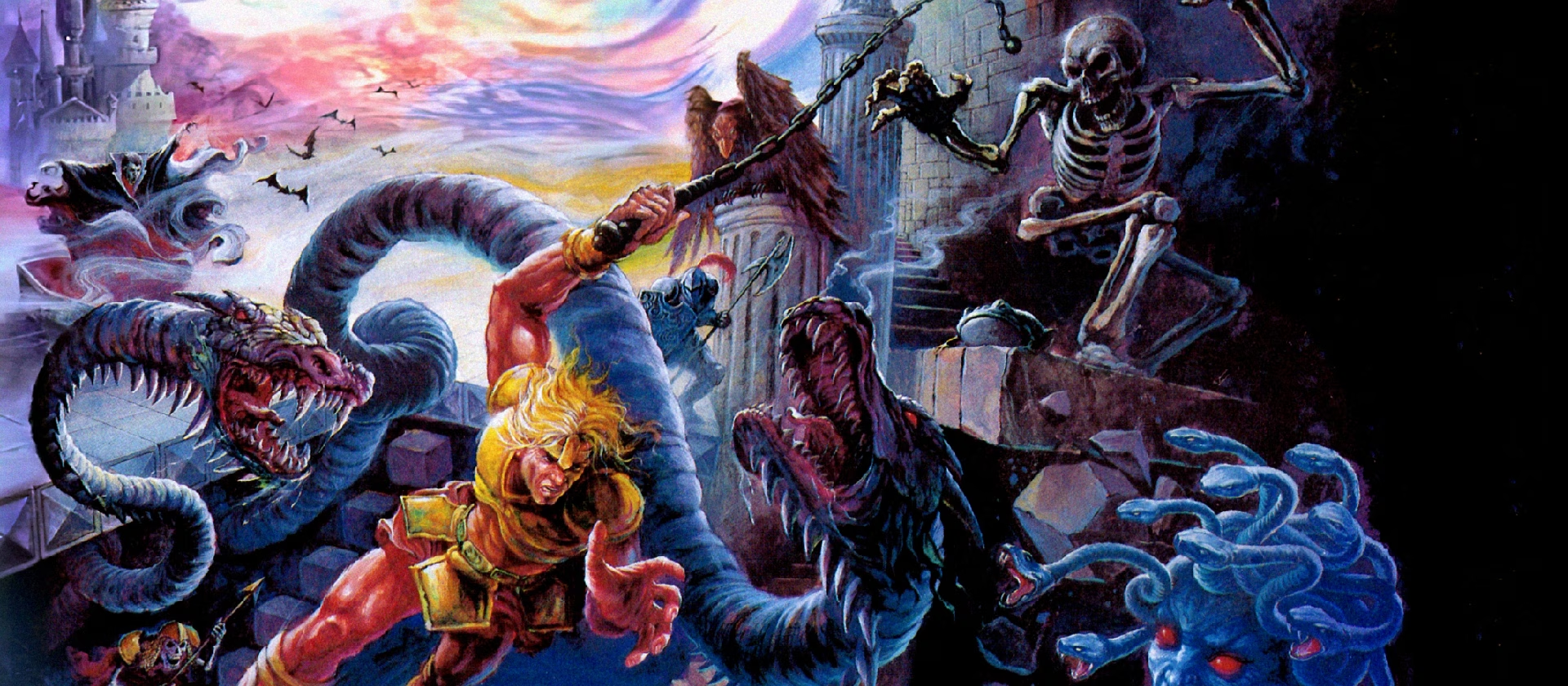
Super Castlevania IV
Whip arcs in eight directions, spins to deflect, hangs Simon from rings — the first Castlevania where the player, not the level, decides.
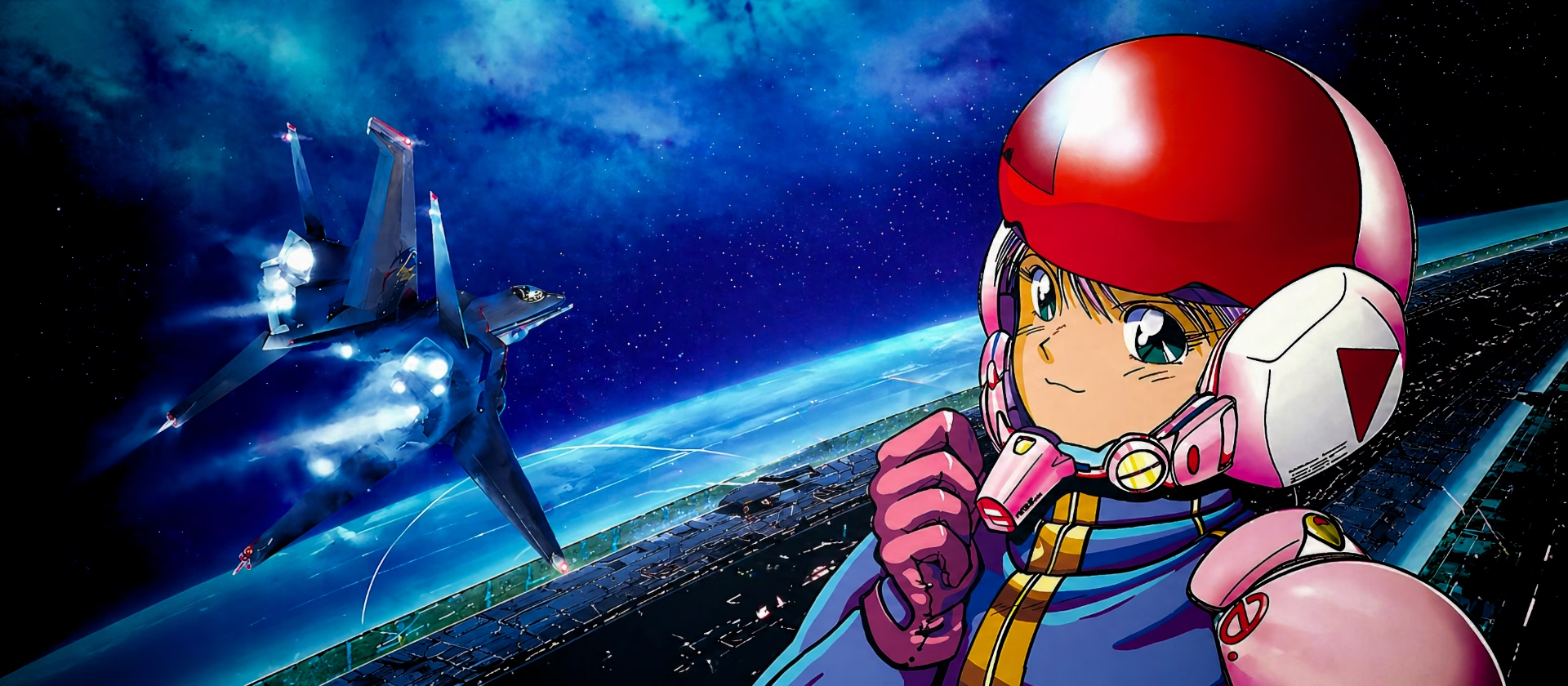
GG Aleste
Cycle the weapon, read the screen, survive — Compile's shoot 'em up design stripped to its essentials on the smallest hardware they ever shipped to.
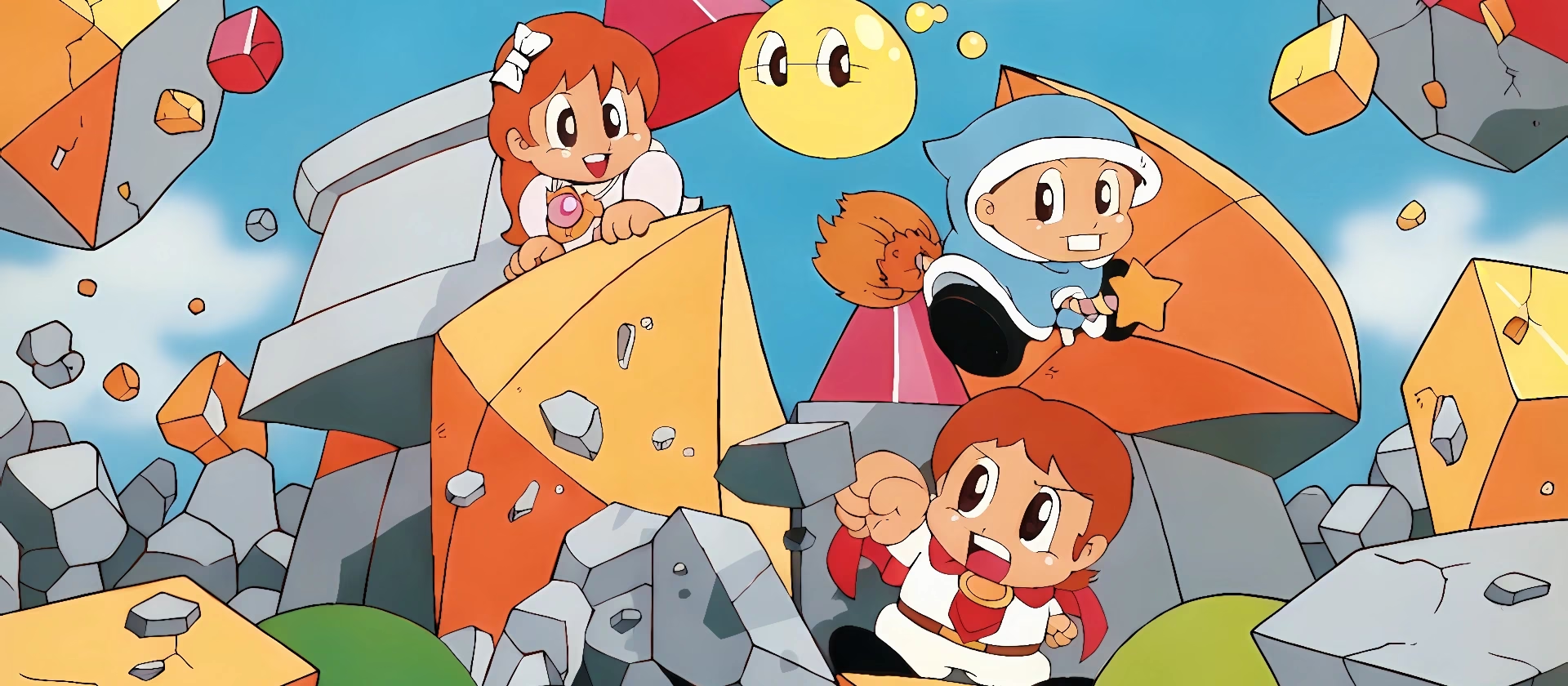
Popils
A 1991 puzzle-platformer by the creator of Bubble Bobble — a hundred hand-tuned rooms and a built-in level editor that already read as MTJ's design curriculum.
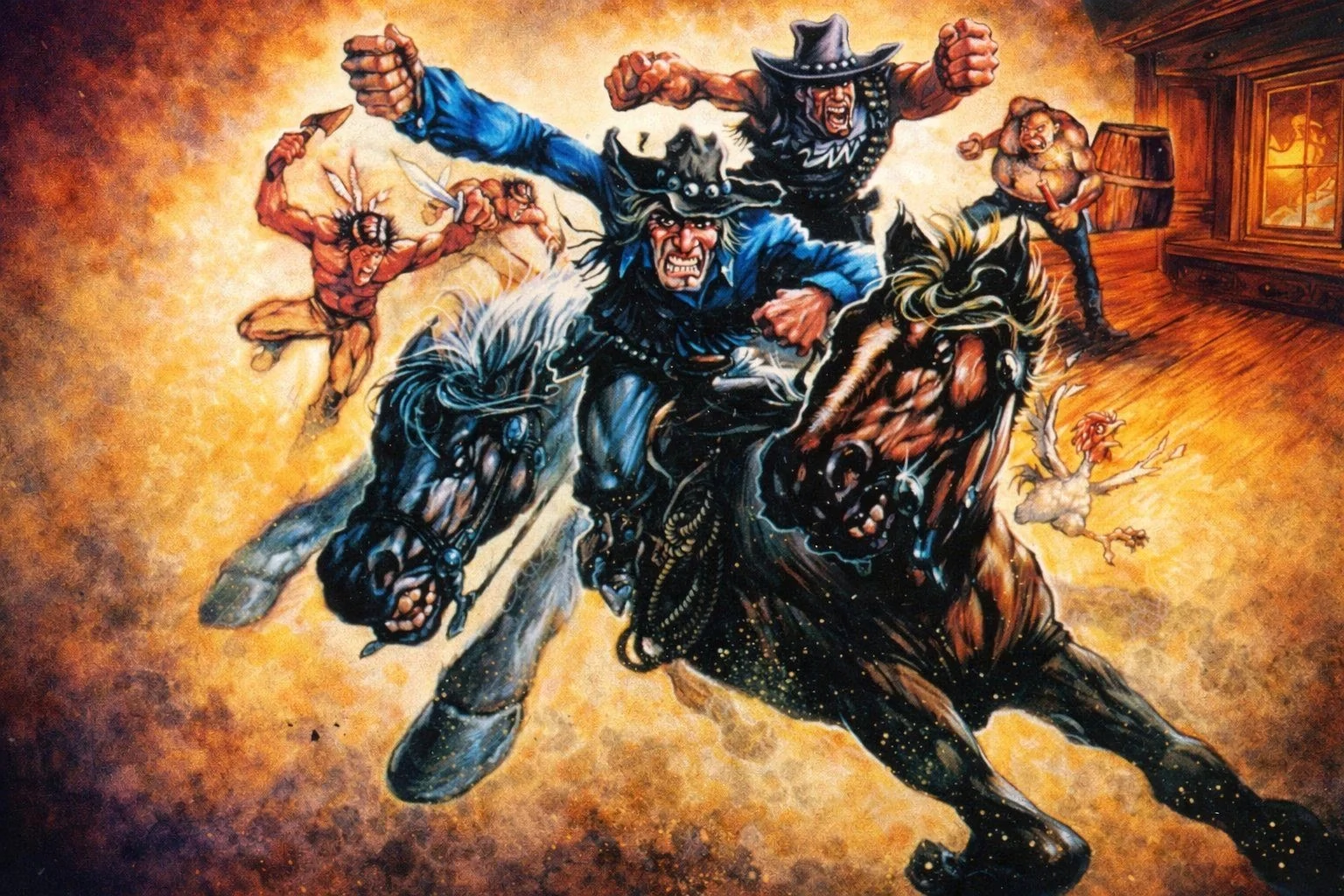
Sunset Riders
Konami's four-player Western cabinet — eight wanted posters, one English aristocrat, and a dollar-bounty score system still sharper than most arcade design since.
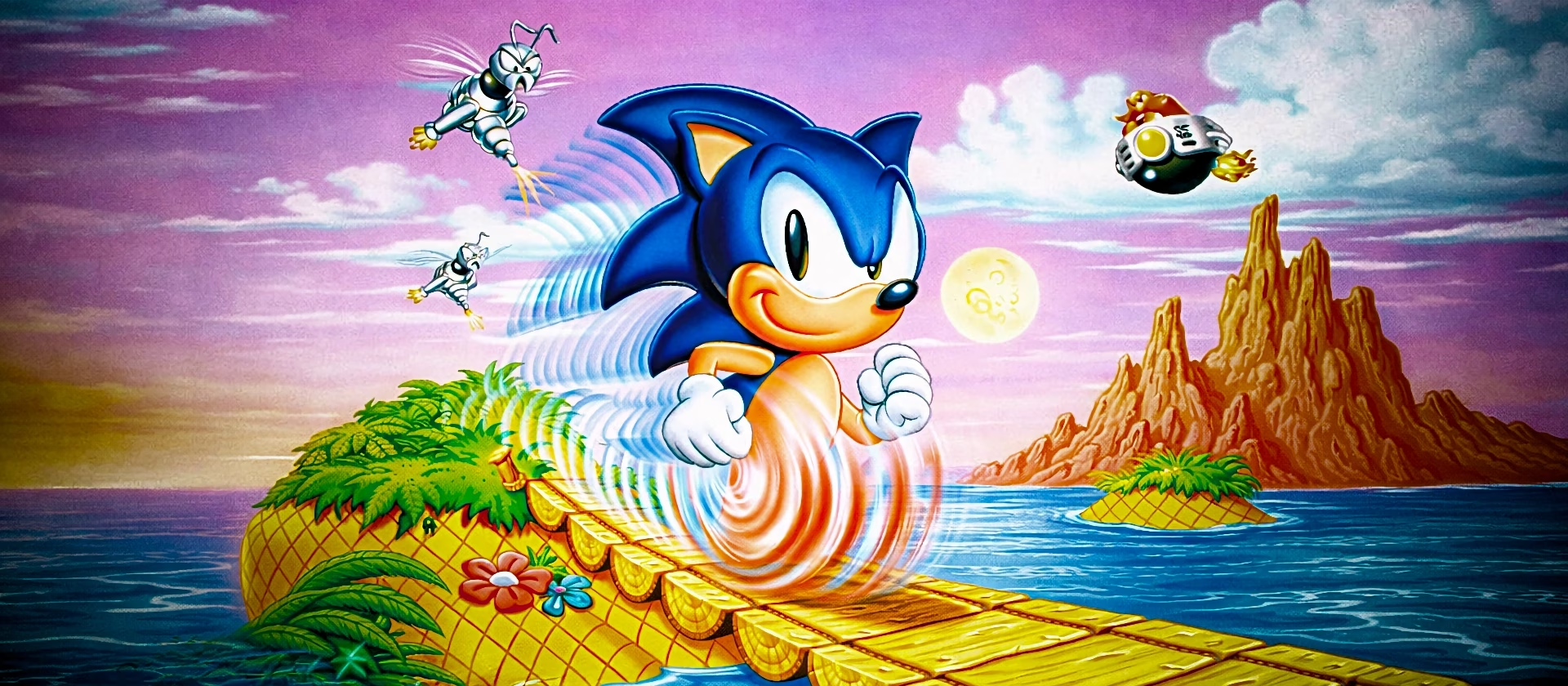
Sonic the Hedgehog
A quieter Sonic built by Yuzo Koshiro's studio for the Master System — a case for architecture over velocity the franchise never built again.
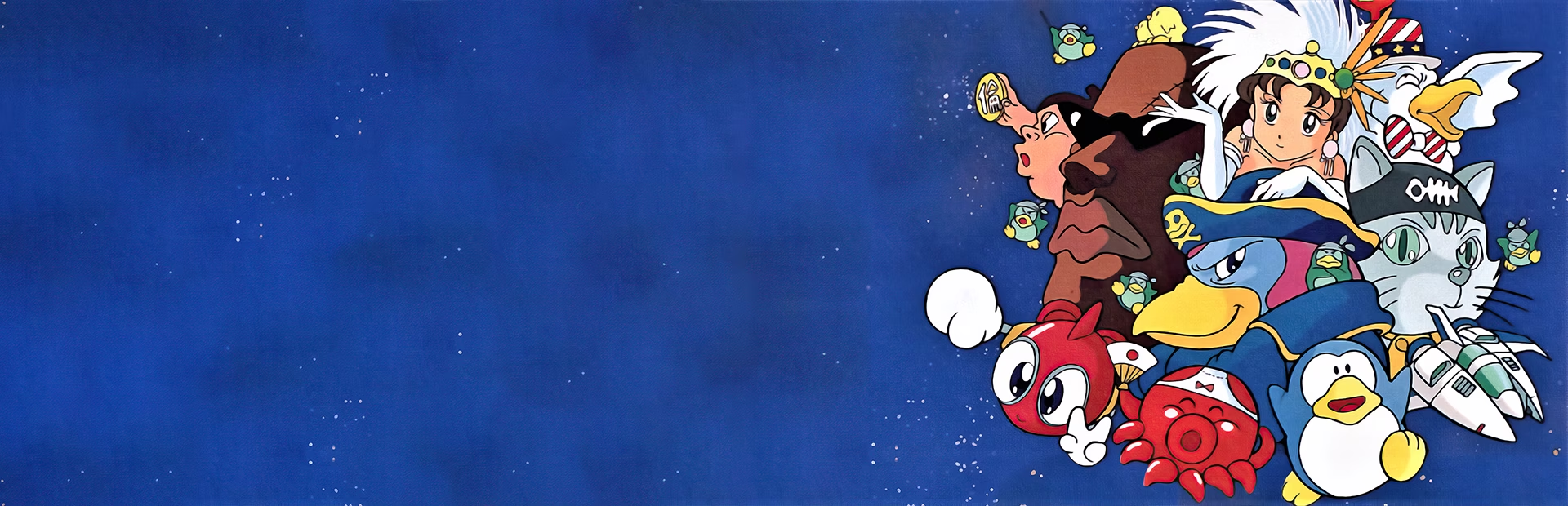
Parodius Da! ~Shinwa kara Owarai e~
A cat-faced battleship that mews when shot — and a bell-cycle scoring grammar Konami's serious shmups never tried, under the joke.
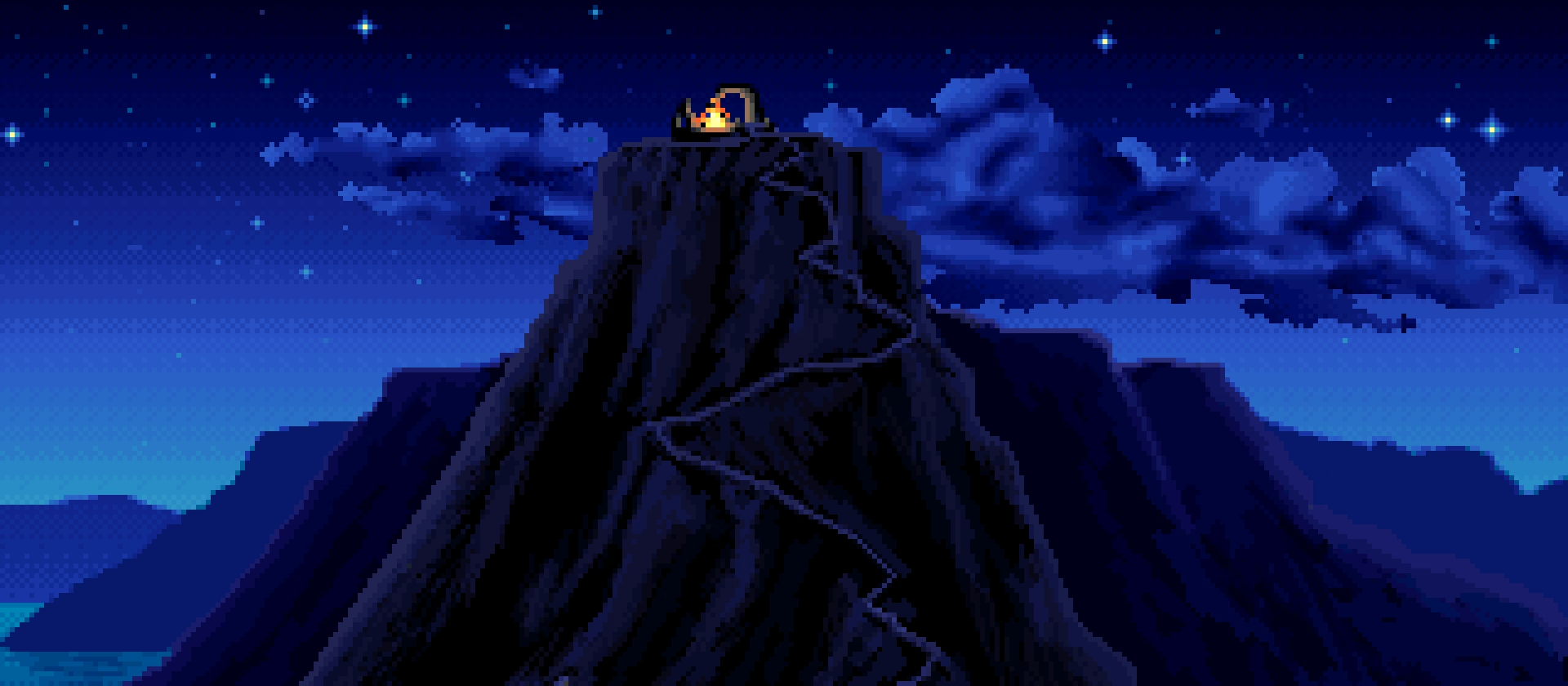
The Secret of Monkey Island
You wander Melee Island collecting insults like inventory — Gilbert's "Why Adventure Games Suck" manifesto rebuilt as a comedy where curiosity never costs a save.
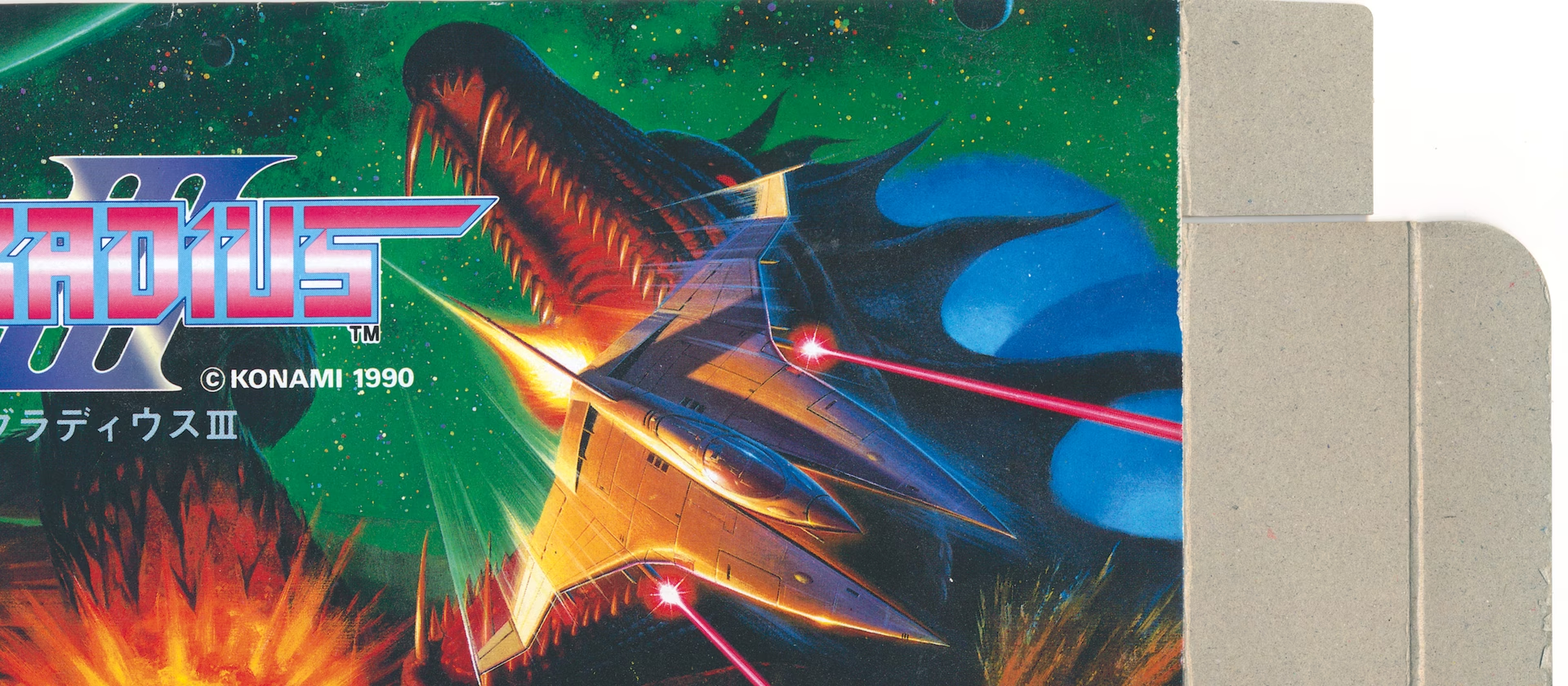
Gradius III: From Legend to Myth
Vic Viper drops into ricocheting cells — Gradius III's Edit Mode lets you carry the loadout the previous two games refused to combine.
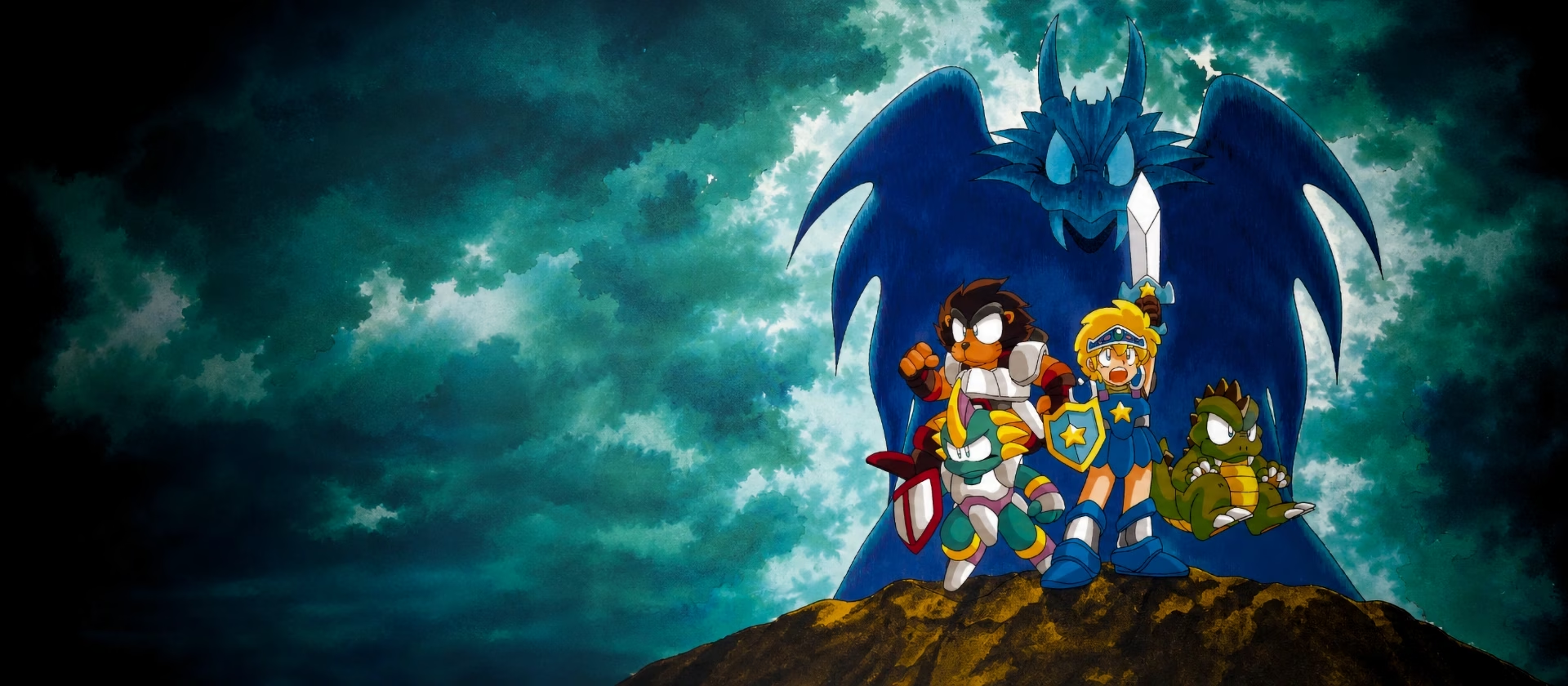
Wonder Boy III: The Dragon's Trap
Five physics models stitched into one continuous hero — the transformation system asks who you are right now, still the cleanest version of the question.
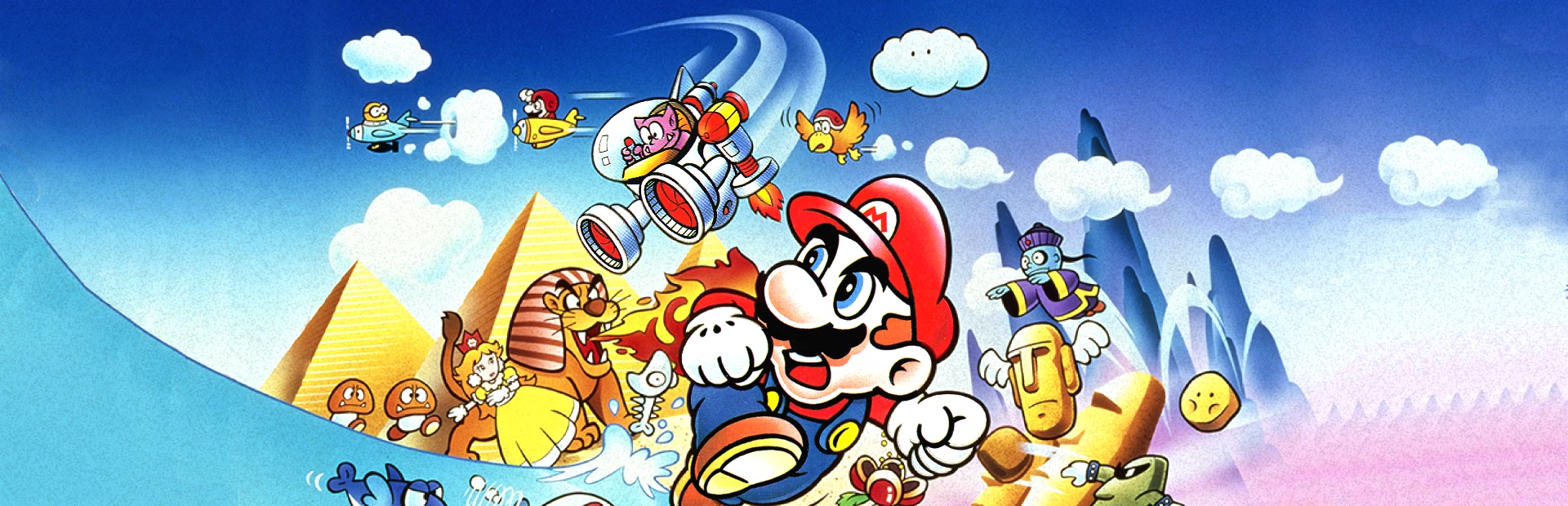
Super Mario Land
The only mainline Mario Miyamoto didn't design — Yokoi's handheld engineers wrote something stranger, and thirty-three minutes still finishes sharper than most platformers.
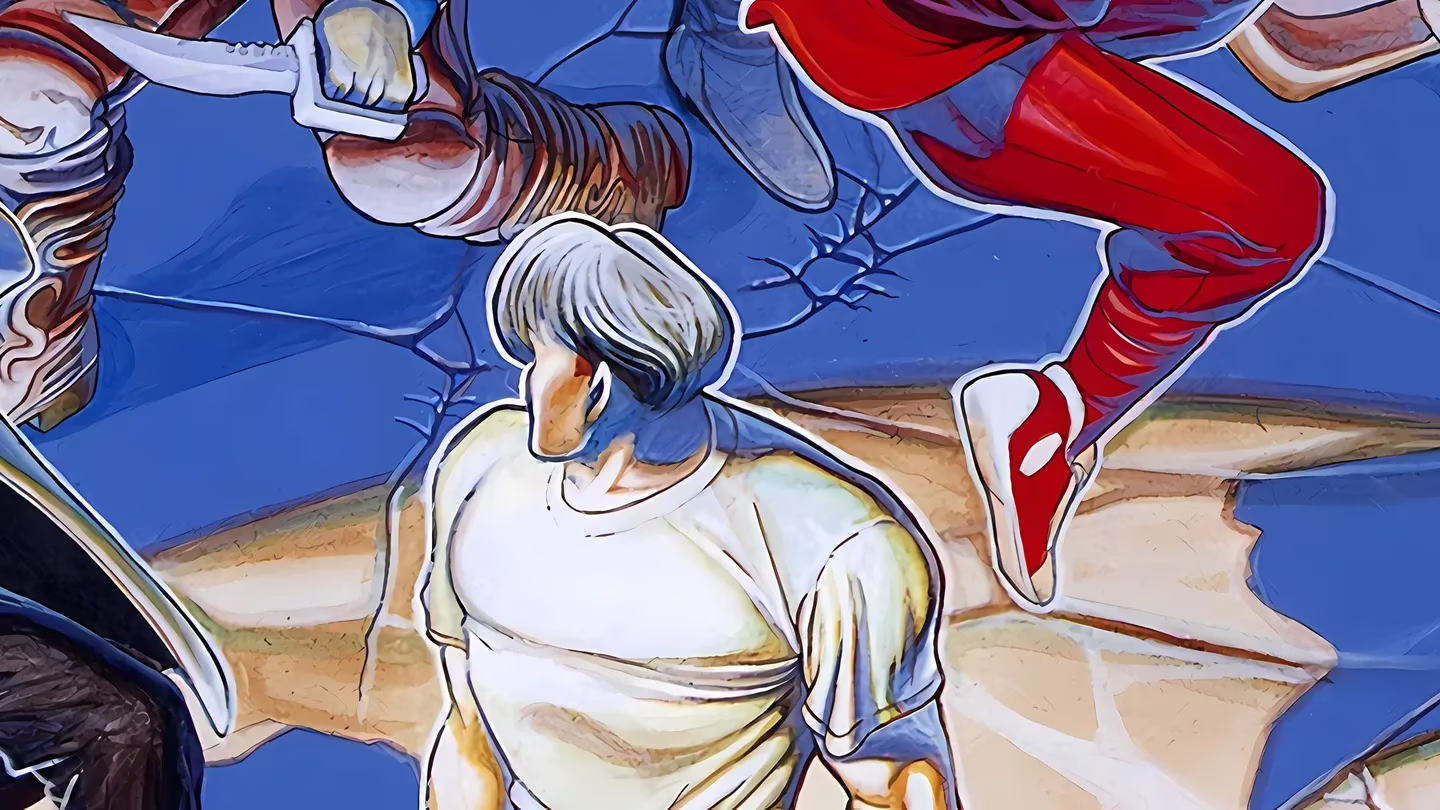
Final Fight
The arcade beat-'em-up Capcom cannibalised to build Street Fighter II — the complete three-character original is a co-op bundle away, still setting the rhythm.
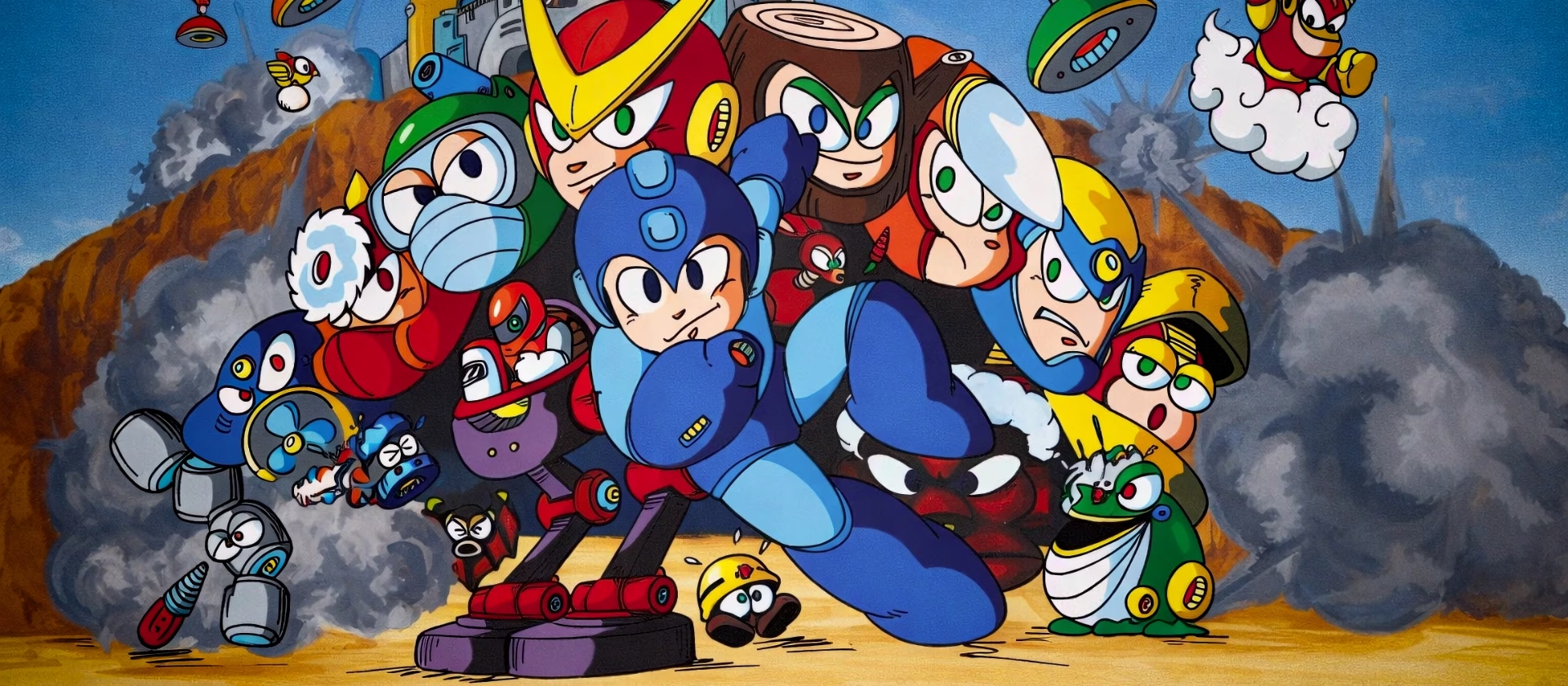
Mega Man 2
The cleanest action platformer the NES made — eight Robot Masters in any order, each fight unlocking the ability the next one demands.
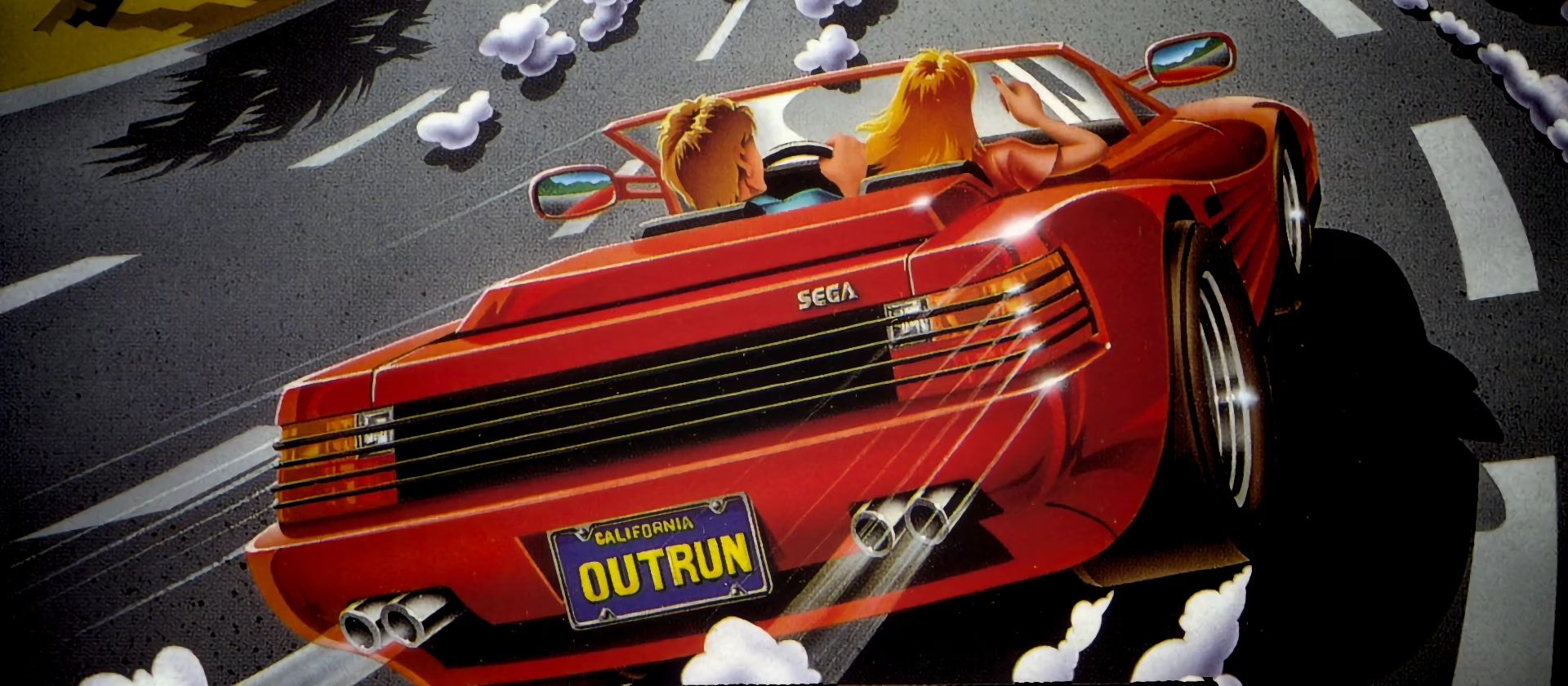
OutRun
Not a racing game — Suzuki's 1986 driving fantasy about speed and branching choice, still making most later racers feel fussy and narrow.
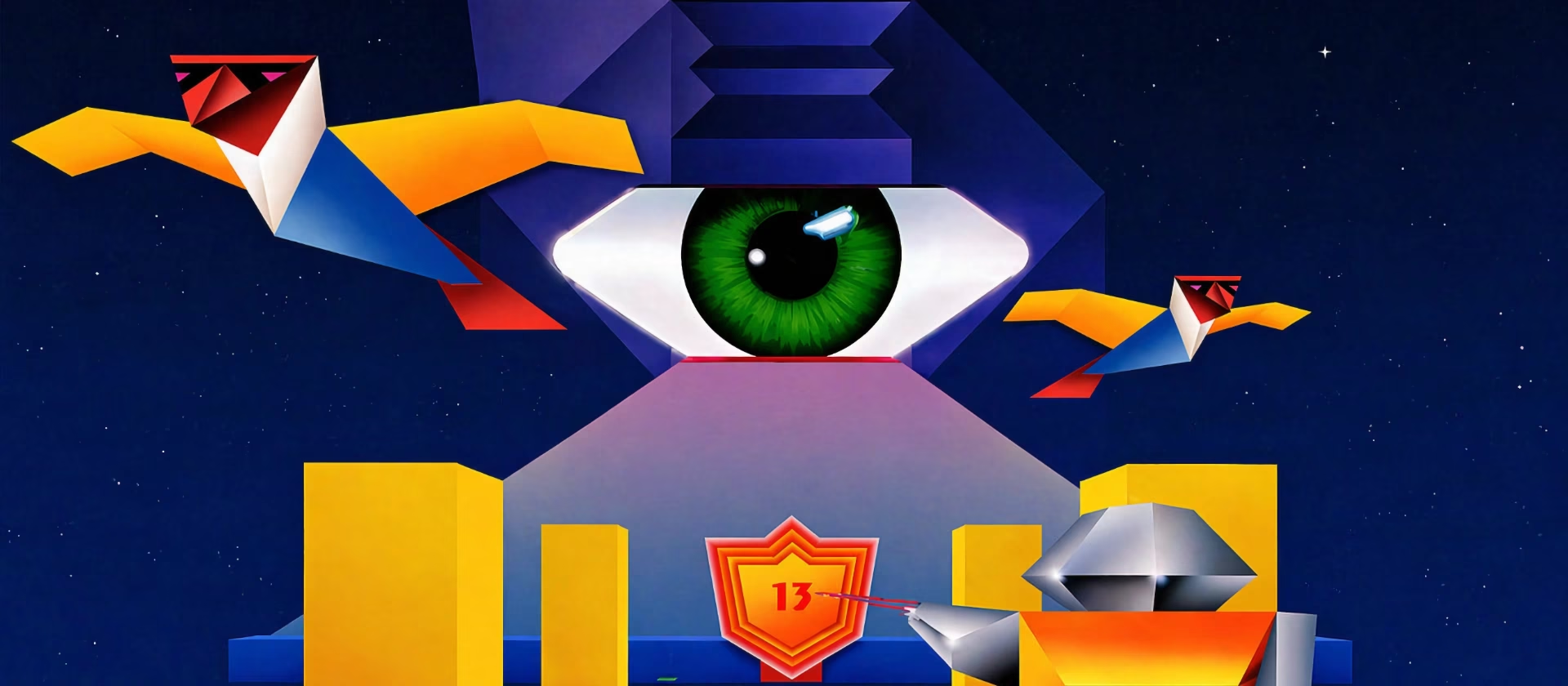
I, Robot
Twenty-two cubist playfields with per-frame randomness and a player-controlled camera — a 1984 design language nobody else was speaking, still readable as a lost indie.
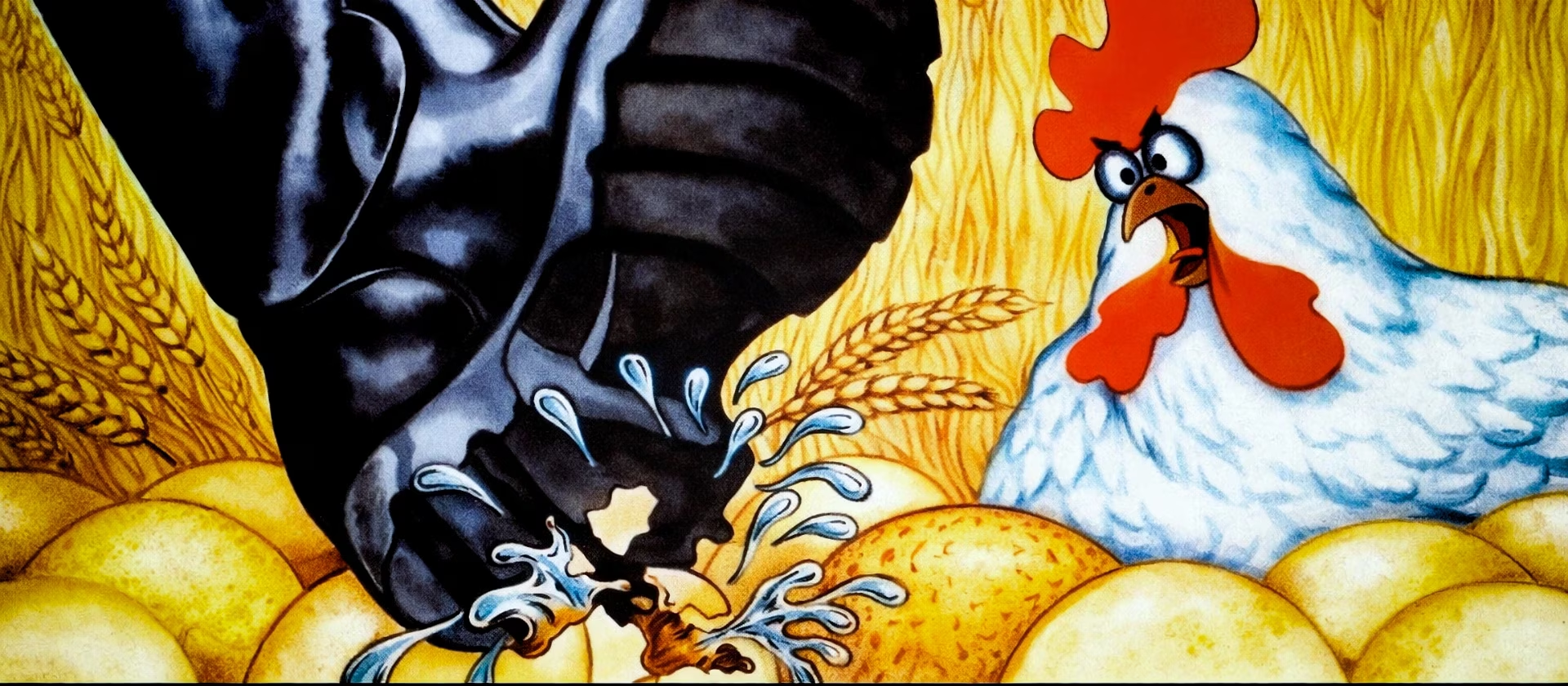
Chuckie Egg
A sixteen-year-old's 1983 Spectrum platformer that still runs faster, fairer, and smarter than most of what the genre has made in forty years.
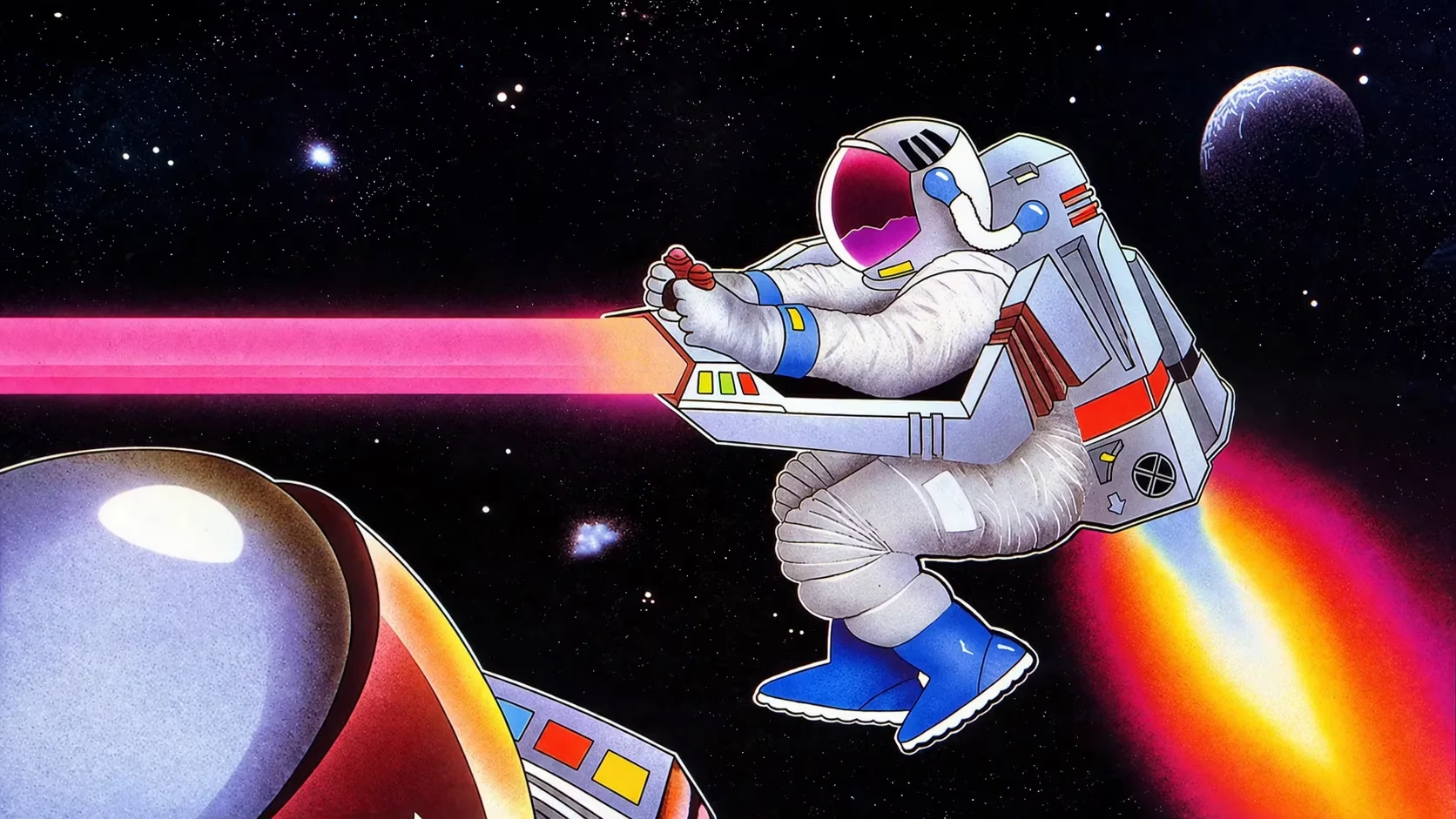
Jetpac
Sixteen kilobytes of perfect arcade grammar — Ultimate understood play so well the 1983 ZX Spectrum original still feels correct on any screen.
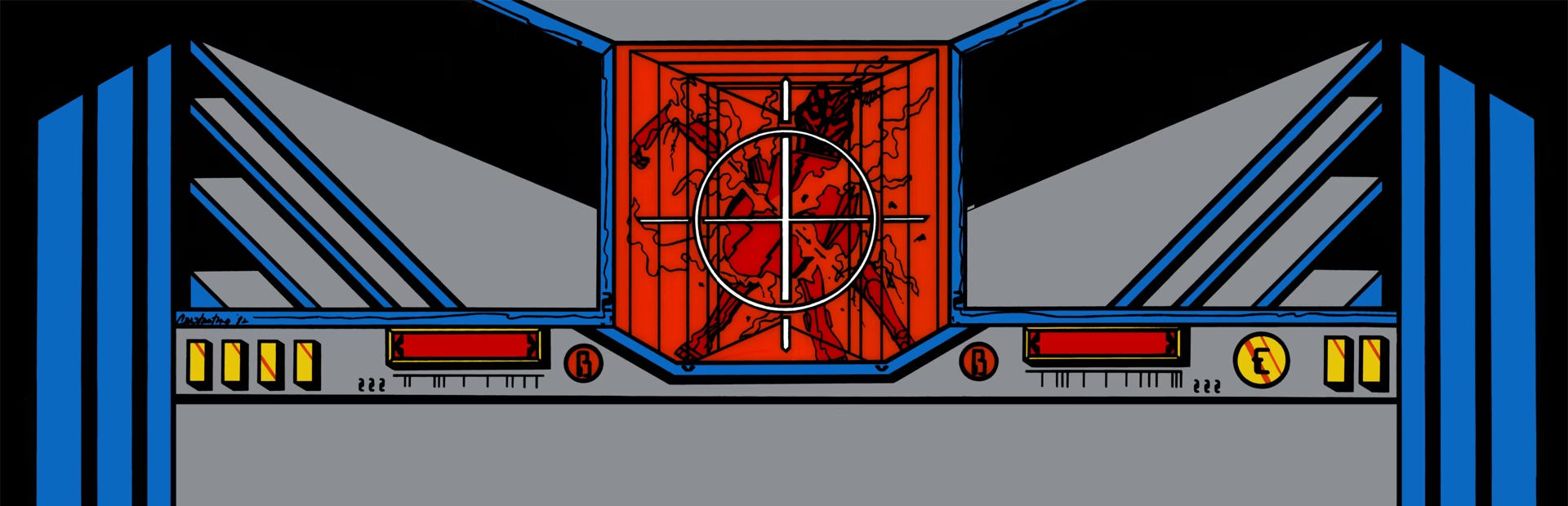
Robotron: 2084
The twin-stick control is only the doorway — Robotron is a pure crisis of priorities, rescue and survive on one screen that never idles.
Ms. Pac-Man
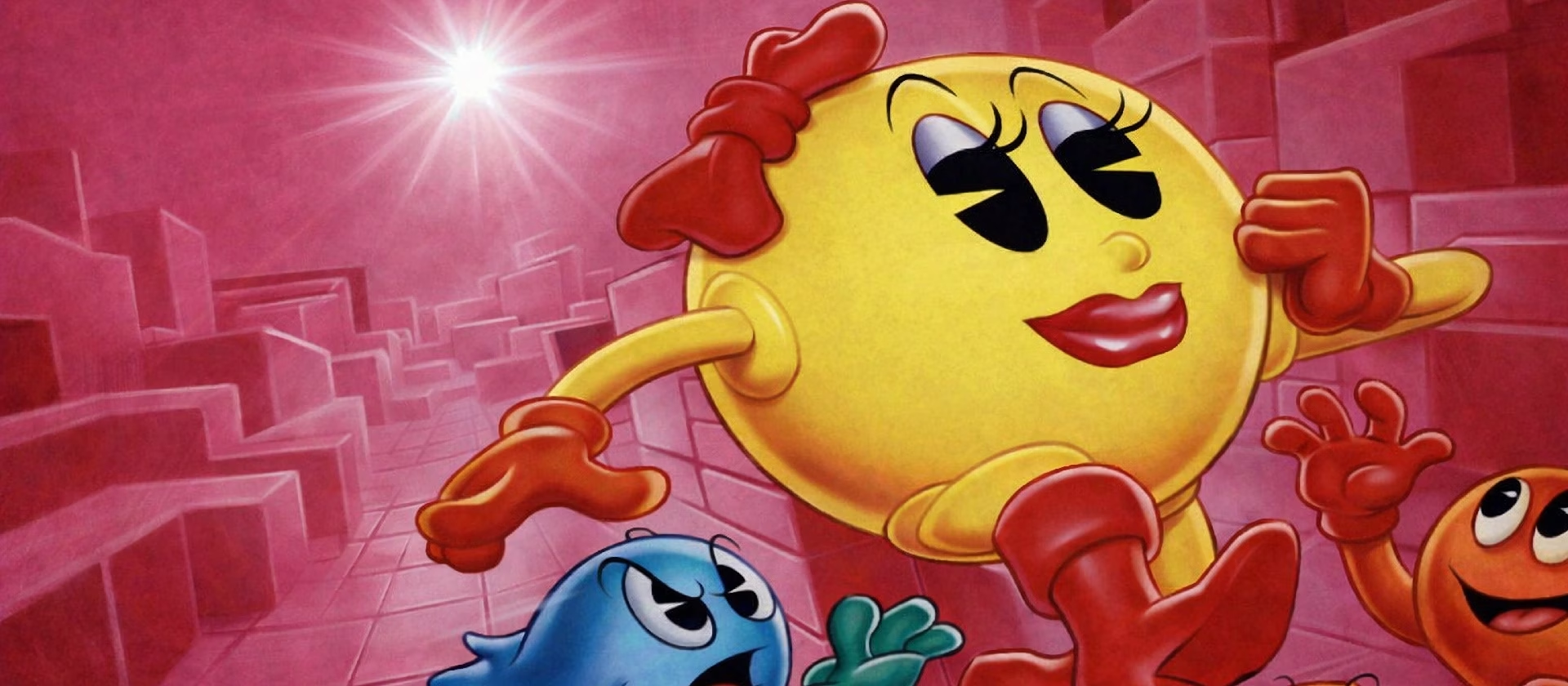
Three MIT engineers built it as an unauthorised Pac-Man hack — the ghosts go random, the mazes multiply, and it still outplays its parent.

Asteroids
Asteroids gives a modern player one perfect arcade grammar: five buttons, no joystick, bright vector lines, and a ship whose every burst of thrust is both escape plan and future problem.
Galaxian
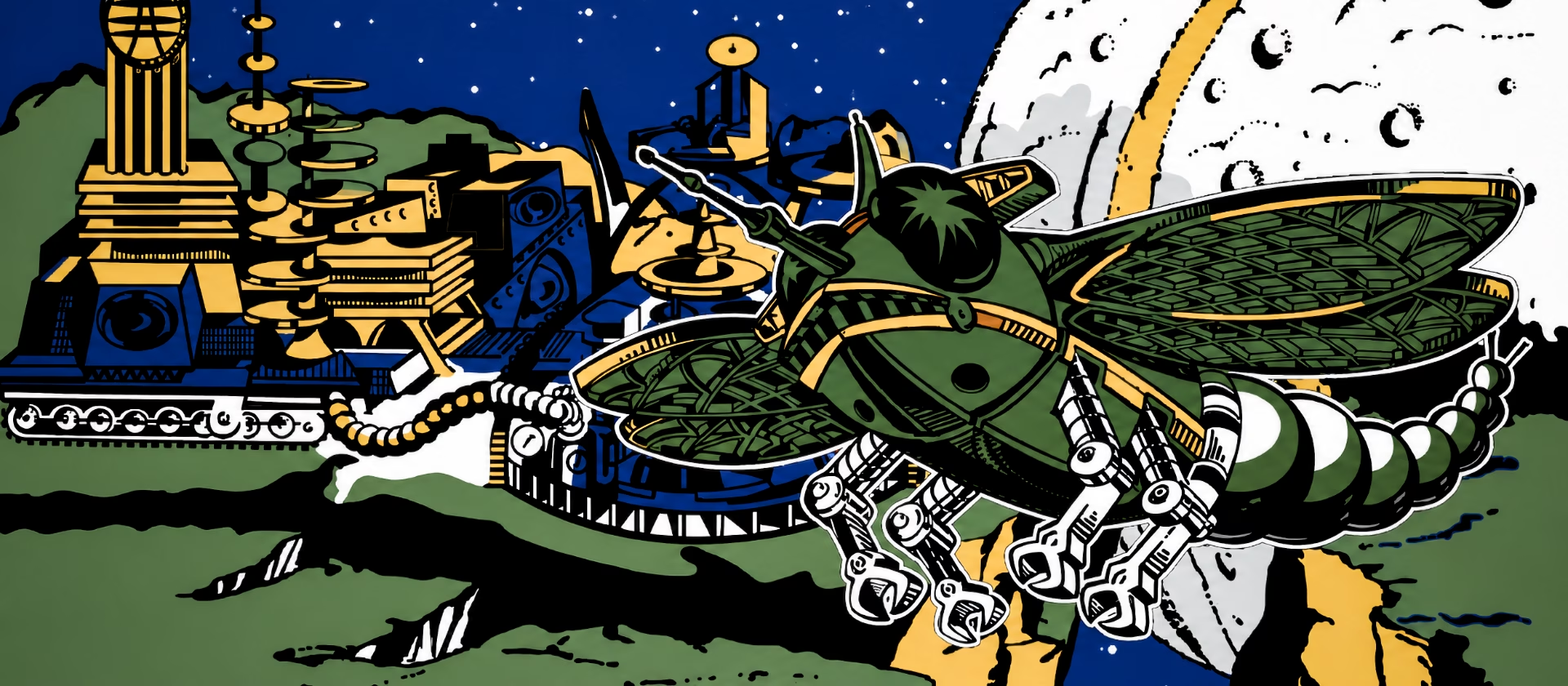
A dive-bomber peels out of formation trailing fire — the first arcade game where enemies acted instead of marched, and the clearest demonstration of why.
Space Invaders
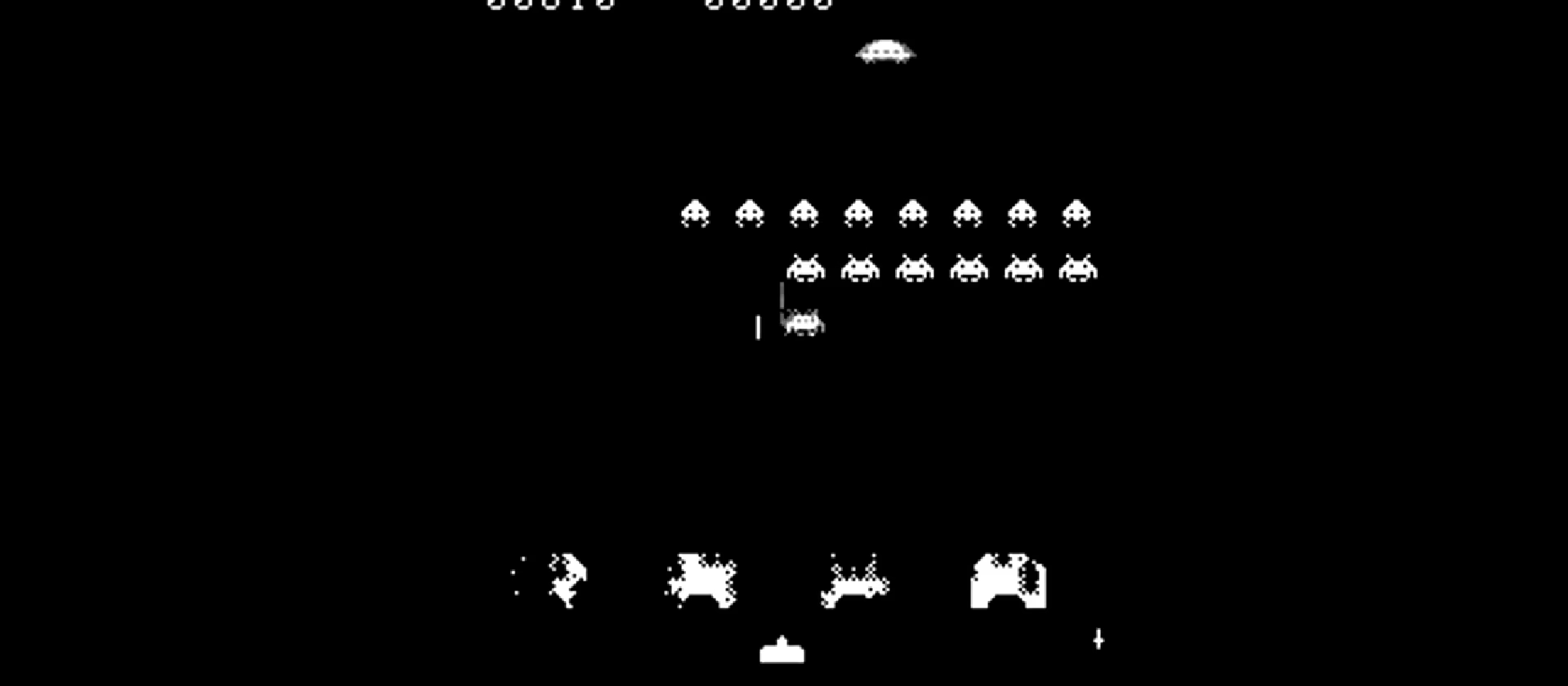
Wave four onwards the four-note loop tightens to a sprint, the last two columns close on the barriers faster than the first eight, and difficulty stops being a sequence of levels and becomes a continuous accelerating function.
No games match these filters.
Widen the search, or clear them all.
Remove a filter