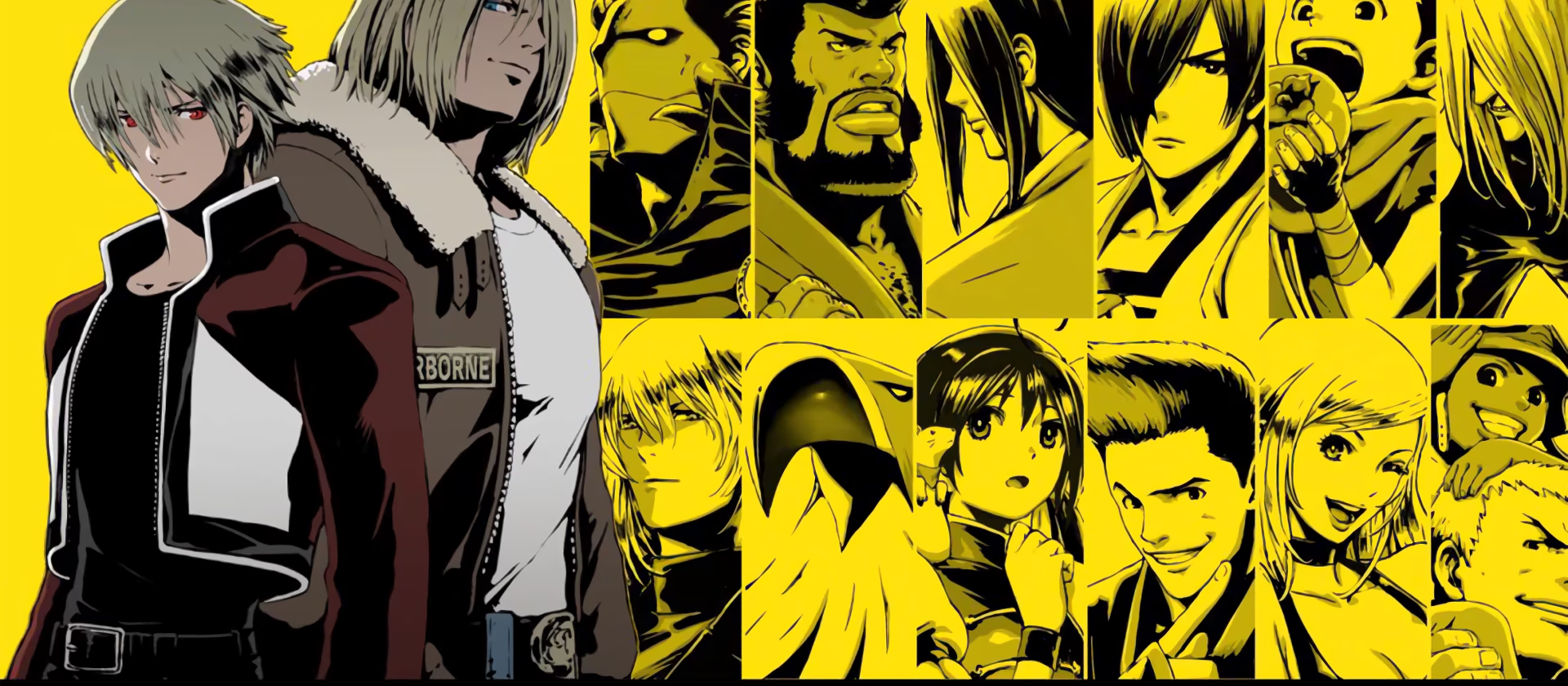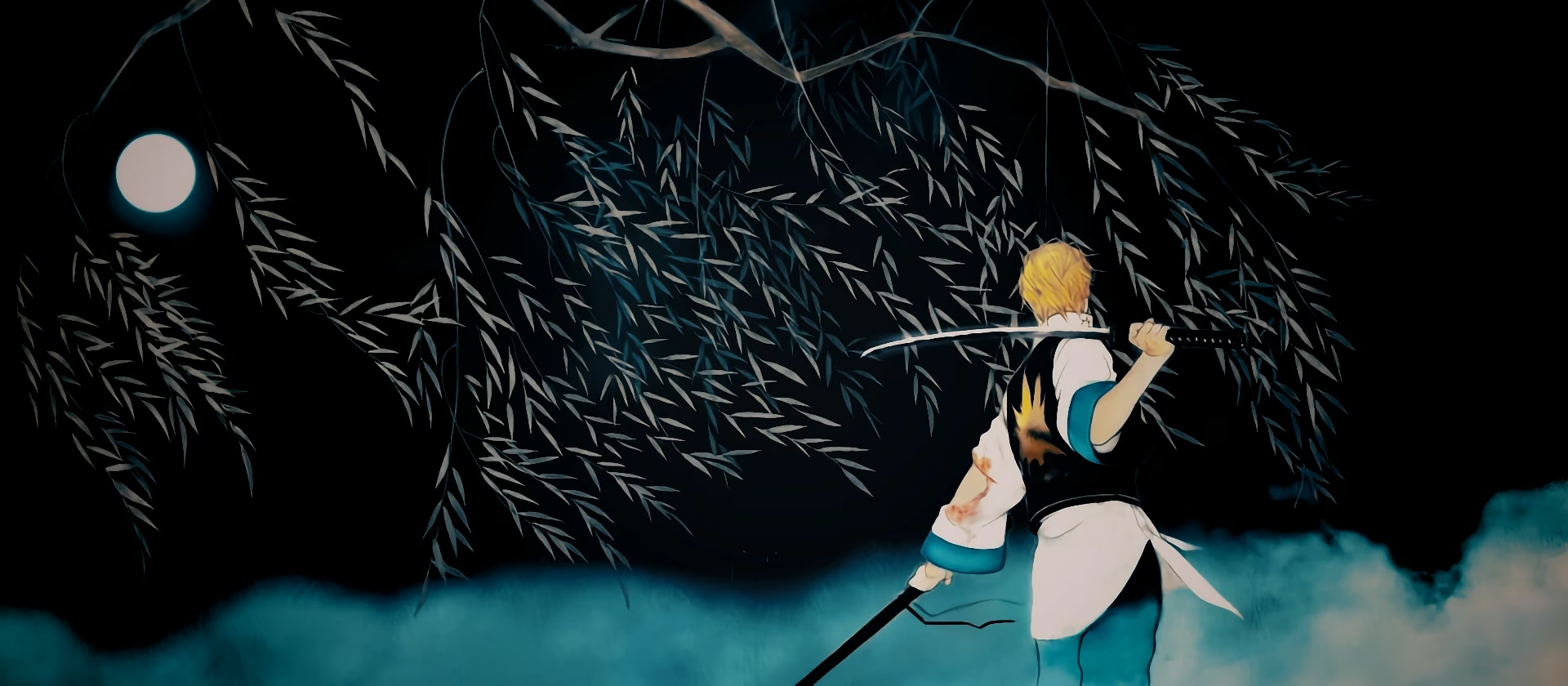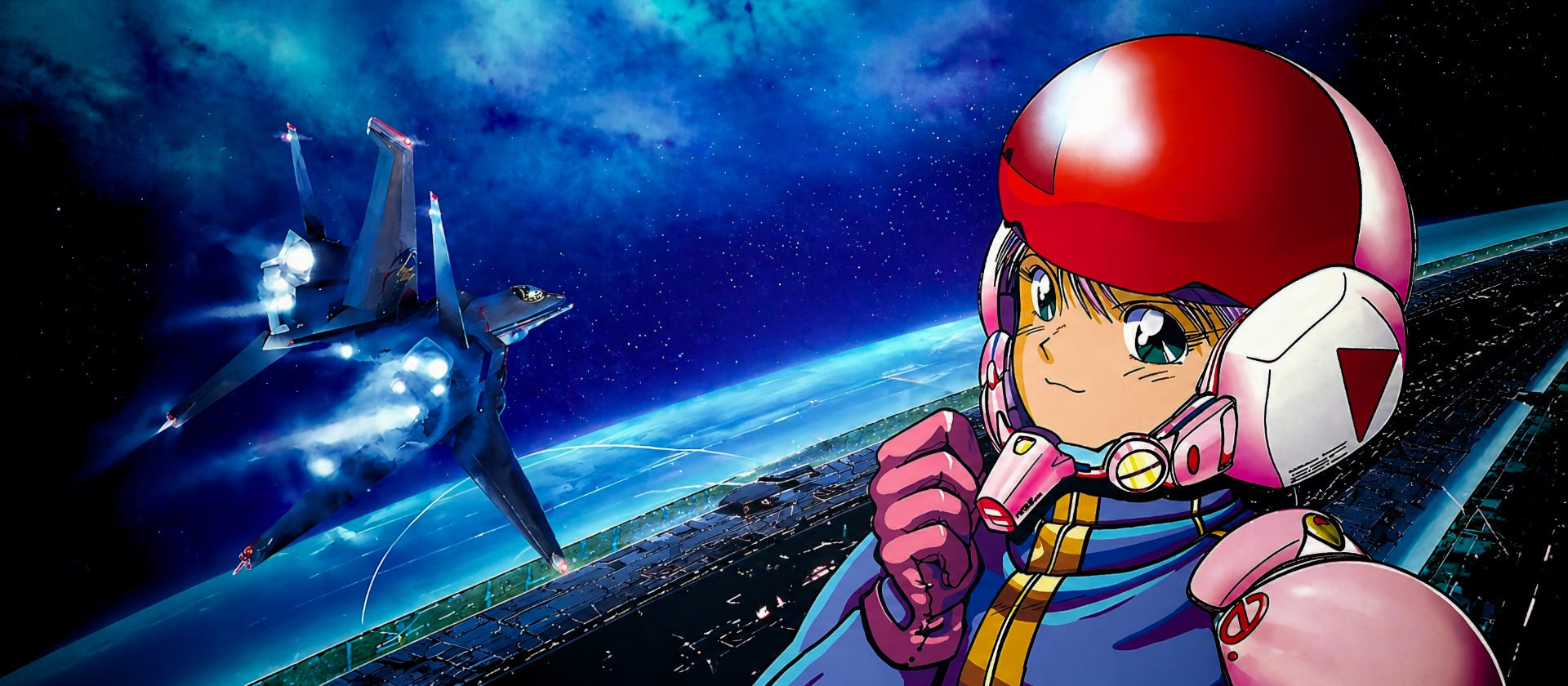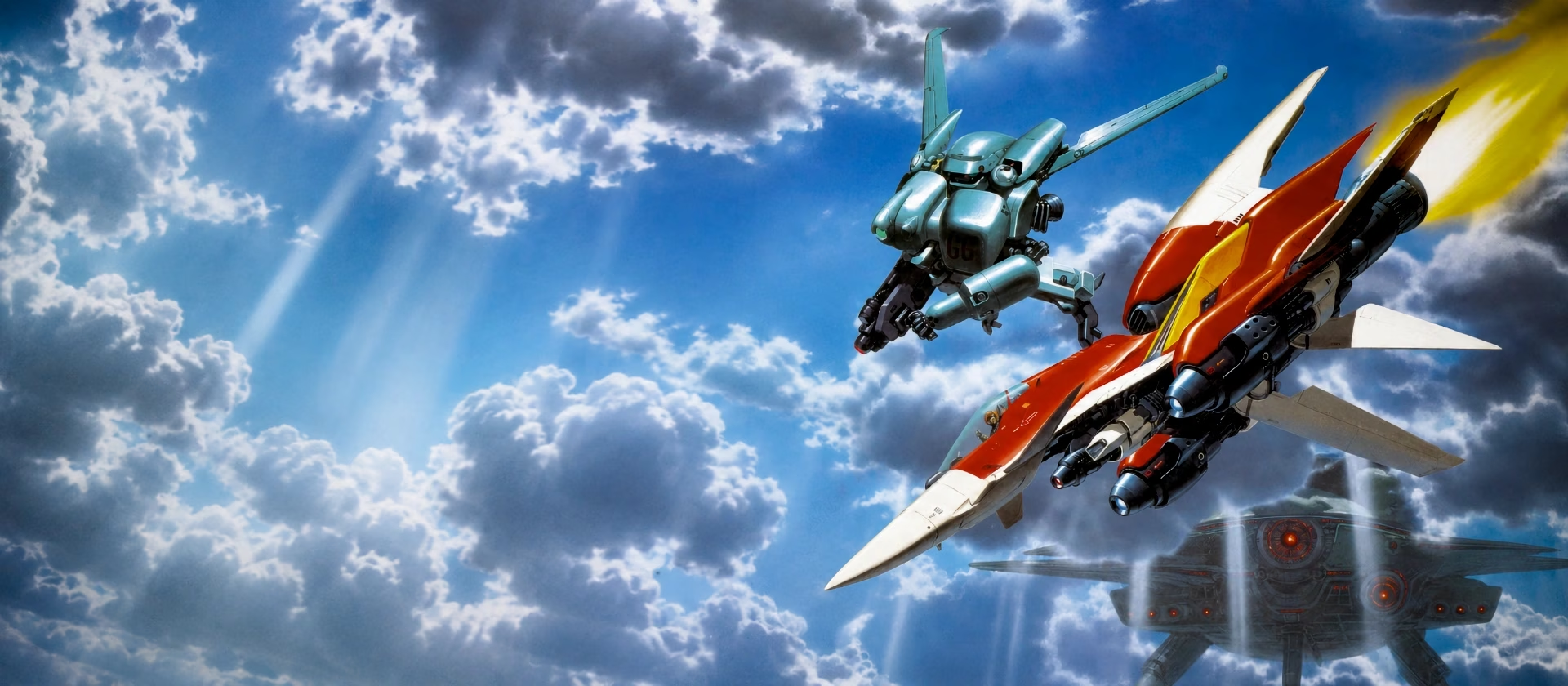
The disco stage opens with a wall of penguins in heavy-metal costume — eight of them, stacked three high in their own little frames, head-banging in unison against a backdrop of neon “ALL NIGHT” signage and a sun the size of the screen. The player ship floats in the middle of an explosion that has not stopped being an explosion since the section began. Somewhere underneath is a Dvořák melody, dressed up as a disco remix. None of this is decoration. This is a 1994 Konami arcade game arguing, in its loudest possible voice, that the horizontal shooter is not finished — that one more credit, one more two-player run, one more set of eight characters with eight different weapon loadouts is still worth setting up the cabinet for. The game’s name is Gokujō Parodius. It is the best Parodius to play today, and the reason it exists at all is that its director walked into an arcade in late 1993 and could not find a hori shmup anywhere.
His name was Tsukasa Tokuda. He had spent the previous two years on the X68000 and PC-Engine ports of Parodius Da!, the 1990 original. When he came back to Konami’s arcade division he was handed what amounted to an internal corporate gift — an anniversary brief, a chance to make a sequel to a game he already loved. He could see what had happened to the floor while he was away. Street Fighter II had been out three years. Samurai Shodown was a year old. Virtua Fighter had just landed. The cabinets that paid the bills were paired-monitor versus boxes, and the genre Konami had spent the eighties owning — Gradius, Salamander, Twinbee, Parodius itself — had been crowded out of operator lineups. So Tokuda did the only thing left to do, which was to make the most defiant horizontal shooter he could.
The Shooter Made Against the Floor
Tokuda’s account of the brief, delivered to a Japanese games mook in 1994 while Gokujō Parodius was new in cabinets, is the most useful single document we have for understanding what the game is. It is not interview boilerplate. It is the director looking around an arcade and naming the problem.
”I noticed there was nothing but vs. fighting games. I personally loved STGs like Gradius, but you could barely find even a single hori STG.”
Tsukasa Tokuda · Game Hisshou Guide, June 1994 (translated by Shmuplations)
The team he built around the brief was small, mixed, and weighted toward people for whom this was a debut or near-debut project. Shuzilow.HA — who had moved into game art via Detana!! TwinBee and Gaiapolis — was the lead character designer, and the recognisable Parodius register (everything has a face, every face is doing a bit) is largely his. The composer was Kazuhiro Senoo, who had joined Konami the previous April; Gokujō Parodius was his first project. The published credits list two more in-house composers, Seiichi Fukami and Satoko Miyawaki, sharing the room. Section 2 chief Masahiro Inoue signed off. Japanese sources — but not, conspicuously, English ones — also credit the gag-manga artist Asari Yoshitoo, whose work on Manga Science and the Wapuro Mahjong strips put Gokujō Parodius inside a humour-comics lineage as much as a shmup-parody one. The piece reads as such if you go looking. The bosses are not parodies of Gradius bosses so much as drawings being asked to do shmup work.
What this team did with the brief is the part that matters. They did not produce a wink at the Gradius line. They produced a game that uses every weapon a shmup has — pattern density, weapon variety, boss-design escalation, second-loop reward stages — to argue that the register of an arcade is the thing worth defending. Cabaret pillars and showgirls and panda ballerinas and disco penguins, yes. But also: bullet waves that demand the same routing instincts as Gradius II, capsule mechs and ringed-bullet battleships, a clock-gear factory that scales in vertical density until the screen runs out of safe space. The argument runs through the design, not above it.
Characters Where Ships Used to Be
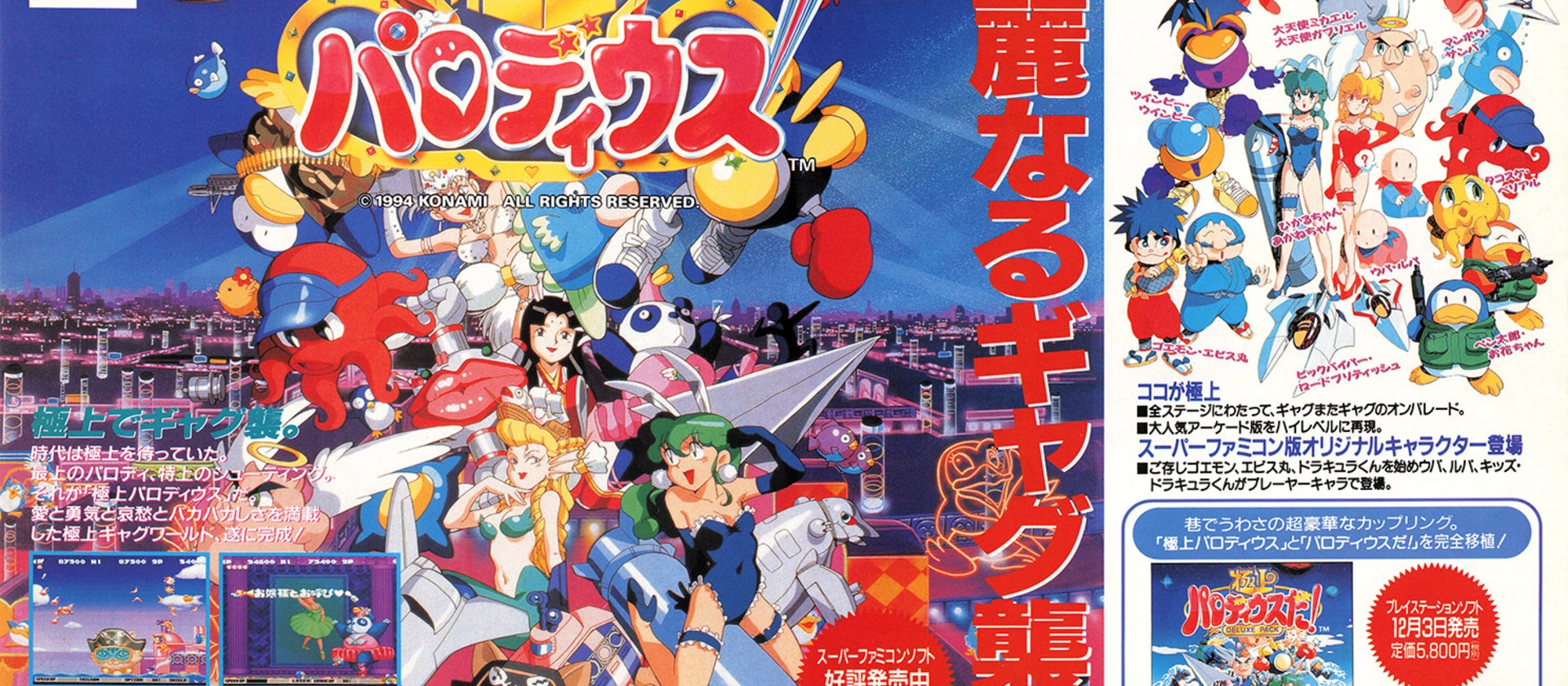
The most consequential rule change from Parodius Da! is the roster. Gokujō Parodius ships with eight characters, expanded mid-development from an initial six after the boss team asked for more. They are not skins. The Vic Viper carries the Gradius options-and-shield loadout; TwinBee carries the Twinbee bell-juggling weapons; Pentarou has options that orbit the ship; Hikaru and Akane fire a paired beam between them and have no options at all, their main weapon scaling instead. Each character makes the game a different game. Two players can run simultaneously — the second player picks from clones with the names swapped (Lord British, Hanako, Winbee, Aitsu) — and there is a small, weird interaction in which friendly fire does no damage but, if you rake your partner with enough shots, they will eventually rage and erupt with extra bullets. It is a tiny piece of co-op behavioural design that almost no shmup of the era has, and it changes how two people play together.
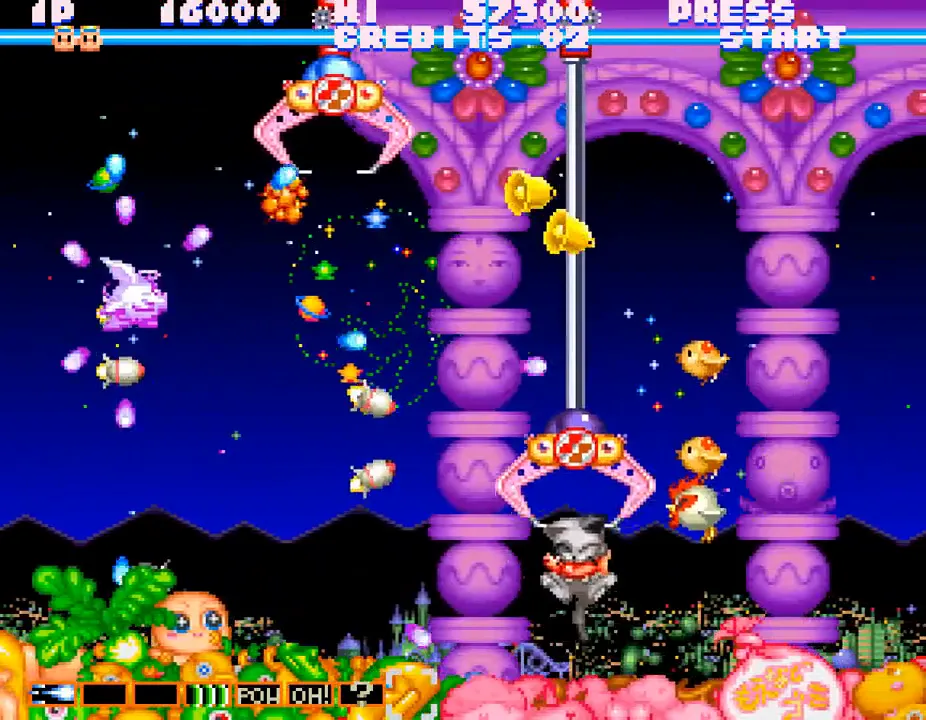
Cabaret pillars and dancing showgirls under the player ship. Konami’s GX hardware is the loud part of the argument — more parallax, more sprite layers, more confident animation than the bubble-system original could afford. Gokujō Parodius · Konami, 1994.
The hardware doing the talking is the Konami GX board, two generations on from Parodius Da!‘s System 1 platform. The difference is structural, not cosmetic. There are more sprite layers. The parallax behaves like a separate creative voice. The animation budget on character sprites is suddenly enough that Shuzilow.HA’s drawings hold their faces while moving — the showgirls flick their fans, the panda boss pirouettes inside a gilded mirror, the disco penguins headbang in time. The arcade soundboard runs the score wide and clean. None of this would matter if the underlying shooter were thin, and it is not. The Stage 5 sequence of miniaturised previous-Gradius bosses is real homage; the capsule mechs and ringed-bullet ships are real pressure. Gradius II veterans will recognise the routing logic immediately. The difference is that the surface is allowed to make jokes.
Seven stages, not the original’s ten. Tokuda’s design notes describe a deliberate one-loop run — the Special Stage exists for hardcore players who want a harder pass, but the main game refuses the Gradius second-loop demand on principle. It is the right call. The pacing tightens, the encounter design has room to escalate, and a single-credit clear lands at around half an hour — the modern-friendly arcade-run length the genre took twenty more years to admit it needed.
Senoo’s First Score, Played in Pastiche
Senoo’s soundtrack is the part that gives the game its temperature. He worked from a brief that Shuzilow had already established visually — every character a register, every register a recognisable music cue — and treated his job as casting. The mermaid boss enters to Sarasate’s Zigeunerweisen. The early stages run on big-band cuts, with the Stage 1 opening built on Glenn Miller’s “In the Mood.” The closing stretch lands on a disco remix of Dvořák’s New World Symphony. None of this is ironic quotation — the arrangements are played straight, with the Konami soundboard pushing them as confidently as it would push original Kukeiha Club material. The classical pieces sit comfortably; the licensed pop pieces required JASRAC clearance Konami evidently negotiated for the arcade release and could not maintain through every reissue. (The 2007 PSP collection had to substitute six tracks, “In the Mood” among them, when the licensing lapsed — a small archaeological record of how much the original score relied on real, paid music.)
The disco stage’s penguin chorus and the New World Symphony as a four-on-the-floor remix. Motion is the point — the explosion does not stop being an explosion, the penguins do not stop headbanging. The visual argument and the musical argument are the same argument. Gokujō Parodius · Konami, 1994.
The effect on the room is what the score is for. Parodius Da! had used novelty sound. Gokujō Parodius uses real arrangements, paid for and credited, with the confidence of a music staff who knew their hardware. It is the part of the game that travelled best even in the truncated SFC and PSP editions, and it is also the part that explains why the game’s silliness reads now as generous rather than thin. The audio was never the joke. The audio was always the room.
What the Director Got Wrong
There is one strange admission in the 1994 interview. Asked to rate his own work, Tokuda gives Gokujō Parodius fifty out of a hundred — half the eighty he scored Parodius Da!. He had reasons, mostly to do with what he wished he had done with the budget. The judgement is wrong. The game is better than the original by every metric you can name from outside the studio, and the playable evidence is exactly what makes that the case. The hardware is louder. The roster is wider. The pacing is tighter. The music is more confident. The two-player rage mechanic is a small invention nobody else made. The closing image — a treasure chest the cast finally opens to reveal a bomb that politely apologises and detonates the heroes, a cruel anti-climax to a game whose Japanese subtitle is In Search of Past Glory — is the kind of joke a smaller, more nervous design would never risk.
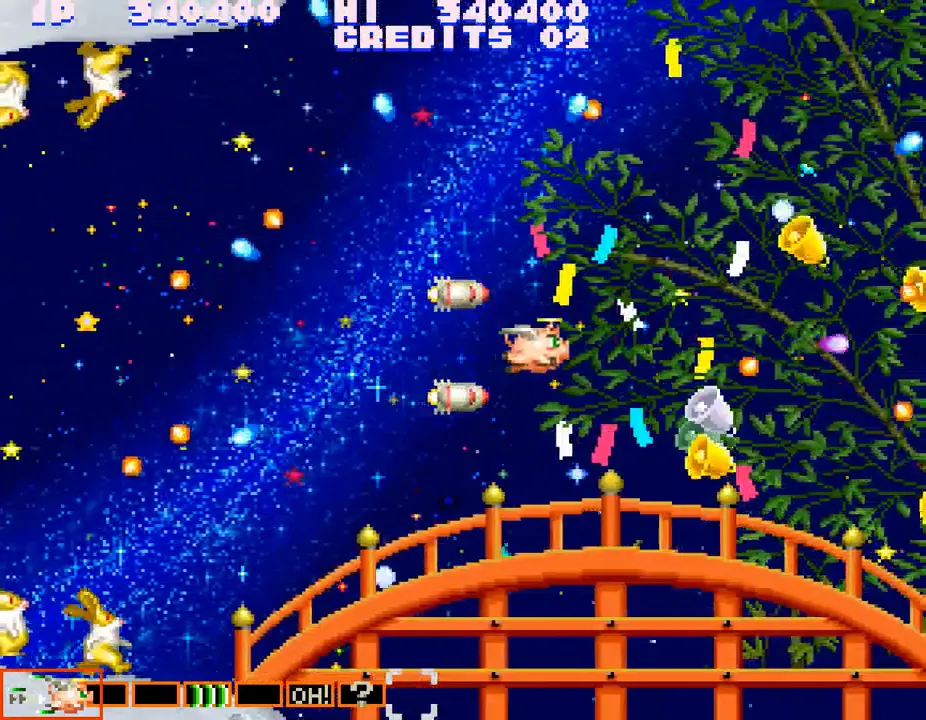
A red bridge and falling blossoms in the moon-stage sequence. The aesthetic range — from Vegas cabaret to Japanese folklore to space-rave disco inside a single half-hour run — is the part Tokuda undersold in his own self-assessment. Gokujō Parodius · Konami, 1994.
It is honest to name what Gokujō Parodius does not give a modern player. The arcade-honest difficulty spikes from Stage 5 onward will eat credits the first three runs, and the Special Stage is, by Tokuda’s own design intent, a wall for hardcore players. The English-language access route is awkward: the cleanest legal-English release is the rare Saturn Fantastic Journey import, the currently-sold Parodius Portable on PSP is a Japanese-only release with six music substitutions baked in, and Konami’s 2019 Arcade Classics Anniversary Collection somehow shipped without it. The Super Famicom port loses two-player simultaneous and gains slowdown; it adds Goemon, Kid Dracula, and Bio Miracle’s Upa as guest characters and is interesting for that reason, but it is not the way to meet the arcade game. The honest answer for most readers today is MAME on a controller, second player on the couch, Parodius Portable if you want a legal route and can read the menus.
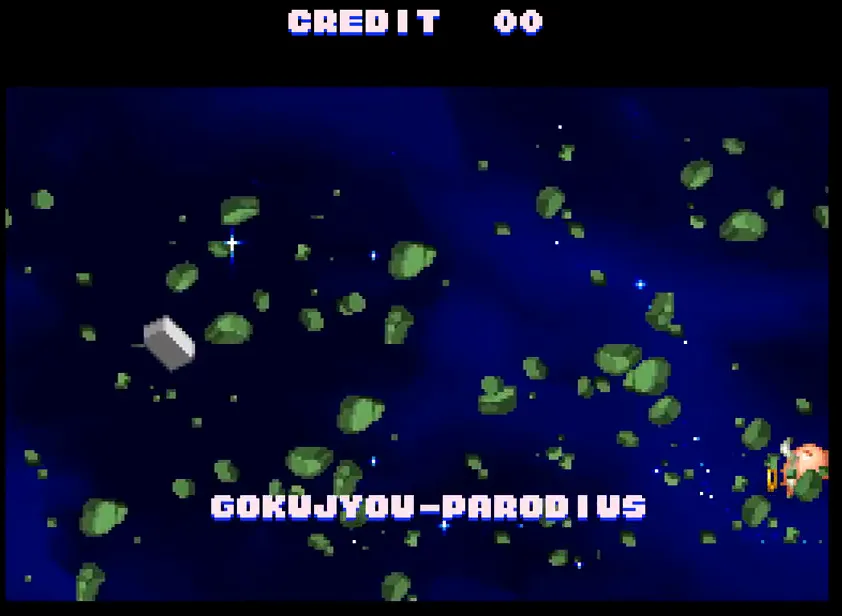
The bonus ‘Shooting History’ stage — a medley level Tokuda designed as a one-loop reward, looping previous-game music through the action. The ‘past glory’ the subtitle keeps promising lives here, played as celebration rather than mourning. Gokujō Parodius · Konami, 1994.
The wider point, and the reason the rescue argument is not the wrong one, is that Gokujō Parodius gives a present-day player something nothing in the genre’s modern lineage gives: the room-temperature confidence of a developer who has run out of fear. Compare it to Gradius II, its ancestor — Gradius II is precise, punitive, ascetic, the player tested against the design rather than welcomed into it. Compare it to Salamander 2 or Sexy Parodius, its successors — both careful, both inflected by the fighting-game decade either coping with or working around the floor. Gokujō Parodius alone plays as if the genre’s marginalisation is freeing. Tokuda made the shooter he wanted to play, on the hardware he was given, with a team young enough not to know it was supposed to be cautious, and the result is the loudest argument for arcade variety the year produced. The director got the score wrong because he was inside it. Players outside it have thirty years of evidence the other way.