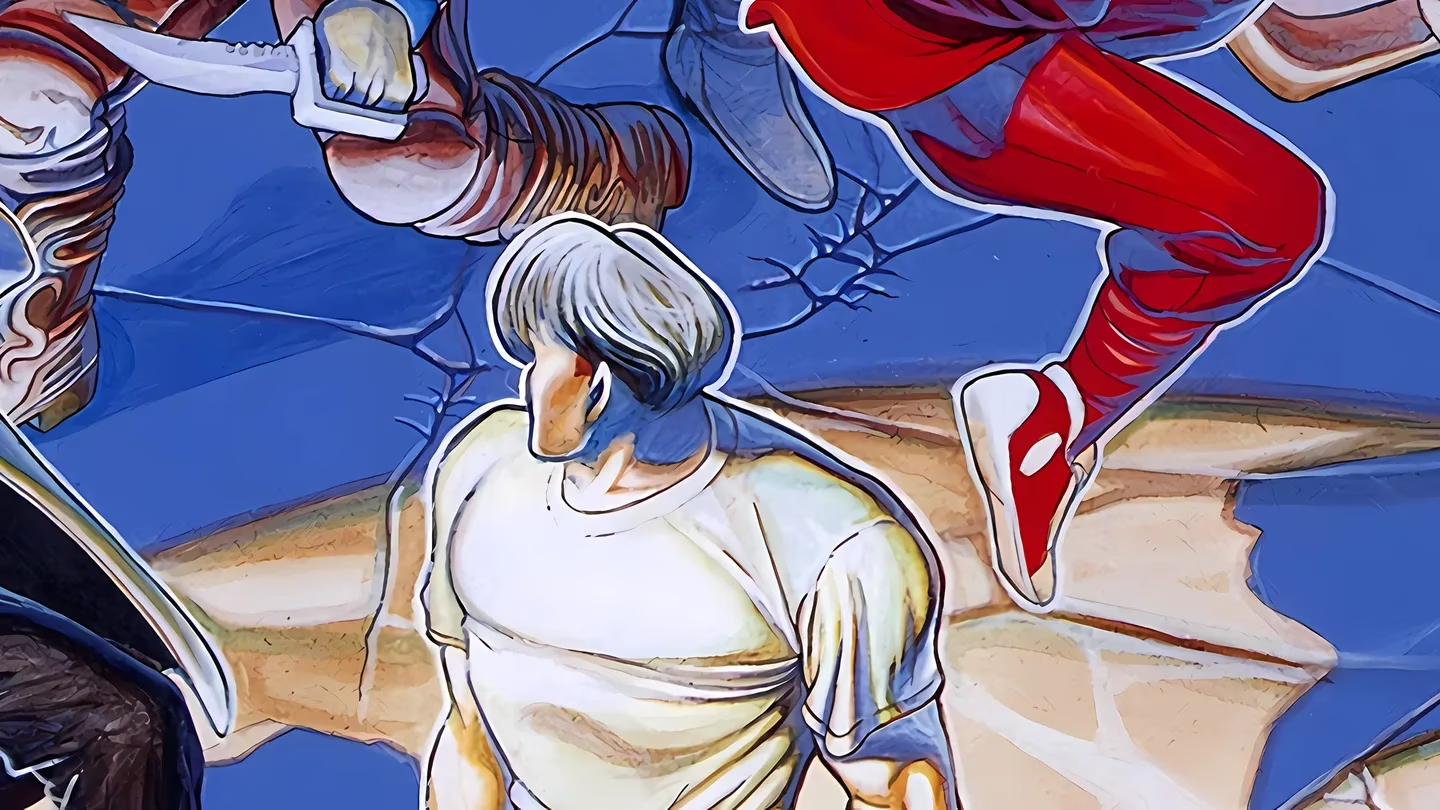
A Street Fighter II cabinet in a London arcade, summer 1991, was taking more money than the rest of the room put together. Nobody was playing alone. The crowd three deep at the Capcom machine meant the light-gun shooters and the driving sims and the last of the beat-‘em-ups were running attract modes to an empty floor. RePlay magazine would chart Capcom’s fighter at the top of its American operator league for sixteen consecutive months, from May 1991 through August 1992. Nothing else in the coin-op charts got near it. That kind of concentration does not describe a healthy sector. It describes a sector with one game left to lose.
That Street Fighter II was the biggest arcade game of the decade is the thing everyone remembers about 1991. That it was the last arcade year is the thing almost nobody says. In the same twelve months that Capcom ate the cabinet, seven home-console games shipped whose design grammar we still play by three decades on. Fighting, platforming, 4X strategy, JRPG, cinematic adventure, puzzle-as-system, Mode 7 spectacle — every canonical template was authored in 1991, every one for the living room, not the arcade floor. The room changed. The cabinet was just where we were still looking.
A Room With One Game In It
The combo system was not designed. In a 1991 Gamest interview, programmer Akira Nishitani explained — almost sheepishly — that the emergent grammar of the entire fighting genre was a side effect of settings the team had adjusted for other reasons.
”The well-known uppercut to shoryuken combo was not something we originally planned. It came about as a chance side effect of some game settings we had adjusted.”
— Akira Nishitani, Gamest, 1991
What would, within months, become the language of competitive play — the link, the cancel, the juggle — was an unintended interaction the team noticed, tested, and decided not to fix.
Capcom’s American colleagues reported back to Tokyo in astonishment. A Gamest dispatch from Summer 1991 captured the texture of it: “The size of the crowds that gather around the cab are so much bigger than in Japan. They never play single player either, it’s all versus matches, one after the other.” The cabinet had become a social arena in a way the arcade had not been since Pac-Man. A phenomenon inside a sector that has otherwise flatlined is not a sign of vigour. It is a sign of concentration.
The two regions were already drifting apart. Japanese game centres had begun a slow pivot toward UFO catchers and prize redemption — formats that would carry the room into the next decade after coin-op design ran out of road. Street Fighter II was a phenomenon there too, but a phenomenon inside a sector remaking itself for a post-arcade future. In London and Chicago there was no such cushion. When the cabinet’s last great social game emigrated to the SNES, the Western rooms it left behind did not fill back up.
The SNES port the following year sealed what the cabinet had quietly signalled. Electronic Gaming Monthly’s 1991 Buyer’s Guide had placed the Genesis above the SNES, averaging nine out of ten to Nintendo’s seven-and-three-quarters. Their 1992 guide flipped that ranking, naming Street Fighter II as the biggest 16-bit exclusive of the year. The arcade’s great game had emigrated. In doing so it restructured the war between two boxes of silicon sitting in children’s bedrooms.
The Hedgehog Went Home
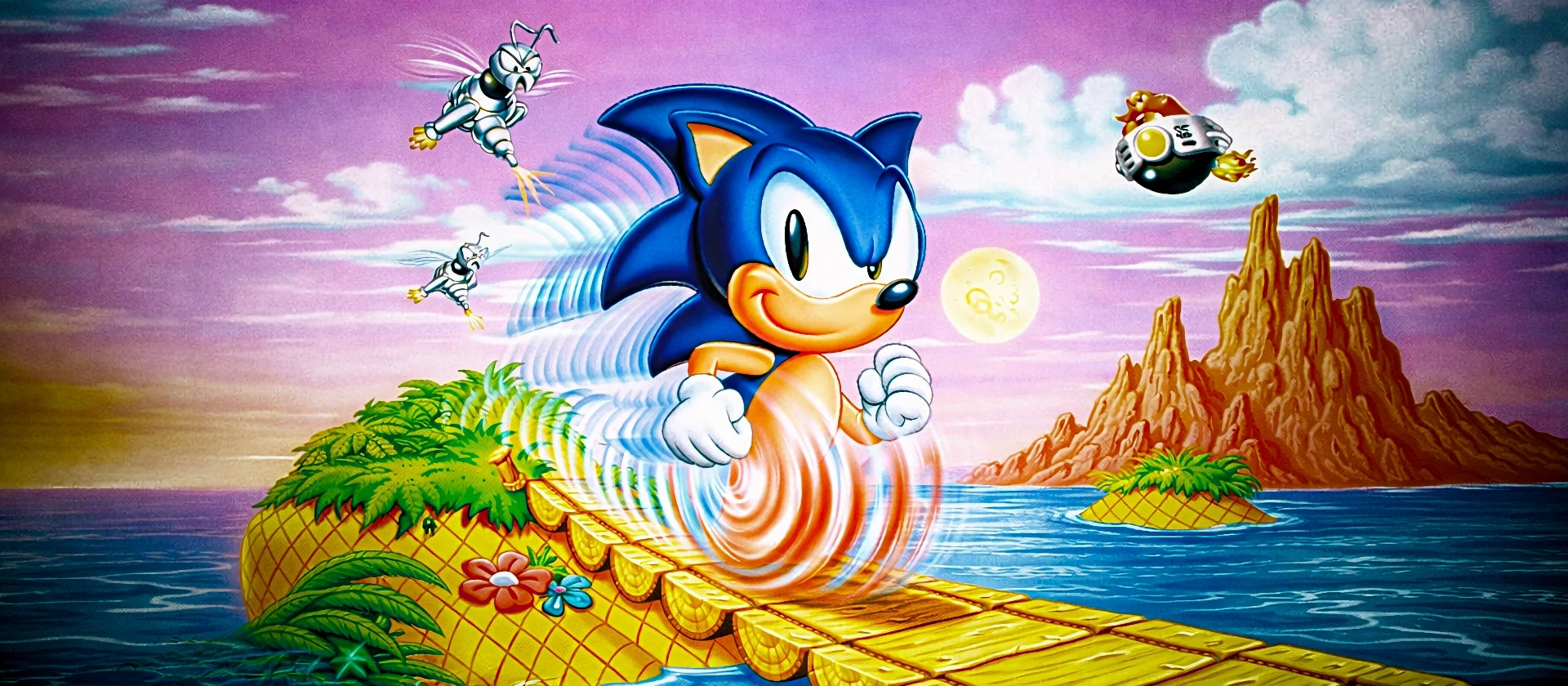
Sega had seen that war coming a year earlier. The internal contest it ran for a mascot capable of challenging Super Mario Bros. 3 landed on Naoto Ohshima’s hedgehog design, according to Sonic Team’s own later recollections, partly because it was the last entry on the list — the committee had exhausted the obvious candidates and was ready to be surprised. The brief attached to the pitch, as Yuji Naka has recounted, was blunt to the point of aggression: an action game to challenge Mario. Sega understood, in 1990, that the war would be decided by a platform hero, and at home.
Naka’s engine was built around a single idea that would be unthinkable in an arcade context: speed as a player-literacy mechanic. A new player survives Sonic. An experienced player reads the terrain fast enough — a rolling hill, a curve, a badnik’s placement — to turn it into momentum. That kind of gradient only makes sense when a player can get better over an afternoon rather than between coins. Sonic is a home game by design.
Across the 1991 holiday season, the Mega Drive outsold the Super Famicom roughly two-to-one in the United States, and Sonic did most of that lifting. But what both companies were now fighting over — a machine in the bedroom, not a cabinet by the pub — was set by the summer.
Konami had reached the same conclusion. Super Castlevania IV shipped on the Super Famicom on the 31st of October 1991, directed by Masahiro Ueno, and reimagined a series whose previous home entries had been paced with coin-op rigour — short stages, instant-kill traps, the whip locked to a single rigid axis. The Super Famicom version moved the whip on eight directions, slowed the pacing, lengthened the stages, and treated the player as someone who could afford to die and try again. Mode 7 rotated rooms a Famicom cartridge could not have rendered. Konami had spent a decade building one of the era’s great arcade-action series; in 1991 it carried that series home and made a different kind of work out of it. Three studios — Capcom, Sega, Konami — making the same migration in the same twelve months is not coincidence. It is a sector reading the same numbers.
Time the Arcade Couldn’t Afford
Sid Meier’s Civilization shipped in September 1991 from a MicroProse office that had nearly binned it. The original prototype ran in real time, which Meier later described as watching the civilization grow was like watching paint dry. Bill Stealey was ready to shelve it. What saved the project was Bruce Shelley, whose day job had been converting Avalon Hill board games and whose instinct for turn-based pacing dragged Civ off the clock and onto a grid of beats the player controlled.
Three months after release, the Soviet Union dissolved. A game whose loop turned on civilizations rising and falling had shipped into the year an empire fell — into a Gulf War televised live, into Tim Berners-Lee’s first web page going public from CERN that August, into a Cold War atlas being redrawn week by week. Civilization did not feel topical because it had been designed to be topical. It felt topical because nothing else in the year could stop arguing about exactly the question its turn structure posed.
What Meier absorbed from Shelley was rhythm. The one more turn loop that would define a genre — and, more importantly, would make a four-hour session feel like forty minutes — is not an artefact of game theory. It is an artefact of a board-game sensibility imported into software by someone who understood that time, not real-time, was the only resource the home could spend that the arcade could not.
Square understood the same thing. Final Fantasy IV shipped on the Super Famicom on the 19th of July 1991, and its central design innovation — the Active Time Battle system — came from designer Hiroyuki Ito, who has since clarified that the Formula One metaphor often attached to ATB was a mechanical hint, not an homage. The problem he was solving was accessibility. Dropping RPG players straight into real-time combat in 1991 would have been jarring. ATB invented a middle register — time that moved, but only as much as you let it — that the genre has been refining ever since.
Both games slow the player down. Both assume the player has an evening, not a coin. 1991 is the year two of the decade’s most durable templates were built around that permission.
The home / cabinet pivot
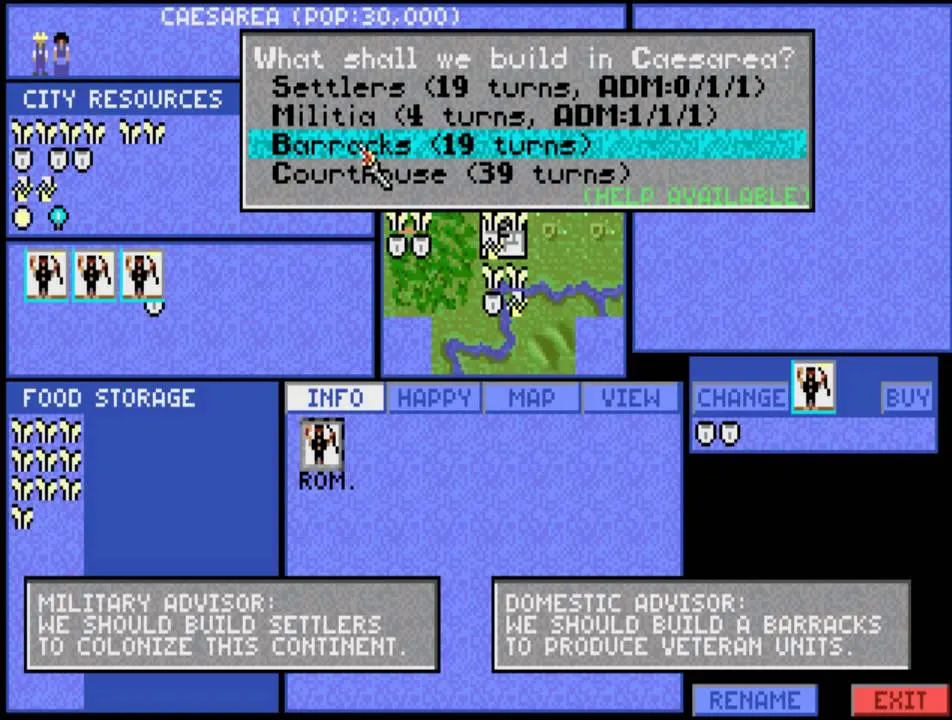
A four-hour session that felt like forty minutes — *one more turn*, on permission only the home could give.
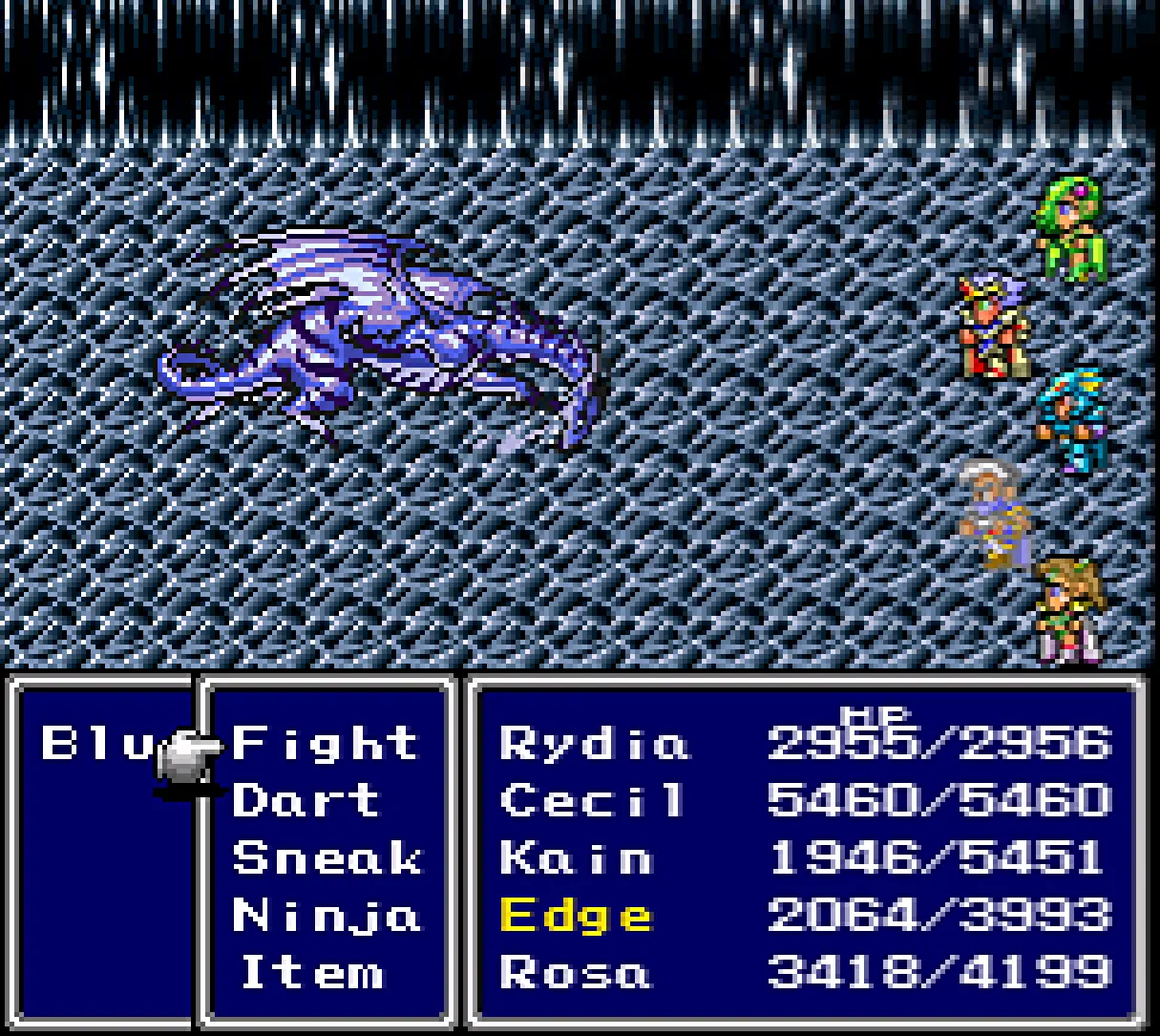
Active Time Battle invents a middle register: time that moves, but only as much as you let it.
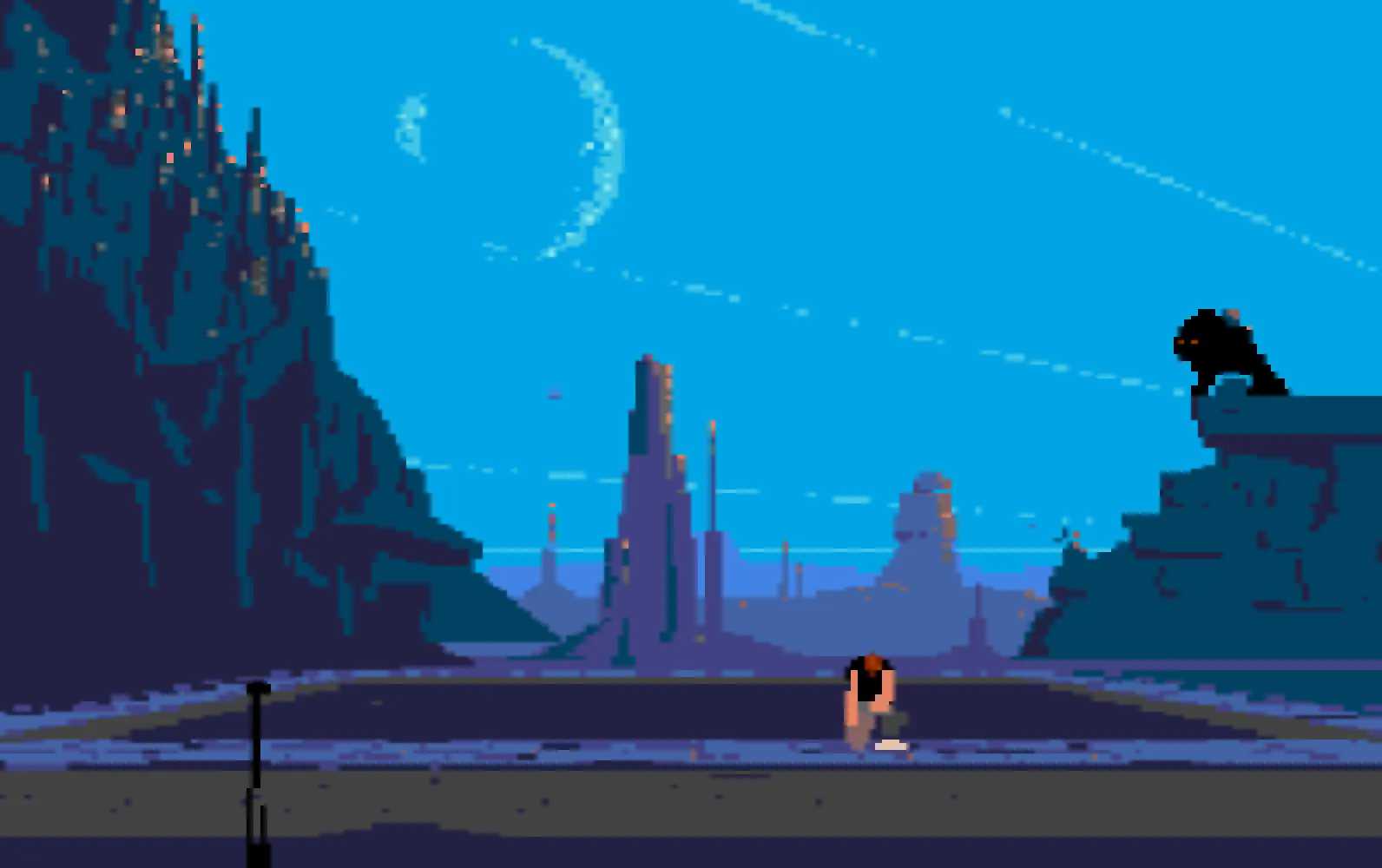
Quiet in a way no other 1991 game is quiet — no HUD, no dialogue, watching back patiently.
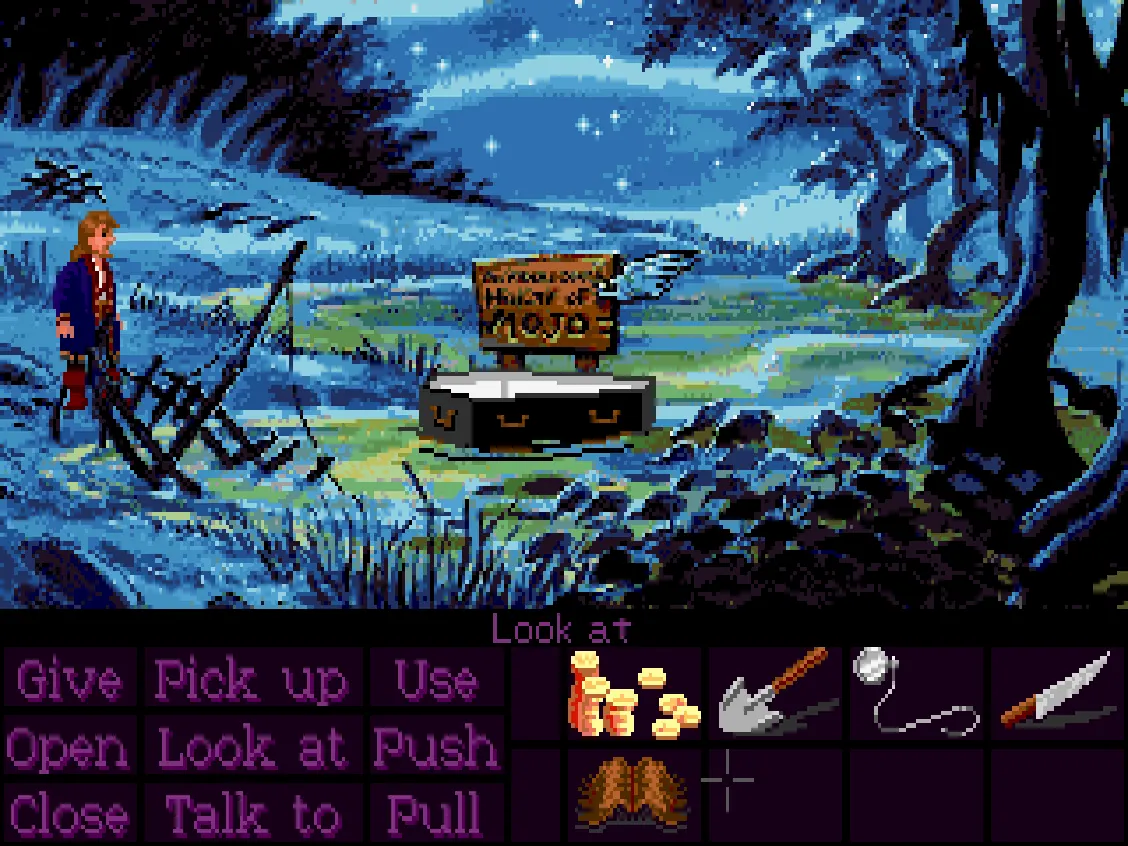
iMUSE made the score adapt to where you walked — a shaggy pun cabinet that listened back.
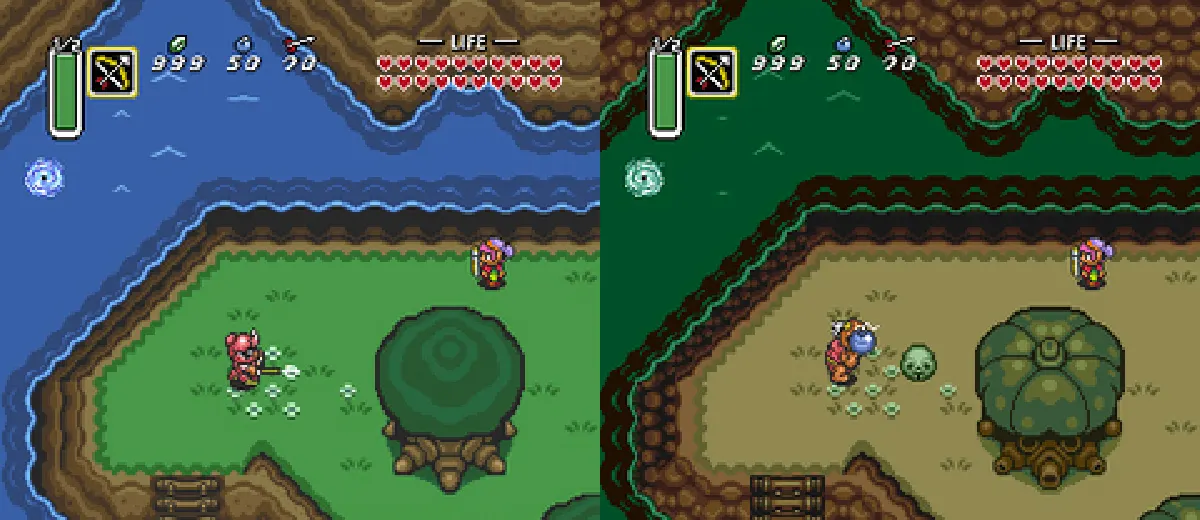
Two complete maps, mirrored across a parallel-world axis, that the player learned to hold as one.
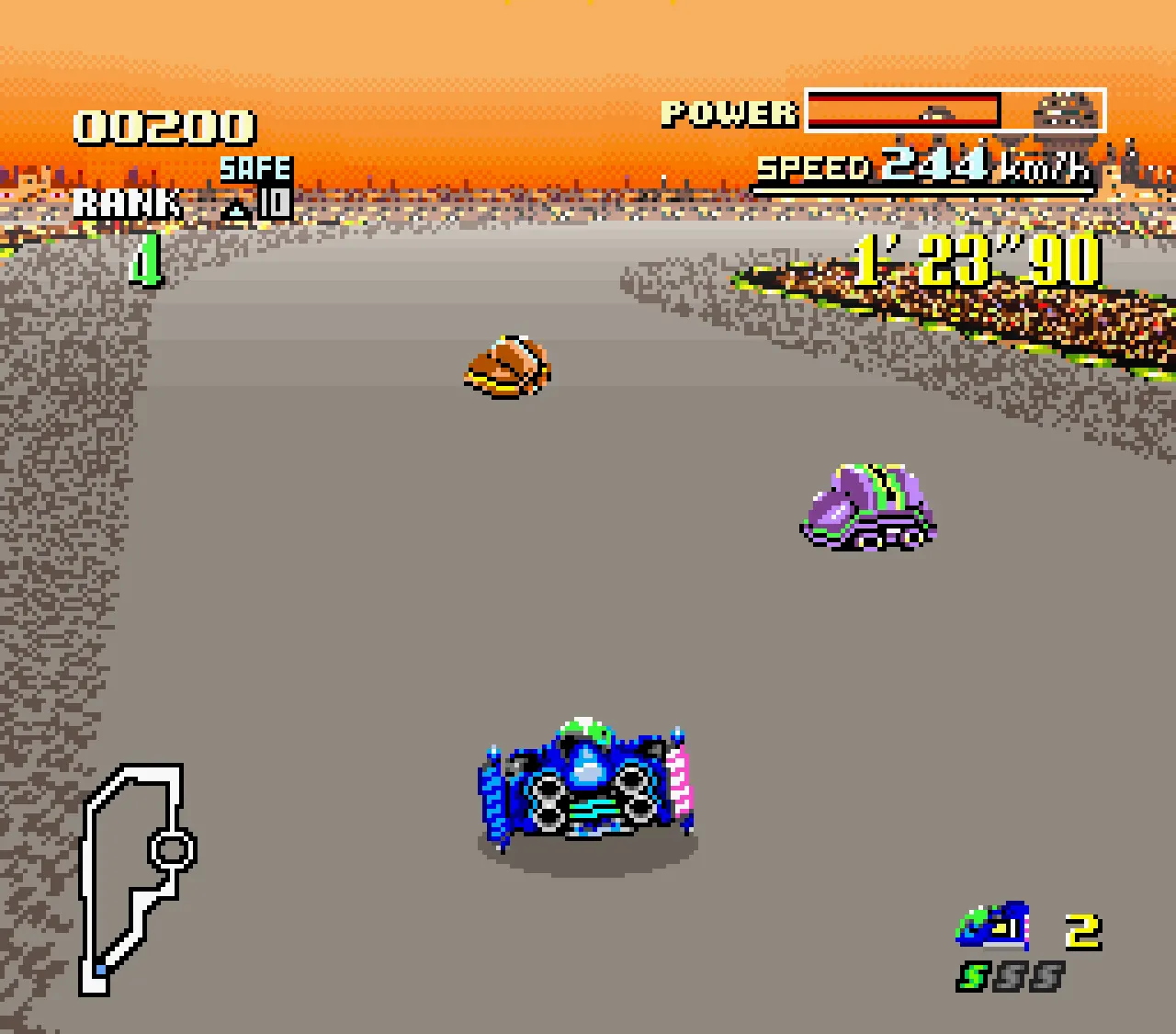
A plane rotated and scaled to fake three dimensions. *Are those polygons?*, a rival asked.
A Camera in the Living Room
In a Paris flat in 1989, Éric Chahi sat down to make a game by himself. It took him two years. Another World shipped in late 1991, solo-authored in all the ways that matter — design, programming, art direction, animation — with composer Jean-François Freitas providing the score and almost nothing else. The result was a game with no HUD, no dialogue, no exposition, and only six scenes that used the rotoscoping technique for which the whole project is remembered. Most of its animation was hand-drawn, frame by frame, by a man who had decided that working alone was also a licence to make something nobody else would sanction.
”It was like theatrical improvisation — because there were firm constraints but creative freedom. Creating the game alone created a feeling of loneliness that you could also find in the game.”
— Éric Chahi, GDC 2011
The alien planet that opens when the lab accident goes wrong is quiet in a way no other 1991 game is quiet. There is nothing to read. There is nothing to explain. The game assumes the player will learn the vocabulary of its animation and its silences by watching, and watches back patiently enough to let them.
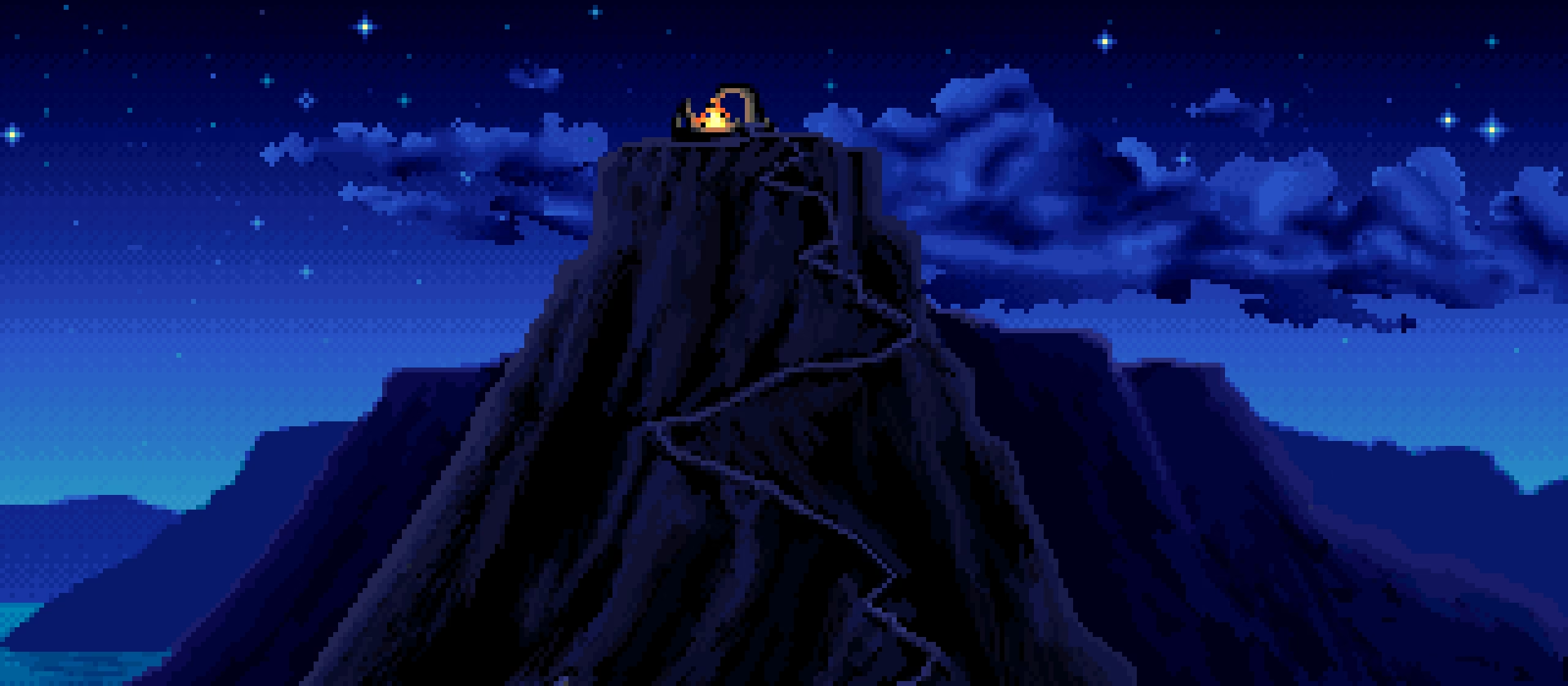
At Lucasfilm Games’ Skywalker Ranch offices, Ron Gilbert was making an opposite claim. Monkey Island 2: LeChuck’s Revenge shipped in December 1991 with the debut of iMUSE — the adaptive music system built by Michael Land and Peter McConnell — and with the most divisive ending of the nineties. The framing device that reveals Guybrush’s whole adventure as, perhaps, a child’s daydream in an amusement park was originally Gilbert’s intended finale for The Secret of Monkey Island a year earlier. His team had talked him out of it. He saved it and used it here.
The two games are tonal opposites. Another World strips language out. Monkey Island 2 is a shaggy pun cabinet that never stops talking. But both are authored with a cinematic confidence the 1990 adventure game did not yet have, shaped by specific hands with specific voices — Chahi’s alone, Gilbert’s barely more than alone — rather than by committee. iMUSE’s contribution to MI2 is structural in the same way ATB is structural to FFIV: it gives time a shape that pays the player back for paying attention. And both games are unplayable as arcade propositions. You cannot put Another World in a cabinet, or LeChuck’s Revenge next to a change machine. The living room is not a happy accident for these games. It is their precondition.
What the Cabinet Couldn’t Compute
On a lunch break in August 1989 at DMA Design’s Dundee office, Mike Dailly took a bet. A colleague — Scott Johnson — had told him you could not animate a recognisable character in an eight-by-eight pixel sprite. On a borrowed Amiga, Dailly did it in an hour. The file was going to be trashed that afternoon. Russell Kay walked past, looked at the sprite, and said: there’s a game in that.
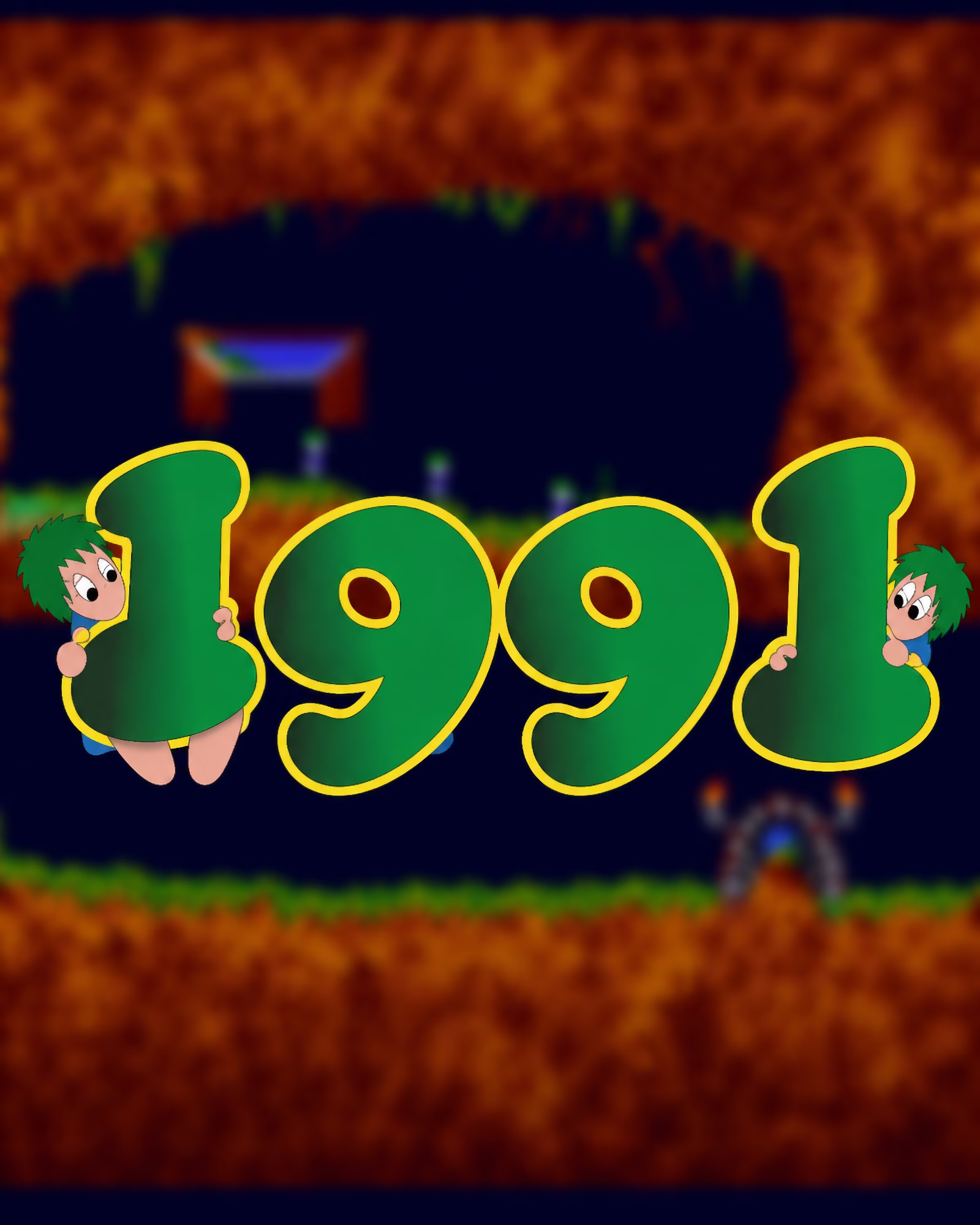
Lemmings shipped eighteen months later, on the 14th of February 1991, as the purest expression of a design idea unmistakably a home-computer thought. It is a system of small agents with independent behaviour, which the player guides by altering the environment rather than the characters. It is the opposite of an arcade proposition in every respect: no single avatar, action unfolding over minutes rather than seconds, success that requires patience over reflex, a screen of tiny animated things no cabinet of the era could have justified the silicon to simulate. A Lemmings arcade cabinet is a thought experiment; it does not survive first contact with a queue of people who have paid a coin to watch something die quickly.
At Nintendo’s EAD, a different but parallel argument was being made in hardware. F-Zero launched with the Super Famicom in Japan in November 1990 and reached North America in August 1991. Mode 7 — Nintendo’s name for the background-rotation trick at the heart of the chip — was not an F-Zero invention, but F-Zero was the piece of software that made Mode 7 legible as a creative tool rather than a demo effect. A rival developer at the Shoshinkai show pressed his face against the cabinet glass and asked, genuinely: are those polygons?
They were not. A plane rotated and scaled to give the illusion of three-dimensional motion — and it worked because the SNES was built to sell the spectacle home hardware could now produce.
The most ambitious wager on that hardware came at the end of the year. The Legend of Zelda: A Link to the Past shipped in Japan on the 21st of November 1991, directed by Takashi Tezuka under Shigeru Miyamoto, and proposed a piece of design no cabinet could have hosted: two complete maps, mirrored across a parallel-world axis, that the player learned to hold in their head as one. The Light World and the Dark World shared geography but not consequence; bridges absent on one side were the only path forward on the other. Death Mountain ascended under Mode 7 rotation. The introduction’s storm rolled across a still-life Hyrule. Koji Kondo’s overworld theme was written for a forty-hour cartridge, not a ninety-second loop. A Link to the Past used the SNES to ask for the kind of patient cartographic attention an arcade had no business expecting — and then trusted the player, alone in a bedroom, to give it.
F-Zero is an argument, in software, about the home console as a venue for technical wonder: a place where the player can sit with an effect and let it do its work. Lemmings is the same argument from the opposite direction. A Link to the Past is the argument made canonical: the bedroom can hold a world the arcade could never afford to render, much less let the player inhabit. All three are made possible by the one thing the arcade could never give the developer: permission to ask the player for more than thirty seconds of attention.
Coda: Why 1991 Feels Modern
The grammar set in 1991 is the grammar we are still speaking. Link a combo in a fighter. Run past a hill in a 3D platformer. Take one more turn in a 4X. Watch an ATB gauge fill in any JRPG. Step between parallel worlds in an action-adventure. Play an adventure game that trusts its silences. Guide a non-player character by changing the world around them. Feel the horizon tilt in a racer. These are not archaeological gestures. They are the bones of a medium that was, in 1990, still trying to work out whether its centre of gravity was a coin slot or a power plug.
1989 feels older than 1991 by more than two years. The games of 1989 are often brilliant, but they are mostly still answering arcade questions — how to compress experience into ninety-second loops, how to punish a failed attempt by demanding another quarter. The games of 1991 have moved on. They assume a reader, not an operator, on the other side of the glass. They assume time.
What the Capcom cabinet was doing, in that London arcade, was closing the form it had perfected. Street Fighter II was the cabinet’s high-water mark and its valediction: the game that made the social phenomenon of the arcade visible one last time before the phenomenon migrated, on its own terms, into the living rooms of the people who had been queuing for it. The medium moved rooms. The cabinet had been where we looked. It was not, after that twelve-month stretch, where the next thirty years were going to be written.