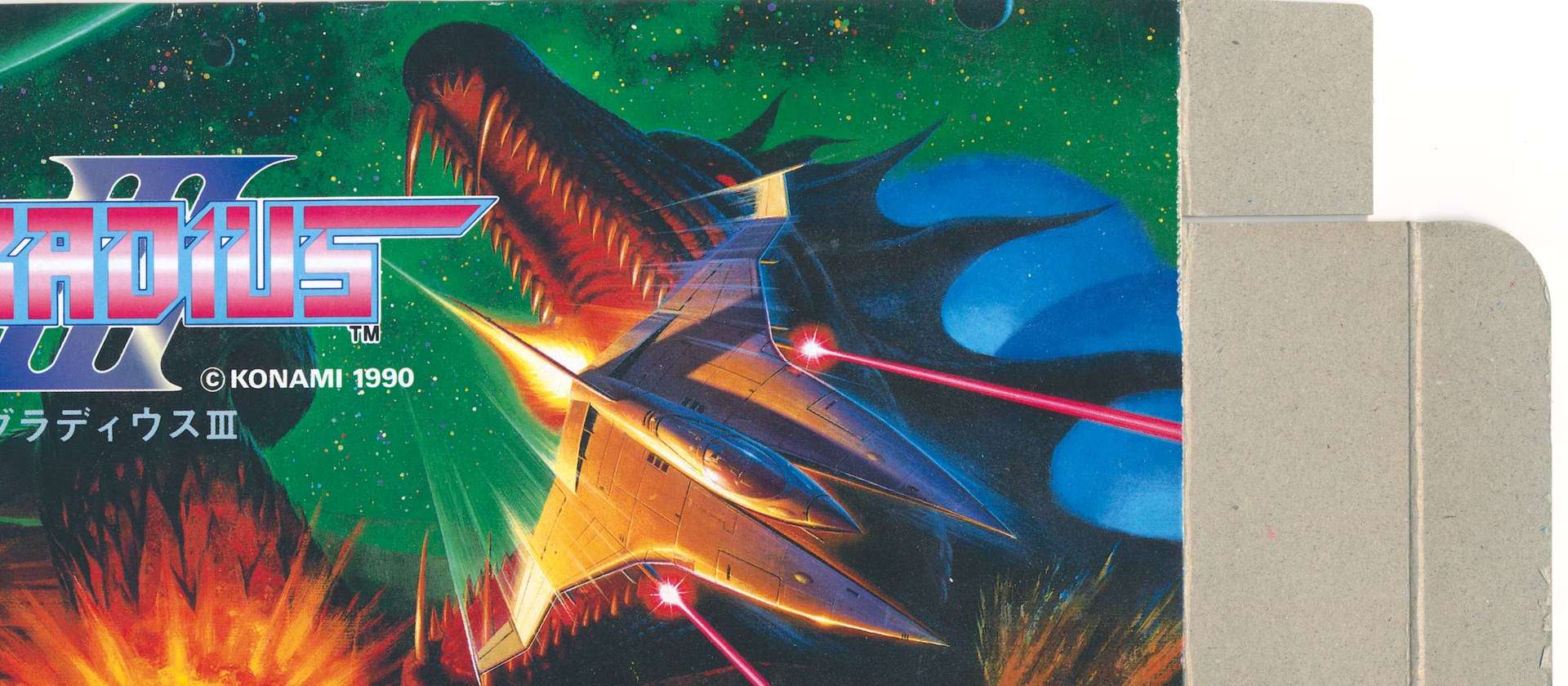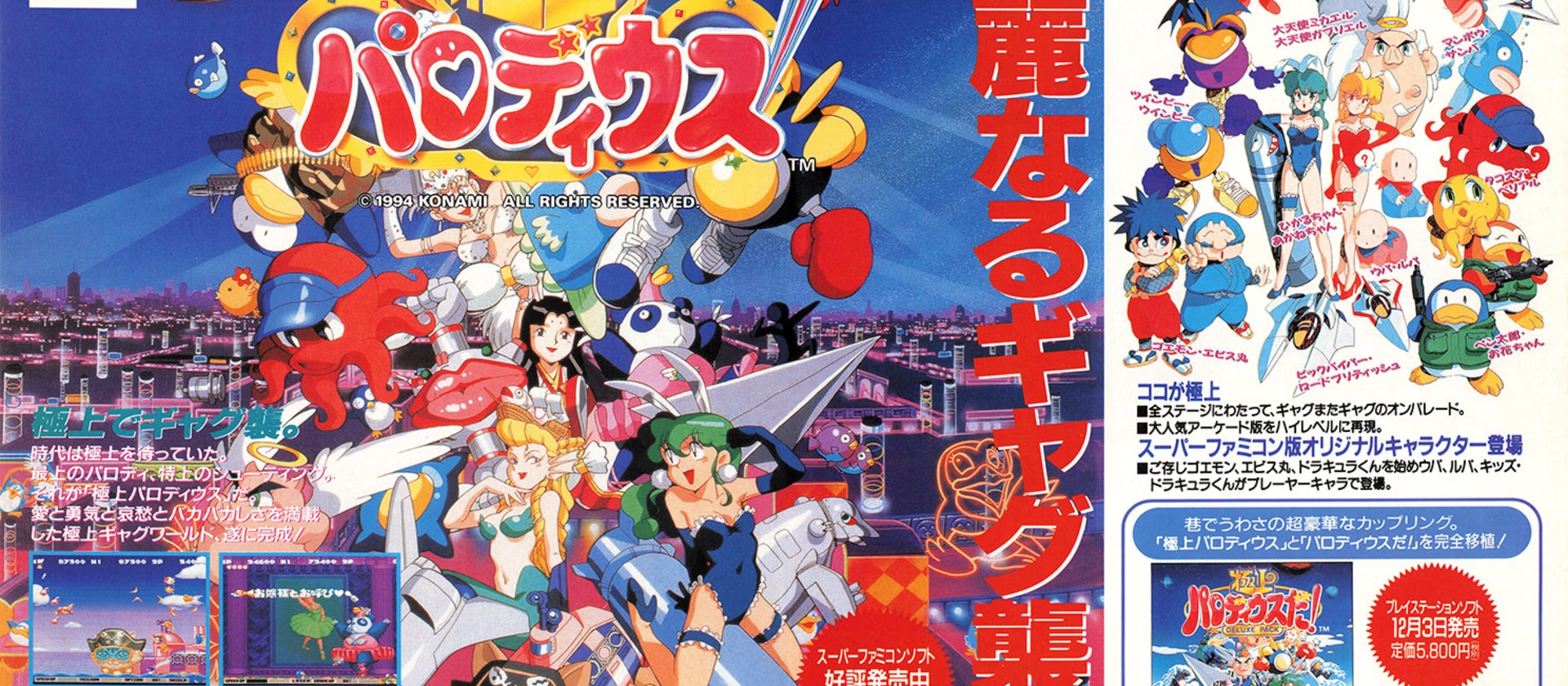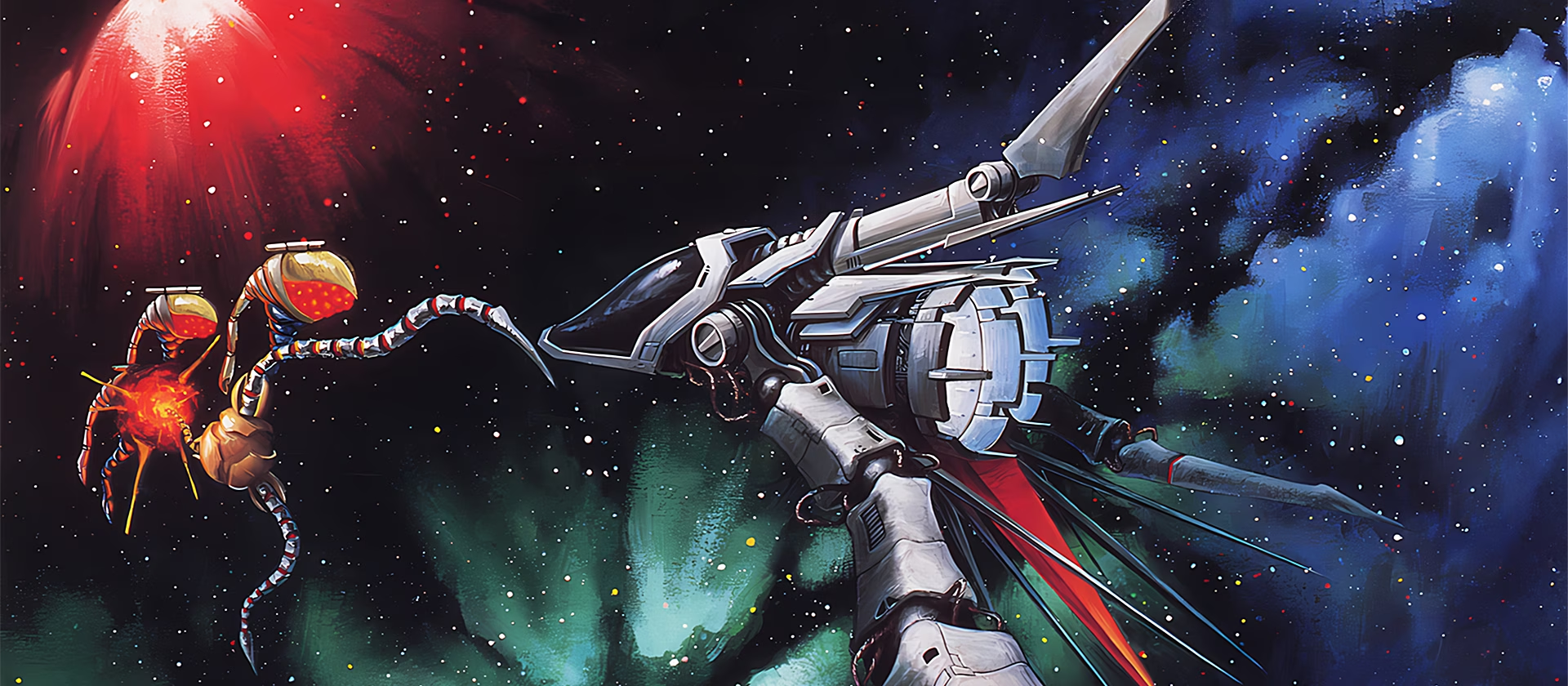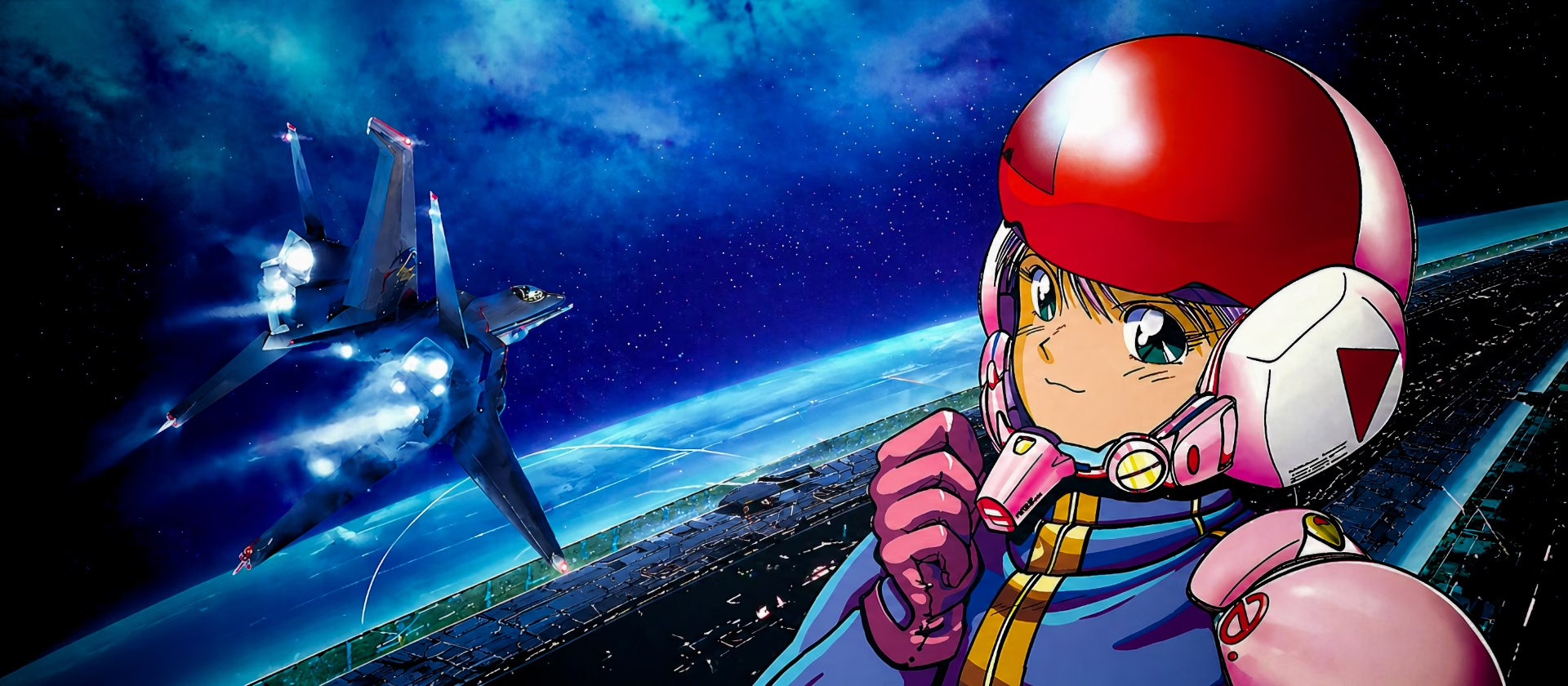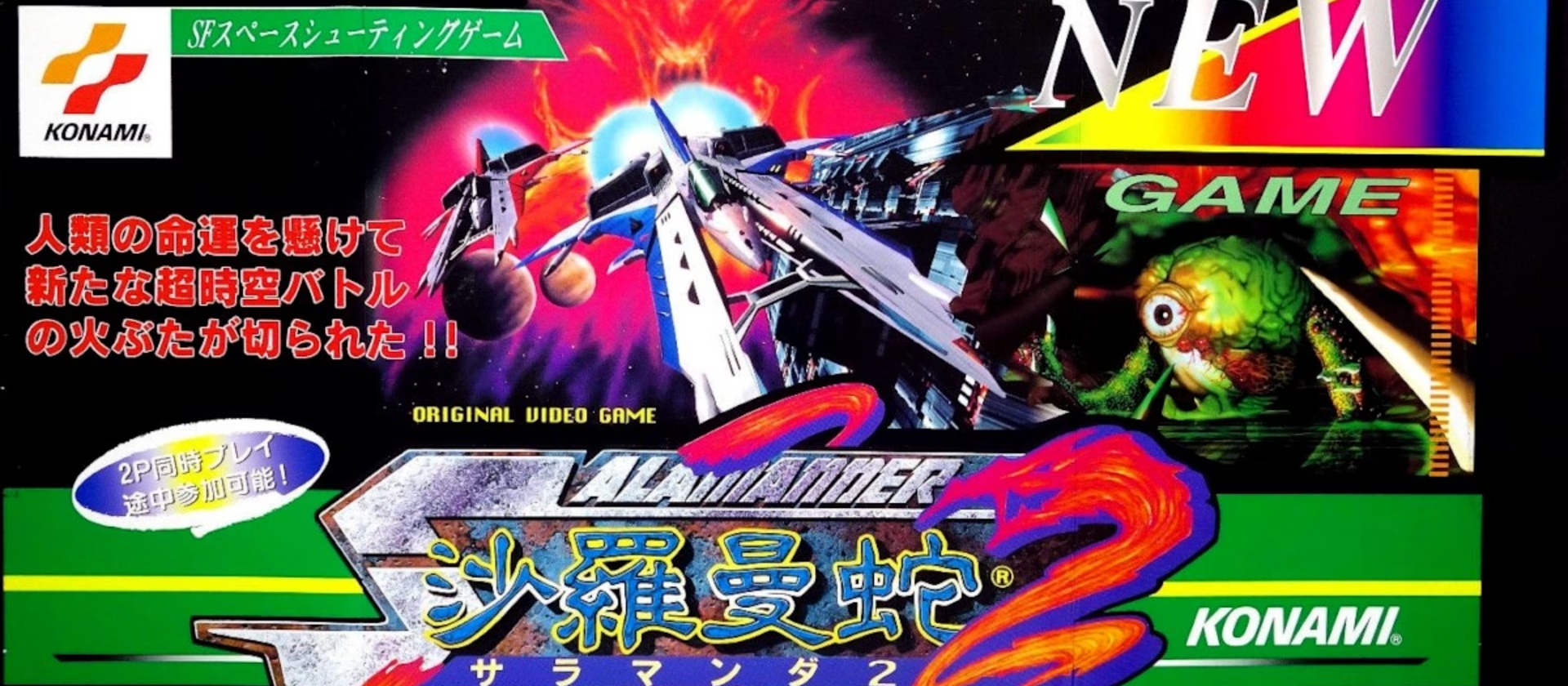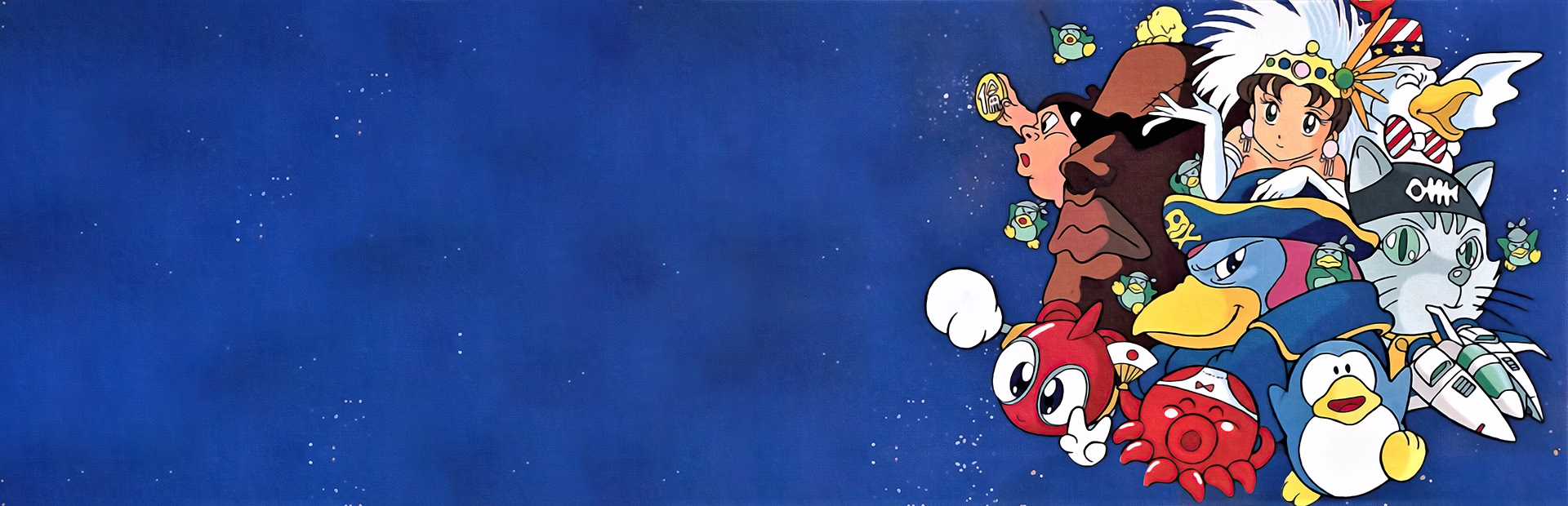
Two Konami cabinets shipped to Japan in the same six months. In December 1989 the studio released Gradius III under the subtitle Densetsu kara Shinwa e — From Legend to Myth — a ten-stage maximalist set-piece its programmers told the press they had built as a swan song for the series. The following April, on the same arcade rig, the same studio released Parodius Da! under the subtitle Shinwa kara Owarai e: From Myth to Laughter. The catalogue staged the joke for anyone reading. Konami had spent two games elevating its space-opera mythology toward sacred status, then cued the next rung itself — bring the whole thing down to the level of a Vegas dancer, a cat-faced battleship, and Beethoven’s Ninth Symphony arranged as bullet-hell BGM.
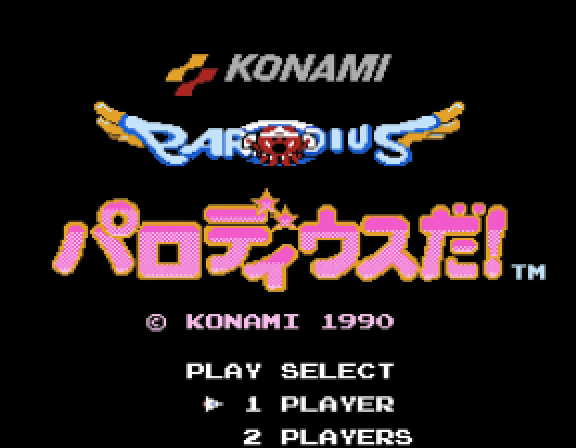
The title screen carries the joke as a piece of corporate signage: the Roman PARODIUS logo answering Gradius’s, the pink katakana subtitle, the 1990 Konami copyright. The studio was selling the parody as a flagship, not a side project. Parodius Da! · Konami, 1990 (Arcade).
The reading audience already knew which game won. The 4th Gamest Grand Prix, compiled from Japanese arcade-goers’ votes across 1990, placed Parodius Da! second overall behind Final Fight, first for Best Shooting, first for Best Direction, fifth for player popularity, and fifth on Konami’s annual income roll. Gradius III held onto Best VGM by a single ranking; Parodius Da! placed second on that ballot too. Two Konami games, one year, head to head on the same readers’ card. The parody outscored its sibling everywhere except music — and even there, the cabaret arrangements of Strauss and Offenbach came within one vote of the straight game’s prog-electronica score. This is the Konami arcade output most contemporary Western retrospectives flatten into “the cute Gradius.” 1990 Japan read it the other way.
A Promotion From the MSX
The franchise had begun two years earlier as a single-platform joke. Parodius on MSX, 1988, was a Konami in-house parody of the studio’s own Gradius aimed at the Japanese home-computer audience that had bought Gradius on cassette and disk first. The premise barely escaped its hardware. Cabinet adaptation was not the plan. Then Gradius III’s December 1989 location-test response told the floor what its difficulty rating implied, the team trimmed a stage for a Beginner mode, and Konami greenlit a parallel cabinet on the same GX-400-family rig that would ship as the studio’s next flagship shooter four months later. A 1988 one-off had been promoted to 1990 marquee. The Japanese press read it that way at the time: Retro Game Raiders’s anniversary review still calls it the franchise’s 大出世 — its great promotion across the bridge of tears in reverse.
The team leader through every arcade Parodius was Tokuda Tsukasa, credited on the cabinet roll as Chichibinta Tsukasa — Konami had decided early that the joke applied to the dev names too. Speaking to Game Hisshou Guide in June 1994, four years after the cabinet shipped, Tokuda put the inheritance plainly: I’ve been the team leader for the Parodius games for quite awhile now, since Parodius Da!. He would carry the franchise through Gokujō Parodius in 1994 and the X68000 and PC-Engine ports in between, but he also told the interviewer that he rated this first arcade entry at eighty out of a hundred, against fifty for the sequel. The studio’s parody programmer thought the first time was the best time. The Gamest readers had agreed.
The Bell Cycle Under the Joke
The first boss arrives four minutes into a credit-run. A battleship steams in from the right, masts and smokestacks rigged up like a steampunk pirate brig, and the entire prow is a giant cat’s face — eyes shut in concentration, jaw locked, the kind of expression Konami’s actual R-Type parody might have aimed for. The cat mews when you hit it.
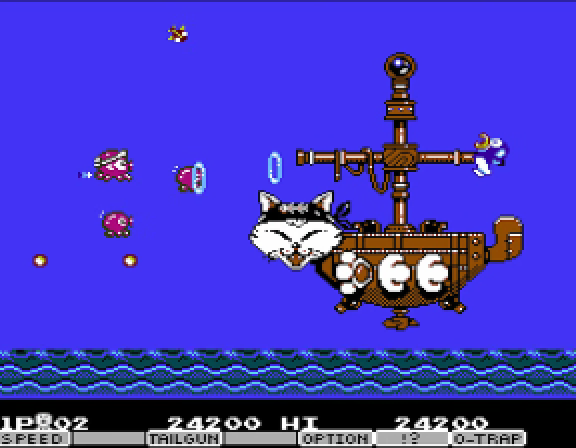
The opening boss punctures the R-Type and Gradius opening-battleship tradition with a sprite that mews on damage. Beneath the gag is the bell-cycle: eight colours of falling power-up that double Gradius’s scoring grammar into a second live system. Parodius Da! · Konami, 1990 (Arcade).
Underneath the visual gag is a scoring system Konami’s straight shmups did not run. Vic Viper, Octopus, TwinBee, and Pentarou — four selectable craft with identical hitboxes and four distinct loadouts — pick up the Gradius power-bar at the bottom of the screen and add a second one to it: the bell-cycle. Shoot a hanging bell and it begins flashing through colours — yellow, blue, yellow, white, yellow, green, yellow, red, repeating — each value granting a different effect when collected. Yellow bells climb from five hundred to ten thousand points; blue is a screen-bomb (capped at three); white is the megaphone-voice attack that spouts do you believe in God? and I want a girlfriend and the quadratic formula while disabling your weapons; green is jumbo-size and temporary invulnerability; red is a laser barrier. The shmups.wiki rank breakdown calls the system incredibly unforgiving — minimum rank per stage layered on power-up count layered on bell stock layered on frame-rank. A second loop puts single-revenge bullets behind every enemy. The carnival paint is the lure; the punishment economy is Gradius II’s, sharpened by an extra system the canon games never wrote.
Tokuda told Game Hisshou Guide that the Auto option — pre-set power-up routing for newcomers, tucked beside the manual mode — was a deliberate gesture toward the wider audience arcades were trying to attract in 1990, a period where the appeal of STGs was expanding. Two years later Street Fighter II would resolve that audience question for the whole genre by changing what arcades sold. Parodius Da! sits on the lip of the shift. The last moment a horizontal shmup could win Best Shooting at Gamest is also the last moment Konami designed one as a piece of mass-audience outreach.
Beethoven’s Ninth as Arcade BGM
Konami credited the soundtrack to Cameo Matano and Dokuo Umeno, joke pseudonyms for Muraoka Kazuhiko — the studio’s marquee sound man, the composer of Metal Gear on MSX2 and Snatcher on PC-88. Giving Muraoka the parody score was not a junior assignment. The most serious arrangement chair at Konami arrived at the cabinet with the entire Western art-music canon to work from, a Konami-branded 8-bit chip to drive, and instructions to take the joke seriously.
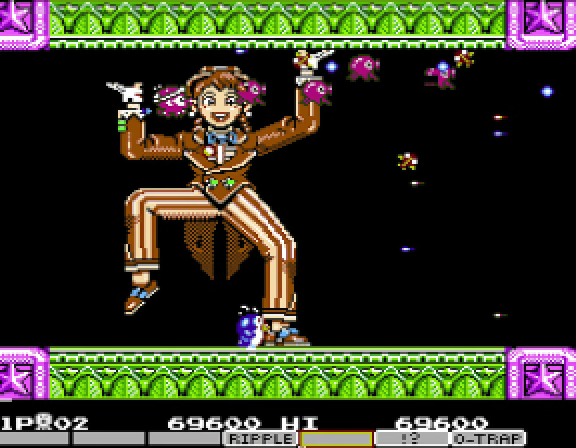
The boss sequence Offenbach’s Can-Can is scored to — Muraoka arranged the Orpheus in the Underworld cue to land its choruses on the dancer’s attack waves. The Konami sound chip running the joke runs the joke at orchestral scale. Parodius Da! · Konami, 1990 (Arcade).
The selection is documented track by track at VGMPF. Stage one opens on Johann Strauss II’s Under Thunder and Lightning polka. Stage three runs Khachaturian’s Sabre Dance against walking cherry blossoms. Stage four boss music is Offenbach’s Can-Can from Orpheus in the Underworld cued to the cabaret dancer’s attack phrases. The Yoshiwara stage takes Rossini’s William Tell Overture. The cemetery stage medleys Grieg, Beethoven, and Tchaikovsky into a Halloween procession. Crisis 4th Movement — the warp-tunnel cue — is Beethoven’s Ninth, Ode to Joy, scored under bullet patterns the orchestral original never imagined. Hardcore Gaming 101 notes the arcade synth makes the arrangements sound much better than the MSX version; what the website does not say is that this is the moment Konami’s parody scope expands from Gradius-the-game to Western music itself. The joke gets bigger. It also stays joke-uniform: Muraoka’s house mode in 1990 is uptempo and cheerful, and forty minutes of unbroken uptempo is genuinely fatiguing — the soundtrack has the consistency of a temperament rather than the range of a score.
The Famicom Lost the Voices
The Super Famicom port arrived in July 1992, two summers and a console generation after the cabinet. It carried almost all of it across. Hardcore Gaming 101 judges the SFC version looks almost identical, and outside of some slowdown, plays faithfully too — Konami added a bathhouse stage, added an omake bonus mode, kept the bell-cycle and the four-craft roster intact. The major loss was Chichibinta Rika’s hip animation, censored by Nintendo of Japan; Konami compensated by adding her a megaphone phrase, koshi fura sete yo! — swing those hips! — that the censor had not anticipated. Mean Machines reviewed it at ninety-three percent. CVG at eighty-eight. The cart became the version Western players met first, and it preserves the cabinet so cleanly that a contemporary Famicom player would not have heard the gap.
The Famicom port of November 1990 is a different shape. It shipped on the smaller console eight months after the arcade, before the SFC even launched, on a chip a generation older than the cabinet. The trade-off is visible. The megaphone is gone — no Konami voice samples on a 1990 Famicom — and the white bell now grants a 1UP instead of the voiced attack.
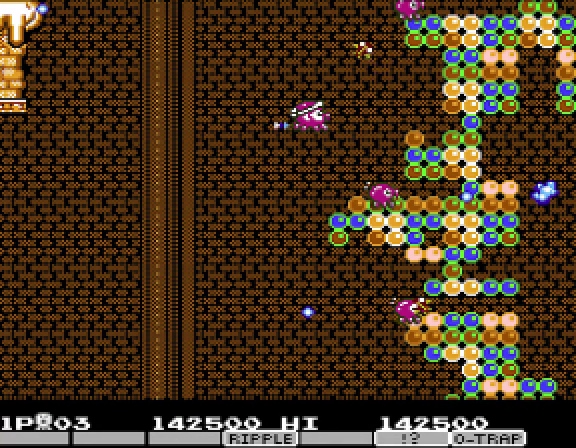
The arcade pachinko stage — one of three Konami’s Famicom port team had to drop wholesale. The cabinet’s mechanical lattice of pachinko-balls-as-bullets routed through gold architecture is the kind of stage 8-bit silicon could not carry. Parodius Da! · Konami, 1990 (Arcade).
Three stages are dropped wholesale: the Japan mountain, the pachinko level, the cloud level. The cemetery is shortened. In their place Konami’s port team built a carnival roller-coaster stage, added two original bosses (a Moai pirate ship, a duck-boat), and routed the bonus zone through the inside of the Moai battleship. None of those were on the arcade cabinet. The Famicom did not carry the parody; it built an answer to it, on the hardware that had hosted MSX Parodius two years before. The console it could not fit onto was the console the franchise had started on.
The Punchline That Beat Konami’s Goodbye
Stage ten begins on a Moai head and ends on the same metallic gold corridor that closes Gradius II. Tokuda had wanted to ship the gag since 1988:
“The final stage, a parody of the final stage of Gradius II, was something I had talked about doing since the original Parodius.”
— Tsukasa Tokuda, Game Hisshou Guide, June 1994
The closer the joke gets, the more the joke knows what it is doing. The yellow plating, the recessed pipes, the curling green coolant lines, the formation pressure of the long enemy approach — all of it carries the Gradius II late-stage shape, with cartoon enemies sprinting through it.
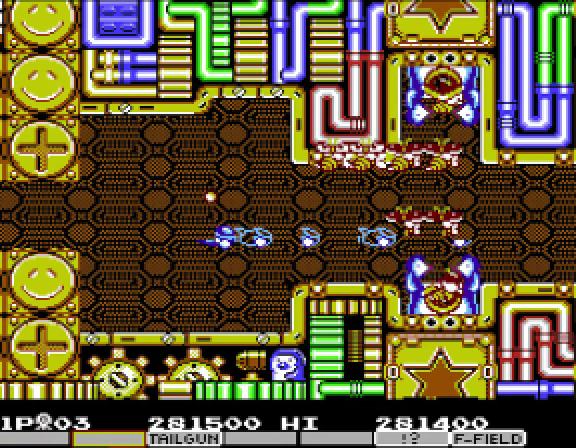
The final stage Tokuda had wanted to ship since the 1988 MSX original. Konami’s mechanical lattice from Gradius II’s closer, reproduced down to the gear ratios under the floor, with parody sprites still doing the work. Parodius Da! · Konami, 1990 (Arcade).
What Konami sanctioned in spring 1990 was not a side-project. It was a flagship-positioning move on a programmer’s three-year creative project — Gradius III’s subtitle had announced an ending, Parodius Da!‘s subtitle announced the next move, and the Gamest readership voted the parody more confidently composed than the canon entry it answered. Tokuda would carry the franchise into Gokujō Parodius in 1994 and then watch arcade economics close the route the parody had been written to broaden. The Auto option that had been an outreach gesture would not survive Street Fighter II’s redefinition of what arcades sold. Muraoka’s Beethoven arrangements would not survive the licensing climate of the 2007 Parodius Portable, which had to substitute Brahms for Khachaturian, and the franchise has shipped nothing since. Konami renewed the Gokujō Parodius Da! trademark in Japan in June 2024 — the first signal anyone has read as movement — and the Arcade Archives slot remains empty. Until something ships, the route to the cabinet runs through a Saturn disc, a Super Famicom cartridge, or a PCB on a JAMMA harness, and the version that beat its own studio’s straight goodbye sits one degree of separation from the arcade audience that put it there.