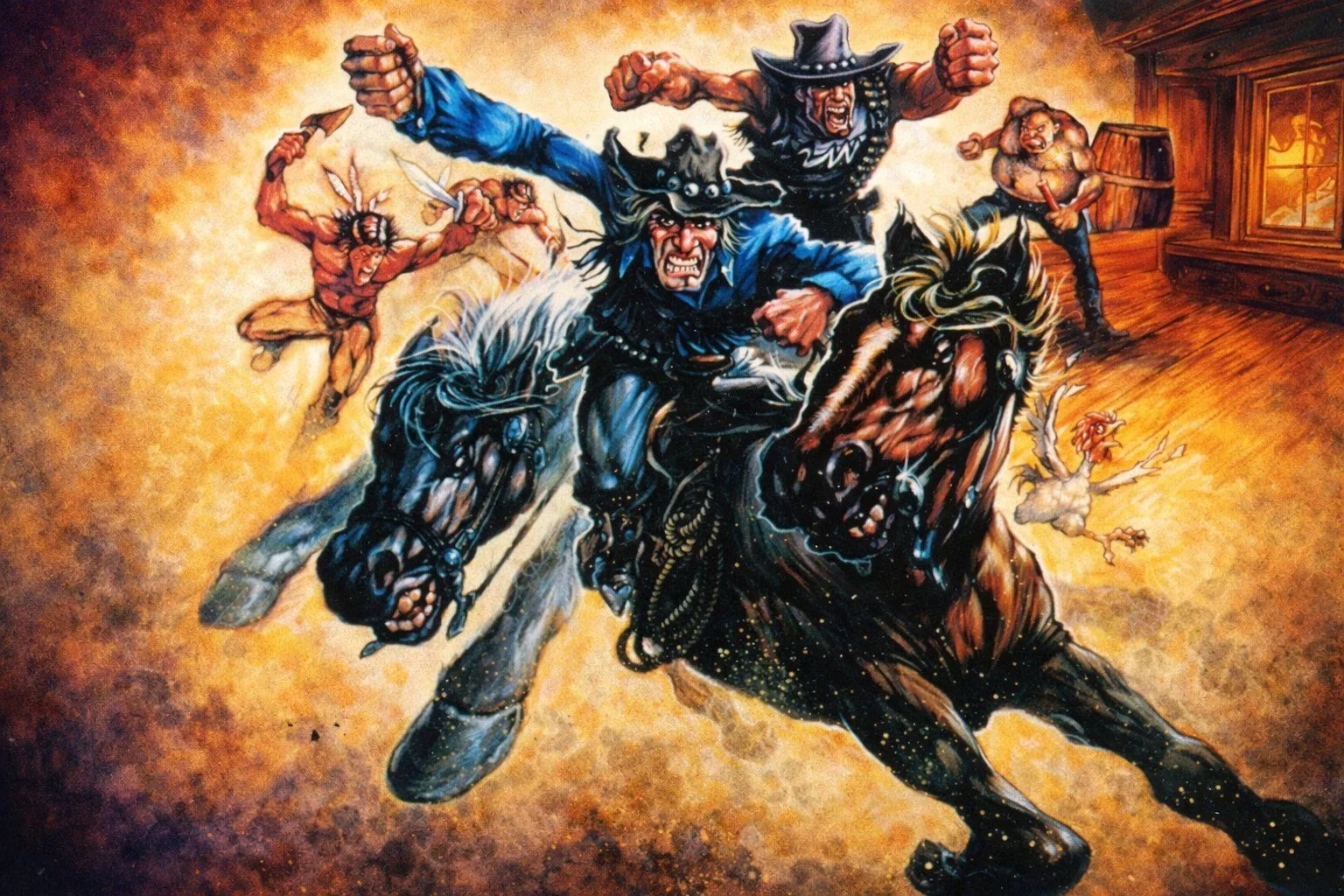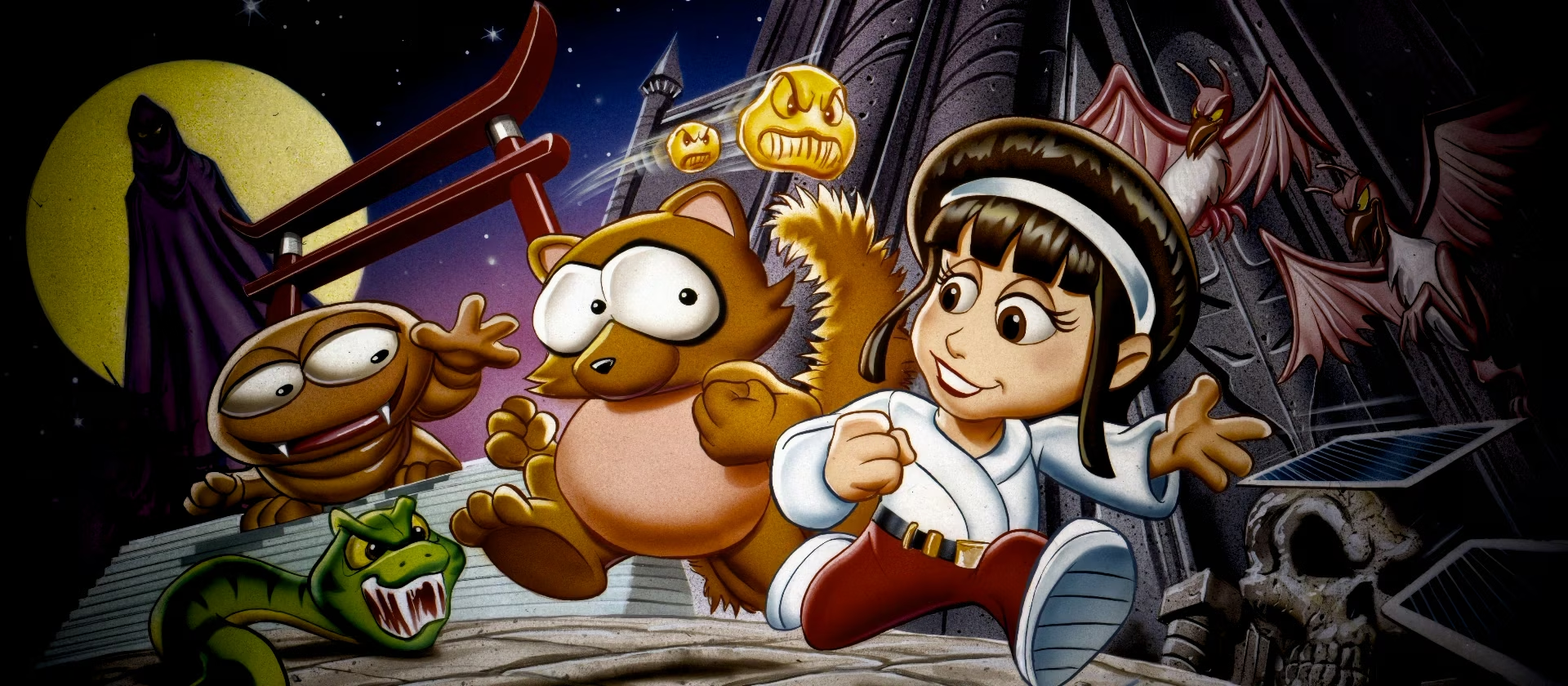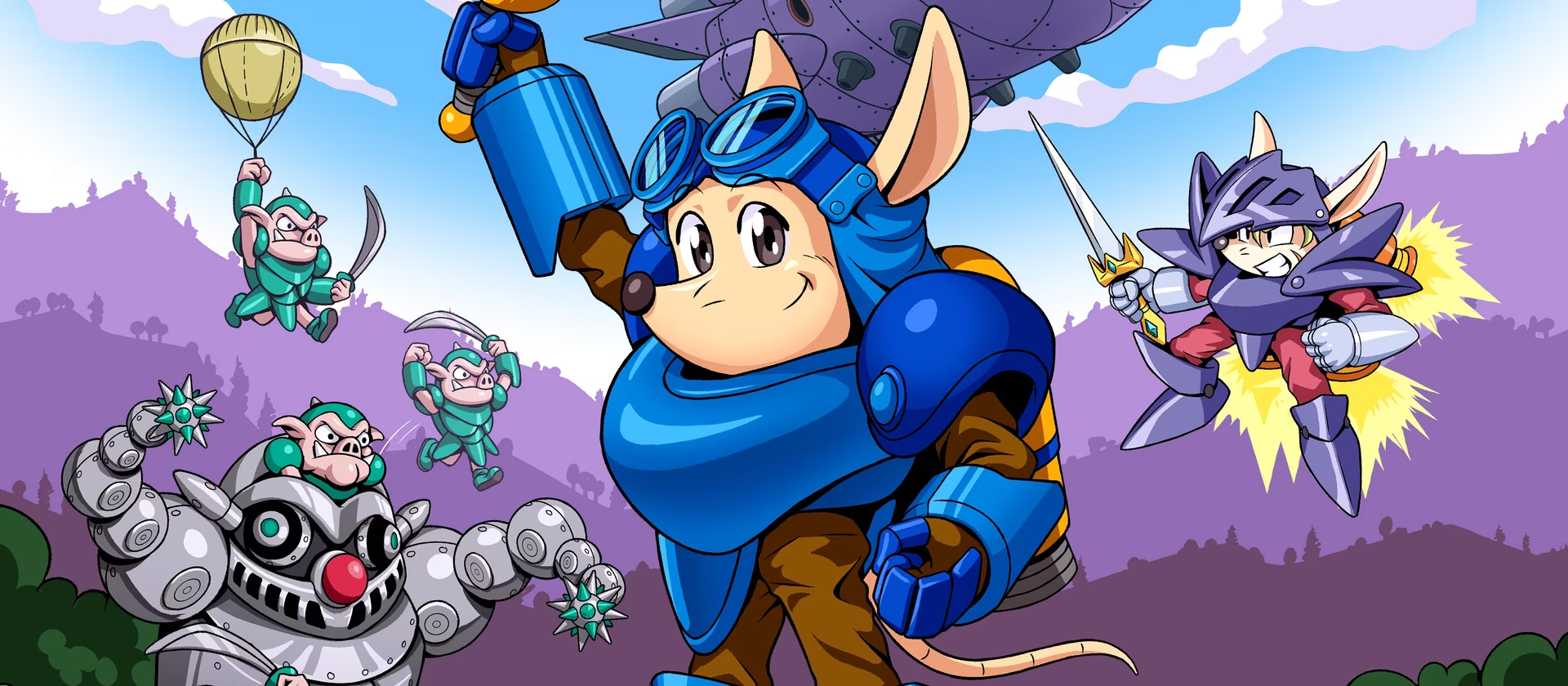
Hold the attack button and watch Sparkster’s rocket meter fill. There is just enough time to decide whether launching yourself diagonally at that wall is a good idea. Release, and the little armoured opossum shoots across the screen, bounces, and sends your carefully chosen angle somewhere new. Get it right and you feel wonderfully clever. Get it wrong and you can usually see the launch you should have made.
Rocket Knight Adventures keeps finding things to do with that pleasure. A sword fight becomes a flying chase; a platforming room gives way to an enormous machine with a pig at the controls. It is a good choice for an evening when you want a game to keep surprising you, provided you enjoy learning through a few scrapes along the way.
You can try it without tracking down a Mega Drive. Rocket Knight Adventures: Re-Sparked collects the original and its two 16-bit follow-ups on PC; it is also available on Switch, PS4 and PS5. Start with the 1993 game. The collection’s save states and rewind let you repeat a difficult moment while the mistake is fresh, or put the controller down without losing your evening’s progress. Give it half an hour, with the sound on.
Get Comfortable With the Rocket
Sparkster can jump and swing his sword, sending a short burst ahead of him. Those ordinary moves matter: you do not need to launch yourself at every enemy. The rocket is the move to prepare while you work out what the next bit of screen is asking. Hold, aim in one of eight directions, then release. A wall becomes a possible rebound; a boss above you becomes a target you can reach.
That changes how you look at a room. The question is where a dash will leave you, as much as what it will hit. Landing a strike and bouncing clear gives the move a lovely second reward. You have hurt the boss and solved your escape in the same small burst of movement.
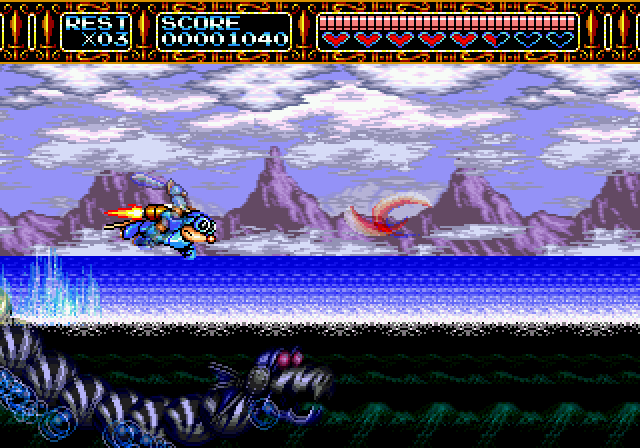
Already airborne in the opening stage: a native-resolution capture keeps the water, clouds and sprite edges as sharply defined as the Mega Drive drew them. Rocket Knight Adventures · Konami / Mega Drive, 1993.
There is a limit to the freedom. Narrow passages leave little room to recover from an enthusiastic launch, and a charged attack requires more preparation than a jump. If you want to run continuously through levels, the stopping and aiming may grate. Begin by using the sword, watching an attack, and trying the rocket when you can see a landing. Confidence comes from recognising an opening.
Choose a forgiving difficulty while you learn. The original’s regional versions assign different numbers of lives and continues to familiar difficulty names; North American Normal is particularly ungenerous. Rewind helps you separate a boss you have not understood yet from a section you simply do not want to repeat. It still takes your hands to land the next attempt.
A New Problem Around Every Corner
The reward for getting comfortable is a game that rarely leaves you doing the same thing for long. The stages break into short encounters, each with its own little demand. You might be judging a jump, watching a machine for an opening, or suddenly dodging enemies in flight. The variety gives practice a destination: there is usually something curious just beyond the bit that is beating you.
The lava rooms are a particularly good example. Reflections in the molten surface help you follow platforms that the foreground obscures. A pretty effect becomes something useful to notice, and the scene asks you to look somewhere other than directly at Sparkster. The game can change the puzzle without handing you another set of controls.
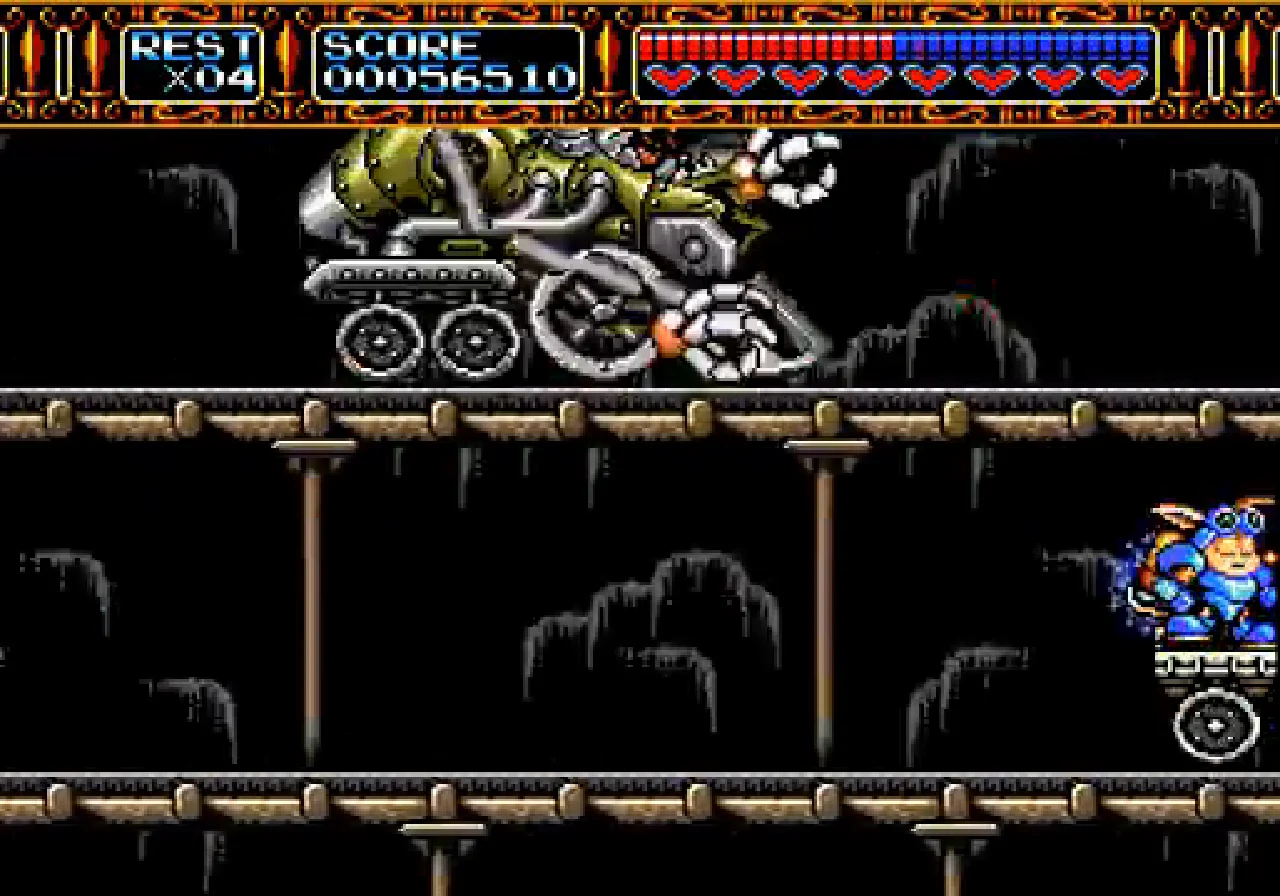
The scenery can help as well as hurt: watch the lava for clues to the route above it. Rocket Knight Adventures · Konami / Mega Drive, 1993.
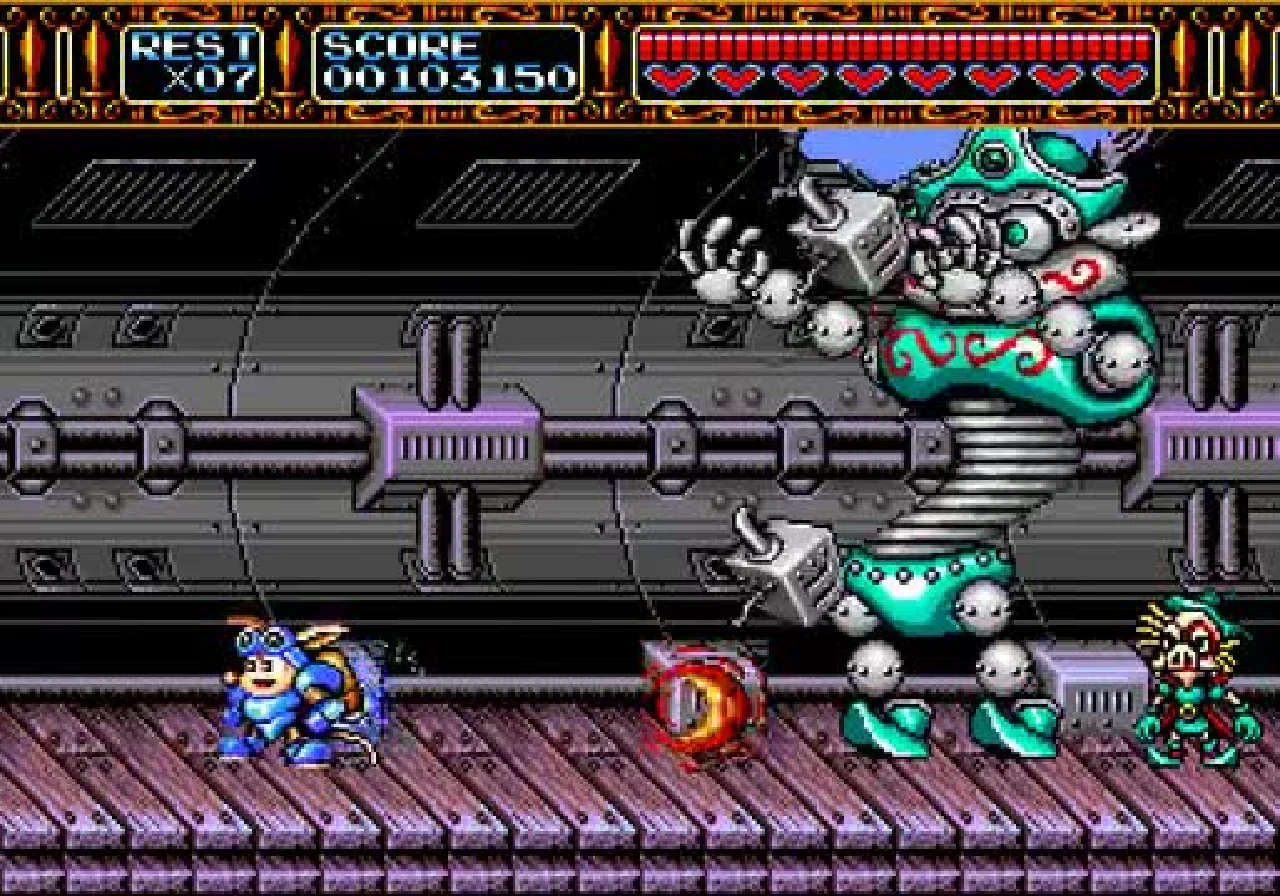
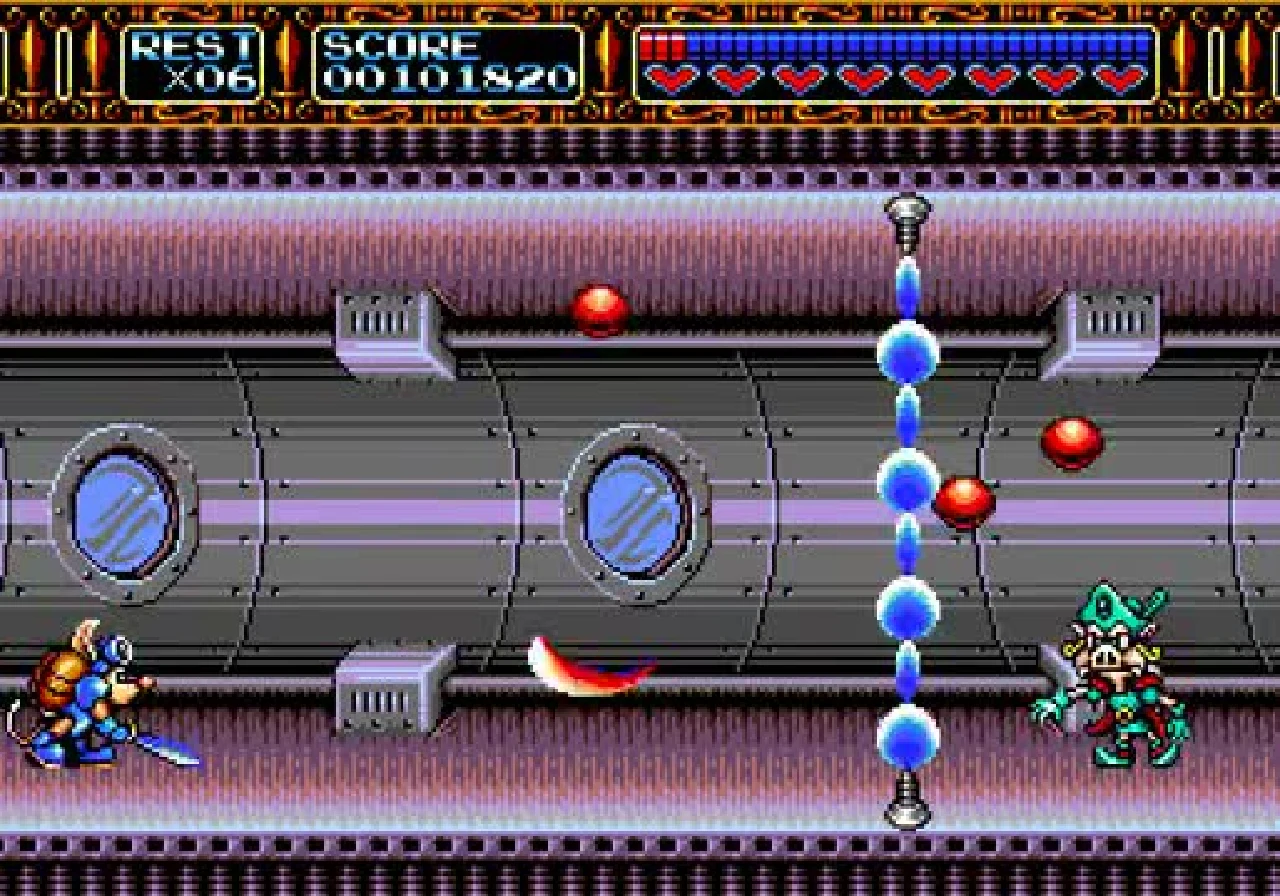
Then it will abandon restraint and put you inside a giant boxing robot. Some of these detours are less satisfying to control than Sparkster himself, and the flying sections can be punishing while you learn their hazards. The appeal is partly the cheerful absurdity of being asked to try them at all. A game with this many changes of plan has room for a ridiculous punch-up.
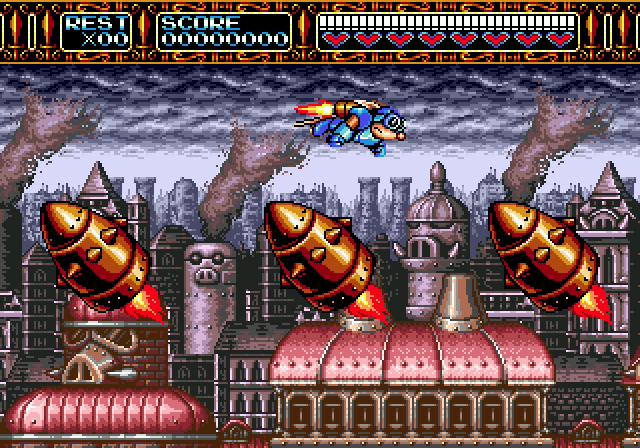
The flying passage below shows how far that appetite carries it. For a while you read the whole screen for approaching enemies and gaps between hazards. Having spent so much time aiming a rocket-powered body, becoming a little spaceship feels like a reasonable next step.
A taste of a later stage, with shooting and dodging taking over from jumping. The rocket gives these changes of pace a familiar centre. Rocket Knight Adventures · Konami / Mega Drive, 1993.
How the Opossum Got His Armour
That mixture of cheerful mascot and demanding action has an interesting history. Artist Tom duBois recalled that Konami brought him into this project unusually early to work on the Rocket Knight character. In his 2018 Arcade Attack interview, he described the brief:
“Konami wanted to get a game out there to compete with Sonic the Hedgehog.”
— Tom duBois, Arcade Attack, 2018
The American advertisement makes the ambition easy to see. Sparkster has blue armour, a sword, a rocket and enough confidence to take on a console mascot. Yet the pleasure of playing him depends on pausing to choose a direction. The character promises speed; the controls let you decide where to spend it.
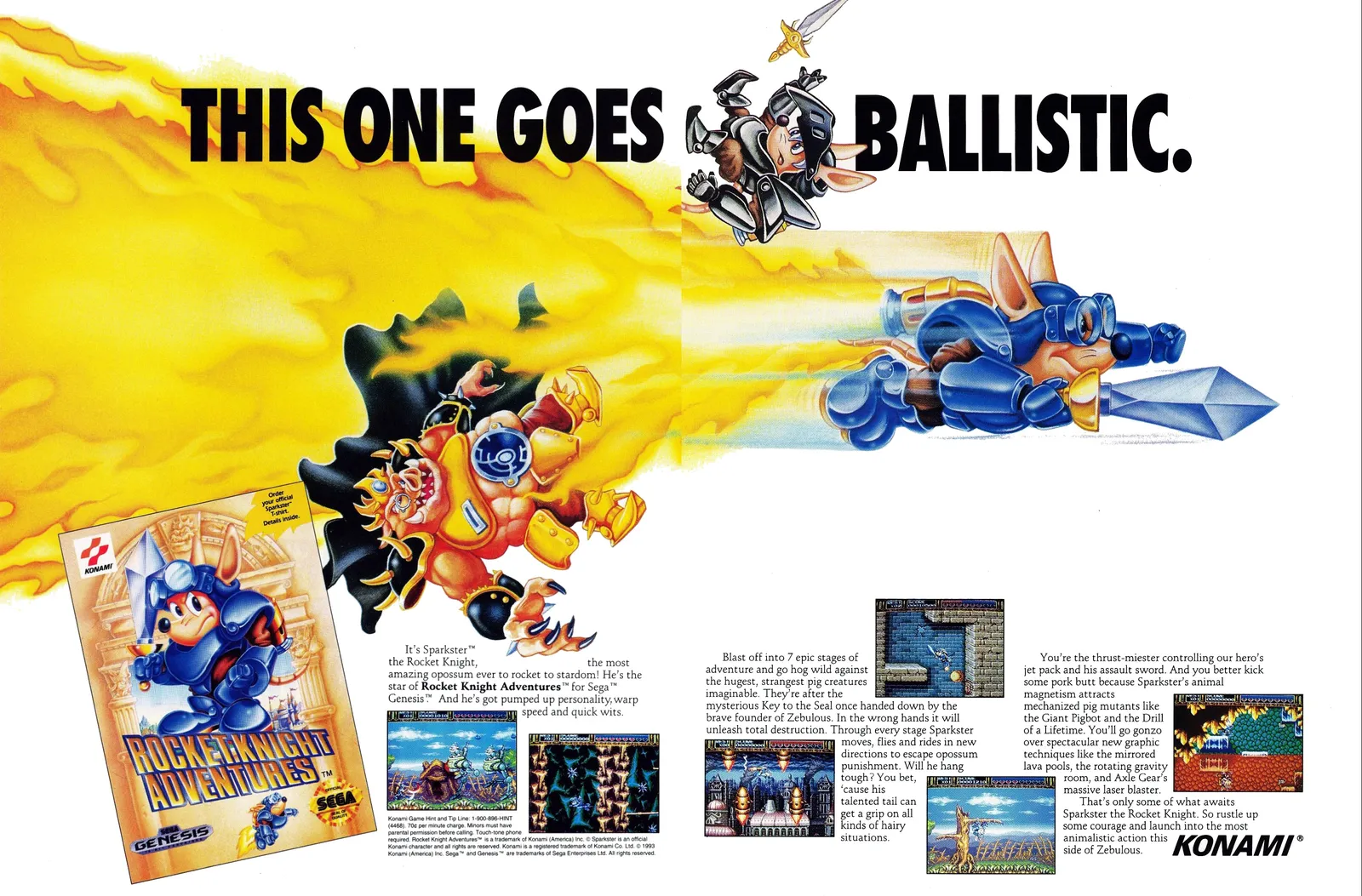
The sales pitch catches the exhilaration of a launch; playing adds the enjoyable business of aiming it. Rocket Knight Adventures · Konami, 1993.
Director Nobuya Nakazato also worked on Contra III and Contra: Hard Corps. Asked about Contra’s difficulty by Brandon Sheffield in 2004, he emphasised thinking through encounters and improving through repeated attempts. He was discussing Contra, but that account helps explain the satisfaction in Sparkster’s boss fights: watch the danger, choose a moment, and make a more confident attempt next time.
That combination gives Sparkster much of his appeal. The pigs and their outlandish machines make the danger funny, while the rocket asks you to take your next move seriously. You can laugh at the thing that just flattened you and still want to work out how to beat it.
Leave Some Surprises for Yourself
There is plenty to explore after that first session. The art keeps changing from cheerful countryside to crowded machinery, and the soundtrack follows it. Michiru Yamane is among the Konami composers credited on the score; bright opening fanfares give way to more threatening electronic passages and insistent boss music. Keep the volume up as the surroundings get stranger.
Re-Sparked’s music player and museum let you linger over the score, artwork and manual scans once you have put the controller down. The collection has rough edges—its boss-rush transitions are abrupt—and the follow-ups need not become homework. The original is the reason to start here. If you already use RetroArch or MiSTer, the Mega Drive version is another good fit for those setups; the routes below explain the options.
There is a soundtrack to listen to below, a full run to watch, and a written guide if one encounter stops being fun. Use as much help as keeps you interested. The moment worth chasing is when a wall that kept getting in your way becomes the thing you bounce off to win.