// import hitboxPracticePoster from ”../../assets/images/real-bout-fatal-fury-2-the-newcomers-1998-hitbox-practice-poster.jpg”; // deleted
Real Bout Fatal Fury 2 behaves like a game made by people who had no time left to decorate the truth. The old Fatal Fury vocabulary remains — Terry’s shoulder, Mai’s fan, Geese’s impossible gravity — but the room around them has been cleared. The ring-out gimmick is gone. The story barely pretends to matter. The roster walks in, the announcer shouts, and the fight immediately asks whether you understand where a body can stand.
That bluntness is the appeal. SNK had already made Real Bout Fatal Fury Special, a generous dream-match version of the series, and it could have treated the sequel as another cabinet full of familiar faces. Instead, Real Bout 2 cuts toward pressure: twenty-three fighters, two planes, faster contact, and a line-sway button that turns the floor into a second argument. The Steam release finally gives that argument rollback netcode, lobbies, and a practice mode with hitbox display. A game built too quickly has become easier to study than almost anything around it.
No Time for Ceremony
Yasuyuki Oda gave the cleanest possible explanation for the game’s shape when he looked back at it years later.
”The development schedule was simply too short.”
— Yasuyuki Oda, Retro Gamer / GamesRadar+
That line can sound like an apology. It plays like a design brief.
Fatal Fury had spent most of the decade trying to make a flat fighting game feel less flat. The original sold the fantasy of ducking between planes, Real Bout turned that idea into a signature, and Real Bout Special polished it into a dream-match party trick. RB2 arrives after that polishing and behaves as if polish has become suspicious. It keeps the extra plane, but it makes the command immediate enough that the mechanic stops feeling like a feature and starts feeling like posture. The game is not asking whether two lines look impressive on a flyer. It is asking whether you can make a person miss by half a step.
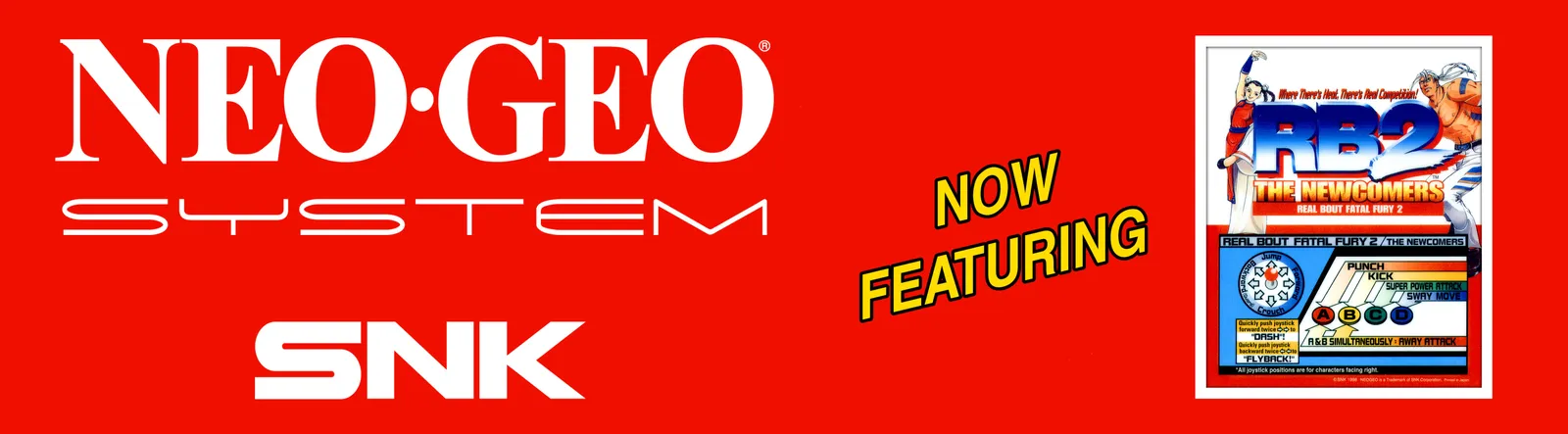
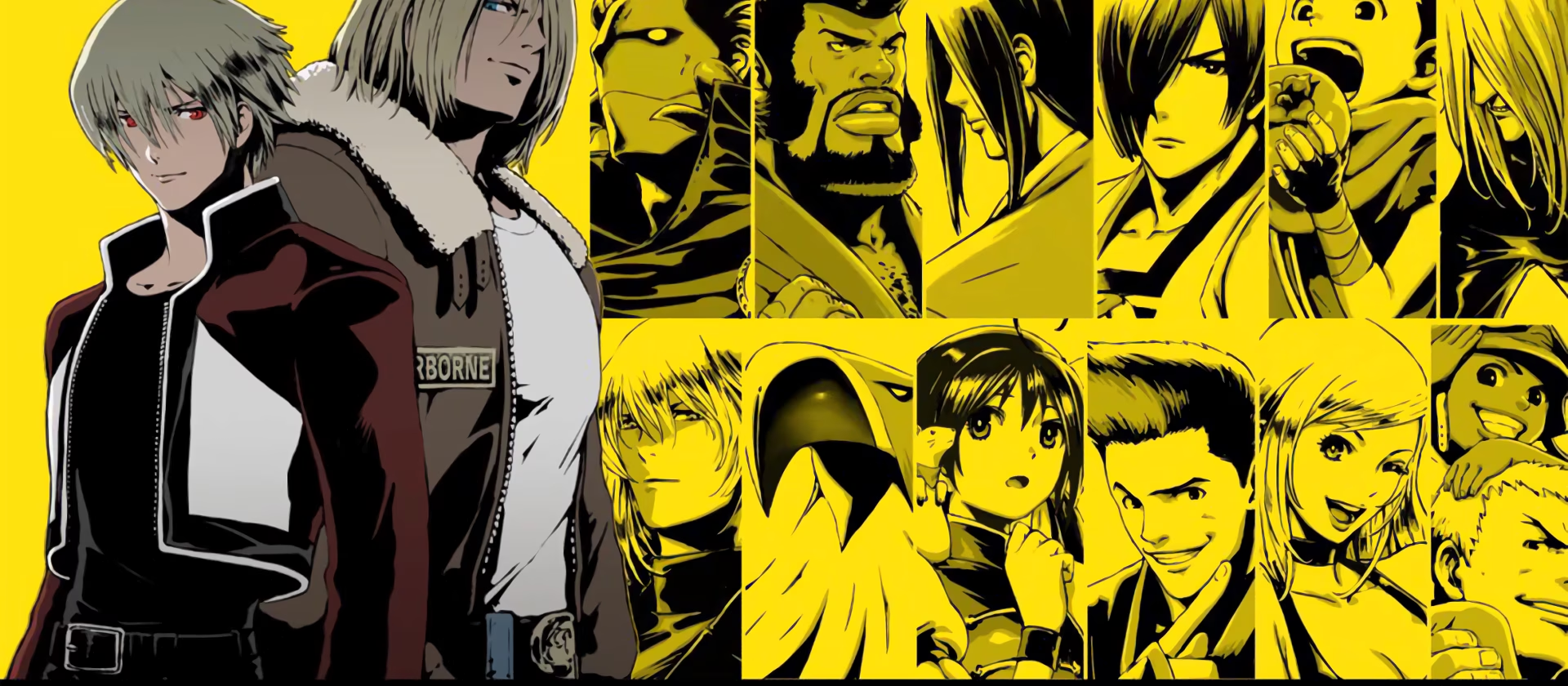
The arcade marquee sells the whole idea at cabinet distance: the familiar stars remain, but Rick Strowd and Li Xiangfei make the cast feel newly crowded. Real Bout Fatal Fury 2 · SNK, 1998.
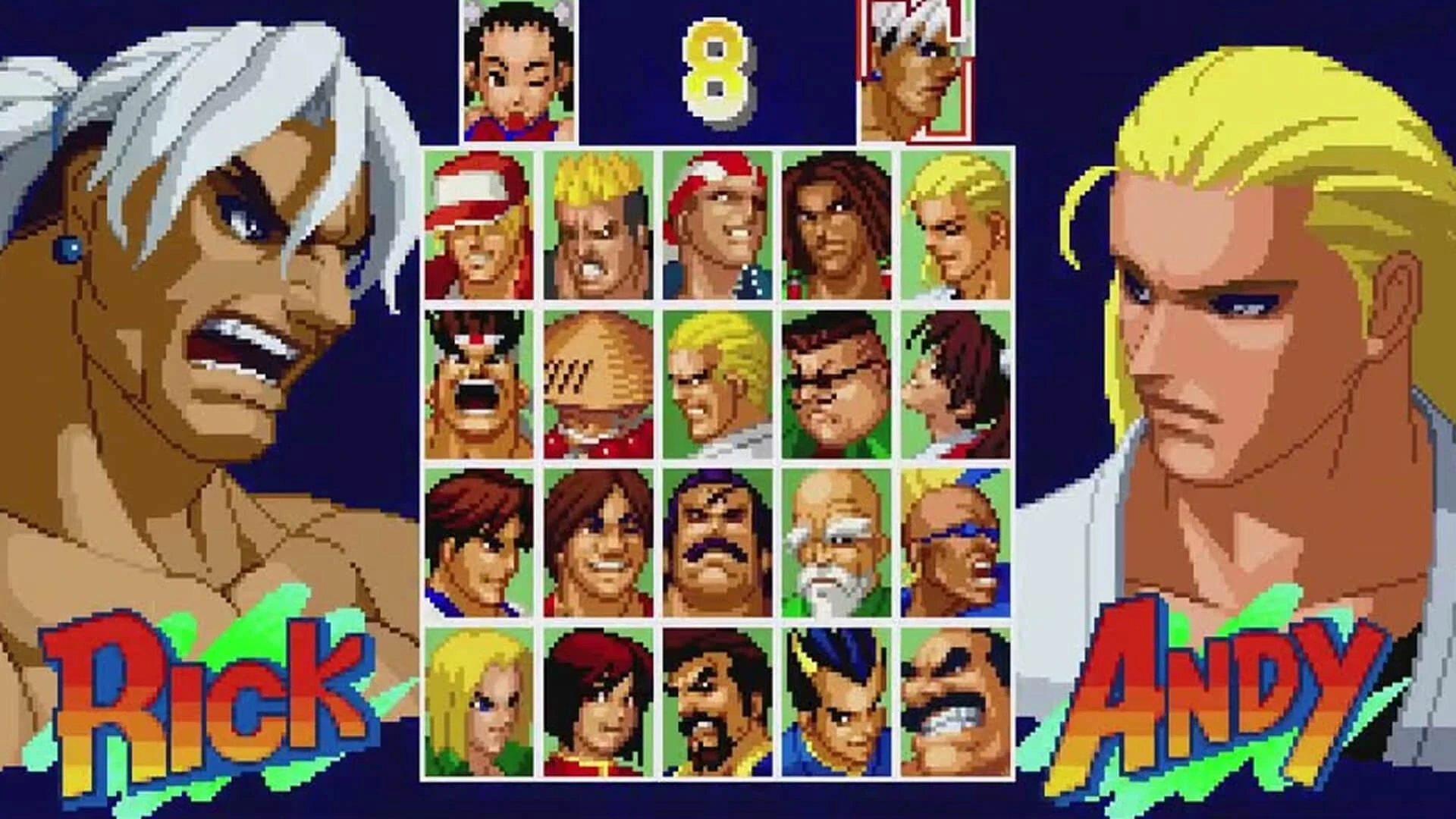
Real Bout 2 adds two genuine newcomers, boxer Rick Strowd and runaway martial artist Li Xiangfei, then treats the rest of the cast like a working repertory company. There is no heroic succession drama, no Garou-style generational handoff, no attempt to make Terry Bogard’s biography carry the cabinet. Even Geese Howard returns less as a narrative event than as a threat profile. The point is not who deserves to be here. The point is what they do when the stage gives them one more axis.
Rick explains the new mood better than the returning stars do. Terry has myth around him, Mai has animation history, Geese has boss aura. Rick is all forward lean and shoulder torque, a boxer built for closing space rather than posing inside it. Li Xiangfei works from the opposite direction: light, sharp, and noisy, a character whose movement sells the idea that RB2’s speed is behavioural rather than purely technical. They are not additions in the modern content-drop sense. They are proof that the old cast can be made strange again if the rules around them tighten.
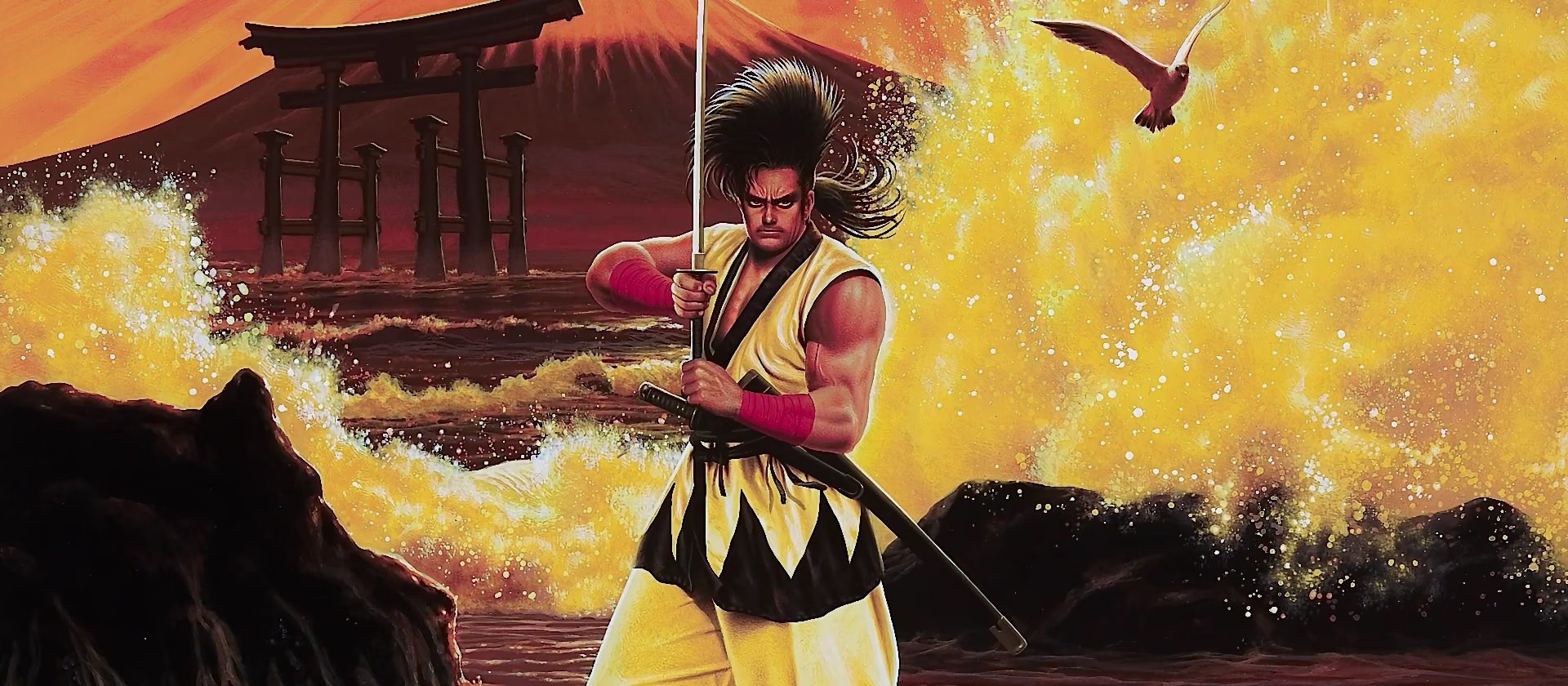
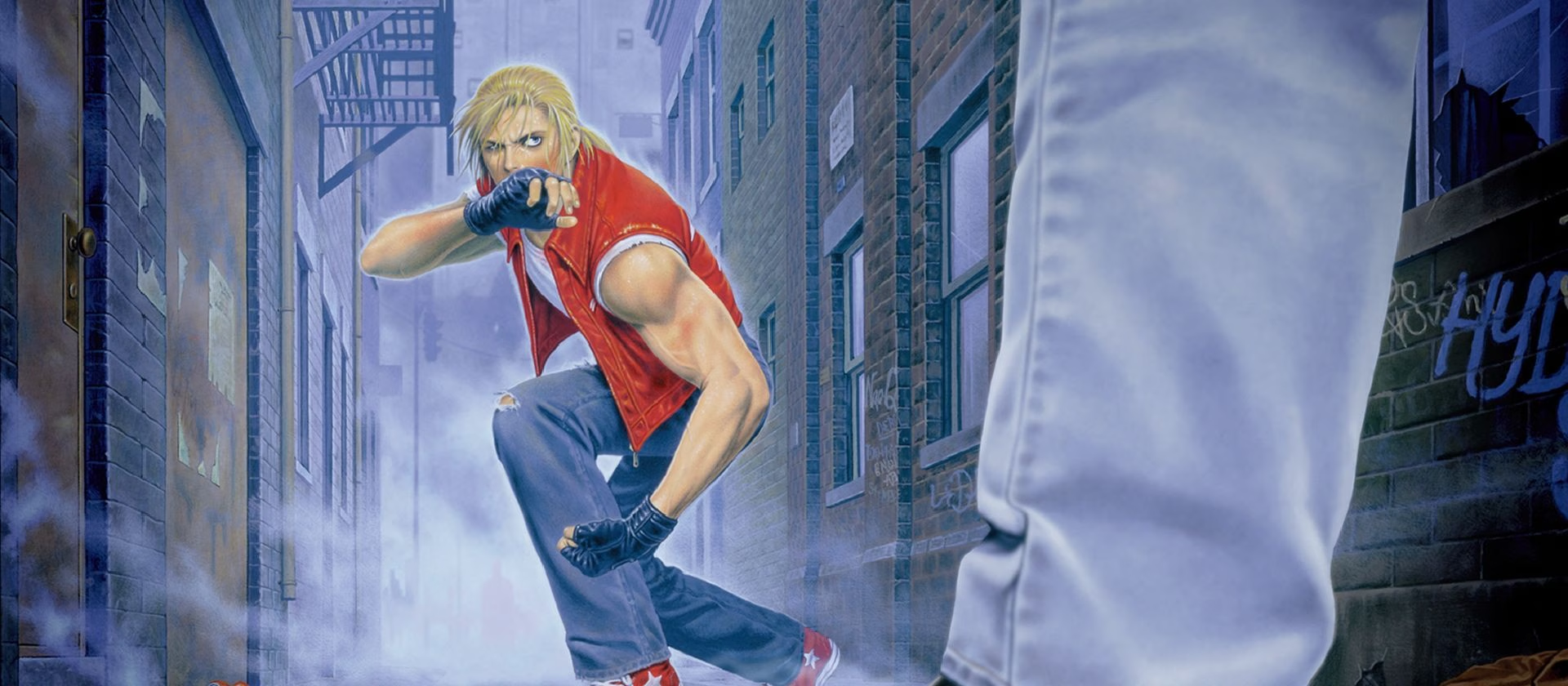
The covers reveal the tension. The world AES art is a maximal SNK roll call, Terry and Mai orbiting a logo as if brand recognition were the safest bet. The Japanese cover lets the faces breathe a little more, but it still knows this is a roster pitch before it is a story pitch. That is not a weakness. Fatal Fury’s mythology had started to harden around itself; Real Bout 2 wins by refusing to make reverence the entry fee.
The Floor Becomes a Sentence
The series’ famous lane system had often felt like spectacle first and grammar second: a way to dodge, lunge, or make the stage feel wider than a flat plane. Real Bout 2 makes it readable. The D button slips a fighter into the background or foreground, and the match starts to hinge on whether that movement is escape, bait, or challenge. You are not only asking whether a jab reaches. You are asking whether your opponent expects you to leave the line before the jab matters.
That is why the game feels fast without feeling scrambled. A weak 2D fighter makes speed by shortening the distance between decisions until every exchange blurs. RB2 makes speed by making each decision branch. Dash or hop. Stay on the line or leave it. Block into Break Shot, or keep the gauge for a larger swing. The GameFAQs move guide reduces Break Shot to notation — guard cancel possible while H.Power is available — but in play it becomes a promise that defence can interrupt the script if you have the move, the meter, and the nerve.
The result is a kind of footsies that refuses to stay on the floor. Traditional spacing asks you to measure horizontal distance: can my poke reach before yours, can I bait the whiff, can I walk into throw range without getting clipped? RB2 keeps those questions and adds depth as a timing problem. A fireball is not only something to jump, block, or counter. It can become an invitation to step away from the plane where the opponent has already spent their turn. A rush is not only speed. It is a bet that you will remain hittable long enough for speed to matter.
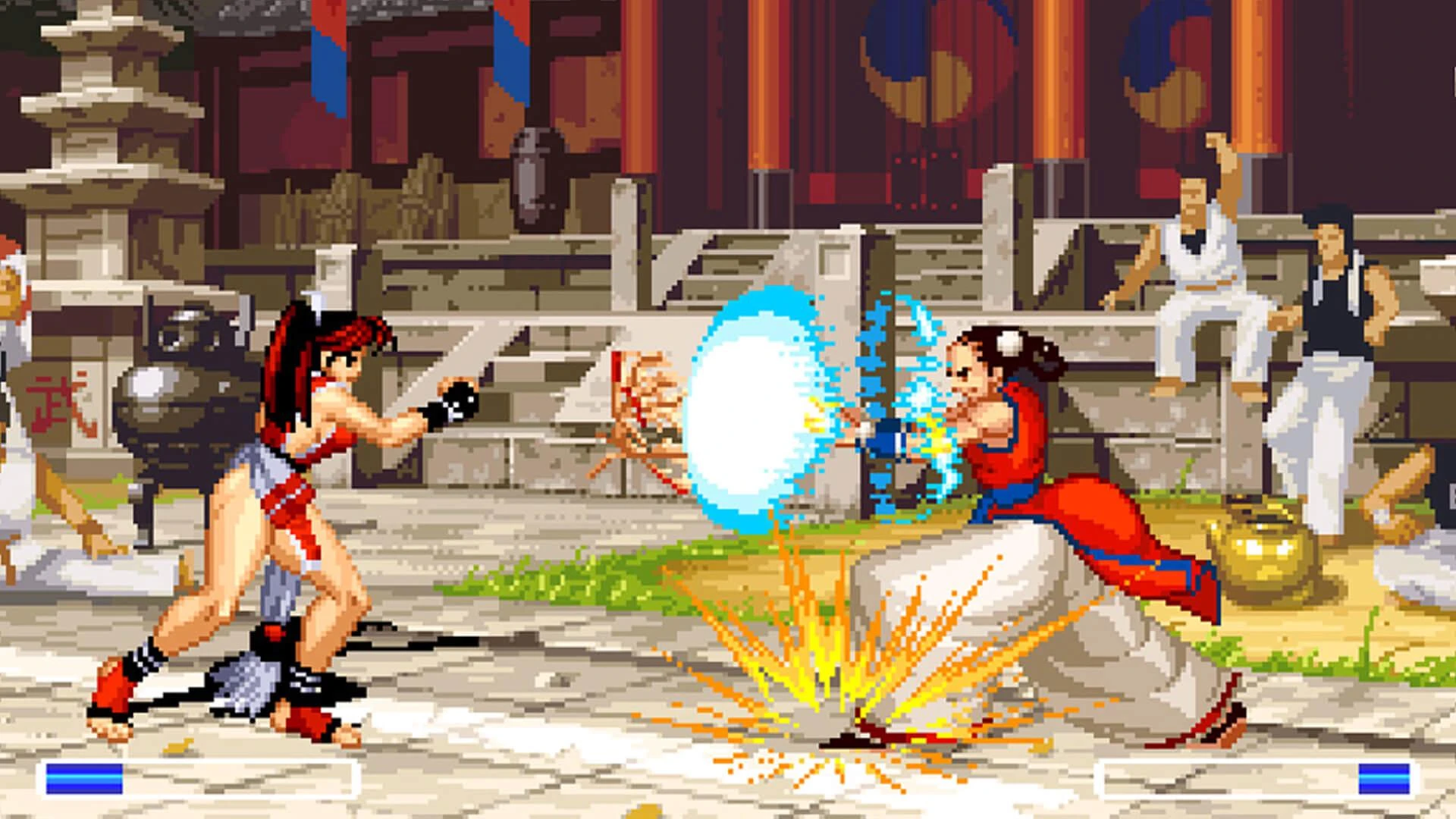
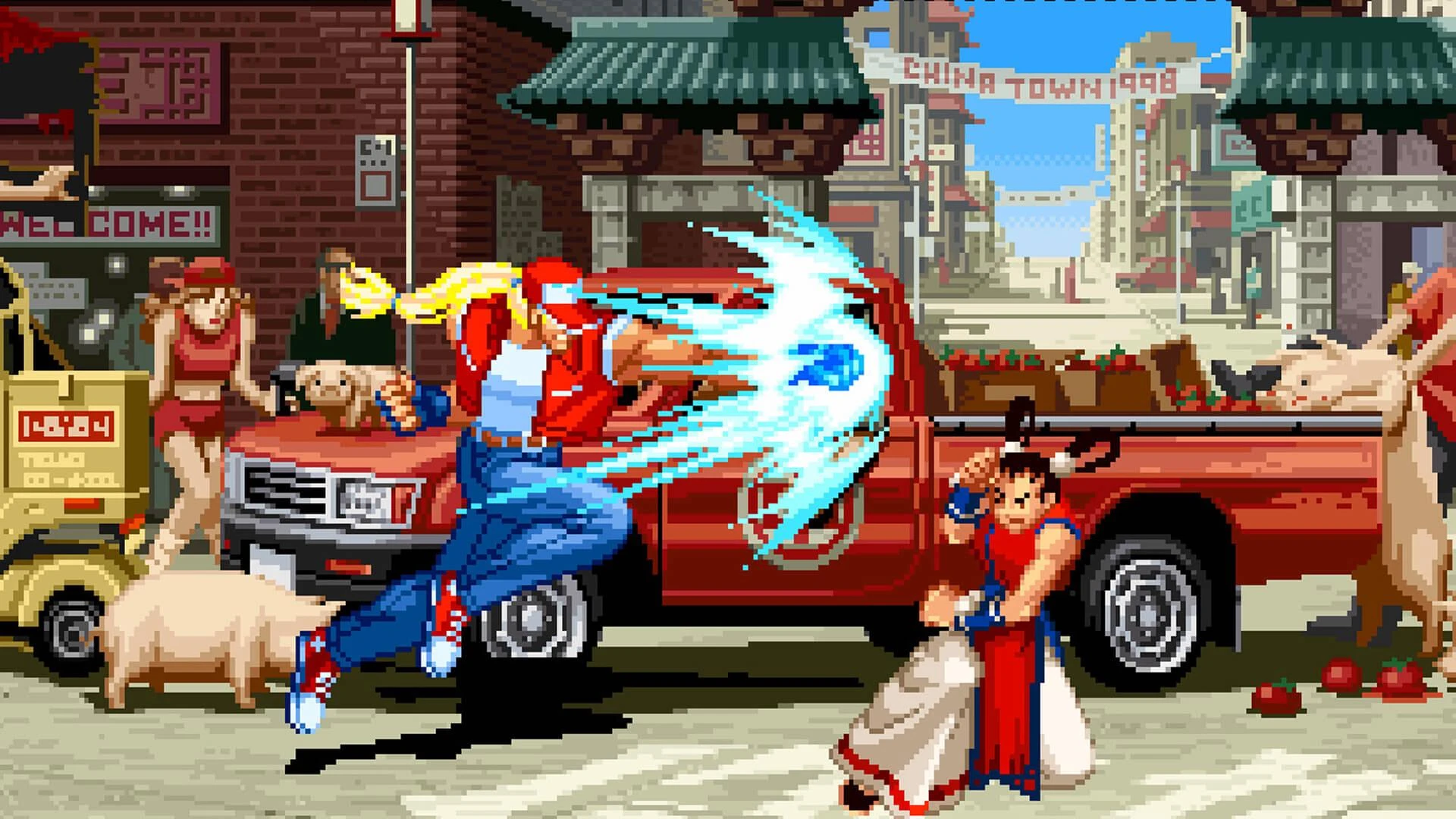
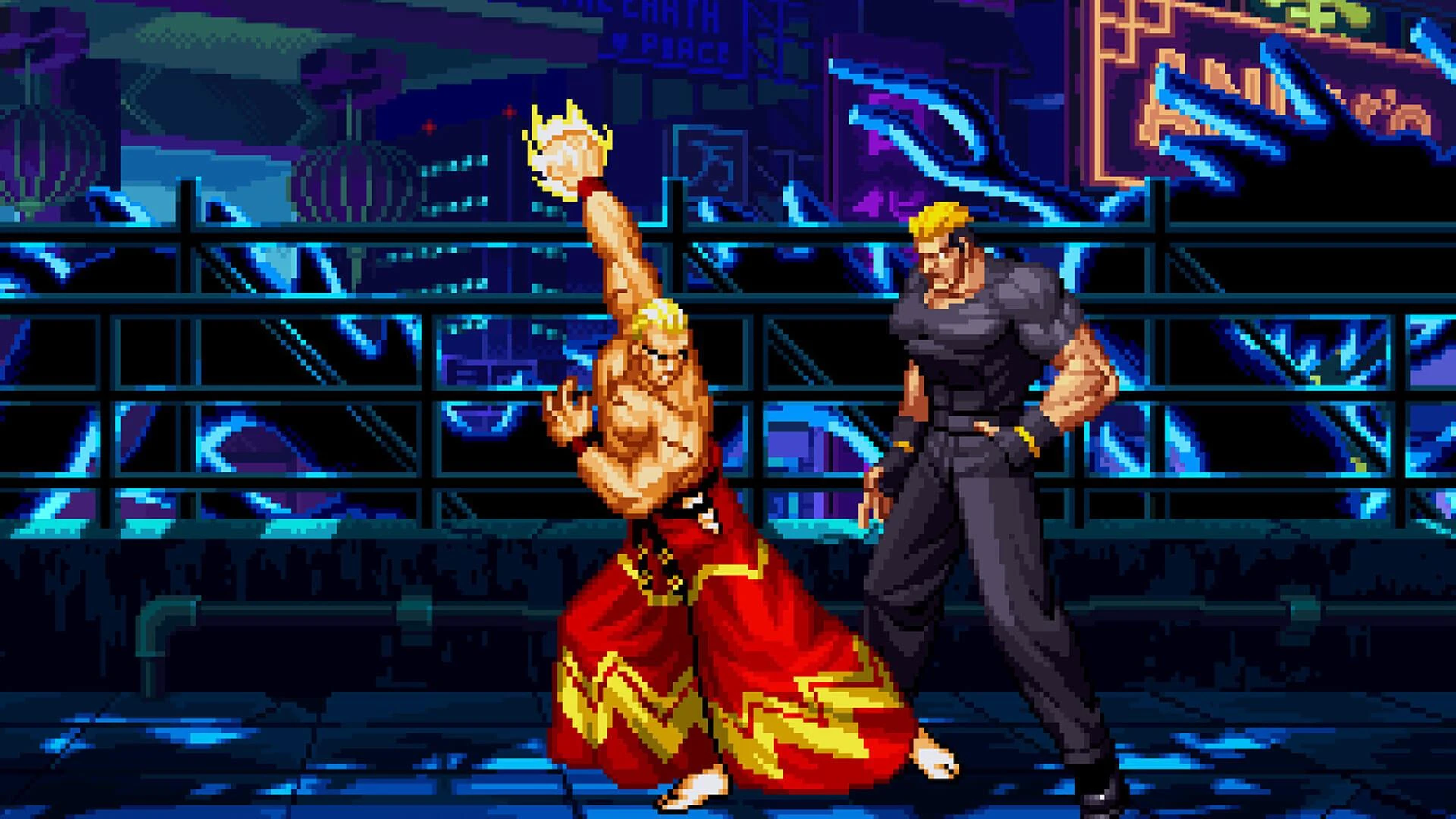
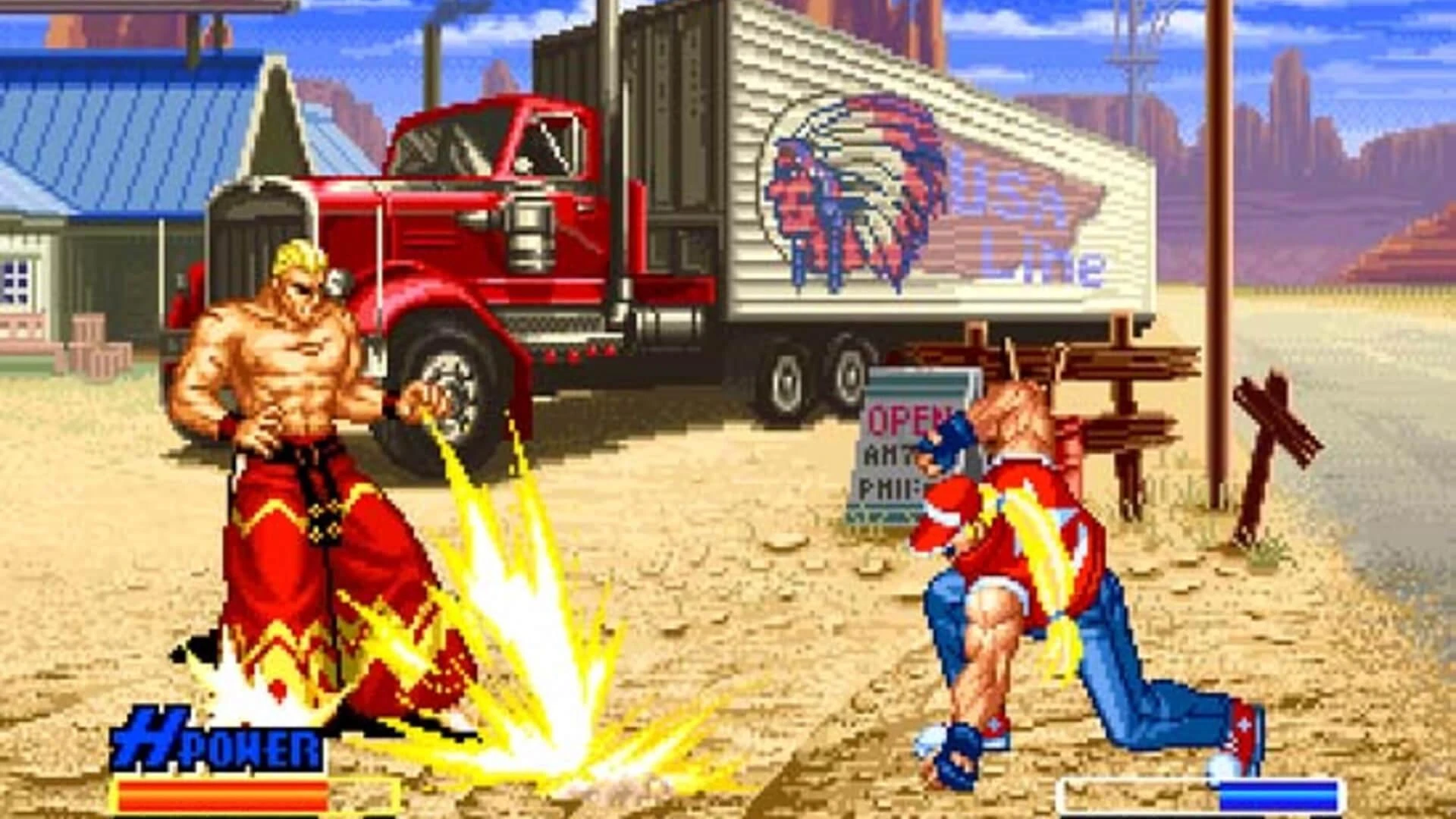
Break Shot completes that loop because it makes defence argumentative. Blocking does not end the exchange; it can become the exchange. Several specials carry the property, so a character’s defensive answer is tied to their body rather than bolted on as a universal escape. Terry answers like Terry. Kim answers like Kim. The roster’s personality survives inside the system because the system keeps asking each fighter to solve the same pressure problem in their own accent.
There is friction here, and some of it is real. CPU routes can read like a machine daring you to prove you know old SNK habits. The boss logic has the familiar company cruelty: quick reactions, heavy punishes, little interest in whether your first arcade run is pedagogically kind. But the friction points in the right direction. The game wants you to stop treating the plane-change button as a trick and start treating it as a verb.
The Crowd Arrives Late
The odd thing about RB2’s modern rerelease is that it does not need to flatter the game. Code Mystics’ Steam version adds the parts that make an old competitive game legible now: rollback netcode, nine-player lobbies, spectator-friendly tournament formats, adjustable practice speed, input recording, and hitbox display. Those are not museum labels. They are tools for proving whether the design can survive contact with strangers.
That last word matters. Fighting games do not fully exist in solo play. An arcade route can teach rhythm, punish windows, and the humiliating speed of SNK boss reactions, but it cannot teach doubt. Doubt arrives when the other player has learned your favourite answer and waits just outside it. RB2 is built for that doubt. A line sway that destroys the CPU becomes a habit against a person; a Break Shot that looks heroic becomes a liability once the opponent starts delaying their string; a hop that seemed safe becomes a pattern. Rollback does not modernise the design so much as restore the social pressure it always needed.
This matters because RB2 has always been the kind of game people praise in confident shorthand. “Best Fatal Fury before Garou” is the usual shape of the compliment, and it is not wrong, only too small. Garou is cleaner and more mournful. The Last Blade 2 is more beautiful. Samurai Shodown II makes a single weapon hit feel like a court ruling. RB2 is less stately than all of them. It is a specialist in interruption, a game where the strongest moments often come from not letting the other player finish the sentence they thought they were writing.
The Steam release also changes who the game can teach. Fightcade and emulation communities kept RB2 alive, but they tend to reward the already initiated. A front-facing rerelease with rollback and hitboxes gives a curious player permission to arrive late. You can see why the move worked, where the hurtbox lingered, how the line-sway punish opened. The new release does not replace the old board. It gives the board a classroom.
Brass, Breath, and Impact
SNK’s sound team writes RB2 like a tournament happening in an overlit club: hard stabs, short cues, brass confidence, rhythm sections that keep shoving the match forward. Terry’s “Kuri to Itsumademo” nods back to the series’ older American swagger, but Rick’s music is the giveaway. He does not arrive with a solemn newcomer theme. He arrives with brass and bounce, a boxer who sounds like he has already decided the ring belongs to him.
That audio directness fits the game better than grandeur would. Hits crack. The announcer barks. Potential Power announces itself like a dare rather than a revelation. Nothing lingers for sympathy. Even the short “Get in the Ring” stingers understand arcade time: six seconds to reset the blood, then hands back on the panel.
The soundtrack also knows when to stay out of the way. SNK’s more romantic late-period scores can turn a stage into theatre; RB2 mostly wants propulsion. The melodies are bright enough to mark a character and brief enough to let the impact samples own the foreground. The best music here does not ask to be admired over the fight. It keeps the fight awake.
RB2’s art works the same way. The backgrounds are busy but practical, full of spectators, signs, and shopfronts that keep the world hot without stealing the read from the fighters. The animation is not Garou’s lavish last word; it is older SNK muscle, expressive where it counts and economical where it can be. The difference matters. Garou feels like a elegy composed in advance. RB2 feels like the rehearsal room that left the door open.
The Best Fatal Fury Before Garou
There are cleaner fighting games. There are kinder ones. There are games with better onboarding, calmer CPU ladders, and less attachment to an SNK input culture that expects your hands to learn before your pride does. RB2 can make a new player feel late to the meeting.
But it also gives that player something unusually honest. The match is always showing its argument: the line you occupy, the line you threaten, the meter you can spend to break pressure, the plane you abandon at the exact moment your opponent commits to hitting it. Once those pieces click, the game stops being a crowded roster update and becomes one of SNK’s clearest competitive designs. It does not ask you to admire how much it contains. It asks you to notice how quickly it converts space into consequence.
That is the gift of the short schedule. No one had time to turn RB2 into a monument. It stayed a fight.