The trick in Robotron: 2084 is that every correct move betrays another correct move. Step toward the family member drifting alone at the edge of the room and the Grunts close over the centre. Clear a corridor and an Enforcer turns the safe lane into ricocheting fire. Run from the Brain and the human you meant to save becomes a Prog, which is the game’s way of saying that hesitation is not neutral. Something gets worse while you are thinking.
This is why the twin-stick legacy, useful as it is, has always been too small a box for the game. Robotron is not only important because one joystick moves and the other shoots. It matters because that arrangement lets the cabinet ask two hands to hold incompatible desires at once. One hand wants flight. One hand wants violence. The score wants rescue. The room wants your body. The little black rectangle becomes an ethical disaster rendered in primary colours, and it does all of that before a modern action game would have finished teaching you how to open a door.
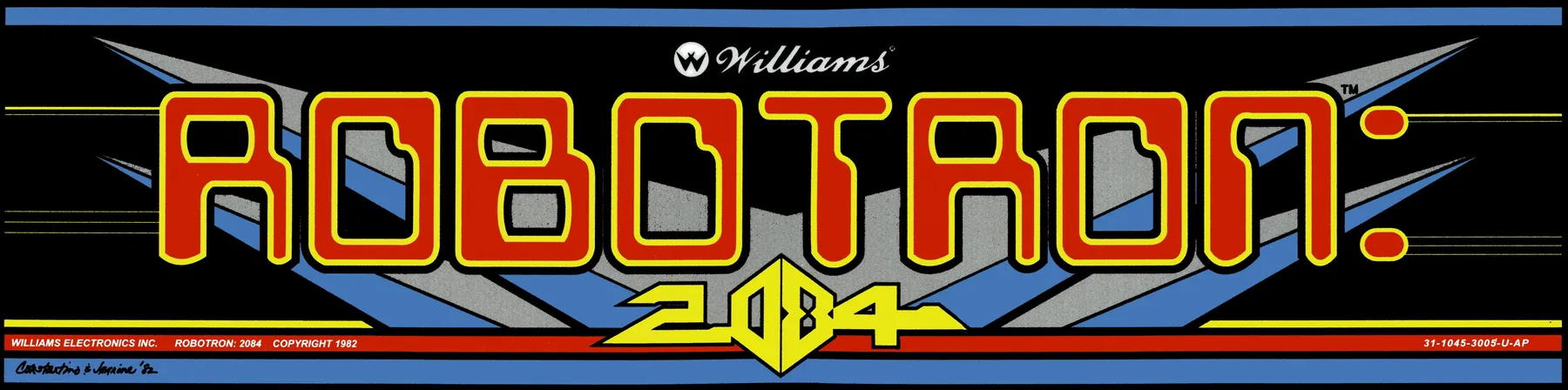
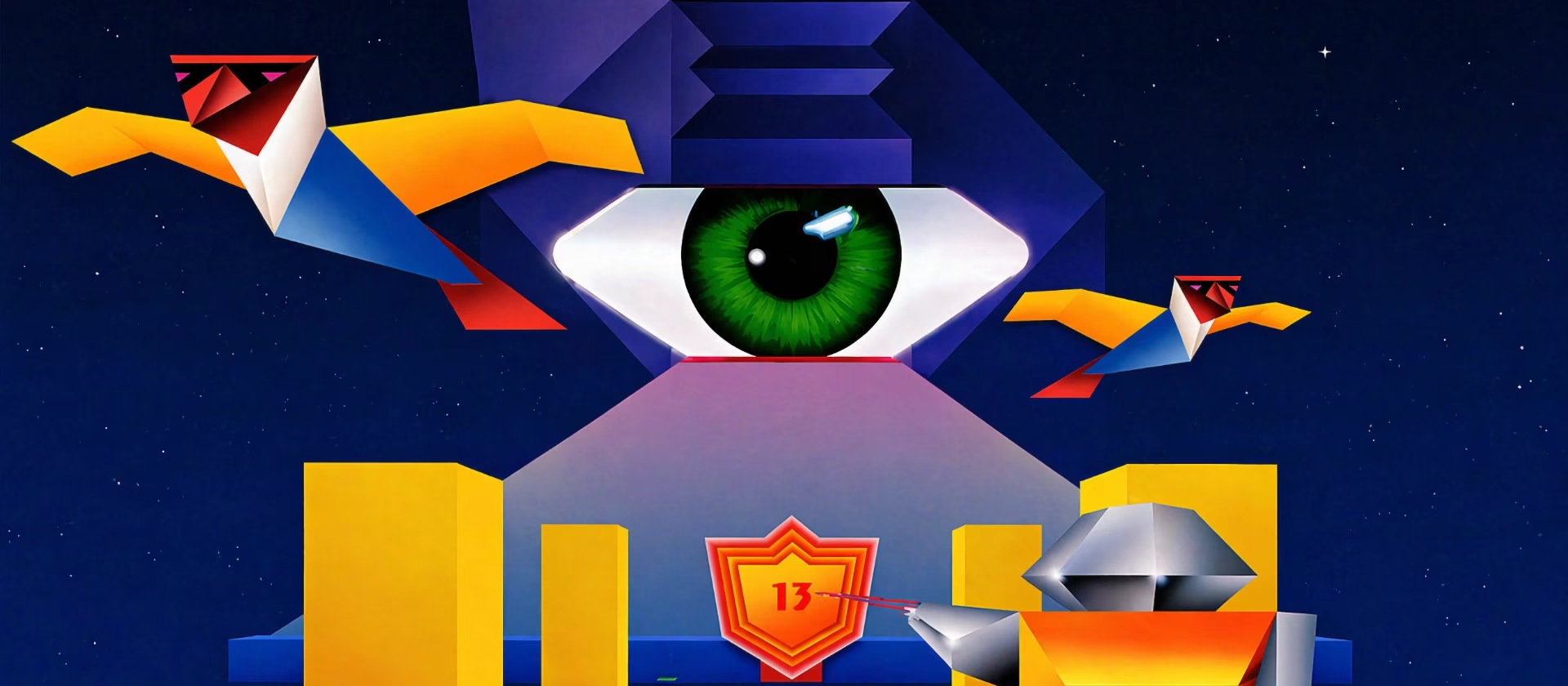
The Williams marquee gives the game its hard-edged machine glamour before a single wave begins. The cabinet art promises an arcade object, not a home computer simulation. · Williams Electronics, 1982
The Room Closes In
Jarvis had just finished Defender and Stargate, games built around horizontal freedom and a little scanner that made the world larger than the screen. Robotron went the other way. It removed the horizon. It removed scrolling. It placed the player in a single room and let the enemies enter from every border, so the drama was not where to go next but how long one small body could keep multiple disasters apart.
”Robotron is a game about confinement.”
— Eugene Jarvis, Game Developer, 2014
That confinement did not arrive fully formed. The early idea was closer to a passive robot-avoidance game, a descendant of chase-and-lure designs where the player survived by steering danger into itself. It was missing the thing that would make panic expressive. Jarvis, recovering from a broken wrist and irritated by the physical act of repeatedly hammering a fire button, asked the crucial question: why not have two joysticks? Two Atari 2600 sticks were screwed to a board. Movement detached from fire. The room stopped being a trap the player merely endured and became a pressure vessel the player could fight inside.
The difference is not cosmetic. A single-stick shooter makes direction a compromise. To fire left, your body usually faces left; to flee right, you stop shooting left. Robotron breaks that marriage. It lets the player sprint away while firing backward, edge along a wall while cutting diagonals across the room, rescue in one vector and defend in another. The control scheme feels liberating for roughly half a second. Then the game spends the rest of its life proving that freedom creates more obligations.
Two Hands, Five Emergencies
The opening wave reads as an inventory of needs the moment it starts. Rescue, defend, sprint, shoot — the cabinet asks two hands to hold incompatible desires at once. Robotron: 2084 · Vid Kidz / Williams, 1982
Every wave begins as an inventory of needs. The player appears near the centre. Humans blink helplessly around the room. Grunts start walking the shortest route toward you, not smart enough to be elegant and therefore more frightening in a crowd. Hulks are worse because they cannot be killed. They turn rescue into geometry: a wall of moving inevitability that crushes humans, occupies lanes, and asks whether you can route around a thing your bullets cannot solve.
Then the game adds Brains. On paper they are another enemy type. In practice they change the moral temperature of the whole room. A Brain can capture a human and turn that body into a Prog, a fast, murderous version of the person you failed to reach. The conversion is a perfect arcade idea because it needs no cutscene, no dialogue, no sadness performed for you. The game simply changes a rescue target into a killer and lets you feel the cost in your hands.
Tanks and Enforcers make the room noisy with projectiles. Quarks and Spheroids create more trouble. Electrodes sit still and become accidental tombstones. The manual names these things as species and threats, but what matters in play is their job in the panic economy. One enemy makes space collapse. One enemy makes your greed dangerous. One enemy makes the innocent time-sensitive. One enemy makes the safe lane disappear.
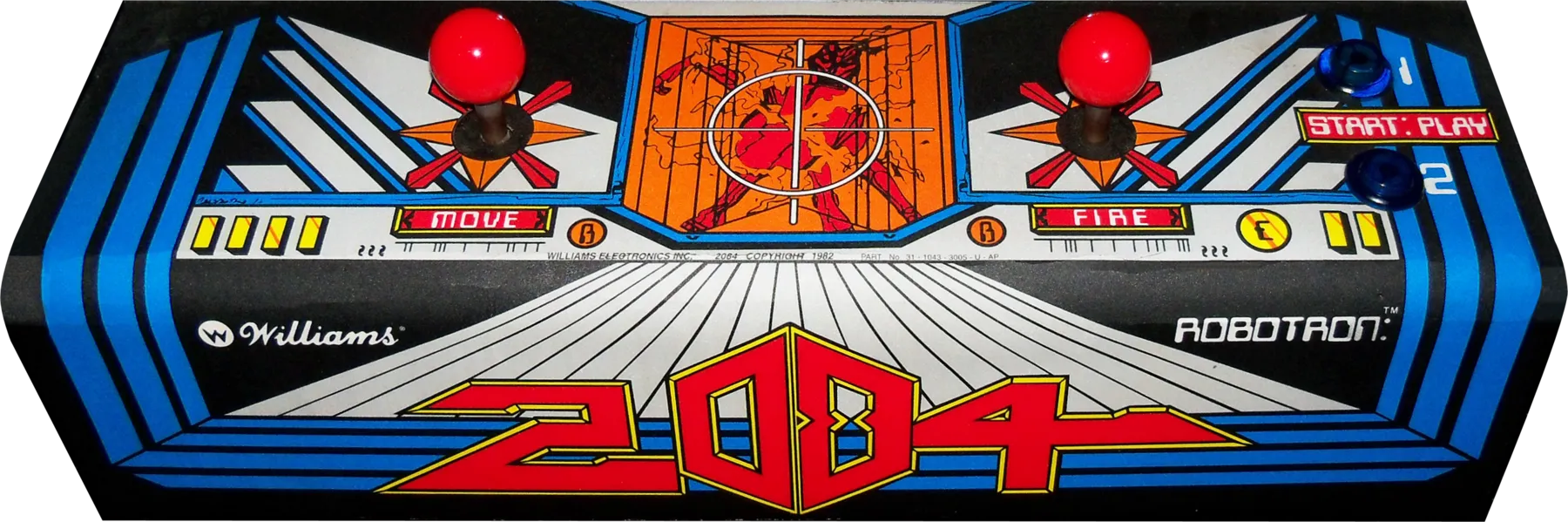
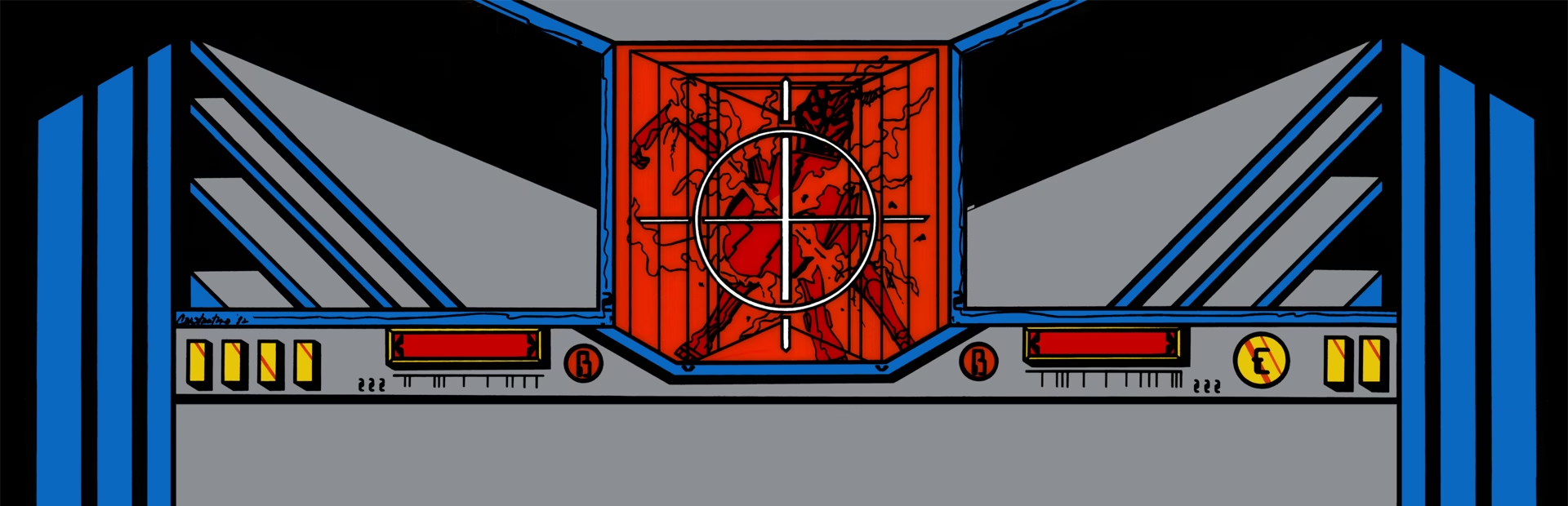
The whole thesis in hardware: two sticks, no fire button, no menu logic, no abstraction between intention and crisis. · Williams Electronics, 1982
Modern action games often talk about readable chaos. Robotron is one of the reasons that phrase has a standard to live up to. The graphics are tiny, crude, and ferociously legible. The black field does half the work. Humans, Grunts, Hulks, Brains, Progs, bullets, and obstacles each hold a distinct silhouette and colour role, so the eye can sort the room while the hand is already moving. It looks simple because it has to. The game is too fast to tolerate decoration that does not report a fact.
Panic Has a Soundtrack
There is not much music in Robotron, and that absence is part of its force. The cabinet does not score the scene from a respectful distance. It alarms the room. Player fire rattles like a malfunctioning signal. Human rescues chirp with tiny relief. Human deaths hurt because they are short, ugly, and interruptive. The start of a wave has the feel of machinery waking up badly.
This is not ambience. It is information with a pulse. In a crowded arcade, a loud cabinet had to claim attention from bodies, cigarettes, coins, and other machines. Robotron claims it by sounding as if it is already losing control. The audio tells you what the eyes might miss and then punishes you emotionally for missing it anyway. A human scream from the far side of the screen is the game reaching over your visual focus and pulling it by the collar.
The result is a strange kind of austerity. Robotron is frantic, but it is not maximalist in the modern sense. It does not layer systems to create the feeling of depth. It strips the room down until every noise is a consequence. Rescue has a sound. Failure has a sound. Survival has a sound, though usually it is just the brief lack of dying before the next wave starts.
The Score Is a Moral Trap
The humans are where Robotron becomes more than an exercise in dodging. If the game were only about clearing robots, the optimal desire would be obvious: stay alive, keep shooting, reduce the room. The family members complicate that clean loop. They are worth points. They are also bait. They make you cross unsafe lines and justify foolish diagonals. They are how the game turns score chasing into a story about obligation without ever stopping to tell one.
That matters because Robotron is often remembered as brutal, and it is, but the brutality is not just speed. It is the way the game makes the tempting move visible. There is always a human near danger. There is always a rescue that looks possible if you believe in the better version of yourself. The cabinet understands that players do not die only because they fail to see threats. They die because they see value.
The genius is that the score never sits outside the fiction. To play for points is to behave like the last human defender. To play for survival is to accept that people will be lost. The game gives you no clean division between heroic and sensible. It keeps creating rooms where the right answer changes while you are trying to execute it.
This is why the famous difficulty still feels earned. Robotron is not asking you to memorise a long track and repeat it cleanly. It is asking for continuous triage under uncertainty. Each wave has a texture, but the main skill is not rote route learning. It is threat reading, hand separation, and emotional discipline. The game wants to know whether you can abandon a rescue a fraction before your pride gets you killed.
The Modern Route Back
The easiest official route is not glamorous. Midway Arcade Origins is a broad Xbox compilation from the previous digital storefront era, but it remains available on Xbox One and Xbox Series X|S, and it includes the arcade original in a form that makes sense for a modern player. A controller is not a Williams control panel, but two analogue sticks at least preserve the central grammar: moving and firing as separate sentences spoken simultaneously.
MAME is the preservation fallback, and FPGA cores have made the hardware-simulation path more attractive for people who already live in that world. The cabinet is still the ideal if you can find one maintained properly. Two red ball-top sticks on a heavy panel change the posture of play. You lean into Robotron differently when the machine pushes back through your wrists.
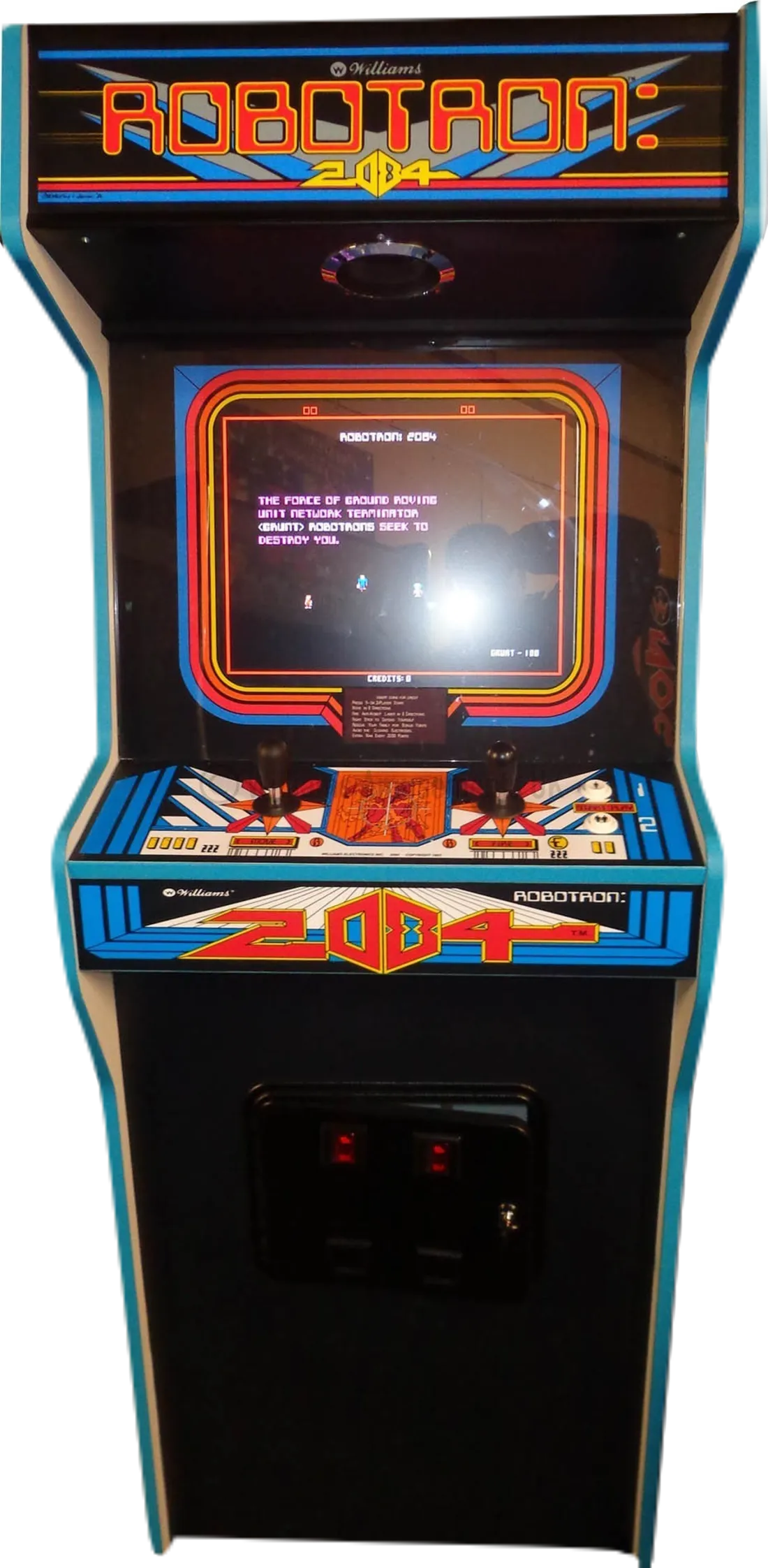
The upright cabinet turns the control idea into a stance. It is hard to overstate how much of the game lives in that panel. · Williams Electronics, 1982
What survives across all routes is the same: one room, two hands, too many correct priorities. The descendants are easy to name. Geometry Wars inherits the neon arena. Nex Machina inherits the rescue panic. Whole waves of survival games inherit the crowd-reading pleasure. But Robotron remains sharper than many of its heirs because it refuses to widen the frame. It has no upgrade build to soften a bad decision. No unlock tree to launder failure into progress. No story scene that forgives you for needing a break.
That sounds severe until the game starts moving. Then severity becomes rhythm. You learn to breathe through the first swarm, cut the room open, hear the rescue chirp, refuse the bad rescue, take the good one, and fire backward while your body runs forward. The pleasure is not nostalgia. It is the moment when panic stops being noise and becomes a playable instrument.