// import neverhoodRecordsPoster from ”../../assets/images/the-neverhood-1996-hall-of-records-poster.jpg”; // deleted
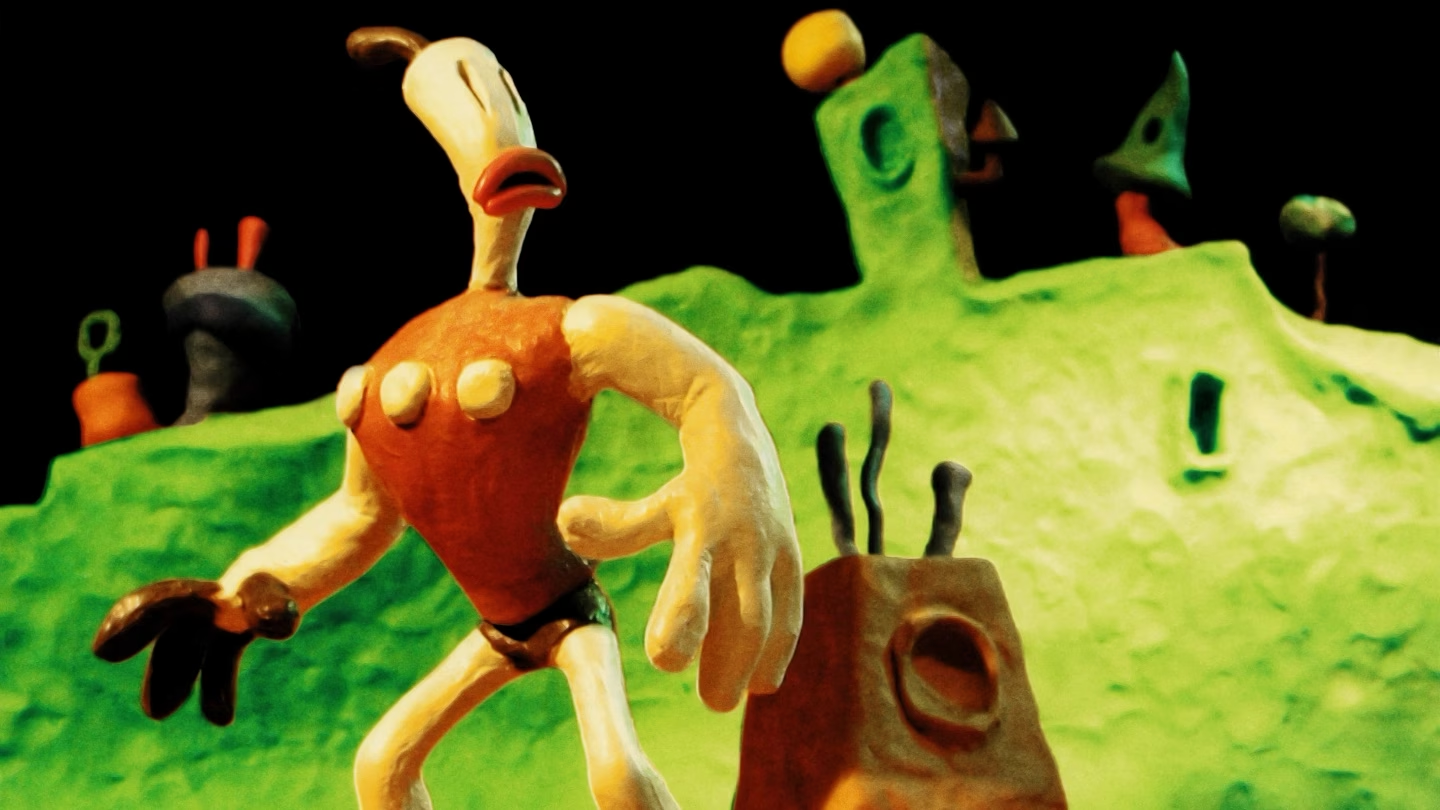
The Neverhood doesn’t look illustrated. It looks handled. Every surface in its world carries the evidence of a human hand — a thumbprint in the clay, a seam where two pieces were pressed together, the faint sag of a wall built by someone who ran out of time. It is a photographed sculpture you can control, not a piece of software.
That distinction is the game’s entire soul. In a medium that usually polishes away the evidence of human contact, The Neverhood is covered in fingerprints. You can feel the heat of the studio lights in every frame and the slight, imperfect sag of the clay sets. It remains one of the few digital experiences that feels “warm” to the touch, a stop-motion fever dream that prioritises material presence over technological smoothness. It is a game that behaves like clay behaves in the mind: slightly soft, faintly grubby, and always one shove away from collapse.
Inhabiting the Thumbprint
Most adventure games ask you to read a space. The Neverhood asks you to dwell in one.
The world of Klaymen begins in a room that feels less like a starting screen and more like a sealed toybox. Klaymen himself—a lanky, hollow-chested Everyman with a beak and a red button on his chest—wakes up into a silence that is heavy and inhabited. He doesn’t just walk; he “thwacks.” His movement has a percussive, tactile weight that mimics the “squash and stretch” philosophy of classic animation, but with the added resistance of physical matter.
This physicality extends to the puzzles. This is not a game of abstract menu-fiddling. It is a game of poking things to see how they wobble. When you depress a button, you aren’t just activating a trigger; you are watching a physical piece of clay being pushed into another. The levers look jury-rigged, the doors clatter with a hollow, plastic sound, and the machinery feels as though it was built by a bored god with poor judgment and too much time on his hands.It is a world of cause and effect you can almost smell.
The fabric of the environment is in a state of comic decomposition. Walls aren’t flat; they are thumbed. Floors aren’t level; they are squashed. This “hand-pressed” architecture makes the world feel fragile, as if your presence as a player might leave a dent in the scenery. It creates a bond between the player and the environment that a high-resolution texture map can never achieve. We must be honest: The Neverhood is not frictionless. Its puzzles can be obscure, and its logic is often purely environmental. There are no dialogue trees to guide you, no quest logs to remind you of your purpose. You are a mute protagonist in a mute world. If you are looking for the “verbs” of a LucasArts adventure or the severe symbolic cleanliness of Myst, you will find the game “baggy.” But that bagginess is the point. The play is not about inventory combinations; it is about paying attention to space. You advance by noticing how a door opens, how a sound echoes, or where a clue is embedded in a long, “unnecessary” detour. Curiosity is the control scheme. Looking is labor. The game doesn’t just want you to solve it; it wants you to inhabit it.
This is why many contemporary reviews missed the mark when they claimed it was “more fun to watch than to play.” That assumes the watching is separate from the playing. In The Neverhood, the two are the same act. The reward for a difficult puzzle isn’t just a progress flag; it’s a new “performance”—a new piece of stop-motion comedy or a new room that smells of studio lights and fresh paint.
Three Tons of Ambition
The miracle is that this was not some tiny indie project built in a basement. It was the flagship gamble of DreamWorks Interactive—a collision between Steven Spielberg’s corporate ambition and Doug TenNapel’s art-school eccentricity.
TenNapel had already proven he could attach character to chaos with Earthworm Jim, but The Neverhood was a different beast.
”Long before The Neverhood was a clay animated game, it was a bunch of paintings I did for a few San Diego art shows in the late 80s.”
— Doug TenNapel
The development was a “garage story” on a Hollywood scale. The team essentially had to invent a puppet-animation pipeline for games while under the pressure of a deadline-driven Windows 95 production.
They used over 3.5 tons of clay to build sets the size of small rooms, used high-end still cameras to capture thousands of frames of stop-motion, and then digitally “stitched” them together. This was technological rebellion. At a time when Microsoft was pushing the “multimedia PC” as a sleek, future-facing device, The Neverhood was a loud, messy reminder of the power of the handmade. It ages differently than its peers because it isn’t trying to simulate reality; it is documenting a physical sculpture. While the “realistic” CG of 1996 now looks like blurry gray blocks, The Neverhood remains as crisp and vibrant as the day it was photographed.
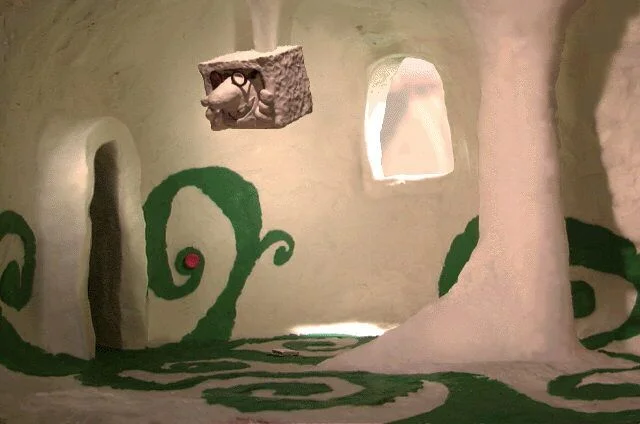
The Neverhood’s rooms work because they look built, lit, and touched. The “evidence of the hand” is the game’s primary aesthetic. Screenshot: DreamWorks Interactive.
The ASMR of Alien Isolation
The “Secret Sauce” of the game’s atmosphere isn’t just the clay—it’s the sonic texture. Terry Scott Taylor’s soundtrack is arguably the most essential component of the game’s identity. It doesn’t provide a background score; it provides a psychic landscape.
Taylor’s music—a lopsided, jazz-infused swing filled with gibberish vocals, mouth-harps, and acoustic grunts—mirrors the visual imperfection of the world. It sounds like the kind of music a clay person would hum to themselves in a world where they are the only living soul. When the music stops, the silence feels “thick.” You hear the ambient hum of the clay world, the distant click of a mechanism, or the hollow echo of Klaymen’s footsteps.
This creates a sense of “tactile loneliness” that is unique to the genre. You are alone, but the world around you is so textured and noisy that you never feel truly empty. The gibberish lyrics aren’t just a gag; they reinforce the feeling that you are an outsider in a world whose language you’ve forgotten. It’s the sonic equivalent of a thumbprint—messy, distinctive, and impossible to replicate with a synthesizer.
The Hall of Records: A Design Dare
Every masterpiece needs a moment of beautiful, unnecessary excess. In The Neverhood, that is the Hall of Records.
It is a corridor that stretches for approximately 40 screens, its walls covered in thousands of lines of handwritten lore. A sensible producer would have cut it. It is too long, it is a nightmare to traverse, and it hides a vital code at the very end of its marathon walk. But to cut it would be to misunderstand the game’s relationship with its own mythos.
The Hall of Records is a spatial test of the player’s commitment. It functions as a literal monument to the creators’ overcommitment—a way of saying, “We built all of this, and you are going to walk beside it.” It transforms the lore from a “file dump” into a physical journey. By the time you reach the end, you feel the weight of the world’s history because you have physically moved past it. It’s an endurance test that rewards you not just with an item, but with the feeling that this world has a “past” that is as heavy as its clay. The vertical code found in its lower room (lights off!) is required to operate the cannon later, proving that even the most tedious walk has a mechanical purpose.
The Fingerprint That Lasts
The rarity of The Neverhood’s magic was proven years later by its spiritual successor, Armikrog. Despite having the same creative DNA, the same composer, and the same clay, Armikrog failed to capture the same sense of wonder. It lacked the “weight” of the original. This serves as a crucial retrospective insight: The Neverhood wasn’t just about the medium of clay; it was about the collision of that medium with 1996’s technological constraints. The original game feels like a transmission from another dimension because it had to fight against the hardware of its time. Armikrog felt like a modern game wearing a clay costume. The Neverhood is clay. The fingerprints aren’t just an aesthetic choice; they are the evidence of a struggle between physical art and digital delivery that can never be recreated.
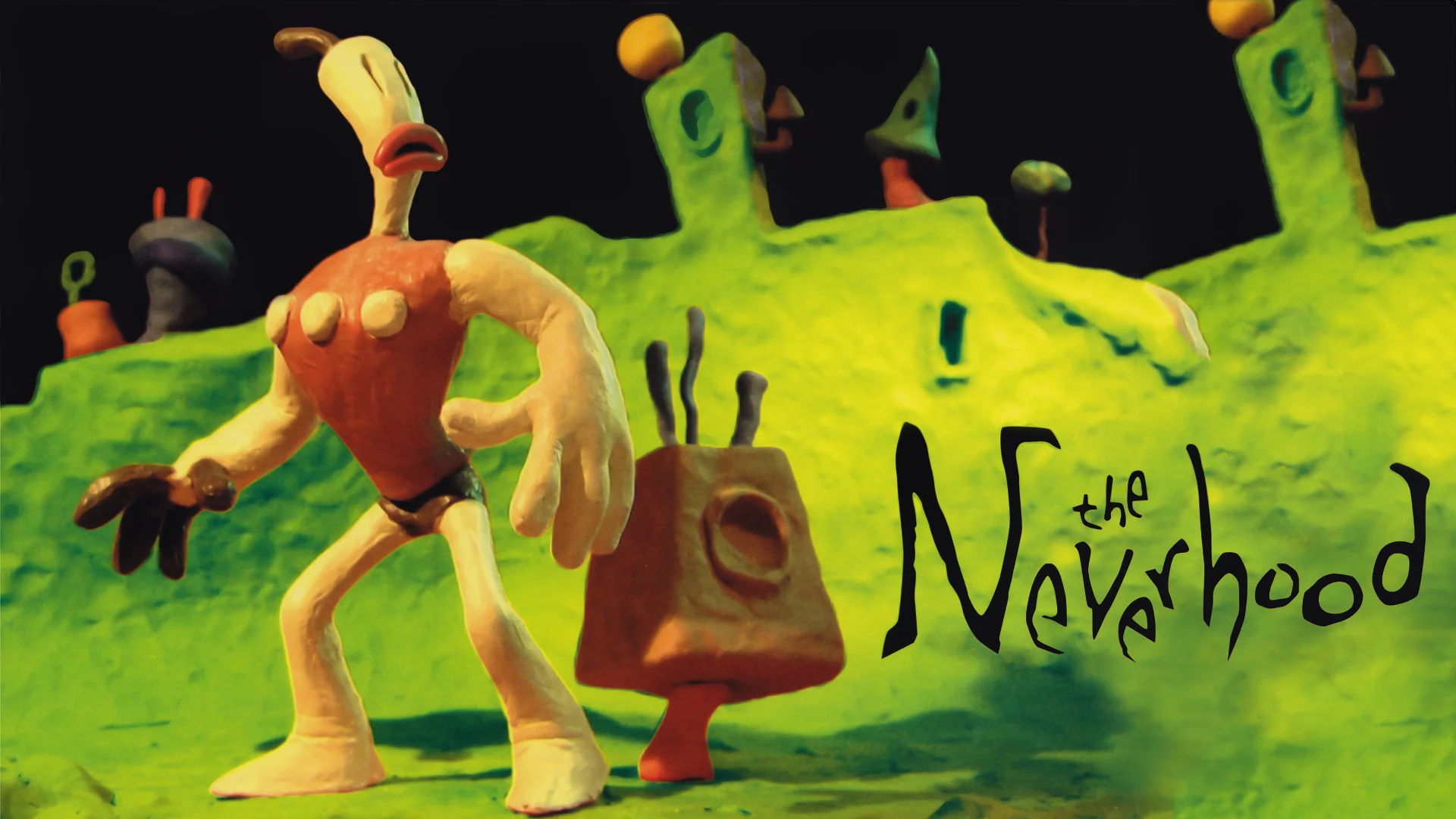
Fan tribute. Three decades on, the Neverhood’s protective fanbase keeps redrawing the cast by hand — a medium shift, but the same impulse the game itself ran on.
The Neverhood arrived in the wrong shape for its market. Large retailers were hesitant to stock expensive, handcrafted adventure games in an era of 3D shooters. It was admired critically but remained a cult relic commercially. This gap explains the “protective intensity” of its fanbase. It was never absorbed into the mainstream well enough to become overfamiliar. Today, the reason to play The Neverhood is the same as it was in 1996: it is a rebellion against the digital. In a world of generative AI and procedural generation, The Neverhood is a loud, thumb-printed shout of human presence. It knows that a world can feel authored not through scale or realism, but through touch.
You do not remember The Neverhood because its clay looked “cool.” You remember it because everything in it seems to have been physically persuaded into being. It is a game that leaves the fingerprints in — a world built by hand, and still warm from the handling.