// import palmtreePastPoster from ”../../assets/images/sonic-cd-1993-palmtree-panic-past-poster.jpg”; // deleted
// import speedwayRacePoster from ”../../assets/images/sonic-cd-1993-stardust-speedway-race-poster.jpg”; // deleted
In the spring of 1992, Yuji Naka left Sega of Japan for Redwood City. He took most of Sonic Team with him, set up at the Sega Technical Institute, and started work on Sonic the Hedgehog 2. The original character designer, Naoto Ohshima, did not go. He stayed in Tokyo with the composers, the art director, and a Mega CD that nobody at Sega quite knew what to do with.
What Ohshima built — quietly, on a peripheral that almost no one owned, with Naka thousands of miles away — turned out to be the strangest Sonic of the 16-bit era and the one the franchise has been inheriting from ever since. Sonic CD is the only mainline Sonic where the disc isn’t a delivery vehicle for the game. The disc is the game. Time travel, the house-and-techno soundtrack, the five thousand cels of Toei animation — every choice runs through the same logic. It took the rest of the world nineteen years to read it that way.
Two Sonics, One Ocean Apart
The split was not a falling-out. Naka had insisted on programming Sonic 1 personally, and after shipping it he wanted to keep working on the engine in a place with less mascot-management overhead than Sega Japan. STI gave him that, and a Western team, and a directive to make the sequel marketable. Ohshima — the man who had drawn Sonic in the first place — stayed home with Hataya and Ogata on music, Hoshino on character design, and a small crew the company was content to leave alone. Sega Japan barely supervised them. The franchise pressure was all aimed at California.
The teams were on the same brand and on different planets. “Since Sonic 2 was developed in America,” Ohshima told iMore on the game’s thirtieth anniversary, “we had no idea Tails even existed while we were working on Sonic CD.” Two Sonic games shipped in the same calendar window — late 1992 and late 1993 — by people who, at the moment of shipping, did not entirely know what was in the other game.
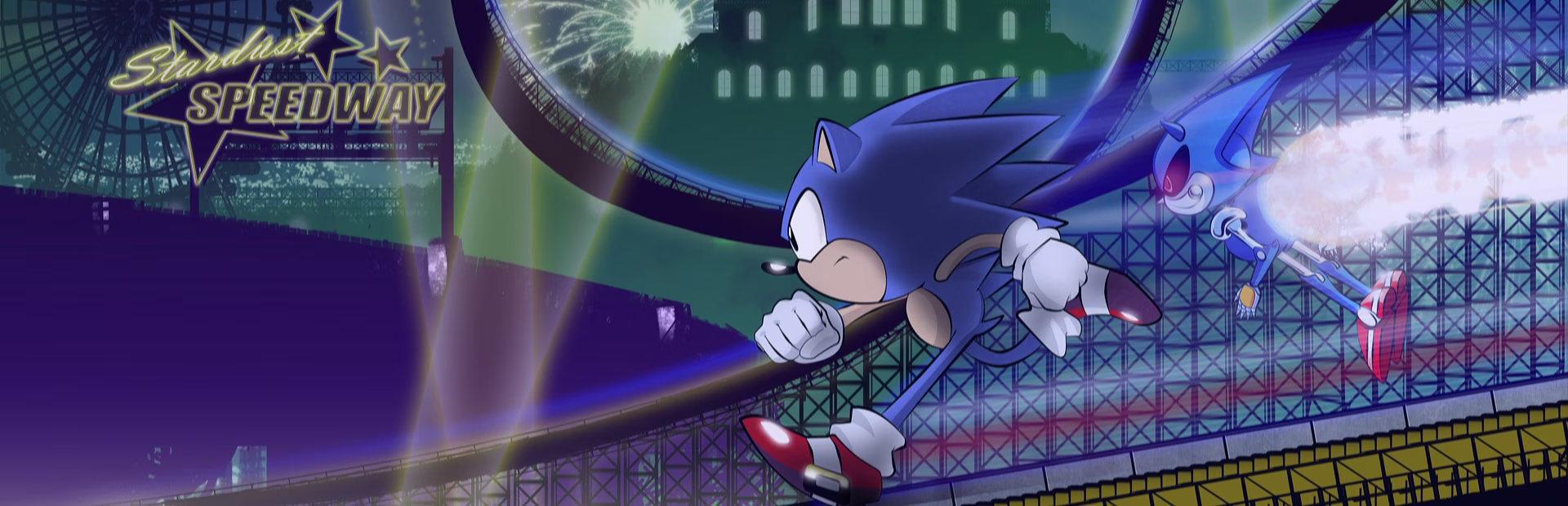
Hoshino, the character designer, said the team’s central directive was a single word: “CG.” Not the photoreal CG of a few years later — the 1993 version, the one that meant sparkling reflections on chromed surfaces, prerendered metal, anything that would yell at the player that this was CG. Metal Sonic was the obvious vessel. So was the cosmic-disco neon of Stardust Speedway. The Mega CD couldn’t actually do prerendered 3D in any meaningful sense, so the team faked it: hand-drawn metal, animated to look extruded.
Time Travel as Storage Format
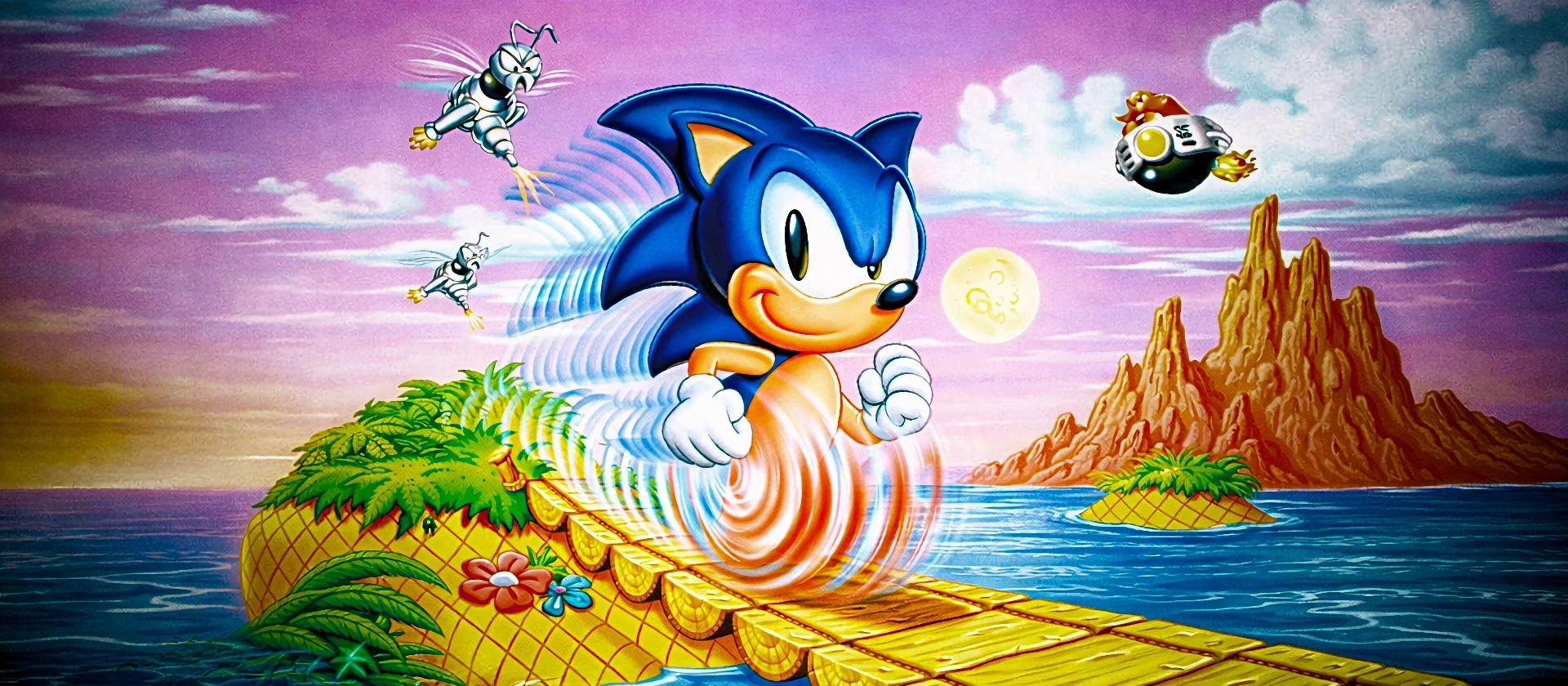
The big mechanical idea is also a storage idea. Each zone exists in four versions — past, present, good future, bad future — and the player flips between them by hitting a marked signpost (“PAST” or “FUTURE”) and holding top speed for a few seconds. The screen smears, the music drops, and the level is rewritten around you. Layouts change. Hazards move. The colour palette shifts entirely.
“The time travel mechanic was made possible due to the increased storage space we had available on the CD,” Ohshima told iMore. He’d watched Back to the Future and wanted top speed to be a verb that did something more than move Sonic forward. The mechanic on the disc is the mechanic on the screen.
The animated opening is the same logic at a different layer. Ohshima wanted instant zone transitions — a literal sonic boom, a flash, a level rewriting itself in front of you. The Mega CD couldn’t pull that off, so the team commissioned Toei Animation to draw a hand-animated cutscene that plays during the loading sequence between zones. Ohshima sketched the storyboards himself; Toei sent them to Studio Junio for animation, then handled the filming. Five thousand cels at thirty frames a second, packaged with the game because the disc had room to package it.
That, more than anything, is what makes Sonic CD a Mega CD game and not a Mega Drive game with extra music. Every mainline Sonic released to that point fit on a cartridge. None of this fit on a cartridge.
House and Techno on a Disc
The composers took the same instruction further. “Ogata and I decided that Sonic CD would feature techno and house,” Hataya said in a twentieth-anniversary interview, naming Frankie Knuckles, the KLF, and C+C Music Factory as the touchstones. The Sega Japan sound team had been listening to what Tokyo’s clubs were playing in 1991 and 1992, and they made the case to Ohshima — over multiple revisions, after a first demo tape he rejected outright — that this was what a Sonic on a CD ought to sound like. Hataya and Ogata won the argument. The result is a 16-bit platformer scored as if for a 1993 Roppongi dance floor, with full CD-quality audio for the first time in the series.
Then Sonic CD crossed the Pacific. Sega of America took one look at the soundtrack and decided American players would not respond to it. They handed the rescore to Spencer Nilsen, then head of music for Sega Studios, and gave him about two weeks. Nilsen brought in David Young as co-composer and the San Francisco jazz trio Pastiche on vocals, and wrote a more orchestral, “rocking” version with a marketable theme song, “Sonic Boom,” for the opening and ending. The past-stage music in every zone, including the American release, is still the original Hataya/Ogata composition — those tracks were programmed into ROM as PCM samples, not stored as CD-DA, and Sega could not swap them on the disc. So even the rescored cartridge has Hataya in the past.
The localisation history reads as the most-discussed thing about Sonic CD — GameFan gave the Japanese version four perfect 100s in 1993, and editor Dave Halverson would later call the rescore “an atrocity that remains the biggest injustice in localization history.” That framing has consumed the discourse for thirty years. It also misreads the story. The interesting question is not whether the swap was right. The interesting question is what the original soundtrack reveals about the team that wrote it. The Japanese version is a Sonic game where the composers were free to argue for techno and win. The American version is a Sonic game where the marketers were free to argue for orchestral pop and win. Both are real. Only one is what Sonic CD was.
What I do want is to do something much more spectacular with Sonic CD than what is being done in the United States.
— Naoto Ohshima, Sega-16 (translated classic interview, March 2023)
What the Levels Are Asking For
The levels are where modern players bounce. Sonic CD’s zones are vertical, exploratory, and frequently maze-like. The Sonic 2 grammar — long horizontal hold-right-and-go runs, predictable loop-de-loops, momentum as the dominant verb — is mostly absent. In its place is something closer to the original Sonic 1’s Marble Zone, scaled up and routed through a time-warp signpost system that asks the player to read the geometry rather than blast through it.
This is the design’s most criticised feature, and the criticism is fair on its own terms. Wacky Workbench and Metallic Madness can feel like architecture inflicted on you. But the maze quality is doing work the genre rarely does. Each Bad Future has a hidden Robotnik machine generating the timeline; finding it and destroying it is what converts the zone to a Good Future. So the levels are vertical because they’re hiding things, and they’re hiding things because the time-travel mechanic only pays off if you explore. The friction is the architecture asking the player to do the thing it’s about.
The reward, when the architecture clicks, is the moment-to-moment thing nothing else in the franchise does. Drop into Tidal Tempest’s past and the music is suddenly an early-90s house instrumental over a 16-bit underwater Sonic level. Convert Stardust Speedway to a Good Future and the cyberpunk noir flips into hot pink and neon green. The aesthetic claim Sonic CD makes — that disc-era Sonic should feel like four parallel realities of the same place, not one place with extra rooms — happens nowhere else in the run.
What Whitehead Made Legible
For seventeen years almost nobody played Sonic CD. The Mega CD shifted poorly outside Japan; the Sega CD did slightly better in the US and was treated as a punchline by the late 90s. The game appeared, briefly, on a 1996 Windows port and the 2005 Sonic Gems Collection, both compromised. Then in 2009 an Australian programmer called Christian Whitehead posted a video of Sonic CD running at sixty frames a second on iOS, on an engine he’d written himself. He spent the next year persuading Sega to let him ship it.
The 2011 release — iOS, Android, PSN, XBLA, then Steam in early 2012 — is the version that taught the world how to read the game. Locked 60fps everywhere. Both soundtracks selectable from the title screen. Sonic 2’s spin dash optional. Tails unlocked as a playable character. Time-warp collision tuned so that hitting top speed on a slope no longer dropped the warp at the wrong moment. It was the same game; it was finally the game on its own terms.
What followed put the case beyond argument. Whitehead’s Retro Engine — the one he’d built for Sonic CD — became the engine of Sonic Mania in 2017. Mania’s most-celebrated reworked zones were Stardust Speedway and Metallic Madness, both originally Sonic CD. The game critics decided was the only good Sonic of the modern era was, line for line, in spirit and in source code, the lineage of the Sonic Yuji Naka was not in the room for. Sega delisted the standalone 2011 release in May 2022 to clear the way for Sonic Origins, which now bundles the Whitehead remaster with the rest of the classic catalogue. It is the only legal path to Sonic CD now, and it is, by some distance, the right one.