// import codySpecialPoster from ”../../assets/images/mighty-final-fight-1993-cody-special-poster.jpg”; // deleted
// import oldTownBrawlPoster from ”../../assets/images/mighty-final-fight-1993-old-town-brawl-poster.jpg”; // deleted
The Mighty Final Fight most readers remember is the cute one. A chibi NES cart from mid-1993, three little fighters where the arcade had three big ones, a late-cycle 8-bit afterthought from the studio whose A-team was finishing Mega Man X for the SNES. The real Final Fight had been on the SNES for two and a half years. The chibi version was the joke. Almost none of that survives the cartridge. The NES game is the truer arcade adaptation; the prestige SNES port everyone canonised is the cart that cut the most. The cuteness everyone read as a joke was the trick that let the smaller cart fit a fuller game.
The SNES Cart’s Eight-Megabit Hole
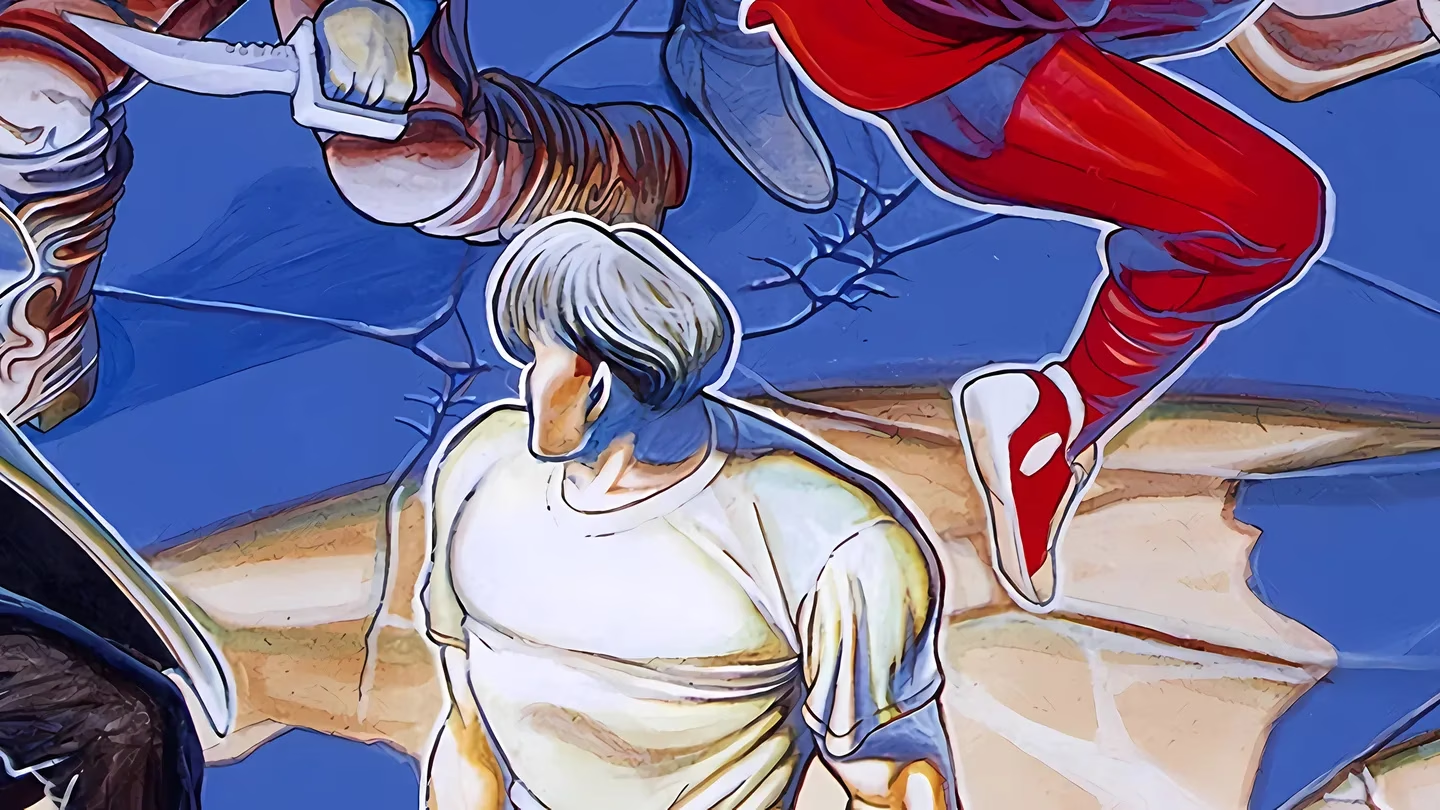
The 1990 SNES Final Fight is the version that lives in players’ memory as Final Fight on console. It is also the version that lost Guy as a playable character, lost the Industrial Area stage entirely, lost two-player co-op, and — in every North American Nintendo release — lost the female enemies Roxy and Poison, who were swapped out for two men named Sid and Billy. The SNES cart held one megabyte of ROM. The arcade game wanted more. Capcom cut until the game fit, and the cuts were significant enough to constitute a different game: shorter, solo, with one fewer playstyle on offer. Two years later a revised Japan-only release titled Final Fight Guy restored Guy by removing Cody — same cartridge size, same compromises, just a different absence.
That is the Final Fight most readers carry. The chibi NES cart that arrived in mid-1993 carried something else.
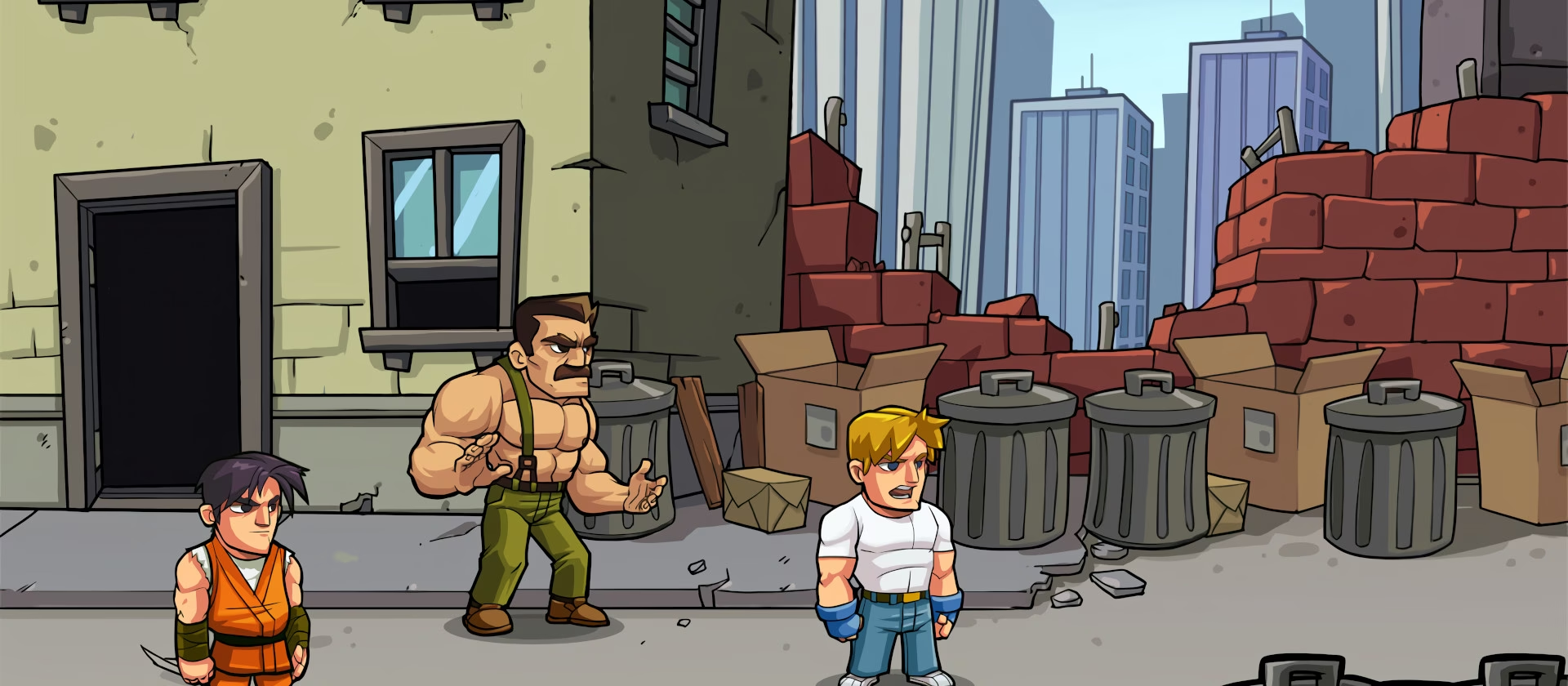
What the NES held was a cartridge that included Cody, Guy, and Haggar all playable, an original five-stage layout, two bonus rounds between stages, full pre-fight banter cutscenes for every boss, an experience-points levelling system that unlocked special moves, and — in the Japanese and European releases, where Nintendo of America’s localisation rules did not apply — Roxy and Poison still on screen as female sprites. It is, by every measurable axis except one, more of the arcade game than the prestige port managed. The axis it loses on is sprite resolution. That loss is the trick.
”Even though it is technically far less capable as the cut-down Super NES port of Final Fight, in many ways it is a much better game.”
— Comma Eight Comma One, retrospective review, 2015
Three Heroes Where the SNES Got Two
The chibi style was not a parody. It was a sprite budget.
A beat-‘em-up needs each character to read at speed across a chaotic playfield. The arcade Final Fight solved this with what Akira Yasuda called the “Huge & Cool” principle — make the figures enormous and let twelve-frame walk cycles do the rest. The SNES port kept that scale and lost roster instead. The NES cart took the inverse trade. Smaller heads, smaller bodies, fewer pixels per fighter, more fighters in the cart. Cody, Guy, and Haggar each get a recognisable silhouette in roughly half the sprite real estate of their arcade counterparts, which is what frees the ROM budget to put them all in the same release. The cuteness is what survives once the maths is done.
The character differentiation survives the shrink. Haggar plays slow and grappler-shaped; his level-three running body splash is the design’s heaviest single hit and the tool that makes positioning matter. Guy plays fast and air-mobile; he can chain a flying side-kick straight off a jump and rebuild combos before the enemy lands. Cody is the balanced default, the one whose chi-blast special at level four is the article’s most-cited new move because it’s the most legible — a hadouken in a brawler, the joke and the system both. The differences are not stat lines pretending to be variety. They are three separate ways through the same five stages.
A Levelling System Borrowed From Technos
The XP bar at the bottom of the screen comes from Technos’s Famicom port of Double Dragon II — a rival publisher’s NES R&D that Capcom imported wholesale, a gesture of cross-pollination the studio rarely allowed itself. The system is simple and hard to overstate. Defeating an enemy yields experience points; stronger finishing moves yield more; food at full health spills the surplus into XP instead of waste. Reach level four, unlock a special move. Reach level five and six, gain raw stat increases.
The mechanic that does the structural work, though, is the level-up health restore. When a level fires mid-fight, the player’s health bar refills to full. On a cart with limited continues — and the NES game is genuinely brutal on a single credit — that restoration is what lets a skilled run survive without the arcade’s coin-fed mercy. It is also what shifts the brawler’s tempo from attrition to rhythm: every two or three encounters, the meter pops, the screen flashes, the bar refills, and the next stretch becomes survivable. River City Ransom’s RPG layer gets the credit for proving an XP system could sharpen rather than dilute a brawler. Mighty Final Fight is the same idea, applied with more discipline, four years later.
The soundtrack underwrites the same trade. Setsuo Yamamoto and Yuko Takehara — Yamamoto would go on to score Street Fighter Alpha and Mega Man X3 — wrote in the Mega Man register rather than the arcade Final Fight’s funk-jazz. Brass-heavy chiptune, driving 6/8 stage themes, a final-boss cue closer to Wily’s Castle than to anything in Metro City. The choice is engineering as much as taste. The 2A03 audio chip cannot do the arcade’s CP-1 brass section; it can do Mega Man, and the score reaches for what the cart can carry rather than papering the gap with reductions of music it cannot reproduce.
The Banter the Brawler Wasn’t Built For
Every boss in Mighty Final Fight gets a pre-fight cutscene. The chibi sprites face each other across the arena, dialogue runs at the bottom of the screen, the boss insults you, your character responds, the fight begins. It is two seconds of character work in a genre that traditionally allows none, and it is on the chibi cart because the chibi cart had room.
What’s striking about it now isn’t the dialogue itself, which is functional — pulpy comic-book threats, the language of a Saturday-morning beat-‘em-up. It’s the structural decision the system encodes. The arcade Final Fight has bosses that walk into frame and start hitting. The SNES port has bosses that walk into frame and start hitting. Mighty Final Fight is the only version that pauses long enough to give them voices — and Capcom kept the pattern. Final Fight One on the Game Boy Advance, in 2001, imported the same boss-banter structure back into a release that finally restored Guy to the arcade build. The chibi cart’s joke became the canonical pre-fight format. It survived eight years of polishing because it worked.
The same trade pays off in friction. Reasonable modern players bounce on three things: limited continues that send you back to stage one on death, controls that read as mushy compared to the arcade’s gem-precise inputs, and the absence of two-player co-op the cart could never afford. The first is the cost of the NES feedback loop being calibrated to NES economics — single-cart play, no coin slot to feed. The second is the price of running a 60Hz arcade fighter on a CPU clocked an order of magnitude slower. The third is the cleanest cost of the chibi trade, and the one a 2025 fan sequel finally closed: Mighty Final Fight Forever, by Bouncer Games, ships free on PC with the two-player mode the original cart could not fit.
A Cyborg, A Wedding, A Late Goodbye
The final boss is Cyborg Belger. The arcade had a man in a wheelchair with a gun, kidnapper of Mayor Haggar’s daughter Jessica for political coercion. The chibi cart redesigns him as a mechanically enhanced robot with augmented limbs and a different motive: he wants to marry Jessica. The change reads, on first encounter, like the joke landing — pulpier, sillier, comic-book scaling. On second encounter, it reads like ambition. The cart’s design ceiling is high enough that the team felt the need to raise the antagonist’s. Where the arcade was satisfied with a wheelchair, the 8-bit version commits to a robot. The chibi style does not soften the late-game; it allows it.
That, ultimately, is the case for picking the cart up today. The Mighty Final Fight that works now is not the one history mounted in glass — the cute curio, the historical footnote, the late-cycle goodbye to Capcom’s NES era. It is the one where Capcom’s console division, the same group finishing Mega Man X for SNES that summer, looked at a hardware platform two and a half years past its own successor’s launch and committed real production resources to it: a planner credited as K.O., three programmers, eight artists, two composers, and a producer credit Wikipedia disputes but which carries Tokuro Fujiwara’s name. The result is a cart that fits more arcade Final Fight onto an obsolete console than the celebrated SNES port managed onto its successor. Played with that knowledge in mind, the chibi joke shifts. The joke was on the SNES.