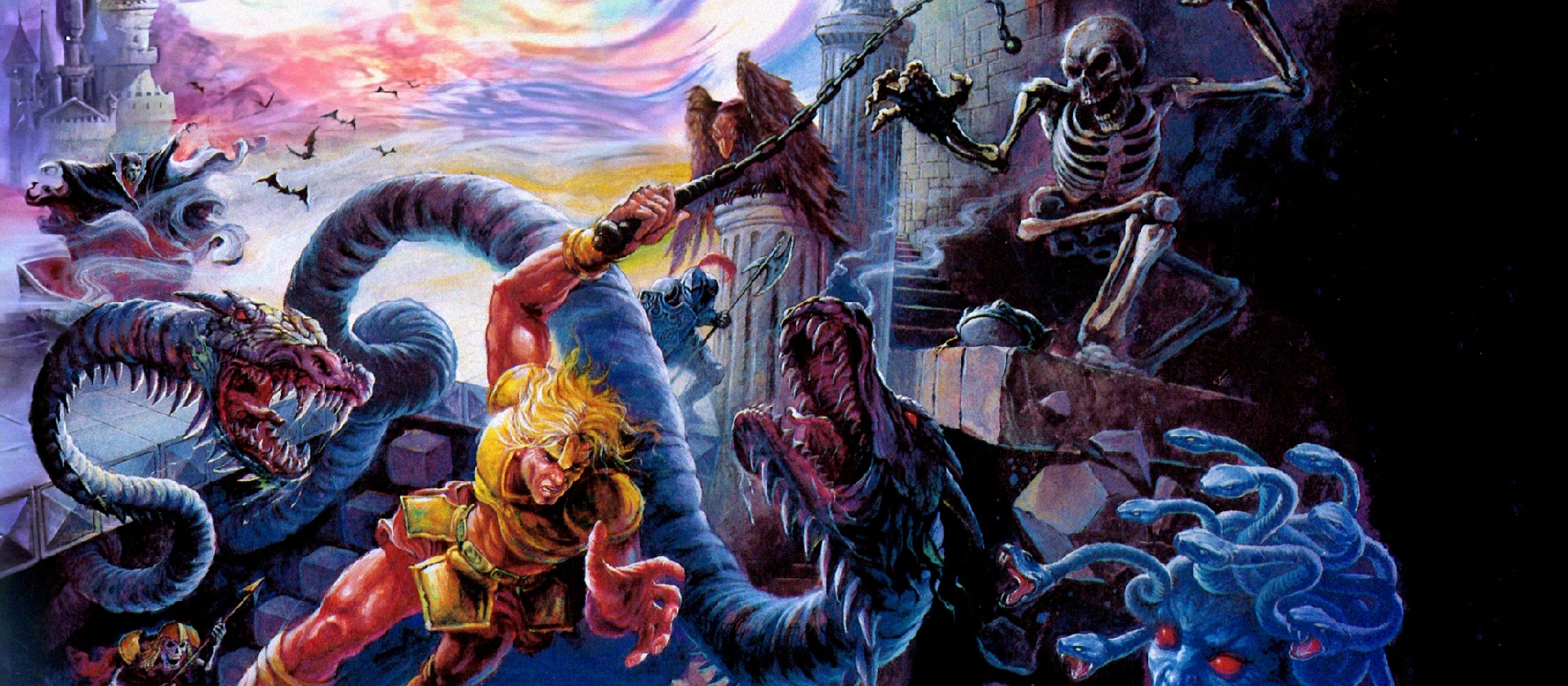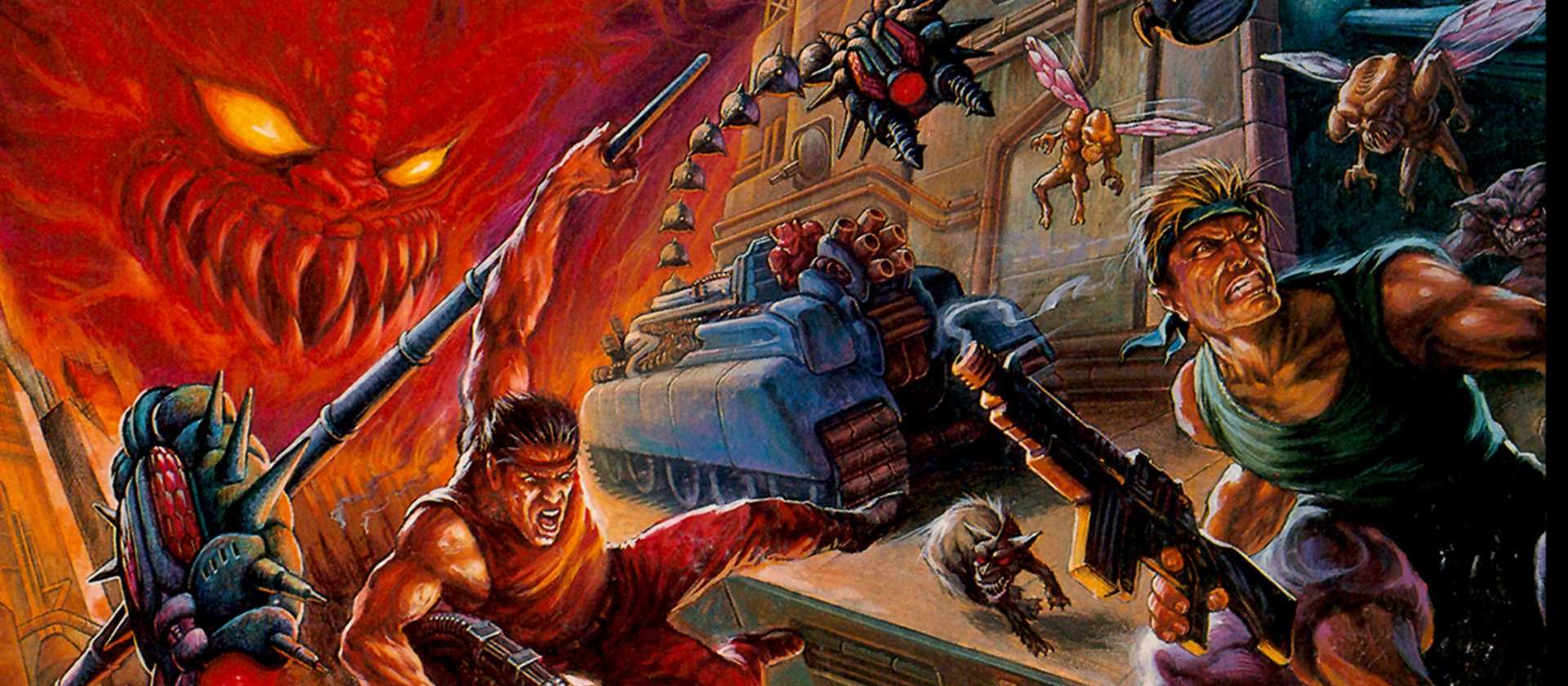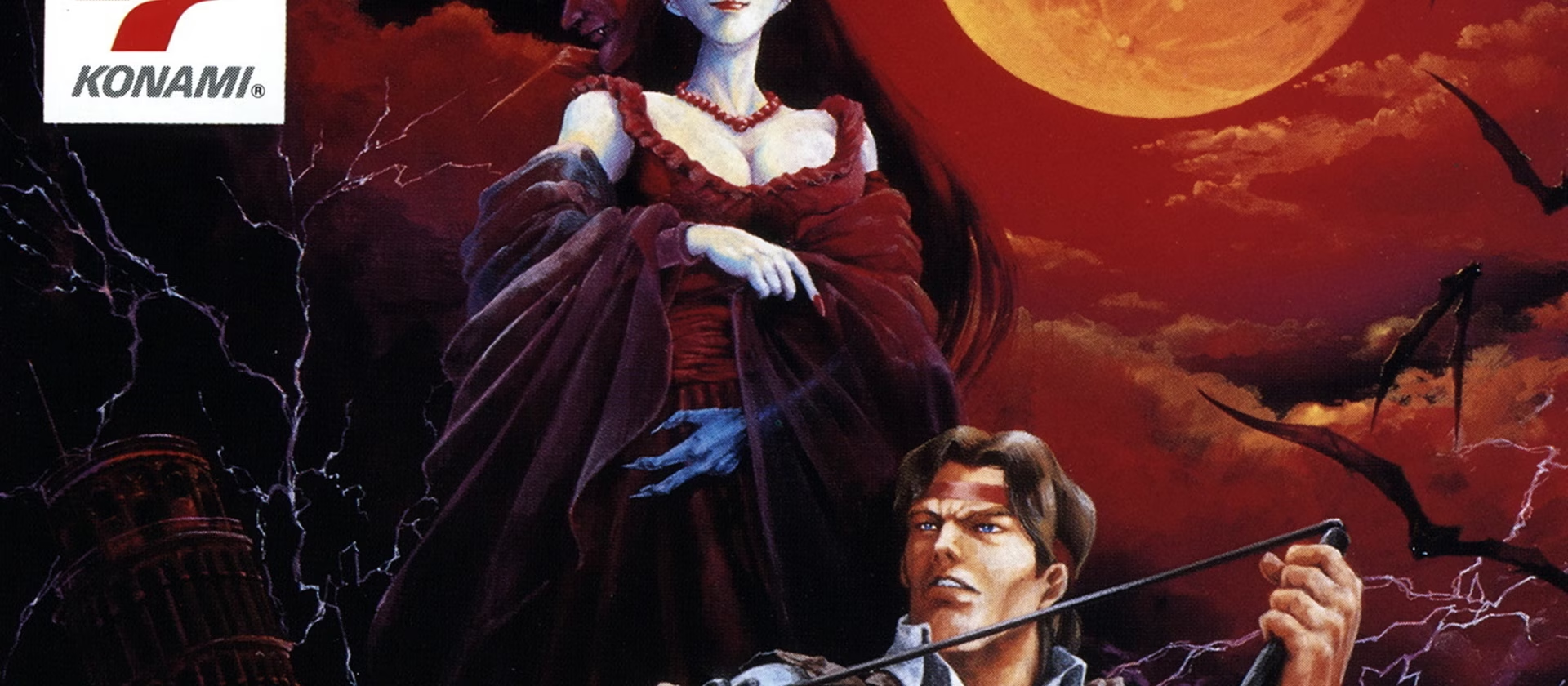
Most people who picked up Castlevania for the Mega Drive in March 1994 picked up the wrong one. The cartridge in the North American case was called Bloodlines and ran at a difficulty the lead designer himself described as the “tabasco” version. The cartridge in the Japanese case was called Vampire Killer — no Dracula, no Akumajō prefix, the twelve-year series brand deliberately stripped from the spine. The cartridge in the European case was called Castlevania: The New Generation because PAL territories had effectively banned the word “blood” from cartridge packaging, and the title screen’s red sea was recoloured blue water to match.
Three cassettes, one design, three different readings. None of them is the Mega Drive Castlevania people mean when they talk about Super Castlevania IV. The Mega Drive Castlevania is its own object: a separately authored, post-castle answer-record built by a different Konami team for a different sound chip, with a script the writer freely admitted was “his personal interpretation” of the saga rather than the canon. And almost nobody heard it. Famitsu’s lifetime sales tally for the Japanese release sits at fewer than ten thousand cartridges — a figure that kept the cart at four-figure secondhand prices until the 2019 reissues forced the gates open.
Three Editions, One Cartridge
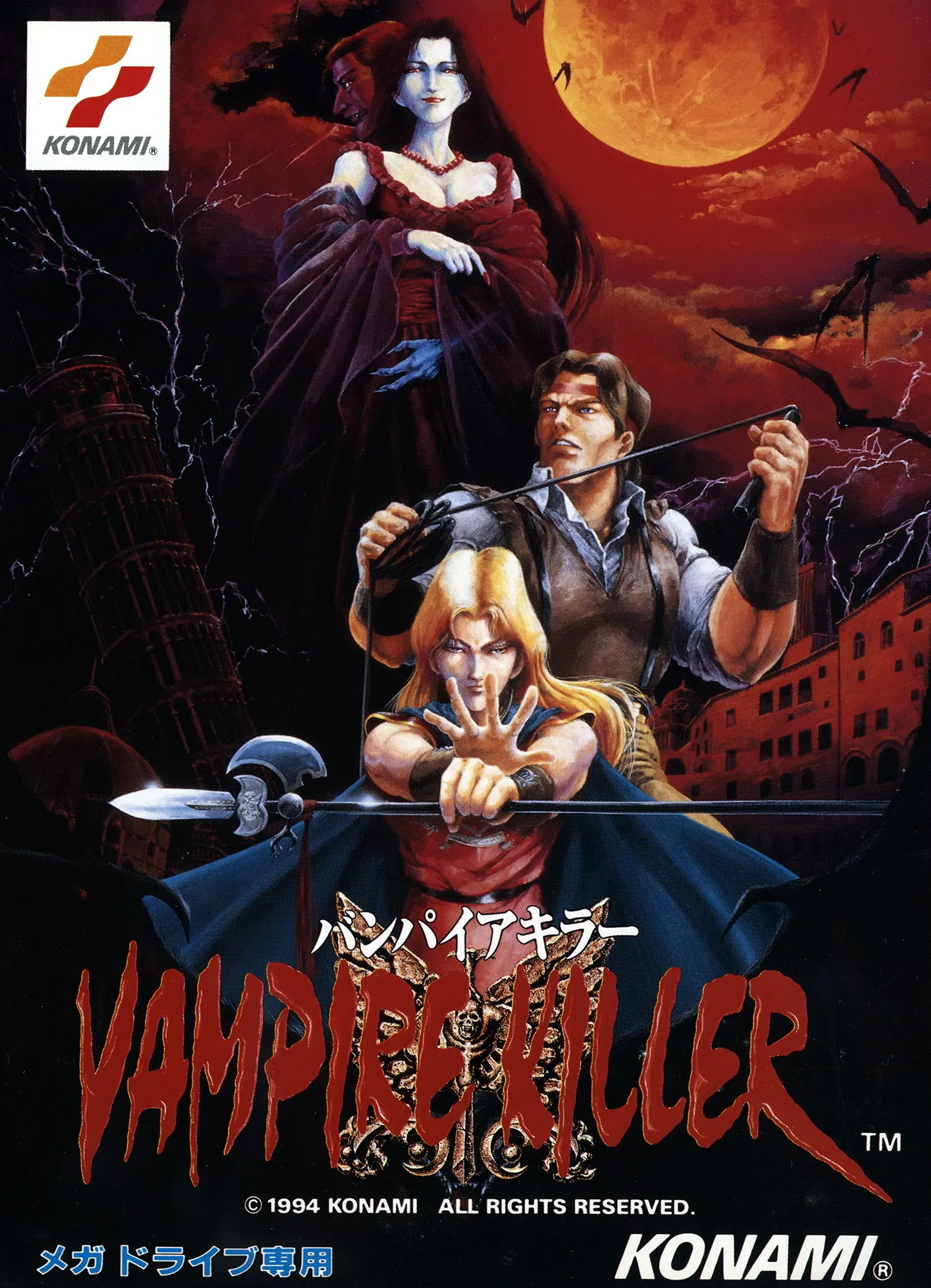
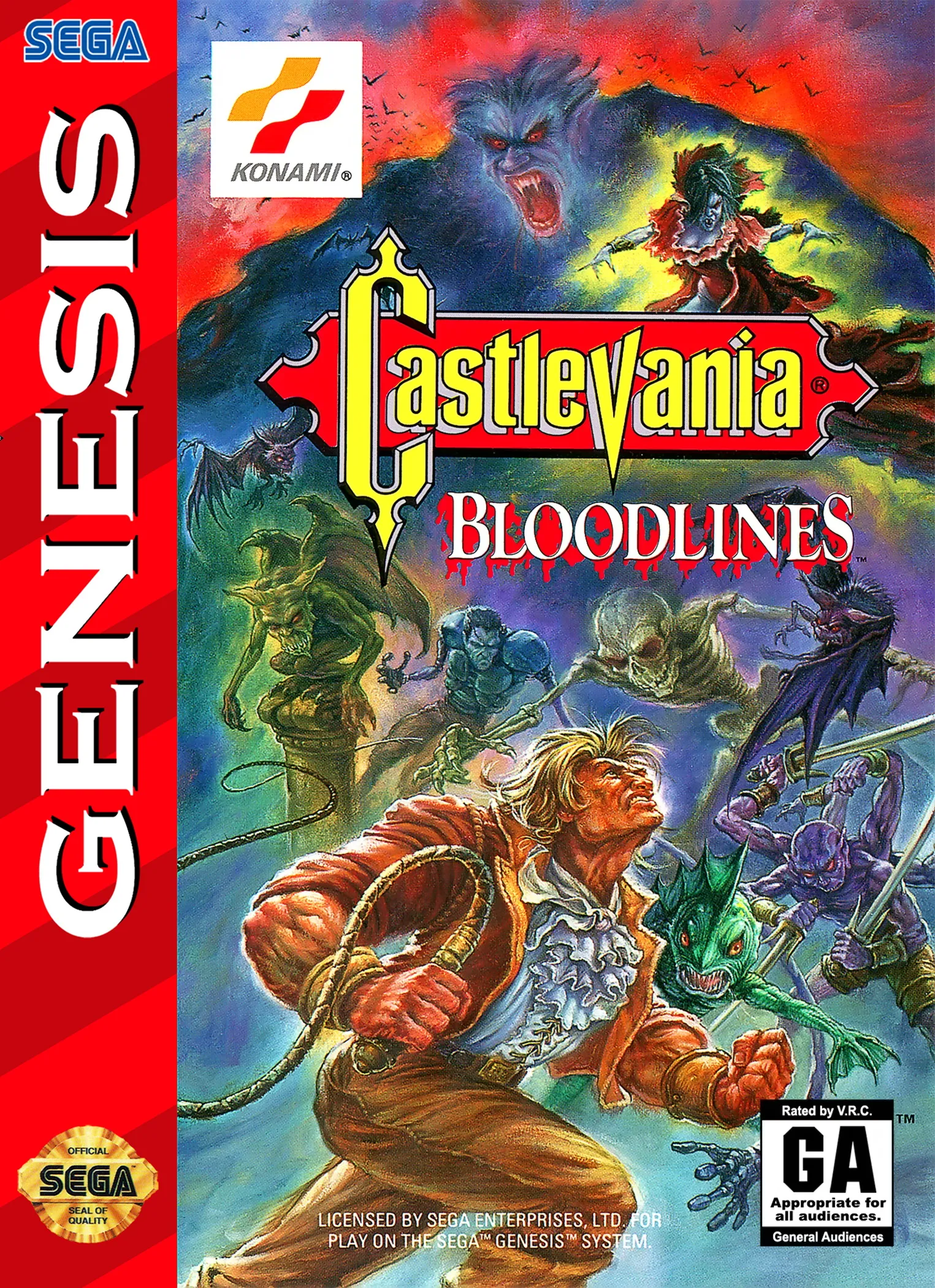
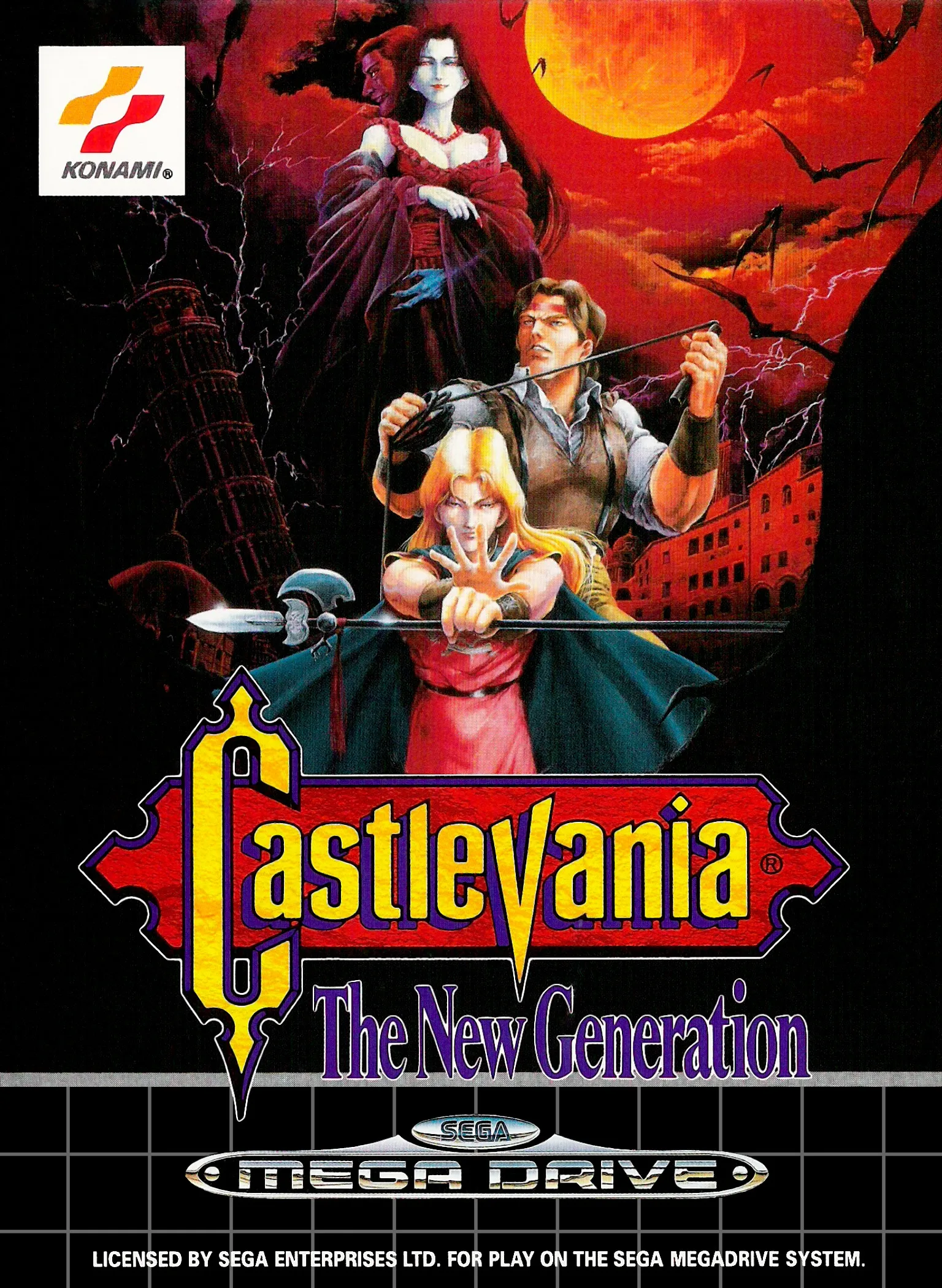
The same cartridge, three readings of what could be said on a spine. The Japanese edition strips the Castlevania brand entirely; the European edition strips the word “blood.” Vampire Killer / Bloodlines / The New Generation · Konami, 1994.
That regional split is not localisation theatre. Toshiki Yamamura, programmer and scenario writer, told BEEP! Megadrive during development that he wanted to use the title-change to mark a working boundary: “The reason we didn’t use the traditional Akumajō Dracula title is that we wanted to challenge ourselves to present a new style and flavor to the series: speedy and action-packed, while still retaining the strategic aspect of the earlier Castlevania games.” Konami of America put the brand back on the spine because the brand was the franchise; Konami’s European distributor pulled it half-off again because the European trade simply would not allow “blood” on a children’s storefront. Yamamura’s other admission, from the same interview, is the one Mega Drive owners outside Japan didn’t have on the cartridge case: “If you find Vampire Killer too easy for you, be sure to check out the overseas version, Castlevania Bloodlines. It’s like the ‘tabasco’ version of Vampire Killer, in terms of difficulty.” Japanese Normal is broadly the same difficulty curve as overseas Easy. The cleanest shop in 1994 — Europe — was selling the hardest cartridge with the gentlest title.
Yamamura’s Own Dracula Trilogy
The deeper break with the established Castlevania reading is the script. Yamamura was not building a sequel to Super Castlevania IV. He was building, by his own account, the middle act of a separate three-part saga he had been carrying around in his head:
“The scenario is unique to the Megadrive, and is my personal conception of the Dracula series. In my mind there is a trilogy or tri-partite structure to the Dracula saga, and this game takes the place of the second act. I’d like players to see Vampire Killer as my personal interpretation to the canon. I was pretty influenced by Hideyuki Kikuchi’s work.” — Toshiki Yamamura, BEEP! Megadrive, 1994
Kikuchi is the novelist behind Vampire Hunter D, the 1983-onward pulp series that runs the gothic vampire mythology through a far-future hard-boiled chassis. None of the previous Castlevania games had cited him. Bloodlines leans on him in places the player can feel: the cast includes a Texas-blooded American (John Morris, the son of Quincey Morris from Bram Stoker’s novel, who is the man who actually drives the knife into Dracula in the 1897 source material) and a Segovian Spaniard (Eric Lecarde, who wields the Alucard Spear and is a fully novelised character — father of Stella and Loretta from Portrait of Ruin, twelve years later). The setting is 1917: Elizabeth Bartley, Dracula’s niece, has manipulated the assassination of an unnamed Archduke and the resulting World War into a continent-spanning blood-letting designed to resurrect her uncle. Konami had spent twelve years setting Castlevania inside a single building. Yamamura’s edit moved it onto the geopolitical map.
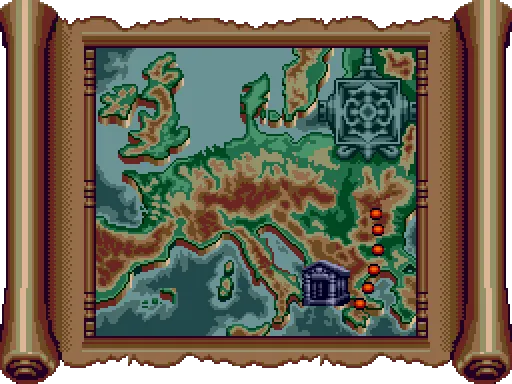
The interstitial map between Stages 1 and 2 — the 1917 travelogue made visible. Konami had spent twelve years setting Castlevania inside a single building. Vampire Killer · Konami, 1994 · Mega Drive.
Two Verbs in Six Stages
The travelogue is also a system, not just a setting. The player picks one of two protagonists at the title screen and the cartridge routes around the choice for the rest of the run. John Morris has the family whip — four-directional, knock-out rope-swing, the Belmont-line spatial vocabulary you arrive expecting. Eric Lecarde has the Alucard Spear — eight-direction thrust, longer reach, a vertical pole-vault jump John cannot perform. Stages branch around these moves: walls John can rope-swing past are walls Eric has to pole-vault over; platforms Eric can reach with the spear’s diagonal are platforms John has to whip a candelabra to. Two genuine playthroughs are designed in. Both are needed for the cartridge to disclose itself.
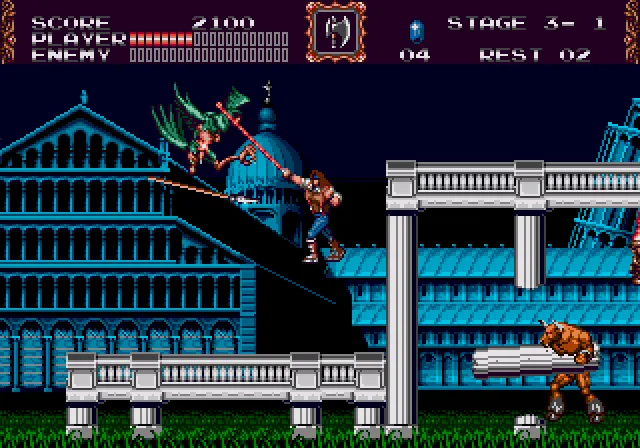
Stage 3-1 — Pisa. The cathedral dome and tower are accurate enough to read against a photograph. Bloodlines doesn’t reuse Dracula’s masonry for European geography; it draws the geography itself. Bloodlines · Konami, 1994 · Mega Drive.
Six stages cover the route. A Romanian ruin to open. The Atlantis Shrine off the coast of Greece. The Leaning Tower of Pisa, which tilts and rotates in real time around the player midway through — Stage 3’s answer to Super Castlevania IV’s rotating Mode 7 chamber, except where the SNES game rotated the room around a stationary player verb, Bloodlines rotates the world while the player keeps walking it. A munitions factory in Germany. The waterworks at Versailles. Castle Proserpina at the end. Each stage is a destination, not a generic dungeon section: the parallax scrolls real architecture, the boss fights cite real myth, the interstitial map traces the route. The friction this puts on a Super Castlevania IV reader is honest: John’s whip cannot spin to deflect projectiles, the knockback on damage remains preserved from the NES line, and Castle Proserpina’s final climb assumes the player has internalised both characters’ verbs to a margin reasonable players bounce off. The cartridge is faster than the SNES original and tighter on its feet — and asks the player to do more.
Yamane’s First Castle, Mostly Unheard
The composer was Michiru Yamane. Bloodlines was her first Castlevania assignment — three years before Symphony of the Night and twenty-five before the Bloodstained Kickstarter that made her name a popular noun. She told Video Game Music Online that she approached the brief by reading sideways into it: “There was some affinity between the image of a vampire-infested world with the traditional classical music that I had been taught from a young age. I tried integrating such things as the classical music element that had already been a part of me with the rock elements previously featured in the series.” The result is a score that quotes Bach against an FM chip — long tonal lines through the cathedral pieces, dynamic bass under the cellars, the series cue “Vampire Killer” itself reframed as a propulsive minor-key march rather than the chiptune anthem the NES game had made it. Yamane later named the Genesis as her favourite system to score — not because she preferred the chip on its merits, but because “for that system I got to do all the work, not just composition, but also synthesising the music into the program. So it’s particularly memorable for me.”
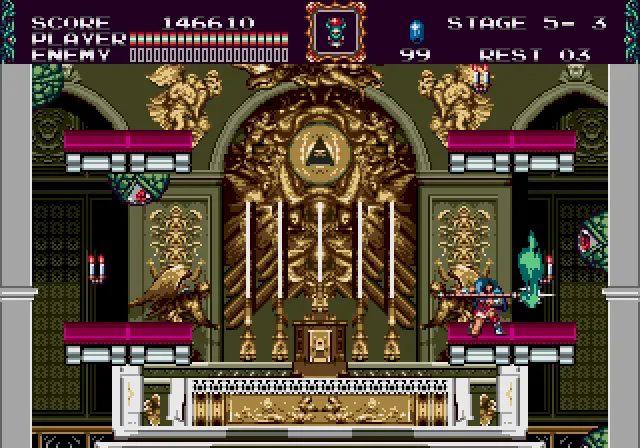
Versailles, Stage 5-3 — a chapel altar in gold leaf and candlelight. Yamane’s score sits underneath it as if written for the building, not the platformer. Bloodlines · Konami, 1994 · Mega Drive.
The trade press in 1994 was divided on the result. Electronic Gaming Monthly gave Ed Semrad’s review a 9 out of 10. Die Hard Game Fan put four editors deep into the nineties. GamePro, less charitably, called it “a satisfactory action cart” that “belongs in the lower reaches of the Castlevania lineage” and signed off with “the Bloodlines run dry.” The split is the reception-gap in miniature: a game the more careful 1994 reviewers heard and the franchise press did not, on a platform that wouldn’t read it back for a quarter-century. The Japanese press buried the score under the rare-cartridge story; the American press buried it under the comparison to a game on a different platform. Yamane’s first Castlevania score — the one she still names when asked about her favourite work for a sound chip — was effectively unheard until the Castlevania Anniversary Collection dropped it on every current console in May 2019, with a fresh interview attached.
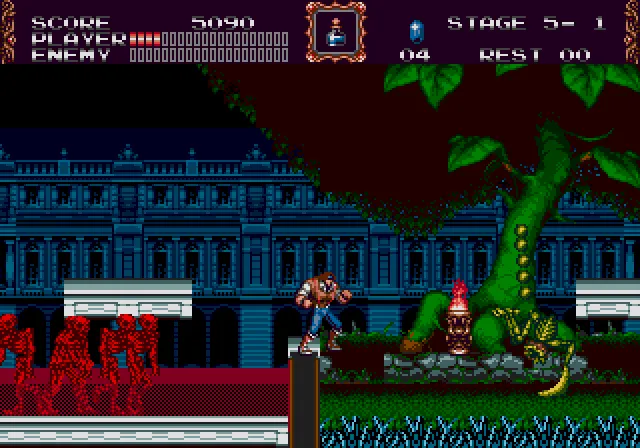
Stage 5-1 — the rose against the palace. A 1917 Versailles waterworks dressed for horror, scored for cathedral. Bloodlines · Konami, 1994 · Mega Drive.
What the Anniversary Collection gives a present-day player is the cartridge as Konami’s Japan team made it. Toggle to Vampire Killer the first time through — the difficulty is the one the author wrote, and the title’s deliberate distance from the Akumajō Dracula lineage is the framing the rest of the design assumes. Then loop back through as Eric and run the second-character version of the same six stages. Six hours, both halves, the FM chip arranged the way Yamane wrote it. What the cartridge gives that Super Castlevania IV does not is a Castlevania willing to leave the castle and the canon — to be a separately authored interpretation rather than the next number in the series — and a composer doing the work she would later become famous for, three years before anyone was listening for it.