The cabinet decade carried four years longer than this Volume covers. What changes after 1993 is not that Konami stopped. It is that the register stopped being the brand. Nineteen articles into a run that reads as one house style — readable, choreographed, top-tier art — the studio that wrote Volume I was already three studios behind the same gold logo. The four years in this Volume are the run when the cabinet was sixteen-bit. The three years that follow are the run after, and the three doors that lead into them were standing open in late 1993 if you knew where to look.
A Mega Drive of Its Own
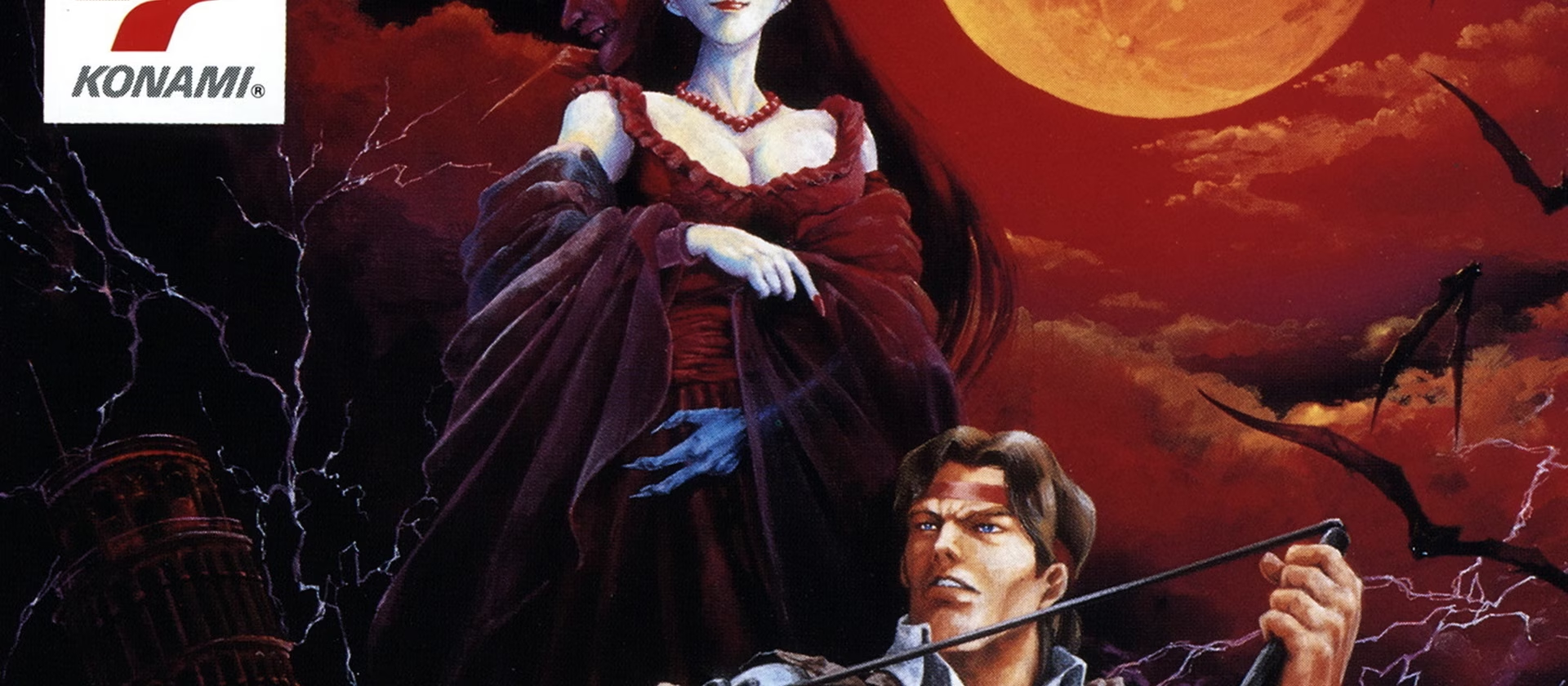
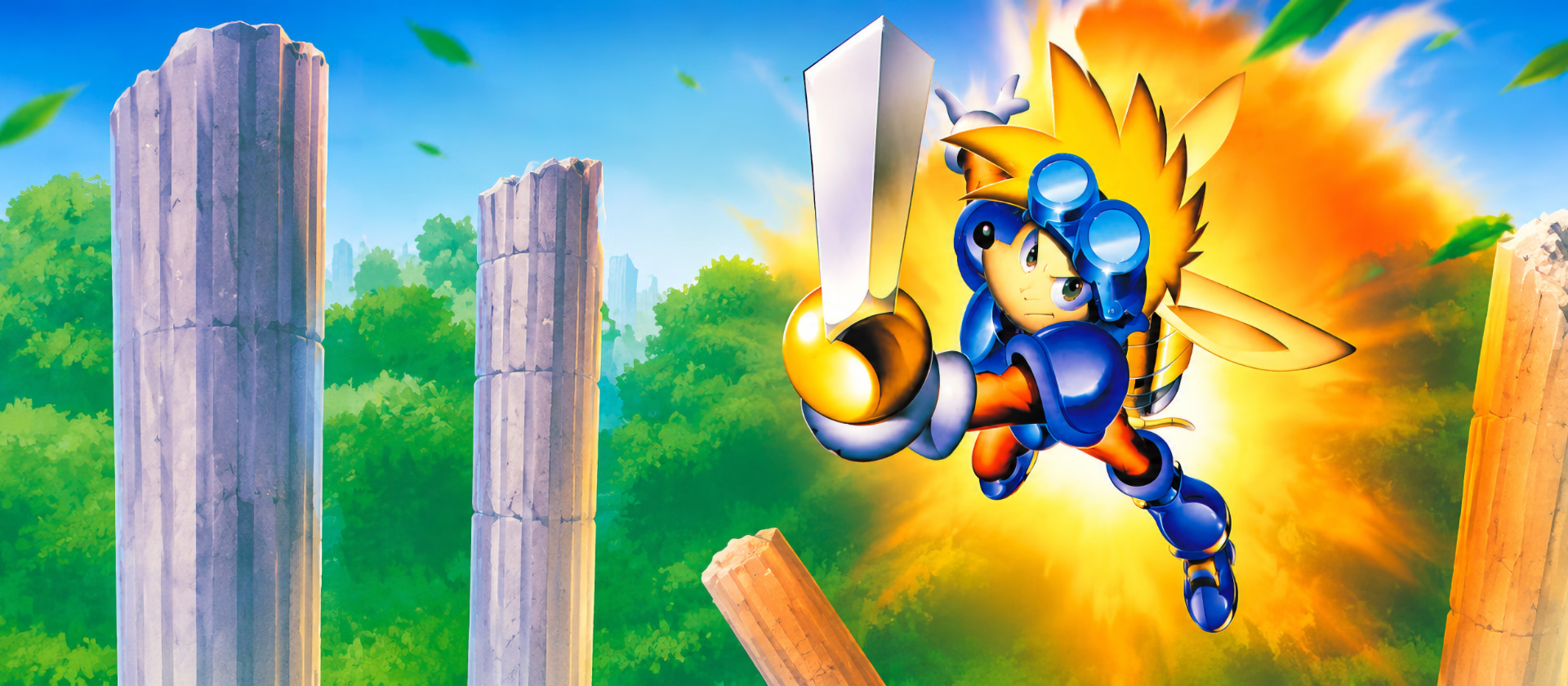
The Mega Drive was already drawing the studio’s sharpest cartridges. Castlevania: Bloodlines — directed by Toshiki Yamamura with Michiru Yamane’s first horror score reaching into the FM chip — shipped in March 1994 as the post-arcade Castlevania nobody had asked for. Contra: Hard Corps followed that August: four playable characters, branching paths, multiple endings, a difficulty curve the SNES generation had spent two years not building. The Mega Drive cut of Sparkster, released the same year, played stranger and harsher than its SNES twin — different physics, different bosses, a different ending. None of these are late-SNES echoes. They are a different temperament inside the same studio, working out of the same building under a different sound chip and a different brief. Volume II opens on that recognition: that the Mega Drive was where the Konami people who had not signed up for the house style went to work.
A Door That Hadn’t Opened
Snatcher CD-ROMantic had shipped in October 1992 on optical media, with the third act Konami had forced Kojima to cut four years earlier finally restored, an all-anime voice cast, and the director’s name on every reel. By late 1993, Policenauts was already in development against the same disc format, in the same back room, by the same auteur — a cinematic studio standing behind a door the company had not yet opened publicly. The cartridge division could be forgiven for not knowing it was there. The visible Konami of Volume I was Sunset Riders and Axelay and TMNT IV; the Konami behind the door was assembling the next decade in seed form. Metal Gear Solid is five years away. The lab that builds it has the lights on.
The Cabinet Loses the Quarter
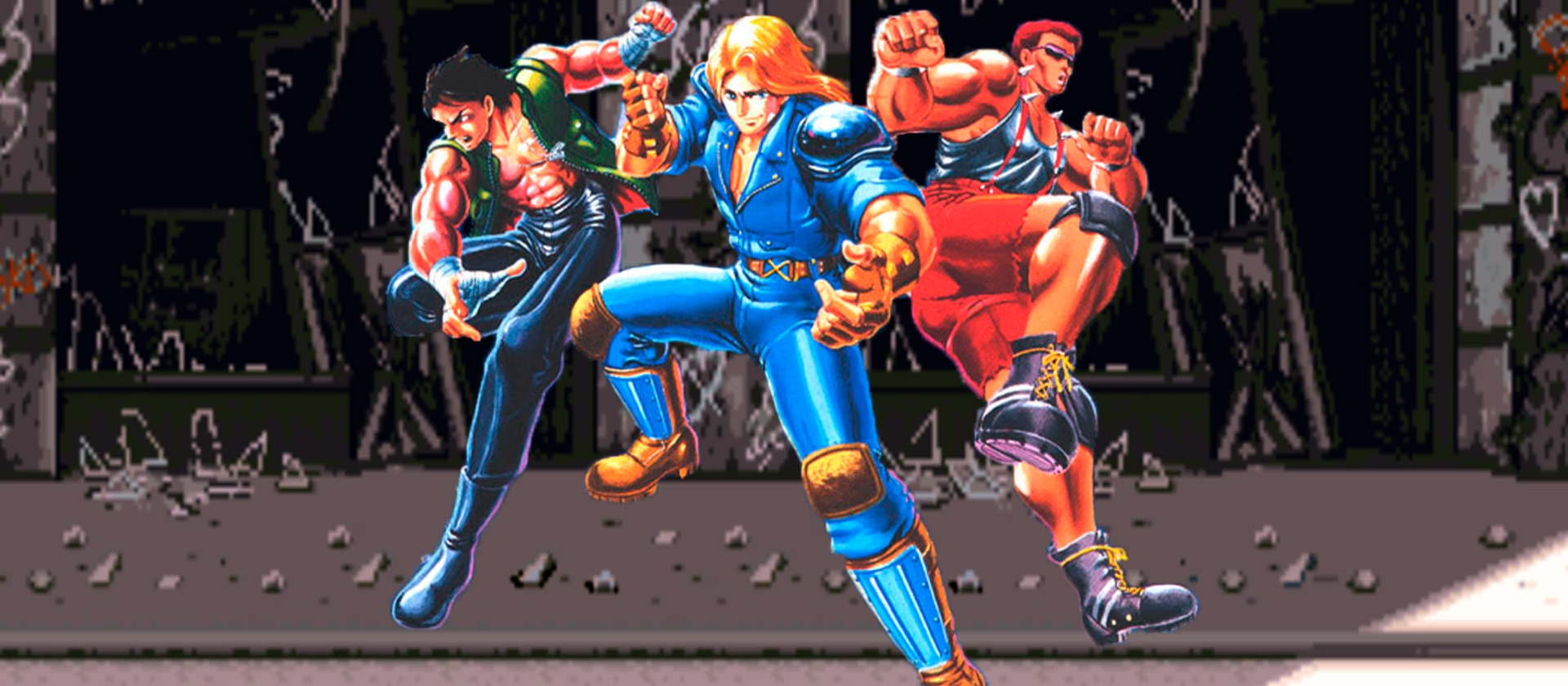
The arcade business was changing under the cabinet. Konami’s coin-op division would keep shipping for another three years — Run and Gun in 1993, Crypt Killer in 1995, Salamander 2 in 1996 — but by 1994 the industry’s revenue model was already moving off the cabinet floor. UFO catchers and prize redemption were absorbing the Japanese game centre; the rhythm-game R&D that would surface as Bemani in 1997 was already underway down the corridor. The cabinet still drew. It no longer kept the quarter. Violent Storm charted tenth in America in July 1994 and went home without a port, and the gap between the operator data and the rerelease drawer is the seam in miniature — a sector with just enough commercial oxygen to ship the work and not quite enough to file the paperwork on it afterward.
By late 1993, then, the house style was still the most coherent third-party register in the business — and three different Konamis were already operating behind it. A Mega Drive studio in Kobe drawing the harder, stranger cartridges. An auteur lab on the back corridor scoring the optical disc against the third act Kojima had not been allowed to finish in 1988. A coin-op division running out the cabinet decade on a clock somebody else was setting. Volume II is the three years it took those three studios to surface as separate signatures. Volume I is the last view of the brand as one room.
The cabinet does not slam shut at the end of 1993. It is still onstage, still playing its credits. But the studio is already next door, building the next thing.